
Soups & Stews
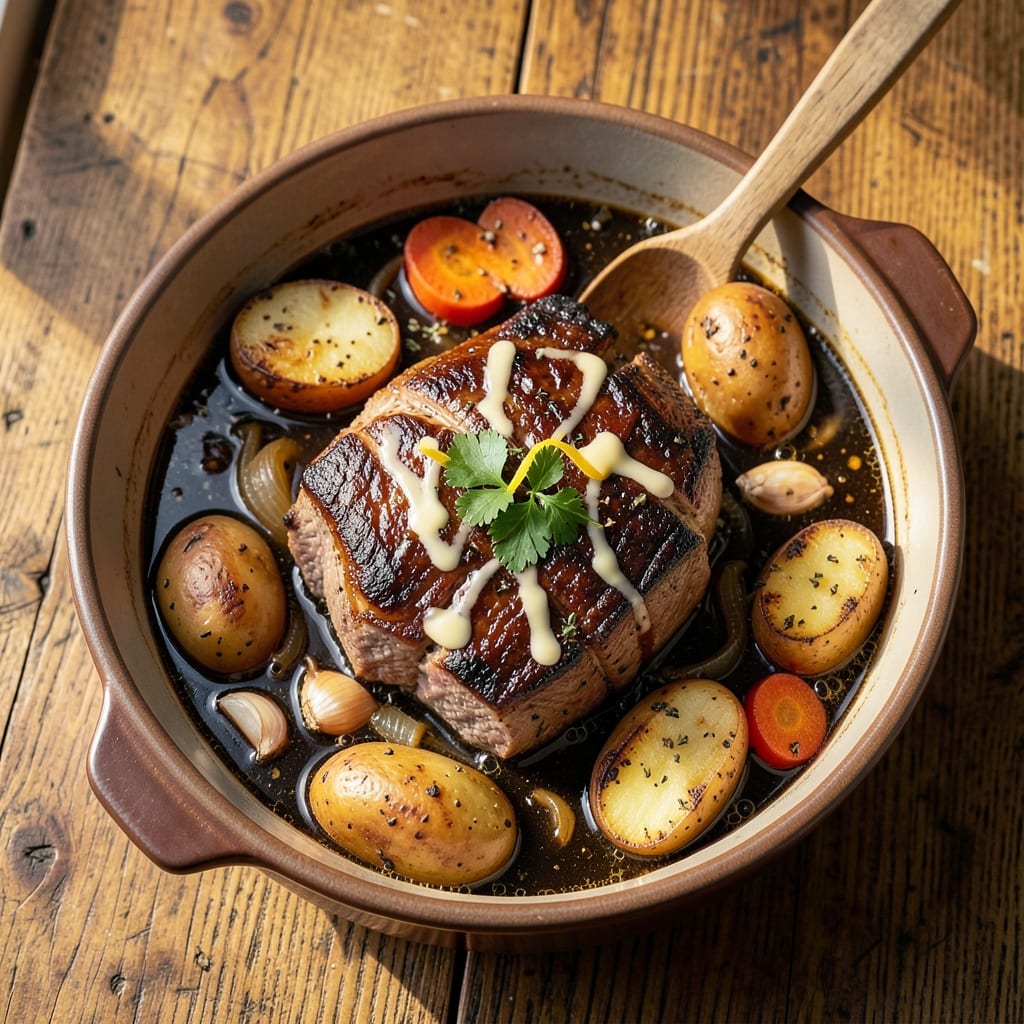
This authentic Irish beef stew brings the cozy pub atmosphere of Dublin straight to your kitchen, where tender beef chuck and hearty root vegetables simmer for hours in rich Guinness stout and aromatic herbs. The slow braising transforms tough cuts into melt-in-your-mouth perfection, while the deep, malty flavor of Guinness creates a sauce so velvety it’ll have everyone asking for seconds. I’ve perfected this recipe over years of testing—balancing traditional techniques with modern shortcuts so you get restaurant-quality results without spending all day in the kitchen.
The secret to tender beef lies in the low-and-slow cooking method, where beef chuck breaks down into fork-tender pieces while absorbing the deep, savory flavors of the stew. Carrots, potatoes, and onions caramelize into a sweet, earthy medley, and a bay leaf and thyme infusion adds that classic Irish herbaceousness. What makes this stew truly special is how the Guinness not only adds color and depth but also tenderizes the meat naturally, creating a sauce that’s rich yet balanced—not too heavy, not too bitter.
By the time your stew is done, you’ll have a pot of authentic Irish comfort food that’s hearty enough for a cold winter night but versatile enough for any meal. The aroma alone—warm, spiced, and deeply satisfying—will fill your home, while the first bite delivers layers of flavor that transport you straight to an Irish countryside pub. This is the kind of stew that disappears fast, so make extra. Here’s how to create it.
Whether you’re cooking on the stovetop or using a slow cooker, this recipe delivers foolproof results every time. The beauty of Irish beef stew is its simplicity—just a few ingredients, hours of simmering, and patience that pays off in the most delicious way possible. Let’s get started on making your own pot of this classic dish.
Ingredients for authentic irish beef stew
Tender beef chuck and Guinness stout create the heart of this classic Irish stew.
| Ingredient | Amount | Notes |
|---|---|---|
| Beef Chuck Roast 🥩 | 3 lb | With good marbling for tenderness |
| Guinness Stout 🍺 | 2 cups | Chilled, not warm |
| Yellow Onion 🧅 | 1 whole | Large, chopped |
| Carrots 🥕 | 1 ½ lb | Medium, peeled and chopped |
| Russet Potatoes 🥔 | 2 lb | Medium, peeled and cubed |
| Garlic Cloves 🧄 | 6 cloves | Peeled and smashed |
| Fresh Thyme 🌿 | 2 tbsp | Leaves only, chopped |
| Bay Leaves 🍃 | 2 whole | Dried, standard size |
| Tomato Paste 🍅 | 2 tbsp | Smooth, not chunky |
| Beef Broth 💧 | 2 cups | Low-sodium preferred |
| All-Purpose Flour 🌾 | 2 tbsp | For thickening |
| Salt 🧂 | 1 ½ tsp | Kosher or sea salt |
| Black Pepper 🌶️ | 1 tsp | Freshly ground |
| Olive Oil 🫒 | 1 tbsp | For searing |
The beef chuck is non-negotiable here—look for well-marbled cuts at Costco or Whole Foods for the best texture. If you're buying a whole roast, ask the butcher to cube it for you (about 1.5-inch pieces). Guinness is the soul of this stew—don't substitute with beer, even dark ones. Grab a cold bottle from the liquor store (it keeps for months unopened). For the potatoes, RussetsFresh thyme is best, but dried works in a pinch (use half the amount).
No Guinness? Substitute with a mix of beef broth and a splash of balsamic vinegar—it's not the same, but it gets you close. Running low on beef broth? Water plus a bouillon cube works, but add a pinch of Worcestershire sauce for depth. The tomato paste can be skipped if you're avoiding it, but it adds that classic umami richness. For the potatoes, parboiling for 5 minutes before adding to the stew keeps them from falling apart. The carrots? Baby carrots work if you're in a hurry, but whole carrots develop deeper flavor. If you're watching salt, use low-sodium broth and add salt at the end.
This stew tastes even better the next day—make extra if you can. Store in the fridge for up to 5 days or freeze for 3 months. For freezing, portion into individual containers so you can thaw just what you need. The sauce thickens as it cools, so add a splash of water or broth when reheating. If you're using a slow cooker, start with 4 hours on low—the meat will be fork-tender and the flavors will meld perfectly.
Why You'll Love This Recipe
- One-Pot Magic: I swear by this—dump everything in a heavy pot, let it simmer, and walk away. No chopping boards to clean, no extra pans, just that deep, rich aroma filling your kitchen by the end.
- Guinness Kiss: That first sip of stout into the pot? Instant flavor upgrade. The roast doesn’t just cook—it melts into the beer, turning tough cuts into something so tender, you’ll forget it’s "slow cook."
- Crowd-Pleaser Always: Rainy Sunday? Game day? My in-laws visiting? This stew handles it all. The potatoes soak up the broth, the carrots stay crisp, and everyone—even the picky eaters—comes back for seconds.
- Leftovers That Don’t Suck: Between us, most stews turn to glue by day three. Not this one. The beef stays juicy, the potatoes hold their shape, and I’ve reheated portions straight from the fridge without a single complaint. (Yes, even from my teenager.)
Step-by-step instructions for authentic Irish beef stew
This method delivers melt-in-your-mouth beef and perfectly tender vegetables every time.
Sear the Beef Chuck Roast
Pat the 3 lb beef chuck roast completely dry with paper towels—this ensures a proper sear. Heat 1 tablespoon olive oil in a large Dutch oven over medium-high heat until shimmering. Place the roast in the pot and sear on all sides for 5-6 minutes total, turning occasionally, until deeply browned. The goal is to develop that rich, caramelized crust that forms the flavor base.
While the beef sears, sprinkle 1.5 teaspoons salt and 1 teaspoon black pepper directly onto the meat. This seasoning will penetrate as the stew simmers. Once browned, remove the roast and set it aside on a plate—you'll return it to the pot later. The browned bits left in the pot will become the foundation of your stew's depth of flavor.
Build the Flavor Base
In the same Dutch oven, reduce the heat to medium and add the 1 whole yellow onion (chopped) and 1.5 lb carrots (peeled and chopped). Cook for 5 minutes, stirring occasionally, until the vegetables begin to soften slightly. Add the 6 smashed garlic cloves and 2 tablespoons fresh thyme (chopped), cooking for another 1 minute until fragrant.
Sprinkle in the 2 tablespoons all-purpose flour and stir vigorously for 30 seconds to coat the vegetables. This creates a light roux that will help thicken the stew. Immediately pour in the 2 cups chilled Guinness stout, scraping up all those flavorful browned bits from the bottom of the pot. Bring to a gentle simmer and let it reduce by half—about 5 minutes—until the liquid thickens slightly and the aroma becomes rich and malty.
Add Tomatoes and Broth
Stir in the 2 tablespoons tomato paste and cook for 2 minutes until it darkens slightly and blends smoothly with the other ingredients. Pour in the 2 cups beef broth and add the 2 whole bay leaves. Return the seared beef roast to the pot, along with any accumulated juices from the plate. The broth should come about halfway up the sides of the roast—if it's too shallow, add a splash of water to compensate.
Bring the stew to a gentle boil, then immediately reduce the heat to low. The liquid should barely bubble—this slow simmer is crucial for tenderizing the tough beef. Cover the pot with a tight-fitting lid and let it cook for 1 hour. Here's the thing—don't peek or stir during this time. The trapped steam and consistent low heat will break down the collagen in the beef, transforming it into tender, fork-tender perfection.
Add Potatoes and Simmer
After 1 hour, add the 2 lb russet potatoes (peeled and cubed) to the stew. The potatoes should be fully submerged in the liquid—if they're not, add a bit more broth or water. Return the pot to a gentle simmer, cover again, and cook for another 45-60 minutes, until the beef is fork-tender and the potatoes are easily pierced with a knife.
I know it's tempting to check the doneness early, but resist. The beef will continue cooking as it rests, and you want those potatoes to absorb all that rich, flavorful liquid. The stew should have a thick, velvety consistency with just enough liquid to coat the back of a spoon. If it's too thin, uncover and simmer for 5-10 minutes longer to reduce slightly.
Rest and Serve
Once the beef is fork-tender (it should pull apart easily with minimal resistance), remove the pot from heat and let the stew rest for 10 minutes before serving. This resting period allows the flavors to meld completely and the juices to redistribute throughout the meat. Remove and discard the bay leaves before serving—you don't want their tough stems in your stew.
Ladle the stew into warm bowls, making sure each serving gets a generous portion of beef and vegetables. The stew should be rich and aromatic, with the deep, malty flavor of the Guinness perfectly balanced by the sweetness of the carrots and the earthiness of the potatoes. Serve with crusty Irish soda bread to soak up every last drop of that flavorful broth.
Pro Tips For Making Authentic Irish Beef Stew
- SEAR THE BEEF FIRST: Skip the slow start—hit that chuck roast with a hot pan and a little oil until it’s deep brown, not just pink. I used to rush this, and the stew always tasted flat; now I give it 5-6 minutes per side until the crust forms. That’s where the flavor hides.
- PEEL AND CUT CARROTS IN CHUNKS: Thin slices turn to mush; cut carrots into 1-inch chunks so they stay intact but still soften quickly. My grandmother swore by this—no one wants to fish out stringy carrots later.
- ADD POTATOES LATE: Toss them in the last 20 minutes or they’ll turn to glue. Russets break down fast, so wait until they’re just tender—not mushy—when you serve. Trust me, you’ll regret adding them early.
- DEGLAZE WITH GUINNESS IMMEDIATELY: As soon as you remove the beef, pour in the stout right away—don’t let those browned bits stick. Scrape the pan clean with a wooden spoon; that’s where half the flavor lives. (Yes, even if you’re impatient like me.)
Essential equipment for this recipe
Dutch Oven
A heavy-bottomed Dutch oven is non-negotiable for this stew—it distributes heat evenly and prevents scorching. I swear by the Lodge 5.5-quart Dutch oven with lid, which handles the 3-hour simmer without hot spots. If you don’t own one, a stainless steel pot with a tight-fitting lid works too, but monitor heat more carefully. The lid must seal tightly to trap steam and tenderize the beef. 🔥
Meat Thermometer
Invest in a digital instant-read thermometer (like the Thermoworks ThermoPop) to check the beef’s internal temperature—195°F is perfect for fork-tender results. I test the thickest part of the roast before adding potatoes to avoid overcooking. A cheap pop-up thermometer won’t cut it here; these tough cuts need precision. Pro tip: Wipe the probe with a damp cloth between uses to avoid flavor transfer.
Wooden Spoon
A long-handled wooden spoon (I use OXO Good Grips) is essential for stirring without scratching your Dutch oven. Wood won’t react with acidic ingredients like metal utensils, and its flexibility helps scrape up those flavorful browned bits from the bottom. Avoid plastic—it melts under prolonged heat. For extra durability, soak it in hot water for 10 minutes before first use to prevent warping.
Slow Cooker
For hands-off cooking, a 6-quart slow cooker (like the Hamilton Beach 63400) is a game-changer. Brown the beef in a skillet first, then transfer everything to the slow cooker and cook on low for 8 hours or high for 5 hours. The key? Use the stovetop method for searing—slow cookers can’t replicate that Maillard reaction. I often double the recipe for leftovers, and the slow cooker’s even heat ensures consistent tenderness. ⏱️
Cheesecloth or Fine Mesh Strainer
If you want restaurant-quality clarity in your broth, strain the stew through cheesecloth or a fine-mesh strainer before serving. This removes any stray thyme stems or bay leaf bits, leaving a velvety sauce. I line my strainer with double-layered cheesecloth for extra filtration. For a quicker (but less refined) option, use a slotted spoon to remove solids and leave the broth intact. The choice depends on how much effort you’re willing to put in for presentation.
Nutrition facts
Frequently asked questions
Why does authentic Irish beef stew need Guinness?
The deep, malty flavor of Guinness stout creates the stew's signature richness and tenderizes the beef naturally. It balances the hearty vegetables and adds a velvety texture that's impossible to replicate with regular beer or broth. The chilled stout also helps prevent the stew from becoming too bitter during long simmering.
Can I substitute beef chuck with another cut?
Beef chuck is ideal for its marbling and collagen content, but you can use beef shank or chuck roast as alternatives. Avoid lean cuts like sirloin—they won't become tender. If using shank, increase simmering time to 3-4 hours for the same results. For quick cooking, pre-cubed stew meat works but may require 30 minutes less total time.
How do I fix stew that's too thin or too thick?
For thin stew, simmer uncovered for 5-10 minutes to reduce the liquid. If it's too thick, whisk in 1/4 cup warm beef broth at a time until reaching the right consistency. The perfect stew should coat the back of a spoon but still be saucy. Pro tip: Add a cornstarch slurry (1 tbsp cornstarch + 1 tbsp cold water) if you need quick thickening.
Can I make this in an Instant Pot?
Yes! Sear the beef first, then add all ingredients except potatoes. Cook on high pressure for 60 minutes, then quick-release. Add potatoes and cook on high pressure for 10 minutes. Natural release for 10 minutes before serving. The Instant Pot cuts cooking time but delivers the same tender results. Just be sure to use the sauté function for proper searing first.
What's the best way to reheat leftovers?
Reheat gently on the stovetop over low heat for 10-15 minutes, stirring occasionally. For microwave reheating, cover with a damp paper towel and heat in 1-minute intervals until warmed through. Never boil—this can make the beef tough. Leftovers keep for 5 days refrigerated or 3 months frozen. The flavors actually improve overnight!