
Soups & Stews
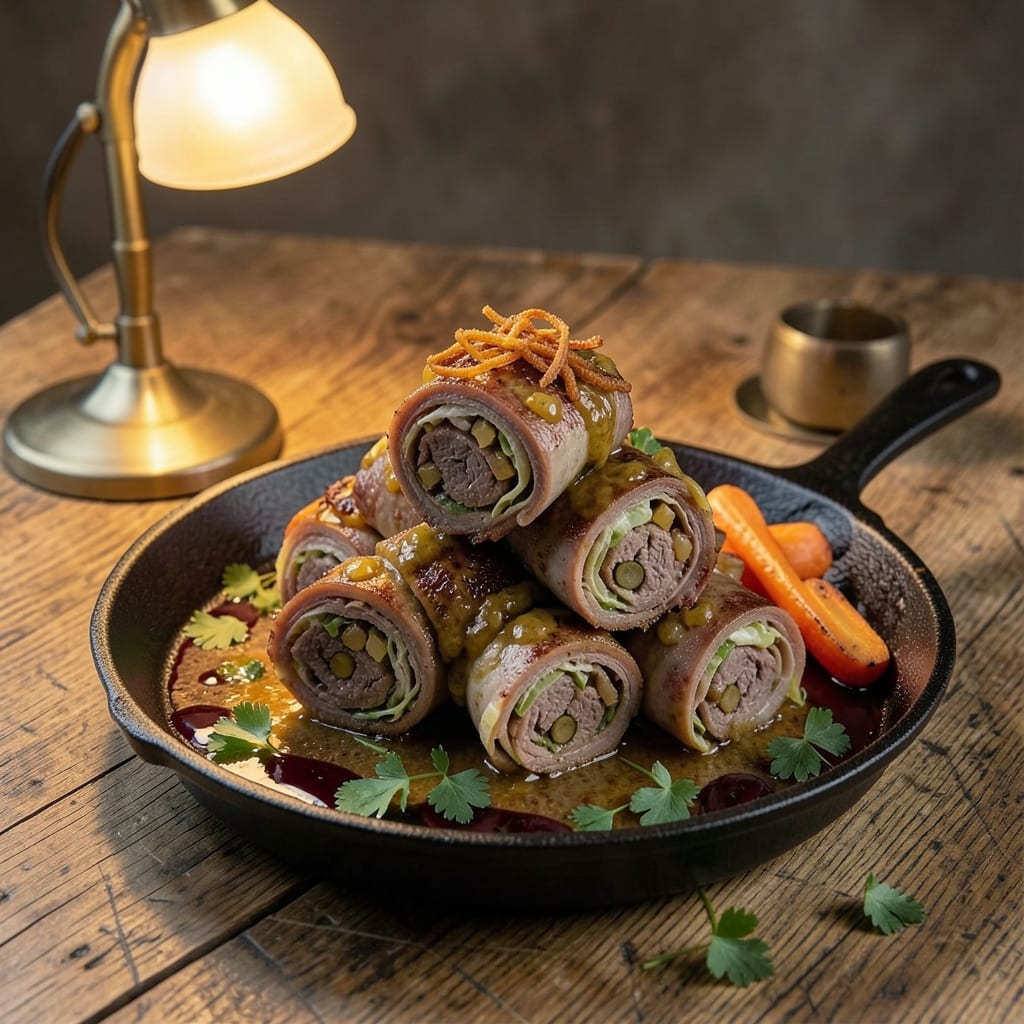
This authentic German beef rouladen recipe brings hearty Bavarian tradition to your table with tender beef rolls wrapped in crisp cabbage and studded with tangy mustard and pickles. The secret lies in slow-cooking the rolls until the beef becomes fork-tender, while the cabbage transforms into a sweet, caramelized embrace. I've perfected this dish after years of testing—each layer of flavor builds on the last, creating a meal that tastes like home.
The beauty of rouladen is in its simplicity: thinly sliced beef, layered with mustard, onions, and pickles, then rolled and seared before a long, slow simmer. The cabbage wrapping isn't just for presentation—it infuses the beef with subtle sweetness and keeps the rolls intact as they cook. This method ensures every bite delivers that perfect balance of savory, tangy, and slightly sweet flavors that define German comfort food.
What you'll achieve is a dish that's rich in tradition yet approachable for home cooks. The beef emerges fork-tender with a deep, caramelized crust, while the cabbage becomes tender yet still holds its shape. The mustard-pickle filling adds a bright, tangy contrast that cuts through the richness, making each bite unforgettable. Serve with buttery potato dumplings or crusty rye bread to soak up every last drop of the savory gravy.
This recipe is designed for those who appreciate the art of slow cooking—where time transforms simple ingredients into something extraordinary. Whether you're preparing for a family gathering or simply craving a taste of Germany, these rouladen deliver restaurant-quality results with minimal fuss. Let's get started on creating a dish that feels like a warm embrace on a chilly evening.
Ingredients for authentic german beef rouladen
Sixteen ingredients transform into hearty Bavarian beef rolls with tender cabbage layers.
| Ingredient | Amount | Notes |
|---|---|---|
| Top Round Roast Beef 🥩 | 3 lb | Thinly sliced against grain |
| Yellow Onions 🧅 | 2 whole | Thinly sliced, about 2 cups |
| Dijon Mustard 🍯 | ½ cup | High-quality for tangy flavor |
| Cornichons 🥒 | 1 cup | Chopped, or sub dill pickles |
| Fresh Green Cabbage 🥬 | 1 lb | Outer leaves for wrapping |
| Carrots 🥕 | 4 whole | Peeled, cut into sticks |
| Celery Stalks 🌿 | 3 whole | Thinly sliced, about 1 cup |
| Beef Broth 💧 | 4 cups | Low-sodium preferred |
| Dry Red Wine 🍷 | 1 cup | Bold variety like Merlot |
| Tomato Paste 🍅 | 2 tbsp | Smooth, not chunky |
| Bay Leaves 🌿 | 2 whole | Fresh preferred |
| Black Peppercorns 🌶️ | 1 tsp | Freshly cracked |
| All-Purpose Flour 🌾 | 2 tbsp | For dredging beef |
| Unsalted Butter 🧈 | 2 tbsp | For searing |
| Salt 🧂 | 2 tsp | Kosher or sea salt |
The beef is non-negotiable—top round roast delivers the perfect tenderness when sliced thinly against the grain. Ask your butcher to slice it if they won't do it for you, or freeze it between parchment paper for 30 minutes to make slicing easier. For the cabbage, green cabbage works best—avoid red unless you want a slightly bitter note. The outer leaves are key for wrapping; save the inner cores for stir-fries. I always grab my cornichons from Trader Joe's—their tiny pickles add that perfect crunch without overpowering.
No Dijon mustard? Whole-grain mustard thinned with 1 tbsp water works in a pinch, though it lacks that signature tang. Running short on cornichons? Dill pickles chopped fine get you close, but drain them well to avoid soggy filling. The wine can be swapped for extra beef broth if you're avoiding alcohol, but the depth of flavor suffers. For the tomato paste, San Marzano is ideal, but any smooth paste will do. Fresh bay leaves make a difference—dried at half the amount if that's what you have. The flour is just for dredging; breadcrumbs would make the rolls too heavy.
Prep the beef filling ahead and refrigerate for up to 24 hours—the flavors meld beautifully. The cabbage leaves soften as they cook, so parboil them for 2 minutes before wrapping to keep them pliable. This dish tastes even better the next day—reheats perfectly in a 350°F oven for 20 minutes. Store leftovers in the fridge for 4 days or freeze for 3 months. The gravy thickens as it cools, so thin with extra broth if needed before serving.
Why You'll Love This Recipe
- One-Pan Magic: I swear by this trick—just roll the beef, tuck in the onions and cornichons, and let the oven do the work. No flipping, no fussing, just hands-off perfection while you sip your beer (or coffee, no judgment).
- Tangy-Savory Bomb: That Dijon mustard and mustard-seed crust? Chef’s kiss. It cuts through the richness of the beef while the tangy cornichons add a bright crunch. Honestly, the first bite makes you question why you ever ate rouladen any other way.
- Weeknight Hero: Between us, this feeds a crowd but costs less than takeout. Use the leftovers for sandwiches the next day—trust me, my lunchbox has never been happier. (Yes, even on a Tuesday night.)
- Budget-Friendly Feast: Top round beef stretches further than you’d think, and cabbage is basically free at the market. I’ve made this for 10 people for under $30, and somehow, there’s always seconds. Not the prettiest, but the taste makes up for it.
Step-by-step instructions for authentic German beef rouladen
Here's how to craft classic German beef rouladen with tender beef, crisp cabbage, and a tangy mustard-pickle filling.
Prepare the Beef and Filling
Begin by slicing the 3 lb Top Round Roast Beef thinly against the grain into ¼-inch thick slices. This cut ensures maximum tenderness. Lay each slice flat on your work surface and spread ¼ teaspoon of the Dijon mustard evenly across the surface, leaving a ½-inch border around the edges. This border prevents the filling from leaking out during cooking.
Next, create the filling by combining the chopped cornichons, thinly sliced yellow onions, peeled carrot sticks, and thinly sliced celery stalks in a bowl. Mix gently to distribute the flavors. Place 1 teaspoon of salt and the freshly cracked black peppercorns into the bowl and toss lightly. The filling should be moist but not soggy—this ensures the beef stays tender without becoming mushy.
Assemble the Rouladen
Place 1 tablespoon of the filling at the bottom of each beef slice, about 1 inch from the edge. Fold the long side of the beef over the filling, then roll tightly from the bottom up, tucking in the sides as you go. Secure each roll with kitchen twine, spacing the twine evenly to prevent the rolls from unraveling during cooking. You should end up with 6 compact rouladen—each one ready for the oven.
While assembling, set aside 2 outer leaves from the fresh green cabbage for later use. These leaves will help hold the rouladen together during the braising process. The cabbage leaves should be large enough to wrap around the rolls without tearing.
Sear the Rouladen
Heat a large oven-safe skillet over medium-high heat and add the 2 tablespoons of unsalted butter. Once the butter foams, place the assembled rouladen in the skillet, seam-side down. Sear for 2 minutes per side until the beef develops a deep golden-brown crust. This step is crucial—it locks in the juices and adds rich flavor to the dish.
Remove the rouladen from the skillet and set them aside. In the same skillet, sprinkle the 2 tablespoons of all-purpose flour over the browned bits, stirring to create a light roux. Pour in the 1 cup of dry red wine and scrape up any remaining fond from the bottom of the pan. Let the wine simmer for 2 minutes until it reduces by half, intensifying its flavor.
Braise the Rouladen
Transfer the seared rouladen back into the skillet with the wine reduction. Add the 4 cups of beef broth, 2 tablespoons of tomato paste, and the 2 whole bay leaves. Bring the mixture to a gentle simmer over medium-low heat. The liquid should just cover the rouladen—if it doesn’t, add a splash of water.
Place the reserved cabbage leaves on top of the rouladen to help them hold their shape during cooking. Cover the skillet with a lid and transfer it to a preheated 325°F oven. Braise for 2 to 2.5 hours, or until the beef is fork-tender and the cabbage leaves are tender but still hold their structure. The rouladen should be cooked through but not falling apart.
Serve with Crisp Cabbage and Sauce
Remove the rouladen from the skillet and let them rest for 10 minutes before serving. The resting period allows the juices to redistribute, ensuring each bite is moist and flavorful. Skim any excess fat from the braising liquid and adjust the seasoning if needed.
To serve, carefully remove the cabbage leaves and twine from each rouladen. Spoon the rich braising sauce over the top and garnish with additional thinly sliced yellow onions for extra crunch. The result is a dish that captures the heart of German comfort food—tender beef wrapped in crisp cabbage, bathed in a tangy, savory sauce. Serve with buttered egg noodles or crusty bread to soak up every last drop of flavor.
Pro Tips For Making Authentic German Beef Rouladen
- SLICE THINLY, STRETCH WELL: Top round can be tough if you’re not careful—slice it against the grain into ½-inch strips, then pound each strip lightly with a meat mallet or rolling pin to coax out those tough fibers. I used to skip this, and my rouladen always felt chewy. Trust me, the extra 2 minutes makes a real difference.
- SAUTE ONIONS LOW AND SLOW: Caramelize those yellow onions until they’re deep amber, not brown—this is where the flavor lives. Too much heat and they’ll burn before they soften enough to hold up in the rouladen. I learned this the hard way after serving crispy, bitter onions instead of sweet, jammy ones.
- PACK THE FILLING TIGHT: Cornichons and mustard need to stay put, so don’t be shy with the filling. Press each layer firmly into the meat, then roll snugly—if it feels loose, it’ll unravel while cooking. My first attempt had half the filling spill out by the time it hit the pan. Now I roll them like I’m wrapping a burrito.
- BRAISE IN TWO STAGES: Sear the rouladen hard in a hot pan first to lock in juices, then transfer to a pot with just enough broth (or beer, if you’re feeling fancy) to come halfway up the meat. Cover and simmer on low heat—high heat here will turn them tough. I was skeptical until I tried it, and now I won’t skip it.
Best sauces and condiments for this recipe
Classic Gravy Base
The foundation of any great rouladen is the rich, tangy gravy made from the wine reduction and beef broth. After searing the rolls, I deglaze the pan with 1 cup dry red wine (like Merlot) and reduce it by half to concentrate the flavors. The 2 tbsp tomato paste adds depth while keeping the sauce smooth—not chunky. For extra richness, I whisk in 2 tbsp cold unsalted butter at the end, which creates a silky texture. This gravy perfectly complements the beef's tenderness and balances the mustard-pickle filling. 🍷
Sweet-Sour Cabbage Sauce
German rouladen often feature a sweet-sour cabbage sauce that adds brightness to the dish. Simmer 1 lb green cabbage, 1 carrot, and 1 celery stalk in 1 cup apple cider with 1 tbsp brown sugar and 1 tsp caraway seeds for 30 minutes until tender. The cabbage should be fork-tender but still hold its shape. This sauce pairs beautifully with the rouladen and adds a refreshing contrast to the rich beef. I like to serve it on the side for dipping or spooning over the rolls. 🥬
Creamy Horseradish Sauce
For a bold, tangy kick, whip up a quick horseradish sauce by mixing ½ cup sour cream, 1 tbsp prepared horseradish, 1 tsp Dijon mustard, and 1 tsp lemon juice. This sauce cuts through the richness of the beef and adds a sharp, refreshing finish. It’s a classic German accompaniment that elevates the dish without overpowering it. I serve it in small bowls so guests can add as much or as little as they like. 🌶️
Mustard-Dill Butter
This simple yet flavorful condiment is a must for rouladen. Mix 2 tbsp softened unsalted butter, 1 tbsp Dijon mustard, 1 tsp fresh dill, and a pinch of salt. Spread it on slices of crusty rye bread or serve it in a small dish for spreading over the rolls. The mustard-dill combo enhances the dish’s tangy profile and adds a fresh, herby note that brightens every bite. 🥖
Pickled Red Onions
Quick-pickled red onions add a bright, acidic crunch that contrasts beautifully with the tender beef. Thinly slice 1 red onion and soak in a mixture of ½ cup apple cider vinegar, 1 tbsp sugar, and ½ tsp salt for at least 30 minutes. Drain before serving and sprinkle over the rouladen just before eating. The onions add a pop of color and a tangy bite that keeps the dish vibrant. 🧅
Nutrition facts
Frequently asked questions
What's the best cut of beef for authentic German rouladen?
Top round roast is ideal—it's lean yet tender when sliced thinly against the grain. For best results, ask your butcher to slice it ¼-inch thick before you assemble the rolls. If you can't find top round, bottom round or sirloin tip work well too, but avoid tougher cuts like flank steak.
Can I make rouladen ahead of time?
Yes! Assemble the rouladen up to 24 hours ahead and refrigerate them unwrapped. When ready to cook, simply sear and braise as directed. For longer storage, freeze assembled rouladen (uncooked) for up to 3 months. Thaw overnight in the fridge before cooking—never at room temperature.
Why does my cabbage get mushy?
Overcooking is the most common issue. The cabbage should be tender but still hold its shape—braise for 2 to 2.5 hours max at 325°F. For extra structure, parboil the outer leaves for just 2 minutes before wrapping. If your cabbage is too soft, try using slightly younger leaves from the outer edge of the head.
What can I substitute for cornichons?
Use dill pickles chopped fine (drained well) or tiny gherkins. For a sweeter option, try sweet pickle relish (about 1 tbsp per rouladen). Avoid large pickles—they can make the filling too bulky. If using relish, reduce the onions slightly to maintain balance.
How do I keep the rouladen from falling apart?
Proper rolling and securing are key! Use kitchen twine spaced evenly along each roll, and tuck in the edges as you roll. The cabbage leaves also help maintain shape. If your rolls still unravel, try using thicker beef slices (⅛-inch) or add a second layer of twine for extra support.