
Main Courses
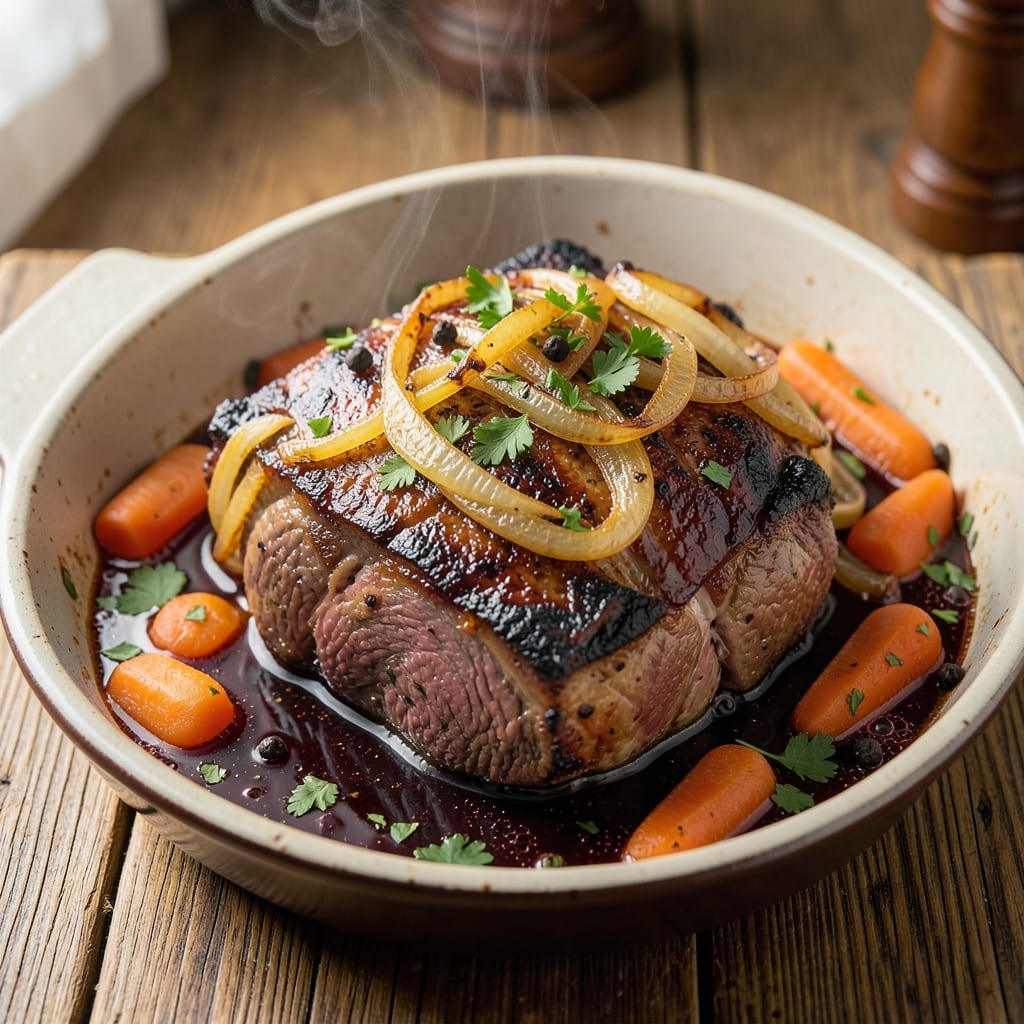
This Bavarian beef recipe transforms tough cuts into melt-in-your-mouth tenderness through slow-simmered beer and caramelized onions. The secret lies in marinating the beef overnight, then braising it with dark beer and aromatic vegetables until the meat falls apart effortlessly. This classic German dish delivers rich, savory depth that’s impossible to resist.
What sets this recipe apart is the balance of techniques: starting with a deep marinade to tenderize, followed by a long, slow simmer that develops complex flavors. The beer not only keeps the meat moist but also adds a subtle malt sweetness that pairs perfectly with the caramelized onions. Traditional sides like fluffy dumplings or buttery potatoes complete the meal.
The result is a dish that’s hearty enough for a family dinner but elegant enough for special occasions. Each bite offers layers of flavor—juicy beef, deep umami from the reduced gravy, and a touch of sweetness from the onions. This is comfort food at its finest, with a technique that guarantees success every time.
Whether you're serving it at a holiday gathering or a weeknight family meal, this Bavarian beef will be the star. The slow cooking process makes it ideal for meal prep, as the flavors only deepen over time. Let’s get started on creating a dish that tastes like home.
Ingredients for bavarian beef
The backbone of this classic Bavarian dish: rich beef, aromatic vegetables, and deep malt flavors that transform simple ingredients into something extraordinary.
| Ingredient | Amount | Notes |
|---|---|---|
| Beef Chuck Roast 🥩 | 3 lb | Tough cut for braising, trim excess fat |
| Yellow Onions 🧅 | 3 whole | Medium size, peeled and halved |
| Carrots 🥕 | 4 whole | Medium size, peeled and chopped |
| Dark Beer 🍺 | 2 cups | Dortmunder or Munich Dunkel preferred |
| Beef Broth 💧 | 2 cups | Low-sodium preferred, homemade if possible |
| Tomato Paste 🍅 | 2 tbsp | High-quality, no sugar added |
| Garlic Cloves 🧄 | 6 cloves | Fresh, peeled and smashed |
| Fresh Thyme 🌿 | 2 sprigs | Or 1 tsp dried thyme |
| Fresh Bay Leaves 🌿 | 2 whole | Dried works in pinch |
| Black Peppercorns 🌶️ | 1 tsp | Freshly cracked preferred |
| Salt 🧂 | 1 ½ tbsp | Kosher or sea salt |
| Olive Oil 🫒 | 2 tbsp | For caramelizing onions |
| All-Purpose Flour 🌾 | 2 tbsp | For thickening gravy |
The beef is everything here—chuck roast with good marbling breaks down beautifully during the long braise. Costco or your butcher shop are best for quality cuts; look for pieces with visible fat marbling. If you can't find chuck, bottom round works too, but trim all visible fat first. The onions and carrots should be medium-sized—they'll caramelize perfectly without turning to mush. For the beer, Dortmunder or Munich Dunkel add the best malt sweetness, but any dark beer (even stout) will work in a pinch. If you're feeling fancy, grab a bottle of Weihenstephaner Original from the international aisle—it's worth it for the depth.
No dark beer? Substitute with beef broth plus 1 tbsp balsamic vinegar for a similar depth. Fresh thyme and bay leaves are ideal, but dried works at half the amount if you're in a hurry. The tomato paste can be skipped entirely if you're avoiding umami, but it adds that classic Bavarian richness. For the flour, all-purpose works fine, but if you've got it, arrowroot powder gives a glossier gravy. The key is patience—don't rush the caramelization of the onions, even if it means an extra 20 minutes. That's where the magic happens. And if you're short on time, pre-chop the onions and carrots while the beef marinates overnight.
This dish tastes even better the next day, so make extra—it reheats beautifully. Store leftovers in an airtight container in the fridge for up to 5 days, or freeze portions for 3 months. The gravy will thicken as it cools, so add a splash of broth when reheating. For meal prep, portion the beef and gravy separately—this keeps the meat juicy and the sauce from getting soggy. If you're serving with dumplings, make them fresh the same day. They don't reheat well, but they're worth the effort for this dish.
Why You'll Love This Recipe
- One-Pot Magic: I swear by this recipe when I don’t want to dirty a million dishes. Chuck roast, onions, and carrots all simmer together in one pot—no chopping boards to scrub, no pans to stack. The beer and broth do most of the work while I sip wine and pretend I’m a fancy chef.
- Beer-Braised Bliss: That deep, malty richness from the dark beer? It’s the secret weapon. The beef practically falls apart when you pull it out—tender, juicy, and wrapped in a sauce that’s got layers of caramelized sweetness from the onions and carrots. Honestly, it’s the kind of flavor that makes you close your eyes and sigh.
- Leftovers That Win: Between us, this dish only gets better the next day. I make a double batch on Sundays because reheating those shredded beef slices with a sprinkle of fresh parsley? It’s my go-to for lazy lunches or quick sandwiches. No sad leftovers here—just pure, repeatable satisfaction.
- Budget-Friendly Feast: A chuck roast stretches farther than you’d think, and pairing it with onions, carrots, and store-brand beer keeps costs low. I’ll be real: this is how I feed my whole family for under $20. Plus, the broth reduces into a thick, savory sauce that feels indulgent—even though it’s basically pantry magic.
Step-by-step instructions for slow-simmered Bavarian beef
This method transforms tough beef chuck into tender, flavorful slices with rich beer and caramelized onions.
Sear the Beef Chuck Roast for Deep Flavor
Pat the 3 lb beef chuck roast dry with paper towels—this ensures a good sear. Heat 1 tablespoon of the olive oil in a heavy Dutch oven over medium-high heat until shimmering. Place the roast in the pot, fat-side down, and sear for 4-5 minutes until a deep golden-brown crust forms. Flip and sear the other side for another 4-5 minutes. The goal is to develop a rich, caramelized exterior that will infuse the braising liquid.
Remove the roast and set it aside. If the pot isn't coated with browned bits, don't worry—we'll build more flavor as we go. The searing step is crucial; it locks in juices and creates the foundation for the deep, savory taste that defines Bavarian beef.
Caramelize Onions and Build the Braising Base
In the same Dutch oven, add the remaining 1 tablespoon olive oil over medium heat. Add the 3 whole yellow onions, peeled and halved, cut-side down. Cook for 10-12 minutes, stirring occasionally, until the onions are deeply caramelized and golden brown—this should take patience, but it's worth it for that sweet, rich depth. If the onions start to stick, add a splash of the dark beer to deglaze and scrape up those flavorful browned bits.
Once the onions are caramelized, push them to one side of the pot and add the 4 whole carrots, peeled and chopped, along with the 6 cloves garlic, smashed. Cook for 3-4 minutes until the carrots soften slightly and the garlic releases its aroma. Stir in the 2 tablespoons tomato paste and cook for another minute to deepen the flavor profile.
Deglaze and Braise the Beef
Pour in the 2 cups dark beer, scraping up any browned bits from the bottom of the pot with a wooden spoon. This deglazing step captures all the flavor you've built so far. Add the 2 cups beef broth, the 2 sprigs fresh thyme, 2 whole fresh bay leaves, 1 teaspoon black peppercorns, and 1.5 tablespoons salt. Return the roast to the pot, placing it fat-side up.
Bring the liquid to a simmer, then reduce the heat to low. Cover the pot and let it braise for 2.5 to 3 hours, or until the beef is fork-tender. The liquid should reduce significantly, but there should still be about 1 cup remaining. The key here is low and slow—this breaks down the tough connective tissue in the beef chuck, transforming it into melt-in-your-mouth slices.
Thicken the Gravy and Finish
Once the beef is tender, remove it from the pot and set it aside to rest. Place the pot back on the stove over medium heat and skim off any excess fat that has risen to the surface. Sprinkle the 2 tablespoons all-purpose flour over the braising liquid and whisk vigorously to combine. Cook for 2-3 minutes, stirring constantly, until the gravy thickens to a rich, velvety consistency. If it thickens too quickly, add a splash of the reserved beef broth to loosen it.
Return the beef to the pot and toss it gently in the gravy to coat evenly. Let it simmer for another 2-3 minutes to allow the flavors to meld. The gravy should now cling beautifully to the beef, creating a luscious sauce that ties everything together.
Rest and Slice for Perfect Texture
Transfer the beef to a cutting board and let it rest for 10-15 minutes before slicing. This resting period is essential—it allows the juices to redistribute throughout the meat, ensuring each slice is moist and tender. Once rested, slice the beef against the grain into ¼-inch thick slices. Serve immediately with the gravy spooned over the top, alongside crusty bread or buttery mashed potatoes to soak up every last bit of that rich, beer-infused sauce.
The result should be tender, flavorful beef with a deep, complex sauce that balances the sweetness of the caramelized onions and the malty richness of the dark beer. This dish is all about patience and technique, but the reward is well worth the effort.
Pro Tips For Making Bavarian Beef
- SEAR THE ROAST FIRST: Don’t just toss that chuck roast into the pot—hit it with a screaming-hot pan for 3-4 minutes per side until it’s deep brown. I used to skip this, and the flavor was always flat. That crust locks in juices and carries the beer’s depth through the whole dish.
- CHOP ONIONS THINLY: Slice those yellow onions paper-thin—no thick rounds here. They’ll soften and melt into the sauce instead of sitting as chewy chunks. I learned this the hard way when my first batch had a textural fight in every bite.
- DON’T SKIP THE BROWNING: Let the onions and carrots caramelize for 10-12 minutes before adding liquid. The deeper the color, the richer the base for the beer and broth. Yes, it takes time, but rushing this step means a sauce that tastes like it was made in 20 minutes.
- USE STOUT BEER: Swap that pale lager for a dark stout or porter—it’s got the roasted malt notes that mimic the depth of a slow-braised sauce. I was skeptical until I tried it; the difference is like night and day in flavor. (No, your IPA won’t cut it.)
Dietary considerations for bavarian beef
Gluten-Free Adaptations
Traditional Bavarian beef relies on flour to thicken the gravy, but you can easily adapt this recipe for gluten-free diets. Replace the 2 tablespoons all-purpose flour with 2 tablespoons cornstarch or gluten-free flour blend like Bob’s Red Mill. Whisk the cornstarch into the cold gravy before reheating—it thickens beautifully without altering the dish’s rich texture. Just ensure your beer is certified gluten-free, as many dark beers contain barley. 🌾
Dairy-Free Considerations
This recipe is naturally dairy-free, but watch for hidden dairy in sides like mashed potatoes or dumplings. For a fully dairy-free meal, serve with roasted potatoes tossed in olive oil and herbs, or gluten-free egg noodles. The beer and beef broth provide enough richness that you won’t miss dairy in the main dish. If serving with bread, opt for gluten-free sourdough or a dairy-free baguette.
Lower-Carb Options
To reduce carbs, skip the potatoes or dumplings and serve the beef over a bed of cauliflower mash or zucchini noodles. The rich gravy will coat the low-carb sides beautifully. For extra flavor, stir 1 teaspoon Dijon mustard into the gravy before serving. This keeps the dish hearty while cutting carbs significantly. A side of roasted Brussels sprouts adds a satisfying crunch without overpowering the beef’s depth.
Allergen-Friendly Swaps
For nut allergies, ensure your beef broth is nut-free (some brands add peanuts). If using dried thyme or bay leaves, check for cross-contamination warnings. For soy allergies, avoid soy-based thickeners—stick with cornstarch or arrowroot. Always verify ingredient labels, especially for store-bought beers or broths, as hidden allergens can lurk in unexpected places. When in doubt, opt for homemade broths and fresh herbs.
Vegetarian Adaptations
While this dish is meat-centric, you can create a vegetarian version by replacing the beef with extra-firm tofu or king oyster mushrooms. Marinate the tofu in the same beer and broth mixture, then braise until tender. For mushrooms, use 2 lbs sliced king oyster mushrooms and follow the same cooking process. The caramelized onions and beer gravy will still shine, offering a satisfying umami-rich alternative. Serve with gluten-free dumplings or roasted vegetables for a complete meal.
Protein Adjustments
For a lighter protein option, swap the beef chuck for leaner cuts like sirloin or flank stein, but reduce braising time to 1.5 hours to avoid overcooking. If you prefer poultry, use bone-in chicken thighs (4-5 pieces) and adjust seasoning to balance the beer’s maltiness. For seafood lovers, try firm white fish like cod or halibut—simmer for just 10-15 minutes in the beer and onion mixture. The gravy will still thicken beautifully, creating a unique twist on the classic dish.
Nutrition facts
Frequently asked questions
Can I use any beer for this Bavarian beef recipe?
While any beer will work, dark beers like Dortmunder or Munich Dunkel are ideal because their malt sweetness complements the beef and onions beautifully. If you only have light beer, add 1 tablespoon balsamic vinegar to mimic the depth. Avoid overly hoppy IPAs—they can overpower the dish.
Why does the recipe call for beef chuck instead of a leaner cut?
Beef chuck is perfect because its connective tissue breaks down during the long braise, creating melt-in-your-mouth tenderness. Lean cuts like sirloin dry out in the beer sauce. If you must use a leaner cut, reduce braising time to 1.5 hours and slice thinner.
How do I prevent the gravy from getting too thin?
Simmer the gravy uncovered for 5-10 extra minutes to reduce it naturally. If it's still too thin, mix 1 teaspoon cornstarch with cold water and stir it in. For a richer texture, skim excess fat from the surface before thickening. The gravy should coat the back of a spoon but still be pourable.
Can I make this recipe in a slow cooker?
Sear the beef first, then transfer everything (including caramelized onions) to the slow cooker. Cook on low for 6-7 hours or high for 3-4 hours. The slow cooker's gentle heat creates the same tender results with less attention. Just thicken the gravy on the stovetop at the end.
What's the best way to reheat leftovers?
Reheat in a skillet with a splash of beef broth over medium-low heat for 3-4 minutes until warmed through. Microwaving can make the gravy watery. For extra flavor, add a pat of butter while reheating. Leftovers keep well for 5 days in the fridge or 3 months frozen.