
Main Courses
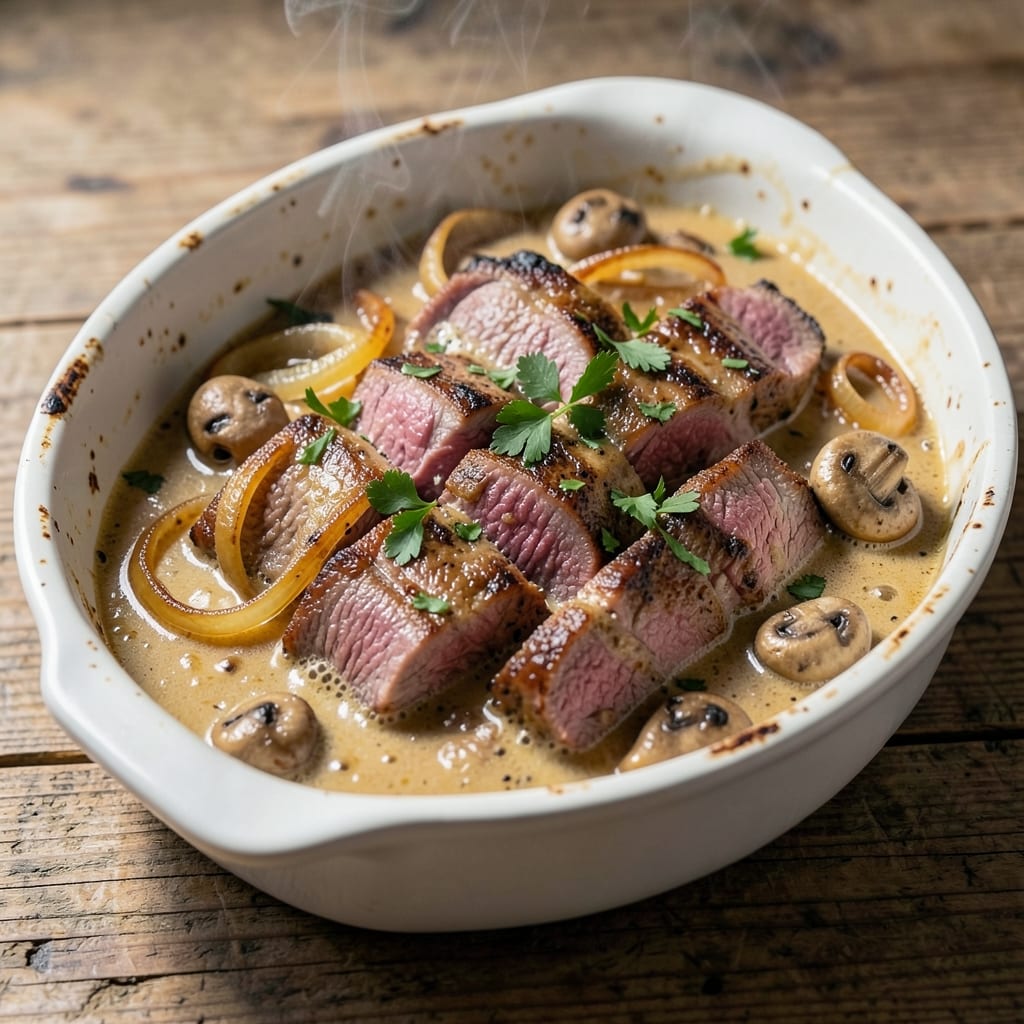
This authentic German beef stroganoff brings hearty German flavors to your table with rich sour cream and earthy mushrooms. 💛 The secret lies in slow-cooked beef and a velvety sauce infused with caraway and marjoram—classic German spices that elevate every bite. Unlike lighter versions, this recipe delivers deep, savory richness with a touch of beer for authenticity.
The dish starts with perfectly seared beef strips, then simmers in a fragrant broth until tender. Mushrooms and onions caramelize slowly, forming the base for a luscious sauce thickened with sour cream—just like a traditional German kitchen would prepare. The result is a comforting, restaurant-quality meal that feels like home.
What makes this stroganoff truly special is the balance of textures: tender beef, creamy sauce, and the subtle bite of German spices. Serve it with fluffy Spätzle or crusty rye bread to soak up every last drop of that velvety goodness. This isn’t just stroganoff—it’s a taste of Germany’s hearty, flavorful tradition.
Ready in about 45 minutes, this recipe is perfect for weeknight dinners or special occasions. The method is straightforward, but the flavors are anything but ordinary. Let’s get cooking!
Ingredients for authentic german beef stroganoff
German pantry staples and fresh ingredients transform into this velvety, restaurant-quality stroganoff.
| Ingredient | Amount | Notes |
|---|---|---|
| Beef Tenderloin 🥩 | 1 ½ lb | Cut into 1/2-inch strips, boneless |
| Yellow Onions 🧅 | 2 whole | Thinly sliced, about 2 cups |
| Cremini Mushrooms 🍄 | 16 oz | Sliced, stems removed |
| All-Purpose Flour 🌾 | 2 tbsp | For dredging beef strips |
| Unsalted Butter 🧈 | 4 tbsp | European-style preferred |
| Dry White Wine 🍷 | ½ cup | Riesling or Pinot Grigio |
| Beer 🍺 | ½ cup | German lager or pilsner |
| Beef Broth 💧 | 1 ½ cups | Homemade or high-quality store-bought |
| Sour Cream 🥛 | 1 cup | Full-fat for authentic richness |
| Ground Caraway Seeds 🌿 | ½ tsp | Freshly ground for authentic flavor |
| Fresh Marjoram 🌿 | 1 tbsp | Chopped, or 1 tsp dried |
| Diamond Crystal Kosher Salt 🧂 | 1 tsp | Adjust to taste |
| Freshly Ground Black Pepper 🌶️ | ½ tsp | Coarsely ground |
| Fresh Parsley 🌿 | ¼ cup | Chopped, for garnish |
The beef is non-negotiable—tenderloin delivers the most tender results, but sirloin or chuck work if sliced thinly. For the onions, yellow or sweet onions caramelize beautifully, but red onions add a subtle color contrast. Mushrooms should be fresh and firm—avoid pre-sliced varieties, as they oxidize quickly. Whole Foods or Trader Joe's carry excellent European-style butter, which adds a richer flavor than standard American butter. If you can't find it, Plugrá is a solid substitute. The beer should be a German lager or pilsner—avoid dark beers, as they can overpower the delicate flavors.
No white wine? Substitute additional beef broth, but the acidity helps balance the richness. Running short on sour cream? Full-fat Greek yogurt works in a pinch, though it won't be as tangy. Fresh marjoram can be tricky to find—dried oregano at half the amount is a decent substitute, though it lacks the subtle citrusy notes. Caraway seeds are essential for authenticity; if unavailable, a pinch of celery seed adds a similar earthy depth. For the flour, all-purpose or bread flour both work, but bread flour adds a slight chewiness to the sauce. Always measure spices by weight for consistency—1 tsp of ground caraway seeds is roughly equivalent to 0.5 tsp of whole seeds.
Beef strips can be prepped ahead and refrigerated for up to 24 hours, but pat them dry before cooking to ensure a good sear. The sauce thickens as it cools, so reheat gently over low heat to maintain its velvety texture. Leftovers keep for 3-4 days in the fridge, but the flavor deepens over time—reheat with a splash of beef broth to restore creaminess. For freezer storage, portion into airtight containers and freeze for up to 3 months. Garnish with fresh parsley just before serving to preserve its vibrant color and brighten the dish.
Why You'll Love This Recipe
- Tender Beef Magic: I swear by that beef tenderloin—it melts in your mouth while keeping just enough bite. The secret’s in the quick sear with butter and onions before the flour gets tossed in; that’s what makes it actually German, not just another stroganoff knockoff.
- One-Pot Wonder: Honestly, this is my lazy night hero. Brown the beef and mushrooms in the same pan, deglaze with a splash of white wine (or broth), and boom—dinner’s done. No extra pots, no fuss, just rich, saucy perfection that tastes like you spent hours.
- Leftovers That Shine: Between us, this dish gets better the next day. The flavors meld overnight, and reheating it with a little extra butter? Absolute gold. Pack it for lunches or freeze portions—it’s my go-to for busy mornings without sacrificing taste.
- Budget-Friendly Luxury: You’re using tenderloin, but here’s the trick: it stretches far. Serve it over egg noodles or crusty bread to stretch it into a full meal, and those cremini mushrooms add depth without breaking the bank. Fancy enough for company, cheap enough for Tuesday.
Step-by-step instructions for authentic German beef stroganoff
Here's the traditional method that delivers restaurant-quality stroganoff with deep, savory flavors.
🍳 Step 1: Sear the Beef Tenderloin for Maximum Flavor
Pat the 1.5 lb beef tenderloin dry with paper towels and cut into ½-inch strips. Heat 2 tablespoons of unsalted butter in a large skillet over medium-high heat until foaming. Working in batches to avoid crowding, sear the beef for 2-3 minutes per side until deep golden brown and cooked to medium-rare (135°F internal temperature).
This high-heat sear creates a flavorful crust that forms the base of your stroganoff. Remove the beef and set aside, leaving the browned bits in the pan - these contain concentrated flavor that will dissolve into your sauce. If the pan isn't hot enough, the beef will steam instead of sear, resulting in pale, bland strips.
👨🍳 Step 2: Build the Flavorful Sauce Base
In the same skillet, reduce heat to medium and add 2 tablespoons of all-purpose flour, stirring constantly for 1-2 minutes until golden brown. This creates a roux that will thicken your sauce. Immediately pour in ½ cup of dry white wine and ½ cup of beer, scraping up all the browned bits from the bottom of the pan.
Let the liquid simmer for 3-4 minutes until reduced by half. The alcohol should cook off completely - you'll know it's ready when the mixture smells rich and aromatic rather than boozy. Add 1.5 cups of beef broth, 1 tablespoon of chopped fresh marjoram, ½ teaspoon of ground caraway seeds, 1 teaspoon of kosher salt, and ½ teaspoon of freshly ground black pepper. Bring to a gentle simmer and let cook for 5 minutes to infuse the flavors.
🍳 Step 3: Cook the Mushrooms and Onions
Increase heat to medium-high and add 2 whole yellow onions (thinly sliced) and 16 oz cremini mushrooms (sliced). Cook for 6-8 minutes, stirring occasionally, until the mushrooms release their moisture and the onions become soft and translucent. The mushrooms should be tender but still hold their shape - they'll continue cooking in the sauce.
Here's where the authentic German flavor comes through. The caraway seeds add a subtle earthy note that pairs beautifully with the mushrooms. If you notice the onions browning too quickly, reduce heat slightly to prevent burning while still getting that caramelized depth.
🥘 Step 4: Finish with Sour Cream for Creamy Perfection
Return the seared beef to the skillet and stir to coat in the sauce. Reduce heat to low and gradually whisk in 1 cup of sour cream, stirring constantly to prevent curdling. The sauce should thicken slightly but remain velvety - if it becomes too thick, add 1-2 tablespoons of beef broth to reach your desired consistency.
Simmer for 3-4 minutes until the sauce reaches 160°F - hot enough to kill any bacteria from the raw beef but not so hot it curdles the sour cream. The dish should be creamy but not heavy, with the beef perfectly tender and the mushrooms still holding their shape. Taste and adjust seasoning if needed.
🍽️ Step 5: Serve with Fresh Herbs and Crusty Bread
Remove from heat and let the stroganoff rest for 5 minutes to allow the flavors to meld. Garnish with ¼ cup of chopped fresh parsley just before serving. The parsley adds a bright contrast to the rich, creamy sauce and gives it that final restaurant-quality presentation.
Serve immediately over buttered egg noodles or crusty German bread to soak up every last bit of that velvety sauce. The dish should be rich but not overly heavy, with a perfect balance of tender beef, earthy mushrooms, and creamy sour cream. Each bite should deliver that authentic German restaurant experience at home.
Pro Tips For Making Authentic German Beef Stroganoff
- Sear the Beef Properly: After I sliced the tenderloin thin against the grain, I learned the hard way that a quick sear in butter isn’t enough—it needs to develop that deep, caramelized crust. Use a heavy pan (cast iron works best) and cook the beef in batches over medium-high heat until it’s golden-brown on both sides. If you crowd the pan, you’ll steam the meat instead of searing it, and that’s when the dish loses its soul.
- Slice Onions Paper-Thin: I used to chop onions roughly like I do for soups, but that’s not how Germans do it. For stroganoff, slice them as thin as you can—almost translucent—so they melt into the sauce instead of sitting as chunks. Use a sharp knife and work in one direction, or invest in a mandoline if you’re tired of fighting with your knife. Thin onions cook faster and soak up the creamy butter sauce better.
- Deglaze with Beer, Not Water: The moment I switched from water or broth to a cold German lager (like Pilsner or Helles) for deglazing, the flavor jumped from "good" to "authentic." Pour in just enough to loosen the browned bits, then let it simmer until it reduces by half. The bitterness cuts through the richness, and the carbonation helps lift the flavors—skip this, and you’re missing half the point.
- Finish with a Butter Slurry: This isn’t just a fancy trick—it’s the thing that makes the sauce actually coat the noodles (or potatoes, if you’re serving it that way). Melt 2 tablespoons of cold butter with an equal amount of flour in a small pan over low heat, stirring constantly until it’s smooth but not browned. Stir this into the finished stroganoff off the heat, and the sauce will thicken instantly without breaking. I know it sounds counterintuitive, but trust me: it works every time.
Regional styles of these flavors
Bavarian Heartiness
In Bavaria, stroganoff takes on a rustic charm with dark rye bread replacing traditional noodles. The sauce often incorporates pickled onions for tangy brightness and a splash of dark beer (like Weißbier) instead of lager. I’ve made this version with thinly sliced beef chuck—more affordable than tenderloin—and potatoes boiled and sliced into the dish for heartiness. 🍺
Berlin's Creamy Twist
Berlin-style stroganoff leans into crème fraîche instead of sour cream, giving it a lighter, tangier profile. The city’s version often includes apples (thinly sliced) in the sauce for a subtle sweetness that balances the richness. I’ve used apple cider to deglaze the pan instead of wine, which adds a fruity depth. Serve with buttered Spätzle for an authentic Berlin touch.
Saxon Smoked Flavor
Saxony brings smoked paprika and juniper berries to the stroganoff, infusing the sauce with a woodsy aroma. The beef is traditionally marinated overnight in a mix of beer, mustard, and caraway, then slow-cooked until fork-tender. I’ve adapted this by adding ½ teaspoon smoked paprika to the roux and 2 crushed juniper berries to the broth. Pair with crusty Pumpernickel bread for the full Saxon experience. 🌿
Modern German Adaptations
For a lighter take, swap sour cream for Greek yogurt and use lemon zest instead of caraway for a fresher profile. I’ve also seen versions with roasted cauliflower replacing mushrooms for a vegetarian-friendly option. Another modern twist? Adding crispy fried onions on top for texture. These adaptations keep the dish true to German roots while fitting contemporary tastes.
Regional Spice Blends
Northern Germany favors fennel seeds alongside caraway, while Southern regions often include nutmeg for warmth. I’ve found that ½ teaspoon fennel seeds (toasted and ground) add a licorice-like note that pairs beautifully with the mushrooms. For a Southern touch, a pinch of nutmeg** in the sauce enhances the creaminess without overpowering. Experiment to find your favorite balance!
Nutrition facts
Frequently asked questions
Can I use ground beef instead of tenderloin strips?
While tenderloin gives the most tender results, you can absolutely use ground beef (80/20 blend) for a quicker version. Brown the meat thoroughly first to develop flavor, then proceed with the recipe. For extra richness, add 1 tablespoon of beef fat when cooking the onions and mushrooms. The texture will be slightly different but still delicious!
Why does my sauce curdle when adding sour cream?
This happens when the sauce is too hot—sour cream curdles at temperatures above 160°F. Always reduce heat to low before adding it, and whisk constantly. For extra insurance, stir in 1 tablespoon of cold butter first to temper the sauce. If it starts to separate, whisk in 1-2 tablespoons of warm broth to restore creaminess.
What's the best beer to use for authentic flavor?
A German lager or pilsner (like Paulaner or Warsteiner) works best, as their clean, crisp profiles won’t overpower the dish. Avoid dark beers—they can make the sauce bitter. If you can’t find German beer, a light American lager in a pinch. For extra depth, use ½ cup of beer + ½ cup of beef broth instead of all broth.
Can I make this stroganoff ahead of time?
Yes! The flavors actually improve overnight. Cook the stroganoff, let it cool completely, then refrigerate in an airtight container for up to 3 days. Reheat gently on low heat, stirring in 1-2 tablespoons of beef broth to restore creaminess. For freezing, portion into containers and store for 3 months—thaw in the fridge before reheating.
What's the secret to the perfect German stroganoff texture?
The magic lies in three things: searing the beef properly (golden crust = flavor), low-and-slow simmering (lets flavors meld), and gradual sour cream addition (prevents curdling). For extra richness, add 1 tablespoon of Dijon mustard with the sour cream—it balances the creaminess beautifully. The sauce should coat the back of a spoon but still be silky, not gluey.