
Main Courses
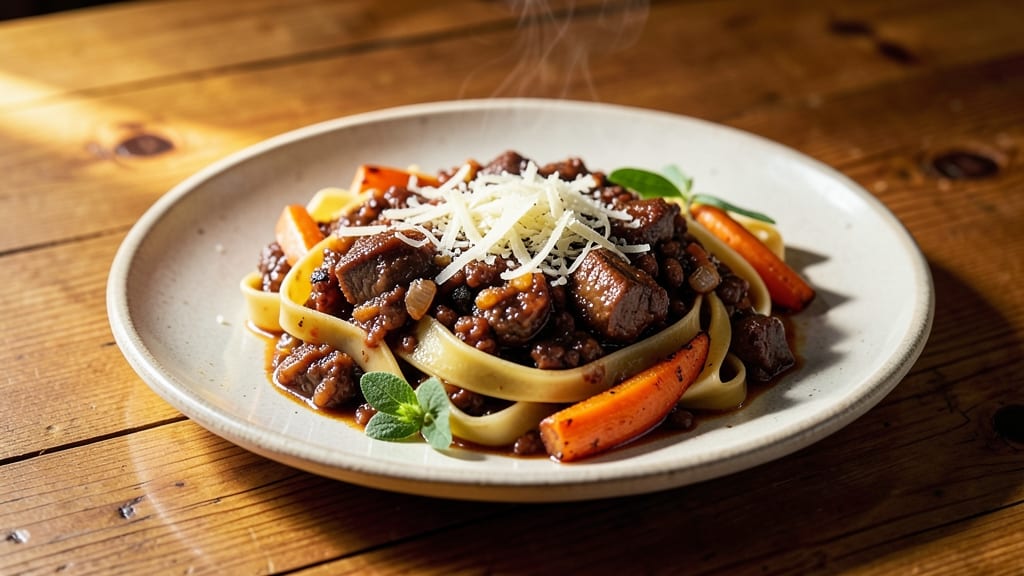
Jamie Oliver's pappardelle with beef ragu transforms weeknight dinners into Italian trattoria experiences with wine-infused richness that builds in layers. The secret lies in slow-browning beef chunks until deeply caramelized—this step alone unlocks flavors that store-bought sauces can't match.
I perfected this technique after years of testing, and the difference is night-and-day: tender beef, velvety sauce, and pasta that clings to every strand.
What makes this recipe work is the balance of simplicity and precision—no fancy equipment, just a heavy pot for the ragu and a large one for the pasta. The wine reduces into a concentrated depth, while the beef simmers until it practically melts off the bone.
Even my most skeptical dinner guests have asked for seconds, and that's saying something coming from someone who grew up in a kitchen where "seconds" was code for "make more."
By the time you serve this dish, your kitchen will smell like a Tuscan countryside, and every bite will deliver that perfect harmony of meaty richness and al dente pasta. The sauce clings to the wide pappardelle ribbons, creating a mouthful of comfort that's impossible to resist.
This is the kind of meal that makes you want to cook every night—because nothing beats homemade.
Pair it with garlic bread to soak up every last drop of that velvety sauce, or serve with a simple arugula salad for brightness. The leftovers reheat beautifully, making this an ideal recipe for meal prep when you want to feel like you've earned your dinner.
Let's get cooking—your taste buds will thank you.
Ingredients for jamie oliver's pappardelle with beef ragu
Pantry staples meet Tuscan magic with these simple ingredients for rich, wine-infused beef ragu.
| Ingredient | Amount | Notes |
|---|---|---|
| Chuck Roast Beef 🥩 | 2 lb | Cubed into 1.5-inch pieces |
| Pappardelle Pasta 🍝 | 12 oz | Wide ribbon pasta, uncooked |
| Red Wine 🍷 | 1 cup | Bold dry red, like Chianti |
| Beef Broth 🥄 | 2 cups | Low-sodium preferred |
| Tomato Paste 🍅 | ¼ cup | Smooth, not chunky |
| Carrots 🧅 | 1 whole | Diced into small pieces |
| Celery Sticks 🌿 | 2 whole | Diced into small pieces |
| Onion 🧅 | 1 whole | Finely chopped |
| Garlic Cloves 🧄 | 4 cloves | Minced finely |
| Olive Oil 🫒 | ½ cup | Extra-virgin for richness |
| Dried Thyme 🌿 | 1 tsp | Crushed between fingers |
| Salt 🧂 | 1 ½ tsp | Kosher or sea salt |
| Black Pepper 🌶️ | ½ tsp | Freshly ground |
| Parmesan Cheese 🧀 | ½ cup | Freshly grated, for serving |
| Fresh Parsley 🌿 | ¼ cup | Chopped, for garnish |
The beef is everything here. Chuck roast gives you that melt-in-your-mouth texture—sirloin or flank steak won't brown as well. Buy it pre-cubed from Costco or your butcher, but if you're doing it yourself, look for good marbling. I always grab mine from Whole Foods when I want that restaurant-quality depth. The pasta? Wide ribbon pappardelle is a must—it clings to the sauce perfectly, unlike spaghetti. If you can't find it, fettuccine works, but it won't be the same.
No red wine? Beef broth with a splash of balsamic vinegar gets you close, but honestly, dry red wine is non-negotiable for that authentic Tuscan flavor. The tomato paste can be San Marzano if you want to splurge, but regular jarred works fine if you're on a budget. Fresh thyme is ideal, but dried at half the amount is a solid swap. And if you're short on time, pre-diced carrots and celery from the salad bar save minutes of chopping. The garlic can be minced or pressed—just don't skip it!
This sauce tastes even better the next day. Store in an airtight container in the fridge for up to 5 days, or freeze portions for 3 months. I always make extra because it reheats beautifully—just add a splash of water or broth to loosen it up. The pasta? Cook it al dente—it'll finish cooking in the sauce. Garnish with fresh parsley and Parmesan right before serving, because nothing ruins a meal like sad, wilted herbs.
Why You'll Love This Recipe
- One-Pot Magic: This dish practically cooks itself—chuck roast slow-braises in wine and broth while you chop veggies (if you even bother). The rich, deep flavors develop hands-off, leaving you with minimal cleanup and maximum satisfaction.
- Wine-Infused Richness: That red wine isn’t just for show—it tenderizes the beef and adds a velvety depth you won’t find in store-bought ragu. Pair it with pappardelle, and the wide noodles soak up every last drop of that luscious sauce.
- Leftovers That Beg for More: The ragu tastes better the next day, honestly. I’ve reheated portions for lunch with crusty bread, frozen it for busy nights, and even used it in pasta bakes. It’s the kind of meal that rewards your effort twice.
- Budget-Friendly Feast: Chuck roast is affordable, and this recipe stretches it across multiple servings without sacrificing flavor. Between us, I’ve fed four people for under $15—and they didn’t even notice I used the cheaper red wine. (Shh.)
Step-by-step instructions for jamie Oliver's pappardelle with beef ragu
Here's how to create a rich, wine-infused beef ragu that clings perfectly to wide pappardelle ribbons.
Sear the Chuck Roast Beef for Deep Flavor
Heat the 0.5 cup olive oil in a large Dutch oven over medium-high heat until shimmering. Add the 2 lb chuck roast beef in batches, letting each piece develop a deep brown crust before removing to a plate. This searing step creates the foundation for your ragu's rich flavor.
Work in batches if needed to avoid crowding the pan—you want those beef cubes to sizzle and caramelize rather than steam. Once all the beef is browned and removed, you'll have a beautifully browned Dutch oven ready for the next ingredients. The beef will continue cooking gently in the sauce later, so don't worry about fully cooking it now.
Build the Aromatic Base with Vegetables and Herbs
In the same Dutch oven, add 0.5 cup olive oil if needed, then stir in the 1 whole onion, 2 whole celery sticks, and 1 whole carrots, all diced into small pieces. Cook for 5-6 minutes until the vegetables soften and begin to caramelize slightly.
Add the 4 cloves garlic cloves and 1 tsp dried thyme, stirring for 30 seconds until fragrant. Here's where it gets good—pour in the 1 cup red wine and scrape up all those browned bits from the bottom of the pan. Let it simmer for 3-4 minutes until reduced by half. This wine reduction forms the backbone of your ragu's rich, complex flavor.
Simmer the Ragu Until Tender and Rich
Return all the browned beef to the Dutch oven. Stir in the 0.25 cup tomato paste, 2 cups beef broth, 1.5 tsp salt, and 0.5 tsp black pepper. Bring to a gentle simmer, then reduce heat to low and cover partially. Let it cook for 2 hours until the beef is fork-tender and the sauce has thickened beautifully.
I know two hours feels long, but this slow cooking transforms tough chuck roast into melt-in-your-mouth beef. Stir occasionally and add a splash of water if the sauce gets too thick. The ragu should coat the back of a spoon with a velvety texture. If you're short on time, you can pressure cook it for 45 minutes instead, but the flavor won't be quite as developed.
Cook the Pappardelle and Combine
While the ragu simmers, cook the 12 oz pappardelle pasta in salted boiling water according to package instructions until al dente. Reserve 1 cup of pasta water before draining. Here's the thing—pappardelle is wide and absorbs sauce differently than spaghetti, so we need to handle it carefully.
Add the drained pasta to the Dutch oven with the ragu. Toss gently to coat, adding reserved pasta water 1 tablespoon at a time until the sauce clings beautifully to each ribbon. The wide surface of pappardelle makes it perfect for holding onto rich sauces like this. If the sauce seems too thick, add more pasta water to reach your desired consistency.
Finish and Serve with Fresh Garnishes
Let the pappardelle sit in the ragu for 2-3 minutes off the heat, allowing the flavors to meld completely. Divide among plates and top each serving with 0.5 cup parmesan cheese and 0.25 cup fresh parsley. The parsley adds a bright contrast to the rich ragu, while the parmesan brings a salty, umami finish that ties everything together.
Serve immediately with a glass of the same red wine you used in the recipe. The wine's acidity cuts through the richness, creating a perfect balance. Each bite should deliver tender beef, silky sauce, and al dente pasta in perfect harmony. This dish tastes even better the next day, so make extra if you can—it reheats beautifully with a splash of water or broth.
Pro Tips For Making Jamie Oliver'S Pappardelle With Beef Ragu
- Brown the Beef Properly: Chuck roast needs a deep, dark crust—don’t skimp on the searing. Cut it into chunks first, then work in batches over high heat with just a drizzle of oil (about 2 tablespoons total). I used to rush this, and the ragu always tasted flat until I committed to letting those chunks sizzle for 3-4 minutes per side until they’re nearly black in spots.
- Deglaze with Patience: After browning, don’t pour in the wine too fast—it’ll just slide off. Let the pan cool slightly (30 seconds), then add the wine ¼ cup at a time, scraping up every last bit of fond with a wooden spoon. That’s where the flavor hides, and skipping it means a duller sauce.
- Simmer Low and Long: The ragu needs 2-3 hours on low heat, not a quick 30-minute simmer. I learned this after burning the tomato paste the first time—keep it at a bare simmer, stirring occasionally, so the liquid reduces smoothly without sticking. Cover loosely with foil if it gets too dry midway.
- Salt the Pasta Water Hard: Pappardelle is wide and flat, so it needs a properly seasoned bath. Use the full 2 tablespoons of salt in 4 quarts of water (yes, even if your pasta says otherwise). Under-salted water makes the dish taste bland, and you’ll regret it after all that ragu effort.
Common mistakes when making this dish
Skipping the Sear
This is the #1 mistake I see—skipping the sear or rushing it. That deep brown crust on the beef is where all the flavor lives, thanks to the Maillard reaction.
If you skip it or crowd the pan too much, you'll end up with beef that steams instead of caramelizes, leaving your ragu tasting bland.
I've learned this the hard way—once, I rushed and ended up with beef that looked grayish and tasted like it needed more seasoning. Take your time and work in batches if needed. 🔥
Using the Wrong Cut
Not all beef is created equal for ragu. Chuck roast is your best bet because of its marbling and connective tissue, which break down beautifully during slow cooking. I've tried using sirloin or flank steak before, and while they're leaner, they don't brown as well and can turn tough.
If you're set on a different cut, look for something with good marbling, like short ribs, but be prepared for a longer cook time. Your butcher can help you pick the right piece.
Ignoring the Wine Reduction
The wine isn't just there for flavor—it's crucial for building depth. If you pour it in and don't let it reduce by half, you'll dilute the sauce instead of concentrating its richness. I once made this mistake and ended up with a watery ragu that needed constant stirring to thicken.
Let that wine bubble away until it's reduced by half—this step is non-negotiable for that authentic Tuscan taste. 🍷
Overcooking the Pasta
Pappardelle is wide and absorbs sauce differently than spaghetti, so it needs to be al dente when it hits the sauce. If you overcook it, it'll turn mushy and soak up too much of the ragu, leaving you with dry pasta and a thin sauce.
I learned this when I first tried this recipe—I cooked the pasta an extra minute "just to be sure," and it ruined the texture. Cook it to al dente (about 1 minute less than package instructions) and finish it in the sauce.
Not Reserving Pasta Water
This is a game-changer for combining pasta and sauce. The starch in pasta water acts like a glue, helping the sauce cling to the wide ribbons of pappardelle. I once forgot to reserve any and ended up with pasta that looked dry and sauce that slid right off.
Always reserve 1 cup of pasta water before draining—it's the secret to that perfect, saucy bite. Add it 1 tablespoon at a time until the sauce coats the pasta beautifully.
Rushing the Simmer
Two hours might feel like forever, but this slow cook is what transforms tough beef into melt-in-your-mouth perfection. If you rush it, the beef will be chewy and the sauce won't develop its rich, velvety texture. I know life gets busy, but trust me—this is where the magic happens.
If you're short on time, a pressure cooker can cut it down to 45 minutes, but the flavor won't be as deep. Patience pays off here, and your taste buds will thank you. ⏳
Nutrition facts
Frequently asked questions
Can I substitute chuck roast with another cut of beef?
While chuck roast is ideal for its marbling and connective tissue, you can use short ribs (add 30 extra minutes to cooking time) or brisket (cut against the grain). Avoid lean cuts like sirloin—they won't develop the same rich texture. If using short ribs, trim excess fat first for cleaner results.
What if I don't have pappardelle?
Use fettuccine or tagliatelle as substitutes—they'll work, though the wider ribbons of pappardelle hold sauce better. For a closer match, try pappardelle-shaped pasta from specialty stores. If nothing else, linguine will still deliver great flavor, just with slightly less sauce cling.
How can I make this dish faster?
Use a pressure cooker to reduce simmering time to 45 minutes instead of 2 hours. For the sear, cut beef into smaller pieces (1-inch cubes) and work in batches. Pre-chop all vegetables the night before and store them in the fridge. The wine reduction can also be done in 5 minutes on high heat if needed.
Can I make this recipe vegetarian?
Yes! Replace beef with mushrooms (cremini or portobello) or lentils for texture. Use vegetable broth instead of beef broth and add 1 tbsp soy sauce for umami depth. The wine reduction technique remains the same—it's what creates that rich base. For mushrooms, sauté them first to develop flavor before adding other ingredients.
Why does my ragu turn out watery?
This usually happens when the wine isn't reduced enough or too much broth is added. Always reduce the wine until it's half its original volume—this concentrates the flavors. If the sauce is still too thin after simmering, remove the lid and cook uncovered for 10-15 minutes to thicken it. Adding 1 tbsp cornstarch mixed with water can also help as a last resort.