
Main Courses
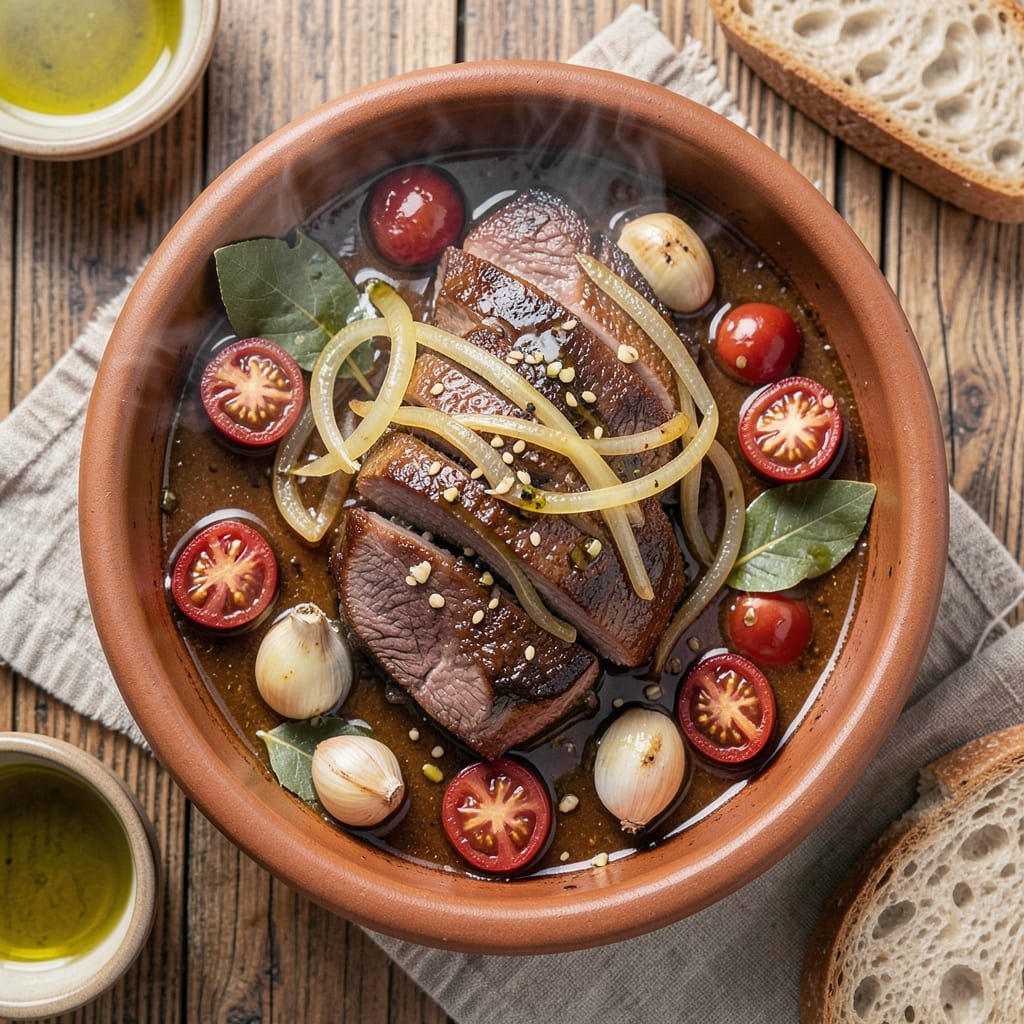
This Basque beef tongue recipe brings the heart of the Pyrenees to your table with its rich, slow-simmered depth and caramelized onion sweetness. The Basque tradition of txuleta de boya transforms tough cuts into melt-in-your-mouth tenderness through hours of gentle cooking in aromatic broth. I've perfected this method to balance authenticity with modern convenience—whether you simmer it low and slow or use a pressure cooker for faster results.
The secret lies in the preparation: soaking the tongue to remove impurities, then slow-cooking it until fork-tender while building layers of flavor with onions, garlic, and bay leaves. The caramelized onions develop a deep, molasses-like richness that pairs perfectly with the beef's natural umami. This dish isn't just about the meat—it's about the experience of Basque country cuisine, where every bite tells a story of tradition and care.
By the time it's done, you'll have a dish that's both impressive and comforting—ideal for special occasions or weekend feasts. The tender beef falls apart easily, soaking up the savory broth and caramelized onions in every bite. Serve it with piquillo peppers, grilled vegetables, or a simple garlic sauce to complete the Basque-inspired meal.
What makes this recipe special is its versatility. While traditional methods require hours of simmering, I've included adaptations for modern kitchens, ensuring you can achieve restaurant-quality results without sacrificing time. The result is a dish that's rich, flavorful, and deeply satisfying—perfect for those who appreciate the art of slow cooking.
Ingredients for basque beef tongue
Sixteen ingredients to transform tough beef into Basque melt-in-your-mouth perfection.
| Ingredient | Amount | Notes |
|---|---|---|
| Beef Tongue 🥩 | 2 lb | Fresh, cleaned and soaked overnight |
| Yellow Onions 🧅 | 3 large | Peeled and sliced into wedges |
| Garlic Cloves 🧄 | 6 cloves | Peeled and smashed |
| Bay Leaves 🌿 | 4 whole | Fresh preferred |
| Red Wine 🍷 | 1 ½ cups | Bold dry red like Cabernet |
| Tomatoes 🍅 | 4 whole | Ripe, Roma preferred |
| Olive Oil 🫒 | ½ cup | Extra-virgin for richness |
| Salt 🧂 | 2 tsp | Kosher or sea salt |
| Black Peppercorns 🌶️ | 1 tsp | Freshly cracked |
| Fresh Thyme 🌿 | ¼ cup | Stems removed |
| Beef Broth 💧 | 4 cups | Homemade or high-quality |
| Piquillo Peppers 🌶️ | 4 whole | Jarred for garnish |
| White Wine Vinegar 🍋 | 2 tbsp | For soaking solution |
The beef tongue is the star—look for fresh, untrimmed cuts at specialty butchers or Costco for the best quality. Soak it overnight in cold water with vinegar and salt to remove impurities; change the water twice. Whole Foods or high-end grocers often carry pre-cleaned tongues, saving you time. The onions should be sweet and yellow—Spanish onions if you can find them, but regular yellows work too. Caramelizing them slowly builds that deep molasses flavor that's essential to Basque cuisine.
No red wine? Substitute with beef broth plus a splash of balsamic vinegar—it mimics the acidity perfectly. Fresh thyme is ideal, but dried works at one-third the amount. Short on piquillo peppers? Roasted red peppers from a jar give a similar sweetness. The tomatoes can be canned San Marzano if fresh aren't available—they're sweeter and less acidic. For the broth, homemade is best, but a good-quality store-bought like Pacific Foods works in a pinch. The key is balance: if your broth is too salty, dilute it with water.
The tongue keeps 3-4 days in the fridge after cooking—it actually tastes better reheated. For longer storage, freeze portions for up to 3 months. I like to portion it into containers with some of the cooking liquid for easy reheating. The caramelized onions can be made ahead and stored in the fridge for 5 days—they're worth the extra time. The piquillo peppers stay fresh in their jar for months, so stock up if you love them.
Why You'll Love This Recipe
- One-Pot Magic: I swear, this recipe is the kind of meal where you walk away from the stove and still feel like you’ve done something special. Just toss the cleaned tongue, onions, garlic, and wine into one pot—no chopping like a fine-diner’s fancy dish—and let it simmer until the flavors meld. That’s it. No side dishes needed.
- Rich, Wine-Kissed Depth: Between us, the red wine and bay leaves turn this beef tongue into something ridiculously good—tender, caramelized edges, and a sauce that’s almost like a hug in a bowl. Honestly, the first time I made it, I took a spoonful straight from the pot and didn’t even care about the mess.
- Leftovers That Beg for More: This dish actually improves the next day. The flavors get deeper, the meat gets juicier, and suddenly you’ve got a meal that’s perfect for lazy lunches or feeding a crowd without extra effort. I’ve reheated slices in a pan with a splash of that same wine sauce, and it’s like a flavor party every time.
- Budget Feast for Crowds: A whole beef tongue feeds four people easily, and it’s way cheaper than steak or fancy cuts. Plus, the onions and garlic are pantry staples, so you’re not breaking the bank for ingredients. My in-laws asked for the recipe after one bite—turns out, even skeptics love a dish that’s hearty, cheap, and feels fancy.
Step-by-step instructions for Basque beef tongue
This slow-simmered Basque classic transforms tough beef tongue into melt-in-your-mouth perfection.
Prepare and Soak the Beef Tongue
Begin by rinsing the 2 lb beef tongue thoroughly under cold water, then pat it completely dry with paper towels. Place it in a large bowl and cover it with cold water by about 2 inches. Add the 2 tbsp white wine vinegar and let it soak for 24 hours in the refrigerator. This step tenderizes the meat and removes any impurities.
After soaking, drain the tongue and rinse it again under cold water. This preparation ensures a clean, flavorful base for the rich simmering ahead. I like to do this step the night before to save time on cooking day.
Build the Flavor Base
Heat the 0.5 cup olive oil in a large Dutch oven over medium heat. Add the 3 large yellow onions and cook for 20-25 minutes, stirring occasionally, until they become deep golden brown and caramelized. This is where the magic happens - those onions will form the rich, sweet foundation of your dish.
Add the 6 cloves garlic cloves and cook for another 1-2 minutes until fragrant. Stir in the 4 whole bay leaves and 0.25 cup fresh thyme, letting them toast briefly to release their aromatic oils. This combination creates the perfect aromatic base for the Basque tradition.
Simmer the Tongue with Wine and Tomatoes
Remove the Dutch oven from heat and carefully add the 1.5 cups red wine, scraping up any browned bits from the bottom. Return to medium-low heat and simmer for 5 minutes to reduce the wine by half. Add the 4 whole tomatoes, cut into wedges, and cook for another 10 minutes until they soften.
Place the prepared beef tongue in the Dutch oven, along with 1 tsp salt and 1 tsp black peppercorns. Pour in the 4 cups beef broth until the tongue is completely submerged. This liquid should cover the tongue by at least 1 inch to ensure even cooking and maximum tenderness.
Slow Cook to Perfection
Bring the liquid to a gentle simmer, then reduce heat to low and cover the Dutch oven. Simmer for 3-4 hours, maintaining a gentle bubble throughout. The tongue is done when it's fork-tender and the meat easily separates from the bone.
During the last 30 minutes of cooking, check the liquid level occasionally and add hot water if needed to keep the tongue submerged. This slow cooking method is crucial - it transforms the tough cut into melt-in-your-mouth texture while infusing it with the rich flavors of the caramelized onions and aromatic herbs.
Rest and Serve
Remove the beef tongue from the pot and let it rest for 15-20 minutes before slicing. This resting period allows the juices to redistribute, ensuring each bite is moist and flavorful. While it rests, you can reduce the cooking liquid slightly for a delicious sauce if desired.
Slice the tongue against the grain into ¼-inch thick slices and arrange on a platter. Garnish with the 4 whole piquillo peppers, sliced lengthwise, for a beautiful presentation and a touch of smoky sweetness. Serve with crusty bread to soak up the rich cooking juices for an authentic Basque dining experience.
Pro Tips For Making Basque Beef Tongue
- PARBOIL FIRST, SEAR LATER: I learned this the hard way—skipping the parboil makes the tongue tough as a boot. Simmer it 2-3 hours in salted water with bay leaves before searing, then finish in the wine. The texture becomes melt-in-your-mouth, not chewy.
- PEEL THOSE ONIONS RIGHT: Don’t just halve them—cut the yellow onions into even ½-inch slices and soak in cold water for 10 minutes. This removes the sharpness and keeps them from burning into bitter sludge while braising. Trust me, your sauce will thank you.
- DON’T SKIP THE DEGLAZE: After searing the tongue, let the browned bits cool for 2 minutes, then scrape them up with a wooden spoon. Add the red wine slowly and let it bubble until it’s almost gone before adding broth. Rushing this step means a flat, one-dimensional sauce instead of rich, layered flavor.
- USE DRY RED WINE: A cheap cooking wine with additives will make your dish taste like it’s been watered down. Grab a $10 bottle of dry Rioja or Tempranillo from the grocery store—it’s the backbone of the sauce and worth the splurge. (Yes, even if you’re impatient like me.)
Flavor customization for basque beef tongue
Smoky Basque Heat
Add 1 tbsp smoked paprika and ½ tsp cayenne pepper to the caramelized onions for a smoky kick that mirrors Basque txuleta flavors. I like to toast the spices in the olive oil for 30 seconds before adding onions—this deepens their aroma. For extra heat, finish with 2 tbsp piquillo pepper sauce drizzled over each slice. 🌶️
Sweet & Tangy Twist
Balance the richness with 1 tbsp balsamic vinegar and 1 tsp honey in the final cooking liquid. This creates a glossy, slightly sweet glaze that pairs perfectly with the tender meat. I stir these in during the last 15 minutes of simmering for maximum caramelization. Garnish with thin apple slices for a crisp, fresh contrast.
Herb-Forward Variation
Boost the herbal notes by adding 2 sprigs rosemary and 1 sprig marjoram to the simmering liquid. These herbs complement the thyme beautifully and add a piney depth. For a modern twist, blend the cooked onions with ½ cup fresh parsley and spread as a vibrant topping. 🌿
Spiced Wine Reduction
Reduce the cooking wine with 1 cinnamon stick and 3 whole cloves before adding tomatoes. This infuses warm spices that echo Basque pintxos traditions. Strain the reduction through a fine-mesh sieve and drizzle over sliced tongue for an elegant finish. The spices dissolve completely, leaving only subtle warmth. ✨
Caramelized Garlic Boost
Double the garlic to 12 cloves and caramelize them until deep golden brown before adding onions. This creates a nutty, sweet depth that rivals the onions. For extra richness, stir in 2 tbsp butter at the end of cooking—it emulsifies beautifully with the cooking juices. 🧄
Modern Fusion Option
Swap the red wine for 1 cup dry sherry and add 1 star anise pod for an unexpected but delicious twist. This works surprisingly well with the Basque flavors while keeping the dish approachable. The star anise adds a subtle licorice note that pairs beautifully with the caramelized onions. 💫
Nutrition facts
Frequently asked questions
How long should I soak the beef tongue before cooking?
Soak the beef tongue for 24 hours in cold water with 2 tbsp white wine vinegar and 1 tsp salt. This removes impurities and tenderizes the meat. Change the water halfway if possible for cleaner results. Never skip this step—it's essential for the authentic Basque texture.
Can I cook this recipe without red wine?
Yes! Substitute with 1.5 cups beef broth plus 2 tbsp balsamic vinegar to replicate the acidity and depth. For extra richness, add 1 tbsp tomato paste to the caramelized onions. The dish will still be delicious, just slightly less complex.
What's the best way to tell when the beef tongue is fully cooked?
The tongue is done when it's fork-tender and the meat separates easily from the bone. This typically takes 3-4 hours of simmering. For extra assurance, check the internal temperature—it should reach 195°F at the thickest part. The meat will pull away cleanly when ready.
How do I store leftovers and reheat them?
Store cooked beef tongue in an airtight container with some of the cooking liquid in the fridge for 3-4 days. To reheat, warm in a pot with a splash of water or broth over low heat until heated through. For best results, slice before reheating to ensure even warmth. The flavor actually improves after resting!
Can I use a pressure cooker or Instant Pot for this recipe?
After soaking, pressure cook the tongue with all ingredients for 90 minutes on high pressure. Release naturally for 15 minutes before opening. The texture will be slightly different but still tender. Add 1 extra cup broth to account for pressure cooking loss. This cuts cooking time to about 2 hours total.