
Main Courses
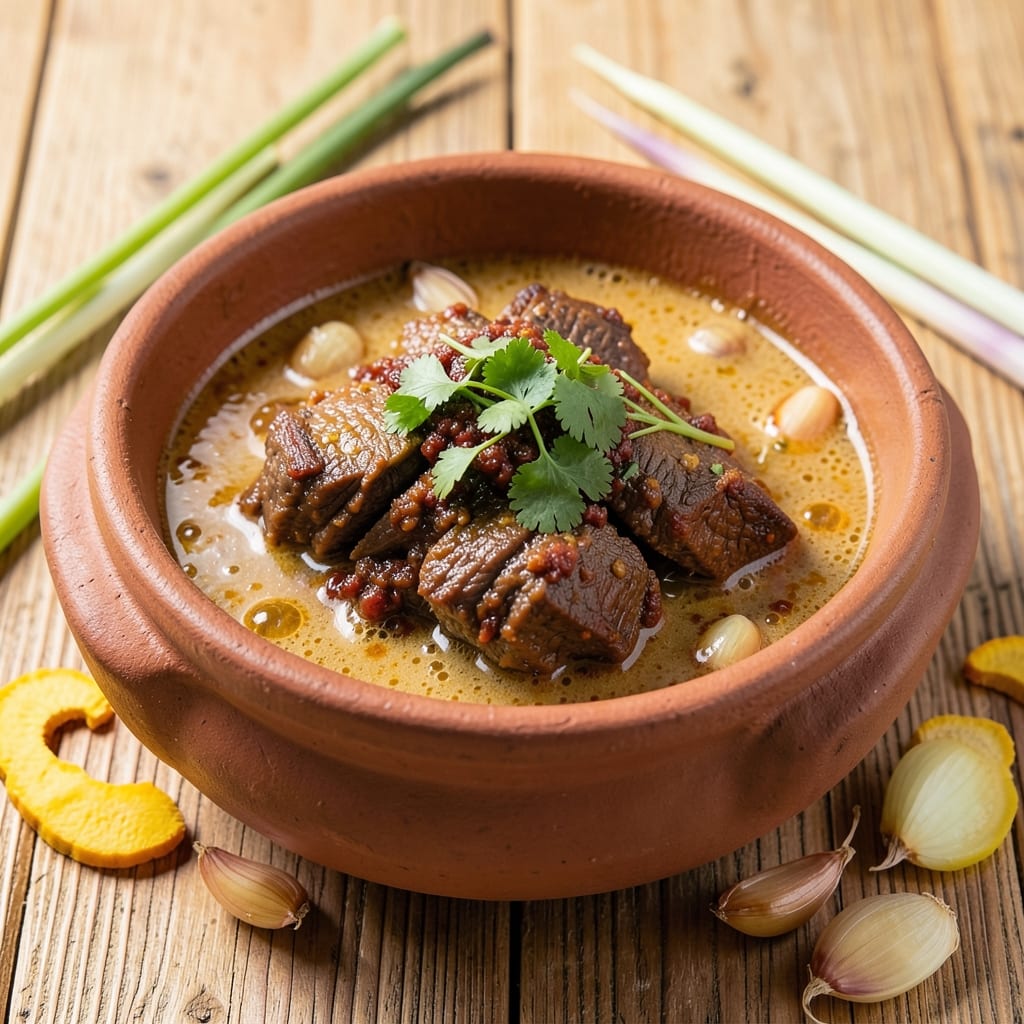
This authentic beef rendang recipe brings the rich, aromatic flavors of Indonesia to your kitchen with a slow-simmered masterpiece. 🌟 The secret lies in the intricate spice paste—turmeric, lemongrass, and galangal—blended into a fragrant paste that transforms tough beef into tender, caramelized perfection. What makes this dish truly special is its long braising process, where coconut milk reduces into a thick, velvety sauce that clings to every bite.
The beauty of rendang is in its complexity—layers of spice and coconut meld together over hours, creating a dish that’s both deeply flavorful and subtly balanced. Unlike quick-cooked meals, this recipe rewards patience with a depth of flavor you won’t find anywhere else. The slow simmer not only tenderizes the beef but also develops a caramelized crust that adds texture and richness.
By the time you’re done, you’ll have a dish that’s as impressive as it is delicious—golden-brown beef bathed in a fragrant, slightly sweet coconut sauce. The aroma alone will have everyone gathering around the table, and the first bite will transport you straight to Indonesia. This is the kind of meal that turns ordinary weeknights into a celebration.
Perfect for special occasions or when you want to impress, rendang is also incredibly versatile. Serve it with steamed jasmine rice to soak up every last drop of that rich sauce, or pair it with crusty bread for a heartier meal. The flavors only get better as it sits, making it ideal for meal prep or entertaining.
Ingredients for authentic beef rendang
Six aromatic spices, tender beef, and hours of slow simmering—this rendang delivers restaurant-quality depth.
| Ingredient | Amount | Notes |
|---|---|---|
| Beef Chuck Roast 🥩 | 3 lb | Cut into 2-inch chunks |
| Coconut Milk 🥥 | 2 cans | Full-fat, 13.5 oz each |
| Fresh Turmeric 🌿 | 1 piece | About 3 inches long |
| Galangal 🌿 | 1 piece | About 3 inches long |
| Lemongrass 🌿 | 4 stalks | White parts only, chopped |
| Shallots 🧅 | 8 whole | Peeled, roughly chopped |
| Garlic Cloves 🧄 | 8 cloves | Peeled, minced |
| Fresh Ginger 🌿 | 1 piece | About 2 inches, peeled |
| Kaffir Lime Leaves 🌿 | 4 leaves | Torn into strips |
| Ground Coriander 🌶️ | 2 tbsp | Freshly ground preferred |
| Ground Cumin 🌶️ | 1 tbsp | Toasted for depth |
| Ground Turmeric 🌶️ | 1 tbsp | Bright orange color |
| Salt 🧂 | 1 ½ tbsp | Kosher or sea salt |
| Brown Sugar 🍚 | ½ cup | Light or dark |
| Jasmine Rice 🍚 | 2 cups | Uncooked, for serving |
The galangal and turmeric are non-negotiable for that authentic Indonesian flavor. Asian markets carry fresh galangal—look for firm, knobby roots with vibrant color. If you can't find it, ginger is a decent substitute, but it won't be the same. The beef should have good marbling—chuck roast is ideal, but brisket works too. Coconut milk matters: full-fat only—the lighter versions won't give you that rich, velvety sauce. I always grab Thai Kitchen or Aroy-D brand from the international aisle at Whole Foods or Trader Joe's.
No galangal? Double the ginger—it's the closest you'll get, though the flavor will be more citrusy. Running low on kaffir lime leaves? Lemon zest plus a splash of lime juice adds brightness. The brown sugar caramelizes beautifully during the long cook, but white sugar works too if that's what you've got. For the spice paste, toast your whole spices in a dry pan for 30 seconds first—this deepens their flavor. And if you're short on time, pre-made rendang paste from the Asian section cuts prep time in half (just add extra coconut milk).
This rendang tastes even better the next day—plan ahead. Store leftovers in an airtight container in the fridge for up to 5 days, or freeze for 3 months. The sauce thickens as it cools, so add a splash of water or coconut milk when reheating. Serve with steamed jasmine rice to soak up every last bit of that fragrant sauce. The aroma alone will have your whole house gathering around the table.
Why You'll Love This Recipe
- One-Pot Magic: I swear by this—just sear the beef, toss in the paste (turmeric, galangal, lemongrass), then let the coconut milk work its slow, creamy spell. No extra pans, no fuss. The only cleanup is wiping down one pot.
- Deep Umami Bomb: That beef chuck? It melts into the sauce until it’s ridiculously tender, while the galangal and lemongrass add a bright, earthy punch. Honestly, the first bite makes me close my eyes—it’s that good.
- Leftovers That Shine: Make a double batch, and you’ve got flavor-packed lunches for days. The sauce thickens beautifully when reheated, and it tastes even better the next day. (Yes, even my picky teenage nephew asks for seconds.)
- Budget-Friendly Luxury: Beef chuck is affordable, and the spices stretch far—no wasted ingredients here. Plus, the slow cooking makes it feel special without breaking the bank. My go-to for date nights or lazy Sundays.
Step-by-step instructions for authentic beef rendang
Here's how to build rich, aromatic layers that define this Indonesian masterpiece.
🔥 Step 1: Sear the Beef for Deep Flavor
Heat a large Dutch oven over medium-high heat until hot. Add the 3 lb Beef Chuck Roast cut into 2-inch chunks in a single layer, working in batches if needed. Let them sear undisturbed for 3-4 minutes per side until deep golden brown with crisp edges. This step creates the Maillard reaction that forms the foundation of rendang's complex flavor.
Real talk: Don't rush this. You'll know it's ready when the beef releases easily from the pan and has developed a caramelized crust. Transfer the seared beef to a plate and set aside. You'll use the flavorful browned bits (fond) later in the cooking process.
👨🍳 Step 2: Toast the Aromatic Spices and Herbs
In the same Dutch oven, add 8 whole shallots and cook over medium heat for 5-6 minutes until softened and lightly browned. Add 8 cloves garlic, 1 piece galangal (sliced), 1 piece fresh ginger (sliced), 4 stalks lemongrass (white parts chopped), and 4 leaves kaffir lime leaves (torn). Cook for another 2-3 minutes until fragrant and the aromatics begin to soften.
Here's the thing—these aromatics are what make rendang truly authentic. The galangal and kaffir lime leaves add that distinctive citrusy, peppery note that sets it apart from other coconut-based dishes. Don't skip toasting them—they need to release their essential oils for maximum flavor.
🍳 Step 3: Build the Spice Paste Foundation
Add 2 tbsp ground coriander, 1 tbsp ground cumin, 1 tbsp ground turmeric, 1.5 tbsp salt, and 0.5 cup brown sugar to the pot. Stir continuously for 2-3 minutes until the spices are fragrant and the sugar begins to caramelize slightly. This is where the magic happens—the spices should smell warm, earthy, and slightly sweet.
Pour in 1 can of coconut milk and stir well to combine with the spices. Let this mixture simmer gently for 5 minutes until slightly thickened. This creates the base for your rendang sauce—smooth, aromatic, and packed with flavor. The coconut milk should be fully incorporated with the spices, creating a velvety paste.
🥘 Step 4: Slow-Simmer the Beef in Coconut Milk
Return the seared beef to the pot along with any accumulated juices. Add the remaining 1 can of coconut milk and bring the mixture to a gentle simmer. Here's the crucial part: cover the pot and reduce heat to low. Let it simmer uncovered for 2.5-3 hours, stirring occasionally to prevent burning at the bottom.
You'll notice the sauce will gradually reduce and thicken as it simmers. The beef should become fork-tender and the sauce should develop a rich, caramelized color. This slow cooking process is what makes rendang so special—it allows all the flavors to meld together beautifully. If the sauce gets too thick, add a splash of water to maintain the right consistency.
⏰ Step 5: Reduce and Finish to Perfection
Once the beef is tender and the sauce has thickened significantly, increase the heat to medium and let the sauce reduce further for another 30-45 minutes. The sauce should coat the back of a spoon and have a glossy, caramelized appearance. This final reduction step concentrates all the flavors and gives rendang its signature thick, sticky consistency.
Remove the pot from heat and let it cool slightly. The beef should be falling off the bone tender, and the sauce should be rich, aromatic, and deeply flavorful. Serve the beef rendang hot over 2 cups jasmine rice, spooning the rich sauce generously over the top. The rice will soak up all that beautiful coconut-spice goodness, making every bite delicious.
Pro Tips For Making Authentic Beef Rendang
- Sear the Beef First: High heat for 5-7 minutes on each side until deep brown—this isn’t just for looks. The Maillard reaction builds flavor that coconut milk alone can’t hide, and it keeps the beef from turning mushy later.
- Slice Galangal Thin: Use a sharp knife and cut against the grain—thin, even slices (about 1/8-inch) release their oils faster than thick chunks. If you grab the pre-packaged stuff, it’s usually already sliced, but fresh is worth the extra 2 minutes of prep.
- Simmer Slow and Low: After adding coconut milk, reduce heat to the lowest setting that keeps a gentle bubble—too high, and the sauce will curdle. I learned this the hard way when my first rendang ended up looking like a science experiment gone wrong.
- Toast the Spices: Bloom your turmeric, galangal, and lemongrass in oil for 2-3 minutes before adding coconut milk—this draws out their aromatics and prevents a bland, one-note flavor. Yes, it means waiting, but skipping this is like skipping the salt in a stew.
Essential equipment for great authentic beef rendang
Dutch Oven
The Dutch oven is your secret weapon for making authentic rendang. Its heavy construction ensures even heat distribution, which is crucial for the long, slow simmer that develops deep flavors. I recommend a 5-6 quart Lodge Dutch oven—it's affordable, durable, and retains heat beautifully. The tight-fitting lid helps trap steam, keeping the beef moist and the sauce rich. If you don't have one, a heavy-bottomed pot with a lid will work, but you might need to stir more frequently to prevent burning. 🔥
Immersion Circulator
For those who want to cut down on hands-on time, an immersion circulator like the Anova Nano or Breville Joule can help maintain precise temperatures during the long cooking process. Set it to 185°F for the slow simmer phase—this ensures the beef cooks gently without drying out. You'll still need to monitor the sauce reduction, but it takes the guesswork out of temperature control. Just be sure to use a pot that fits your circulator's probe securely.
Food Thermometer
A good instant-read food thermometer is non-negotiable for checking the internal temperature of your beef. Aim for 195-203°F—this ensures the meat is fork-tender without falling apart. I love the ThermoWorks Smoke because it's durable and gives accurate readings quickly. Insert the probe into the thickest part of the beef, avoiding any fat or bone. If the temperature isn't high enough, return the pot to low heat and let it cook longer, stirring occasionally to prevent sticking.
Mortar and Pestle
While pre-made rendang paste is convenient, making your own spice paste from scratch elevates the dish to restaurant-quality. A marble mortar and pestle is ideal for grinding the spices into a smooth paste. The cool marble helps regulate the heat, preventing the spices from burning. If you don’t have one, a food processor works in a pinch, but you’ll need to pulse carefully to avoid overheating. The paste should be smooth and fragrant—this is the heart of rendang’s flavor. 🌶️
Tongs and Slotted Spoon
Long-handled tongs and a slotted spoon are essential for handling the beef and stirring the sauce without disturbing the tender meat. The tongs help lift beef chunks out of the pot for serving, while the slotted spoon lets you skim off any excess fat or foam that rises to the surface during cooking. I prefer stainless steel tools—they’re durable and won’t react with the acidic coconut milk. Avoid wooden utensils, as they can absorb flavors and harbor bacteria over time.
Slow Cooker Option
If you're short on time or don’t want to monitor the stove, a slow cooker can be a lifesaver. Use a 6-quart model on the low setting for 6-8 hours or high setting for 4-5 hours. The key is to sear the beef in a separate pan first—this step is non-negotiable for flavor. After browning, transfer the beef and spices to the slow cooker, then add the coconut milk. Stir occasionally to prevent the sauce from sticking. The result will be tender beef with a slightly less caramelized sauce, but it’s still delicious and far more convenient. ⏰
Nutrition facts
Frequently asked questions
Why does authentic rendang need such a long cooking time?
The 4-5 hour slow simmer is essential for developing rendang's signature caramelized sauce and tender beef. The low-and-slow process allows the spices to fully infuse into the meat while the coconut milk reduces gradually, creating that thick, velvety texture. This method also breaks down collagen in the beef, making it fork-tender while developing deep, complex flavors that quick cooking can't achieve.
Can I make rendang without galangal?
Yes, but the flavor won't be identical. For the closest substitute, use double the ginger (about 2 inches) plus a pinch of black pepper. The ginger will add warmth but lacks galangal's citrusy, peppery depth. If you're using pre-made rendang paste, it typically already includes galangal, so you won't need to substitute. For authentic results, track down fresh galangal at an Asian market—it's worth the effort!
What's the best way to reheat leftover rendang?
Reheat gently in the same Dutch oven over low heat with a splash of water or coconut milk to prevent drying. Cover and simmer for 10-15 minutes, stirring occasionally. The sauce will thicken as it cools, so add liquid as needed. For microwave reheating, cover with a damp paper towel and heat in 30-second intervals until warmed through. Never reheat to a boil—this can make the sauce separate or the beef tough.
How do I know when the beef is perfectly tender?
The beef should easily shred with a fork and have a 195-203°F internal temperature. Press a piece gently—it should feel soft like mashed potatoes but still hold its shape. If it's not quite there, return to low heat for another 30 minutes. Overcooking can make it mushy, so check frequently during the final stages. The sauce should coat the back of a spoon and have a glossy, caramelized appearance.
Can I make rendang with chicken instead of beef?
While possible, chicken rendang won't have the same rich, meaty texture. If you prefer, use bone-in chicken thighs (they stay juicier than breasts) and reduce the cooking time to 2-2.5 hours. The chicken will be tender faster, but the sauce will be slightly thinner. For best results, marinate the chicken in half the spice paste for 1 hour before cooking. The dish will be lighter but still delicious—just not the same hearty experience.