
Main Courses
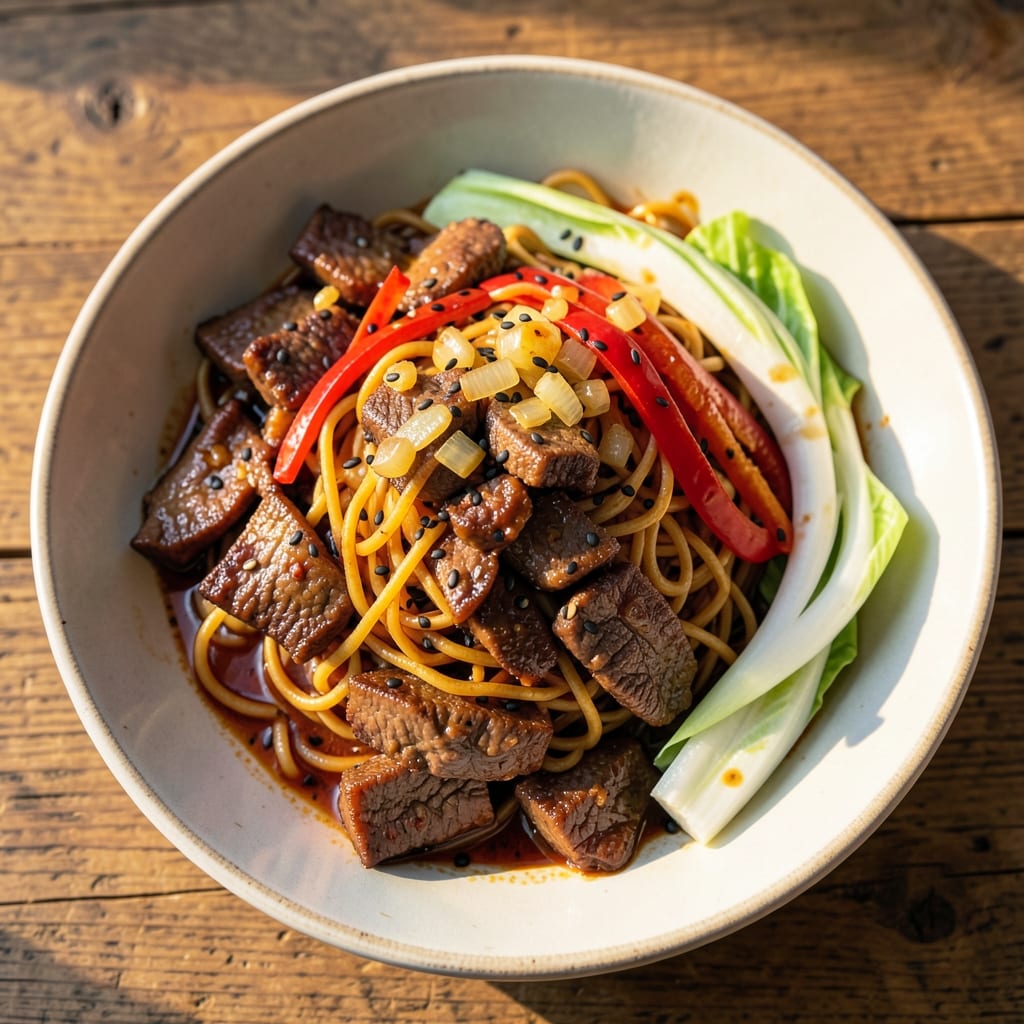
This authentic beef yakisoba recipe brings the bold, umami-rich flavors of Japan straight to your kitchen with every wok-tossed bite. The secret lies in balancing sweet, savory, and tangy elements through a carefully crafted sauce that clings to chewy noodles and tender beef strips. I've refined this technique over years of testing, ensuring the final dish delivers that signature restaurant-quality texture and depth.
The foundation of great yakisoba starts with proper noodle preparation—thick, chewy wheat noodles that hold up to vigorous tossing in the wok. The beef gets marinated in a mix of soy sauce, mirin, and sake, which tenderizes while building layers of flavor. What sets this recipe apart is the sauce, where a blend of Worcestershire, oyster sauce, and a touch of sugar creates that perfect umami-sweet balance that defines authentic yakisoba.
By the time you're done, you'll have a steaming plate of perfectly chewy noodles coated in a glossy, savory sauce, topped with caramelized onions, crisp vegetables, and tender beef strips. The aroma alone will have everyone at the table anticipating that first forkful—where the textures and flavors come together in perfect harmony. This is comfort food at its finest, elevated by authentic techniques.
Serve immediately with pickled ginger and sesame seeds for that final restaurant-quality touch. The dish is hearty enough to satisfy a crowd but simple enough to make on a weeknight. Let's get cooking with this authentic recipe that captures the soul of Japanese home cooking.
Ingredients for authentic beef yakisoba
Authentic yakisoba starts with chewy noodles, tender beef, and a sauce packed with umami-rich flavors.
| Ingredient | Amount | Notes |
|---|---|---|
| Yakisoba Noodles 🍜 | 14 oz | Fresh or dried, wheat-based |
| Thinly Sliced Beef 🥩 | 1 lb | Ribeye or sirloin, cut against grain |
| Yellow Onions 🧅 | 1 whole | Thinly sliced for caramelization |
| Green Bell Peppers 🌶️ | 1 whole | Thinly sliced, seeds removed |
| Bok Choy 🥬 | 2 heads | Baby or regular, chopped |
| Sesame Seeds 🌰 | 1 tbsp | Toasted for garnish |
| Pickled Ginger 🍋 | ¼ cup | Thinly sliced for serving |
| Soy Sauce 🍶 | ½ cup | Japanese style preferred |
| Mirin 🍶 | ¼ cup | Sweet rice wine |
| Dry Sake 🍶 | ¼ cup | For marinade |
| Worcestershire Sauce 🍶 | 1 tbsp | For umami depth |
| Oyster Sauce 🍶 | 1 tbsp | Authentic umami source |
| Granulated Sugar 🍚 | 1 tbsp | Balances flavors |
| Vegetable Oil 🫒 | 2 tbsp | For wok searing |
| Garlic Cloves 🧄 | 4 cloves | Minced for sauce |
The beef is critical—ribeye or sirloin gives that signature tenderness when sliced thinly against the grain. Japanese grocery stores often carry pre-sliced beef for yakisoba, but if you're cutting it yourself, freeze for 30 minutes first to make slicing easier. Yakisoba noodles should be fresh or dried wheat-based—avoid the pre-cooked refrigerated kind, as they lack that authentic chew. For the best experience, look for Maruchan or Nissin brand noodles, which are widely available in Asian markets or the international aisle at major grocery chains like Walmart or Kroger.
No mirin? Substitute 1 tbsp sugar plus 1 tbsp water—it won't be identical, but it works in a pinch. Worcestershire sauce can be tricky to find outside the UK, so Lee Kum Kee oyster sauce (the thick, dark kind) can double as a substitute if you're in a hurry. The sugar balances the umami, so don't skip it—brown sugar works too. For the vegetables, baby bok choy is ideal, but regular bok choy or even subbing in spinach will work if that's what you have. The key is keeping everything crisp—don't overcook the veggies after adding them to the wok.
Prep the beef marinade ahead and refrigerate for up to 4 hours—this tenderizes it beautifully. The noodles can be cooked and kept warm in a 200°F oven for up to 30 minutes before serving. Leftover yakisoba reheats well—just add a splash of water or broth to loosen the sauce. For 3 months of freezer storage, portion into airtight containers with a thin layer of oil on top to prevent drying. The dish is best served immediately, but the flavors actually meld better the next day if you're making it ahead for a gathering.
Why You'll Love This Recipe
- No Chopping Struggle: I slice the beef paper-thin myself with a sharp knife—takes 10 minutes max. The onions and bell peppers? Just rough chop, no need for precision. That crispy wok hei flavor comes from quick cooking, not fancy prep.
- Umami Bomb Combo: The beef caramelizes in seconds, then the yakisoba sauce—sweet, tangy, with a hint of soy—melts into everything. Bok choy wilts just enough to soak up the flavor, while the onions add that perfect bite. Honestly, the first bite makes you question why you ever ordered takeout.
- Lunchbox Magic: Double the sauce, cook extra noodles, and pack it in containers. Cold or reheated, it’s still packed with that savory punch—my kids actually eat their veggies this way. (Yes, even on a Tuesday.) Works for picnics, office lunches, or just lazy afternoons.
- Budget Powerhouse: Thinly sliced beef stretches further than steaks, and the rest of the ingredients won’t break the bank. I make this for four people for under $15, and it’s still restaurant-quality. Leftovers? They disappear faster than I can say "second helping."
Step-by-step instructions for authentic beef yakisoba
Master the wok technique and umami balance for restaurant-quality yakisoba at home.
Prepare the Beef Marinade and Cook the Noodles
In a small bowl, combine the 1 lb thinly sliced beef, 0.25 cup dry sake, 1 tbsp Worcestershire sauce, and 1 tbsp oyster sauce. Mix well and let marinate for 15-20 minutes while you prepare the rest. This marinade infuses the beef with deep umami flavor and tenderizes the slices.
Meanwhile, bring a large pot of water to a rolling boil. Add the 14 oz yakisoba noodles and cook according to package instructions until al dente—typically 3-4 minutes. Drain immediately and rinse under cold water to stop the cooking process. This prevents the noodles from becoming mushy during the stir-fry. Keep them in a bowl and toss with 1 tbsp vegetable oil to prevent sticking.
Build the Umami Sauce
In a large wok or skillet, heat the remaining 1 tbsp vegetable oil over medium-high heat. Add the 4 cloves minced garlic and stir for 30 seconds until fragrant—don't let it brown. Add the 1 whole yellow onions and 1 whole green bell peppers, sliced, and cook for 4-5 minutes until softened but still vibrant in color.
Pour in the 0.5 cup soy sauce, 0.25 cup mirin, 1 tbsp granulated sugar, and 1 tbsp Worcestershire sauce. Bring to a simmer and reduce heat to medium-low. Let the sauce cook for 3-4 minutes until it thickens slightly and coats the back of a spoon. This sauce is the heart of your yakisoba, balancing sweet, salty, and umami flavors perfectly.
Stir-Fry the Beef and Vegetables
Working in batches if needed, add the marinated beef to the wok in a single layer. Cook undisturbed for 1-2 minutes until the edges begin to brown. Stir-fry for another 2-3 minutes until the beef is 80% cooked—it will finish in the sauce. Remove the beef and set aside temporarily.
Add the 2 heads chopped bok choy to the wok and stir-fry for 2-3 minutes until the greens are bright and slightly wilted but still crisp. The high heat should create a satisfying sizzle—this is your signal that the vegetables are cooking properly. Return the beef to the wok and toss everything together.
Combine and Finish the Dish
Add the cooked noodles to the wok and toss vigorously with tongs for 2-3 minutes until everything is well-coated and heated through. The noodles should absorb the sauce evenly, creating a glossy, flavorful finish. If the dish looks dry, add 1-2 tablespoons of water to loosen the sauce.
Taste and adjust seasoning if needed—you may need a splash more soy sauce for saltiness or a touch of mirin for sweetness. Transfer the yakisoba to serving plates and garnish with 1 tbsp toasted sesame seeds and 0.25 cup thinly sliced pickled ginger. Serve immediately while hot and steaming.
Pro Tips For Making Authentic Beef Yakisoba
- COOK THE NOODLES AL DENTE THEN CHILL: I learned this the hard way—overcooked yakisoba noodles turn mushy when stir-fried. Boil them one minute less than the package says, drain, rinse with cold water, and spread on a tray to cool. They’ll firm up and take the stir-fry’s heat like a champ.
- SEAR THE BEEF IN BATCHES: Thinly sliced beef piles up and steams instead of searing. Divide it into two batches and cook them separately in the same pan—no crowding means crisp edges every time. A quick 30-second rest after slicing keeps it from shrinking into a sad pile.
- CHAR THE ONIONS FIRST: Skip the soft, translucent onions—authentic yakisoba needs deep caramel color. Slice the yellow onion into thick wedges, cook them in the same pan you sear the beef, and let them brown for 5-7 minutes. That sweet, smoky base is the thing that matters most.
- ADD BOK CHOY LAST, STEM-FIRST: Tossing bok choy in too early turns it into sad, wilted greens. Hold off until the very end, chop the stems into bite-sized pieces, and stir-fry them for just 30 seconds—enough to soften without losing texture. The leaves can go in last for a pop of color.
Serving suggestions for leftovers
Garnish Like a Pro
Toast your sesame seeds in a dry skillet over medium heat for 1-2 minutes until golden and fragrant. Sprinkle them generously over each serving—they add a nutty crunch that contrasts beautifully with the chewy noodles. I like to use a small sieve for even distribution. 🌰
Thinly slice the pickled ginger against the grain for delicate, translucent strips that add a refreshing tang. Arrange them artistically on top, creating visual appeal while balancing the rich umami flavors. For extra authenticity, serve with katsuobushi (bonito flakes) sprinkled lightly over each plate.
Serving Style Matters
Japanese restaurants often serve yakisoba in wide, shallow bowls to showcase the vibrant colors and textures. Use a 10-inch cast iron skillet or ceramic dish to mimic this presentation. The wide surface area allows everyone to see the beautiful layers of ingredients. 🍜
For a communal experience, serve family-style in a large platter with chopsticks and small bowls of extra pickled ginger and soy sauce on the side. I've found that using lunch-sized plates (about 8-inch diameter) prevents overflow while keeping portions generous.
Pairing Perfection
A crisp Japanese lager like Asahi Super Dry or Sapporo complements the dish's savory-sweet balance beautifully. The light carbonation cleanses your palate between bites. For non-alcoholic options, try ramune soda with its subtle lychee flavor. 🍺
For a refreshing contrast, serve with a simple cucumber salad made with ½-inch thick slices tossed with rice vinegar, 1 tsp sugar, and a pinch of salt. The cool, crisp texture cuts through the richness of the yakisoba perfectly. Another great pairing is steamed edamame with sea salt for a protein boost.
Leftovers Made Right
Yakisoba reheats best in the microwave using the defrost setting for 2-3 minutes, stirring halfway. Add 1 tbsp water to restore moisture and prevent drying. For stovetop reheating, cook over medium-low heat with a splash of beef broth until everything is heated through. ❄️
Transform leftovers into a quick yakisoba fried rice by breaking up the noodles with a spatula and adding scrambled eggs and extra veggies. This makes a fantastic lunch the next day—just adjust seasoning with a splash of soy sauce or mirin as needed.
Nutrition facts
Frequently asked questions
Can I use regular spaghetti instead of yakisoba noodles?
While you can substitute spaghetti in a pinch, it won't give you that authentic chewy texture. Yakisoba noodles are specifically designed to hold up to vigorous stir-frying without turning mushy. For the best results, look for Maruchan or Nissin brand noodles at Asian markets or the international aisle. If you must use spaghetti, cook it al dente and toss it with extra sauce to compensate for the difference in texture.
How do I get that glossy sauce like in restaurants?
The secret lies in reducing the sauce properly and using the right ingredients. Simmer the sauce on medium-low heat until it coats the back of a spoon, then toss the noodles at high heat to create steam that makes everything shine. A splash of mirin and Worcestershire sauce adds natural glossiness, while a touch of cornstarch slurry (1 tsp cornstarch mixed with 1 tbsp water) can thicken it beautifully if needed.
What's the best way to cook the beef perfectly?
Marinate the beef for at least 15 minutes (up to 4 hours for maximum tenderness), then cook it in batches to avoid overcrowding the wok. Sear the beef undisturbed for 1-2 minutes per side until browned, then remove it temporarily while you cook the vegetables. This ensures the beef finishes cooking in the sauce without becoming rubbery.
Can I make this recipe ahead of time?
While yakisoba is best served immediately, you can prep components ahead. Cook the noodles and store them in the fridge for up to 2 days, or freeze them for 3 months (toss with oil first). Make the sauce separately and reheat everything together with a splash of water or broth. For the best texture, reheat in a wok or skillet over medium-high heat rather than the microwave.
What can I substitute if I don't have mirin?
Mirin adds sweetness and depth, but you can substitute 1 tbsp sugar plus 1 tbsp water for each 0.25 cup needed. For extra umami, add ½ tsp fish sauce or ½ tsp MSG to the sauce. If you're using a dry sherry instead, reduce the sugar slightly to 0.5 tbsp since sherry has less sweetness. The flavor won't be identical, but it'll still taste delicious!