
Soups & Stews
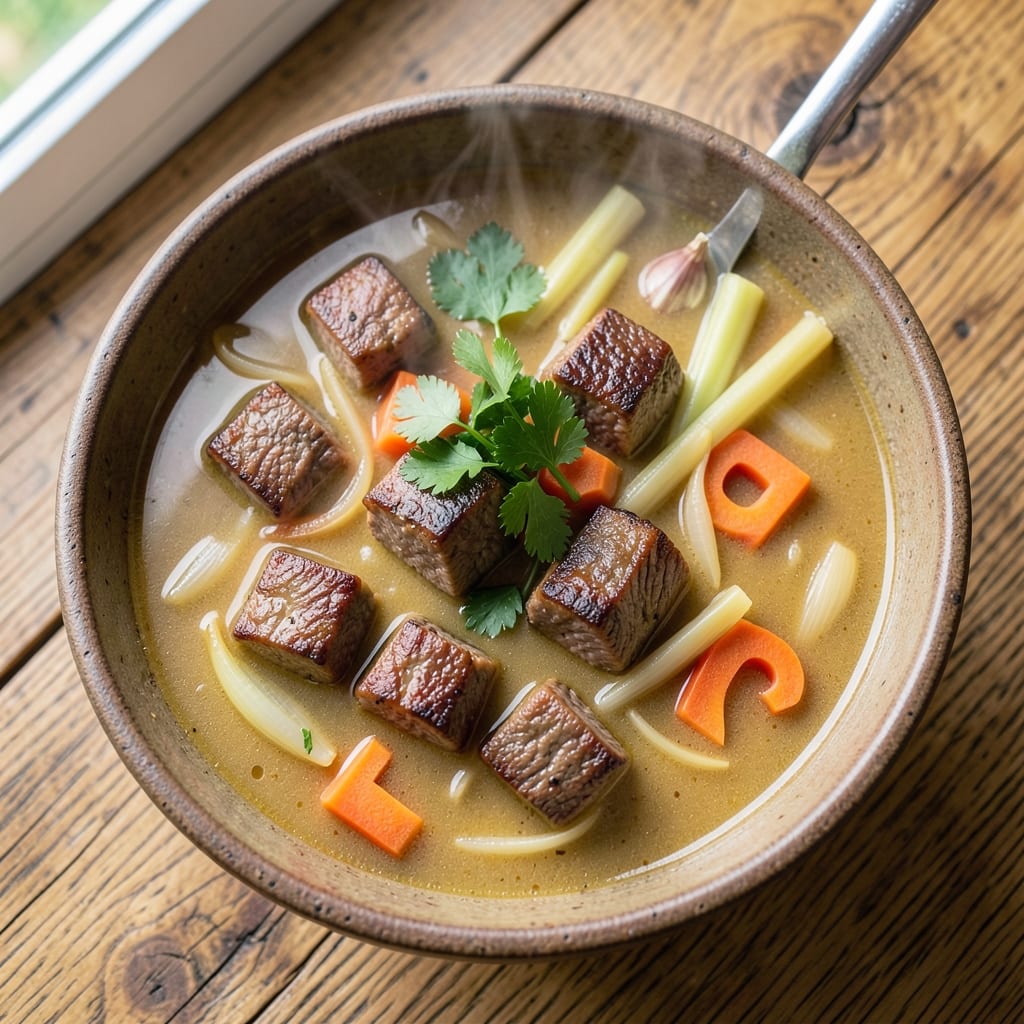
This beef alphabet soup recipe delivers the ultimate comfort food experience with tender beef, rich broth, and those iconic alphabet-shaped noodles. The secret to a truly satisfying bowl lies in slow-cooked beef that practically melts in your mouth and a broth so flavorful it tastes like it simmered all day. I've perfected this recipe over years of testing, ensuring every spoonful delivers that perfect balance of savory, tender beef and comforting vegetables.
The foundation of great alphabet soup starts with properly braised beef chuck, which becomes fork-tender after hours of simmering. Meanwhile, the broth develops deep, complex flavors from aromatic vegetables and herbs that infuse the liquid as they cook. What makes this version special is the homemade touch - fresh pasta shaped like letters adds both visual charm and that satisfying chew that store-bought versions can't match.
By the time you're done, you'll have a steaming bowl of soup that's rich, hearty, and packed with protein - perfect for chilly days or family gatherings. The beef falls apart easily, the noodles maintain their shape beautifully, and the broth has just the right balance of saltiness and depth. This is comfort food at its finest, with each ingredient playing its part to create something truly special.
Serve with crusty bread for dipping or a simple green salad to round out the meal. The leftovers actually taste better the next day as the flavors continue to meld together. Let's get started on creating this classic comfort dish that brings warmth to any table.
Ingredients for beef alphabet soup
Six hearty ingredients transform into the ultimate beef alphabet soup experience.
| Ingredient | Amount | Notes |
|---|---|---|
| Beef Chuck Roast 🥩 | 2 ½ lb | Cut into 1-inch cubes |
| Yellow Onions 🧅 | 3 whole | Medium size, chopped |
| Carrots 🥕 | 4 whole | Medium size, peeled |
| Celery Stalks 🌿 | 4 whole | Stringy parts removed |
| Garlic Cloves 🧄 | 6 cloves | Fresh, minced |
| Fresh Parsley 🌿 | ¼ cup | Chopped, stems removed |
| Dried Bay Leaves 🌿 | 2 whole | For deep flavor |
| Black Peppercorns 🌶️ | 1 tsp | Freshly cracked |
| Salt 🧂 | 2 tsp | Kosher or sea salt |
| All-Purpose Flour 🌾 | 2 cups | For homemade noodles |
| Eggs 🥚 | 2 whole | Large, for dough |
| Water 💧 | 4 cups | For broth and dough |
| Beef Broth 🍲 | 8 cups | Homemade or high-quality |
The beef chuck is non-negotiable here—it's the secret to that melt-in-your-mouth texture. Look for well-marbled cuts at Costco or your local butcher shop, and ask for it pre-cubed to save time. Fresh parsley and bay leaves add depth, but don't skimp on quality: Penzeys or your grocery store's bulk section will have the best. The onions, carrots, and celery form the holy trinity of soup veggies—chop them evenly so they cook at the same rate. If you're feeling fancy, grab organic celery from the produce section, but regular works just fine too.
No beef broth? Homemade is ideal, but a good-quality store-bought like Kraft or Pacific Foods will work in a pinch. Fresh herbs are best, but dried parsley at half the amount works if you're in a bind. For the homemade noodles, don't substitute instant pasta—this is where the magic happens! If you can't find alphabet-shaped pasta, use small shells or rotini and shape them into letters with a knife. The flour should be all-purpose, but if you've got bread flour, it'll give the dough a slightly chewier texture. And trust me, room-temperature eggs mix better into the dough.
This soup tastes even better the next day as the flavors meld together. Store leftovers in the fridge for up to 5 days or freeze for 3 months. The noodles hold up surprisingly well when reheated—just add a splash of water or broth to prevent drying. For a quick meal, portion the soup into containers right after cooking so lunches are ready to grab. The broth can be made ahead too—just freeze it in portions and add fresh veggies when you're ready to serve.
Why You'll Love This Recipe
- One-Pot Wonder: I swear by this for lazy nights—just toss the chuck roast, onions, carrots, and celery into a pot with broth, let it simmer, and walk away. No chopping boards, no extra pots, no stress.
- Deep Umami Magic: That slow-cooked chuck roast? It practically melts into the broth, turning into tender, flavor-packed strands. The garlic and onions caramelize just enough to give it that rich, savory depth I can’t get enough of.
- Leftovers That Don’t Suck: Honestly, this soup only gets better the next day. The flavors meld together, and the beef gets even more tender. I make a double batch on Sundays—one for dinner, one for lunch the next week.
- Budget-Friendly Feast: A chuck roast stretches for days, and the veggies (onions, carrots, celery) are cheap staples. This is my go-to when I need to feed the family without breaking the bank—plus, it’s the kind of meal that makes everyone happy.
Step-by-step instructions for beef alphabet soup with homemade noodles
This classic comfort dish comes together with rich beef broth and tender homemade noodles—each bite is pure homestyle satisfaction.
Brown the Beef for Deep Flavor
Heat a large Dutch oven over medium-high heat with no oil. Add the 2.5 lb beef chuck roast cut into 1-inch cubes and brown on all sides—this step builds the foundation of flavor. It should take about 8-10 minutes total, working in batches if needed. You'll know it's ready when the beef releases easily from the pan and develops a rich mahogany crust.
Once browned, remove the beef and set it aside. The browned bits left in the pan (fond) will dissolve into the broth later, creating layers of depth. Don't wipe out the pan—those bits are pure flavor gold.
Sauté the Vegetable Base
In the same Dutch oven, add 3 chopped yellow onions, 4 peeled carrots cut into ½-inch pieces, and 4 celery stalks chopped into ¼-inch pieces. Cook over medium heat for 8-10 minutes, stirring occasionally, until the vegetables soften and the onions turn translucent.
Add the 6 minced garlic cloves and cook for another 30 seconds until fragrant—this releases the garlic's full flavor. Stir in the 2 whole dried bay leaves, 1 tsp freshly cracked black peppercorns, and 2 tsp salt. These aromatics will infuse the broth with warmth and complexity as it simmers.
Simmer the Beef and Vegetables
Pour in the 8 cups beef broth and bring to a gentle boil. Return the browned beef to the pot, reduce heat to low, and cover partially. Let it simmer for 1 hour 30 minutes until the beef is fork-tender and easily shreds. The broth should reduce slightly but remain flavorful—this is where the magic happens.
About 30 minutes before the beef is done, add the 4 cups water to maintain liquidity. Taste the broth and adjust seasoning if needed—this is your chance to perfect the balance of salt and pepper before adding the noodles.
Make the Homemade Noodles
In a separate bowl, whisk together the 2 cups all-purpose flour and 2 whole eggs until a dough forms. Knead for 5-7 minutes until smooth and elastic. Wrap in plastic and rest for 30 minutes at room temperature—this relaxes the gluten for easier rolling.
Roll the dough thin through a pasta machine or with a rolling pin, then cut into ¼-inch wide strips. Boil in salted water for 2-3 minutes until al dente. Drain and set aside—these noodles will finish cooking in the soup.
Finish and Serve with Fresh Herbs
Add the cooked noodles to the beef broth along with the shredded beef and vegetables. Simmer for 3-4 minutes until the noodles are tender and the soup reaches a perfect consistency. Stir in the 0.25 cup chopped fresh parsley just before serving—this adds a bright, fresh finish that cuts through the richness.
Ladle into bowls and serve immediately. The broth should coat the noodles beautifully, with tender beef, soft vegetables, and that homemade touch that makes this soup truly comforting. Pair with crusty bread to soak up every last drop of that flavorful broth!
Pro Tips For Making Beef Alphabet Soup
- Brown the Chuck Roast First: Skip the slow simmer until it’s raw—sear the chuck roast in batches on high heat until it’s deep brown, almost crusty. I learned this the hard way: skipping the sear leaves the soup tasting flat, no matter how long you simmer. Use about 2 tablespoons of oil per batch, and don’t crowd the pan—give it space to develop that flavor.
- Cut Celery and Carrots Uniformly: Dice the celery and carrots into ¼-inch pieces, not random chunks. My grandmother swore by this, and she was right: even cooking means no mushy bits or undercooked edges. If you’re lazy, a mandoline does the job in seconds—no more guessing.
- Salt the Water Generously: Add 2 teaspoons of salt to the soup pot before boiling, even if you’re using bouillon. I used to hold back, thinking the broth would be too salty later, but the veggies actually draw out excess salt as they cook. Trust the process—your future self will thank you.
- Strain and Reuse the Veggies: After simmering the soup, strain out the carrots, celery, and onions, then dice them finely and toss them back in. Sounds weird, but it works: the second cook softens them perfectly without turning them to mush. Save time by doing this in one pot—no extra cleanup.
Serving suggestions for leftovers
Bread Pairings
Nothing beats this soup with a warm, crusty baguette or ciabatta for dipping. I like to toast slices until golden and crisp, then tear them into chunks. For extra flavor, brush with garlic-infused olive oil and sprinkle with flaky sea salt before serving. The crusty exterior contrasts perfectly with the tender noodles and beef. 🥖
Cheese Additions
Add a sprinkle of Parmesan cheese while serving to give your soup that extra umami punch. I like to use freshly grated Parmigiano-Reggiano for its nutty depth. For a creamy touch, stir in ¼ cup sour cream or crème fraîche before serving—just enough to add richness without making the soup heavy. 🧀
Garnish Ideas
Fresh Italian parsley or chives add a pop of color and brightness to each bowl. I also like to add a few toasted breadcrumbs for texture—simply toast 2 tbsp panko in a dry pan until golden and sprinkle on top. For a smoky twist, try a pinch of smoked paprika or a dash of hot sauce on the side. 🌿
Side Dish Pairings
A simple green salad with a light vinaigrette balances the heartiness of the soup beautifully. I toss mixed greens with red onion slices, cherry tomatoes, and a dressing of olive oil, lemon juice, and Dijon mustard. For a more substantial side, serve with roasted Brussels sprouts or garlic mashed potatoes. 🥗
Family-Friendly Touches
For picky eaters, serve the noodles and beef separately so everyone can customize their bowl. Kids love the fun shape of the alphabet noodles, and you can always add a splash of milk or cream to make it creamier. A side of buttered dinner rolls or cornbread makes it feel like a full meal. 👨👩👧👦
Leftovers Reinvented
Transform leftover soup into alphabet soup dumplings by mixing with shredded chicken, wrapping in wonton wrappers, and steaming for 10 minutes. Another idea: turn it into a soup-stuffed bread by baking in hollowed-out baguette halves at 375°F for 15 minutes. These creative twists keep the meal exciting! 🍽️
Nutrition facts
Frequently asked questions
Can I use store-bought alphabet pasta instead of homemade noodles?
Store-bought alphabet pasta works perfectly—just check the package for cooking times. For a 1-inch shape, cook it for 2-3 minutes less than directed since it'll finish in the soup. The key is to add it during the last 5 minutes of simmering so it absorbs all that rich beef flavor.
How do I make the beef extra tender for this soup?
Slow cooking is your best friend here. After browning, simmer the beef in broth for 2-3 hours instead of 1.5 hours—the extra time breaks down collagen into gelatin, making it fork-tender. For even more tenderness, add 1 tsp baking soda to the water when boiling the noodles (rinse the noodles after cooking). The acidity in the broth will also help tenderize the beef as it cooks.
What if my broth tastes too salty?
Don't panic! If the broth tastes too salty, add 1 cup cold water or 1 cup milk to dilute it, then simmer for 5-10 minutes to let flavors rebalance. For a more natural fix, add 1-2 peeled potatoes or 1 carrot to the broth while simmering—they'll absorb excess salt without altering flavor. Always taste as you go!
Can I make this soup in a slow cooker?
Yes, but with adjustments. Brown the beef first, then transfer everything (including broth) to the slow cooker. Cook on low for 8 hours or high for 4-5 hours. Add the noodles during the last 30 minutes of cooking. The slow cooker method actually enhances tenderness, but you may need to add 1 cup extra broth since slow cooking reduces liquid more slowly.
Why did my homemade noodles turn out tough?
Tough noodles usually mean overworking the dough or under-rising.