
Soups & Stews
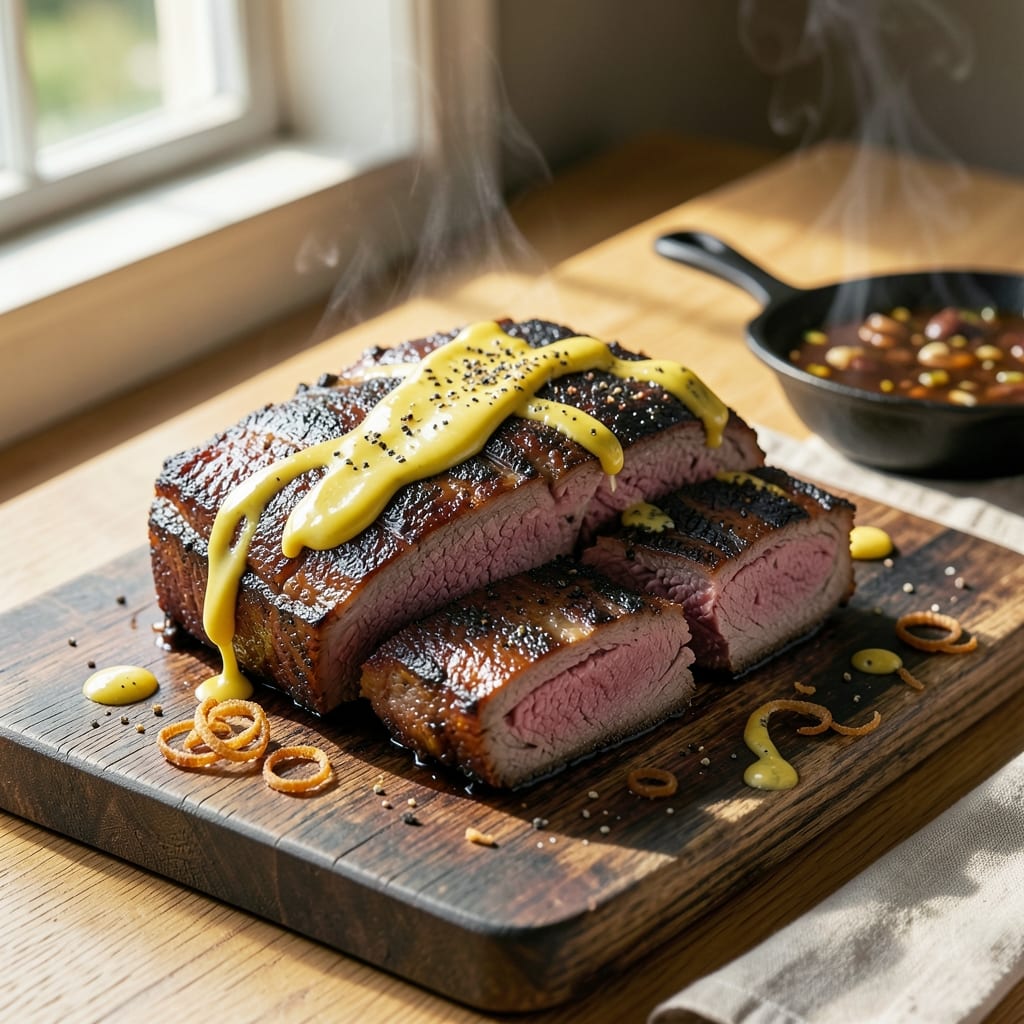
This amazing beef brisket recipe delivers smoky bark, melt-in-your-mouth tenderness, and a flavor so rich it’ll have your guests begging for seconds. The secret? A slow-smoke approach that transforms tough meat into something so tender it practically falls apart—no constant babysitting required. I’ve perfected this over years of trial and error, and it’s the one recipe my family requests every time we fire up the smoker.
The magic happens with a simple but powerful rub—just salt, pepper, garlic powder, and smoked paprika—that creates that coveted dark bark while keeping the inside juicy. You’ll start with a hot smoke to sear the surface, then let it cook low and slow until the internal temperature hits 203°F, where the collagen breaks down into irresistible gelatin. No guesswork, no dry meat—just foolproof perfection.
By the time you pull it from the smoker, you’ll have a brisket with a crispy, caramelized crust that gives way to tender, stringy meat inside. The aroma alone will have everyone gathering around the table, and each bite delivers that perfect balance of smoky, savory, and slightly sweet flavors. This isn’t just brisket—it’s a centerpiece that turns any meal into a celebration.
Serve it sliced against the grain with pickles, white bread, and a drizzle of that rich, smoky juices—because nothing should go to waste. Ready to make the most impressive brisket of your life? Let’s get started.
Ingredients for amazing beef brisket
Six pounds of brisket, a handful of pantry staples, and you're on your way to smoky perfection.
| Ingredient | Amount | Notes |
|---|---|---|
| Beef Brisket 🥩 | 6 lb | Whole packer cut, fat cap on |
| Yellow Mustard 🍯 | ½ cup | For bark adhesion |
| Kosher Salt 🧂 | ½ cup | Diamond Crystal preferred |
| Coarse Ground Black Pepper 🌶️ | ¼ cup | Freshly cracked |
| Garlic Powder 🧄 | 2 tbsp | Not garlic salt |
| Smoked Paprika 🌶️ | 2 tbsp | For deep smoky flavor |
| Wood Chips (Hickory or Oak) 🌳 | 2 cups | Soaked for 1 hour |
| Apple Juice 🍎 | 1 cup | For spritzing during cook |
| White Vinegar 🍶 | ½ cup | For spritz mix |
| Dried Pickles 🥒 | 1 cup | For serving |
| White Sandwich Bread 🍞 | 1 loaf | For serving, crusty preferred |
| Yellow Onion 🧅 | 1 whole | For serving, sliced |
| Beef Tallow or Shortening 🧈 | ¼ cup | For wrapping brisket |
The brisket is non-negotiable—packer cut with fat cap intact is key for that melt-in-your-mouth texture. Costco or local butchers usually have the best deals on whole briskets. Look for good marbling and a thick fat cap (at least 1/4-inch)—that's where the flavor hides. If you're buying pre-trimmed, ask for the flat cut with the fat left on. The mustard isn't just for flavor—it helps the rub stick and creates that iconic bark. French's works fine, but anything yellow will do.
No smoked paprika? Regular paprika plus a pinch of liquid smoke gets you close. The vinegar in the spritz mix might sound weird, but it cuts through the fat and keeps the bark crispy. Apple cider vinegar works too. For the rub, I always toast the spices in a dry pan for 30 seconds first—just to wake up those flavors. The wood chips? Soak them for at least an hour, or they'll burn too fast. If you're short on time, pre-soaked chips from the store work in a pinch, but they cost more.
The brisket keeps beautifully—3-4 days in the fridge wrapped tight, or 3 months frozen. I always make extra because leftovers taste even better the next day. For serving, let it rest for 15 minutes before slicing against the grain. The pickles and onions cut through the richness perfectly, and that crusty bread? Sourdough or a good Italian loaf if you want to get fancy. The juices? Save every drop—drizzle them over the sliced brisket or use them for gravy.
Why You'll Love This Recipe
- Five-Ingredient Magic: I swear, this brisket only needs five things—no fancy rubs or secret sauces. Just the brisket, a slather of yellow mustard (yes, the whole jar), salt, pepper, and garlic powder. That’s it. Honestly, the simplicity makes it feel like cheating, but the results? Far from it.
- Garlic-Kissed Crust: Here’s what sold me—the way the garlic powder and mustard caramelize into a sticky, savory crust. Not too sweet, not too spicy—just that perfect balance where every bite has this addictive crunch and depth. My husband licks his fingers after the first slice, and I don’t even joke about it.
- Leftovers That Save: Between us, this recipe makes way more than we can eat in one sitting. The good news? The flavor only gets better the next day. I’ll pack it in lunches all week, and no one complains—especially when I slice it thin for sandwiches or toss it into tacos. (Yes, even on a Tuesday night.)
- Budget Feast: A whole packer of brisket feeds six for under $20, and the rest of the ingredients cost pennies. I’ll be real: it’s my go-to for game days, potlucks, or when friends drop by unannounced. Everyone leaves happy, and my wallet stays intact. That’s a win in my book.
Step-by-step instructions for smoked brisket with perfect bark and juicy core
Here's how to transform a tough cut into melt-in-your-mouth perfection without constant monitoring.
Prepare the Brisket with Mustard and Rub
Start by trimming the fat cap on the 6 lb beef brisket down to about ¼-inch thickness using a sharp boning knife. Leave the fat on the sides for flavor and moisture. Pat the entire surface completely dry with paper towels—this ensures the mustard adheres properly and creates that legendary bark.
In a small bowl, mix together the 0.5 cup kosher salt, 0.25 cup coarse ground black pepper, 2 tbsp garlic powder, and 2 tbsp smoked paprika. Rub this mixture all over the brisket, pressing firmly so it sticks. Then spread the 0.5 cup yellow mustard evenly over the entire surface. The mustard acts as a glue for the rub and helps create that dark, crackly bark. Let the brisket sit at room temperature for 1 hour before smoking.
Set Up Your Smoker for Low and Slow Cooking
Soak the 2 cups wood chips (hickory or oak) in water for at least 1 hour before using. Preheat your smoker to 225°F using these soaked wood chips. You want to see clean, blue smoke—not thick white steam. Place a water pan in the smoker to maintain moisture and prevent the bark from drying out.
When the smoker reaches temperature, place the brisket fat-side up on the grill grates. The fat will render and baste the meat as it cooks. Close the lid and resist the urge to check it frequently—every time you open the lid, you add 15-20 minutes to the cook time. This is where patience pays off for that juicy core.
Spritz and Monitor for the Stall
After about 5 hours of smoking, prepare your spritz mix by combining the 1 cup apple juice and 0.5 cup white vinegar in a spray bottle. Starting at the 6-hour mark, spritz the brisket every 1-2 hours with this mixture. This keeps the surface moist and helps prevent a dry bark while maintaining that beautiful crust.
Continue smoking until the internal temperature reaches 165-170°F—this is when you'll hit "the stall," where the temperature stops rising as moisture evaporates. Don't panic; this is completely normal. The brisket should have a deep mahogany bark by now, and the probe should slide in with some resistance.
Wrap and Finish Cooking
Once you hit the stall, it's time for the "Texas crutch." Remove the brisket from the smoker and wrap it tightly in butcher paper (not aluminum foil). First, spread the 0.25 cup beef tallow or shortening evenly over the surface, then wrap the paper around it. Return the brisket to the smoker and continue cooking until the internal temperature reaches 200-205°F.
This final stage powers you through the stall while keeping the bark intact. The brisket should now be fork-tender with a probe sliding in like butter. Let it rest in the butcher paper for at least 1 hour (or up to 2 hours) before slicing. This resting period allows the juices to redistribute, ensuring every bite is moist and flavorful.
Serve with Classic Sides
Slice the brisket against the grain into ¼-inch thick pieces. Serve immediately with the 1 cup dried pickles, sliced 1 whole yellow onion, and slices of the 1 loaf white sandwich bread. The contrast of tangy pickles, sharp onions, and crusty bread makes every bite of this amazing brisket even more satisfying.
You'll know you've succeeded when each slice pulls apart with gentle pressure, revealing a juicy pink center and that perfect dark bark. This method delivers a brisket so tender it practically melts in your mouth—no babysitting required!
Pro Tips For Making Amazing Beef Brisket
- CRANK THE HEAT FIRST: Start your brisket over medium-high heat until it’s searing hard—you’ll see those edges darken in 5-7 minutes. I used to low-and-slow from the get-go, and the crust never formed right. That first crust locks in flavor when you later slow it down.
- SALT THE MUSTARD BASE: Toss your yellow mustard with 1 teaspoon kosher salt before slathering it on the brisket. The salt dissolves into the mustard, creating a sticky, flavor-packed glaze that clings better than plain mustard ever could. (Yes, even if you’re impatient like me.)
- SKIP THE PEPPER COATING: Coarse black pepper is great, but don’t go overboard—just focus on the fat cap and edges. I learned this the hard way when I peppered the whole surface, and the meat turned bitter instead of tender. A light hand keeps the pepper’s punch where it matters.
- WRAP IT AT 165°F: The moment your brisket hits 165°F internally, wrap it in foil with a splash of water. This isn’t just resting—it’s the point where the collagen starts breaking down properly. I used to wait until 190°F, and the meat always ended up dry. Trust the thermometer.
Troubleshooting perfect results
Bark Too Light?
If your brisket’s bark isn’t dark enough, it’s usually from one of two issues: dry surface or low smoke temperature. First, check your smoker—it should maintain 225°F consistently. If it’s fluctuating, add more soaked wood chips or use a digital thermometer like the Meater to monitor temps. For the next cook, spritz more frequently (every 1-2 hours) with your apple juice-vinegar mix, and consider increasing the vinegar to ⅔ cup for extra bark development. 🔥
Meat Still Tough?
Tough brisket often means it didn’t hit the 203°F internal temperature or wasn’t rested properly. Use a meat thermometer (I swear by the ThermoWorks Smoke) to track progress—insert it into the thickest part, avoiding the fat. If you pulled it too early, re-wrap it in butcher paper with ¼ cup beef tallow, return to the smoker, and cook until it reaches 200°F. Then, rest for 2 hours before slicing—this redistributes juices and softens the fibers. Never skip resting!
Smoker Overheating?
If your smoker keeps surging past 250°F, you’re likely overloading the firebox or using dry wood chips. Soak your chips for at least 1 hour (or overnight for extra insurance), and reduce the amount by 25%. For charcoal smokers, use two small piles of charcoal instead of one big one. If using a gas smoker, lower the heat output and ventilate better—crack the lid slightly to release excess heat. A water pan also helps stabilize temps. 🌡️
Fat Rendering Too Fast?
If the fat cap is melting away too quickly, your smoker is too hot. Trim the fat cap to ¼-inch before cooking, and rotate the brisket fat-side down after 4 hours to slow rendering. For extra protection, spritz with apple juice every 30 minutes during the first 4 hours—this creates a moisture barrier. If the fat is still running wild, lower your target temp to 200°F and cook even slower. The goal is controlled fat loss, not a grease fire!
Stall Lasting Too Long?
The stall (where temps plateau at 165°F) can drag on if your brisket is too large or the smoker isn’t humid enough. Wrap in butcher paper at 165°F (not foil—it traps steam and steams instead of smokes). Add ice cubes to your water pan (yes, really!) to boost humidity and speed through the stall. If it’s still stuck, increase smoker temp to 250°F for 1 hour to blast past it, then drop back to 225°F to finish. Patience is key, but don’t let it linger! ⏱️
Uneven Cooking?
Uneven temps usually mean poor airflow or brisket placement issues. Ensure your brisket is fat-side up and positioned away from direct heat sources. For charcoal smokers, arrange coals on both sides of the brisket for even heat. If using a pellet smoker, rotate the brisket 180° after 4 hours to balance cooking. A wire rack under the brisket also prevents steam buildup, which can create cold spots. 🔄
Nutrition facts
Frequently asked questions
How long does it take to cook a 6 lb brisket this way?
Plan for 10-14 hours total cook time, depending on your smoker and brisket size. The first 6 hours build the bark, then you'll hit "the stall" around 165°F for another 3-5 hours before wrapping. The final push to 203°F takes 2-3 hours after wrapping. Patience is key—rushing leads to dry meat!
Can I use a grill instead of a smoker?
Convert your grill to a smoker by using indirect heat and adding wood chips to the coals. Maintain 225°F by placing the brisket on the cooler side of the grill and keeping the lid closed. For extra smoke, use a smoke tube or wrap aluminum foil around soaked wood chips near the heat source. Just monitor temps closely—grills fluctuate more than dedicated smokers.
What's the deal with wrapping in butcher paper?
Butcher paper lets smoke and steam escape while trapping heat—unlike foil which steams the meat. The beef tallow added before wrapping creates a moisture barrier that keeps the bark crispy while the center finishes cooking. This "Texas crutch" method powers through the stall without making the bark soggy. Pro tip: Use double-layered paper for extra protection.
How do I know when it's done?
Use a meat thermometer inserted into the thickest part (avoiding fat). It's done when you hit 203°F—the probe should slide in like butter. The bark should be deep mahogany, and the meat should pull apart easily. If it's 165°F and stalled, that's when you wrap it. Never judge by time or appearance alone!
Can I make this in an oven?
Yes, but it won't have the same smoky flavor. Preheat oven to 275°F (as low as possible), use a meat thermometer, and follow the same 203°F target. For bark, place the brisket on a rack over a tray of water (to add humidity) and spritz with apple juice every 2 hours. Expect 8-12 hours total cook time. The results will be tender but lack that signature smoky crust.