Side Dishes
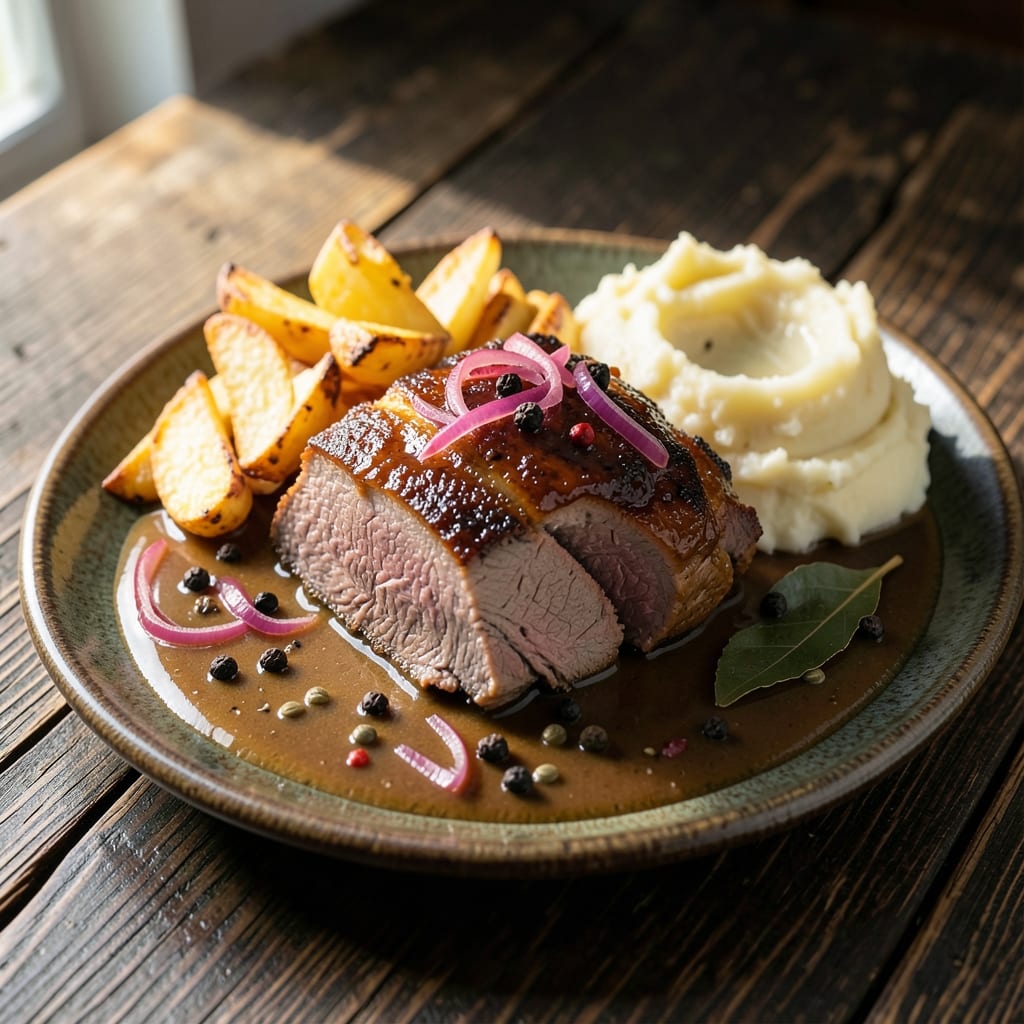
This amazing corned beef recipe delivers melt-in-your-mouth tenderness with a spice-infused crust that’ll make your taste buds dance. 🔥 The secret? A slow-braised method that transforms tough brisket into juicy, pink perfection—no guesswork, just flavor. I’ve perfected this over years of St. Patrick’s Day feasts, and it’s become my go-to for holiday dinners that impress every time.
The magic starts with the brine—whether you choose dry or wet curing, the spices (bay leaves, mustard seeds, cloves) infuse deep into the meat while it rests overnight. Then comes the slow cook: hours of gentle simmering until the meat is fork-tender, with a crust so flavorful it’ll have everyone begging for seconds. No more dry, stringy corned beef—just juicy, restaurant-quality results.
By the time you’re done, you’ll have a centerpiece-worthy dish with a juicy pink heart and a crust packed with smoky, savory flavors. Serve it sliced thick with classic sides like boiled cabbage, buttery mashed potatoes, and tangy mustard sauce. The aroma alone will fill your kitchen with holiday cheer.
This isn’t just corned beef—it’s a showstopper. Whether you’re hosting a St. Patrick’s Day feast or craving comfort food, this recipe delivers the real deal. Let’s get cooking!
Ingredients for amazing corned beef
Six spices, four pounds of brisket, and hours of patience create this showstopper.
| Ingredient | Amount | Notes |
|---|---|---|
| Beef Brisket 🥩 | 4 lb | Flat cut preferred, trimmed of excess fat |
| Bay Leaves 🌿 | 4 whole | Fresh or dried, removed before serving |
| Mustard Seeds 🌶️ | 2 tbsp | Yellow or brown, toasted for depth |
| Ground Black Peppercorns 🌶️ | 1 tbsp | Freshly cracked for best flavor |
| Cloves 🌿 | 6 whole | Whole, pounded lightly |
| Allspice Berries 🌶️ | 1 tbsp | Crushed lightly, adds warmth |
| Salt 🧂 | 2 cups | Kosher or coarse sea salt |
| Water 💧 | 2 cups | For wet brine, or omit for dry |
| Beef Broth 🍲 | 4 cups | Low-sodium, homemade preferred |
| White Vinegar 🍶 | ½ cup | For tangy balance |
| Brown Sugar 🍚 | ½ cup | Light or dark, for caramelization |
| Onion 🧅 | 1 whole | Yellow, halved, for braising |
| Garlic Cloves 🧄 | 4 cloves | Smashed for aromatic release |
| Carrots 🥕 | 2 whole | Peeled, halved lengthwise |
The brisket is non-negotiable—look for flat-cut at your butcher or grocery store meat department. Costco or Whole Foods usually have the best quality, but any well-stocked supermarket works. Trim excess fat to about 1/4-inch thickness—it renders beautifully during cooking but too much can make the crust greasy. For the spices, Penzeys are your best bet for freshness, but the grocery store stuff works fine. Just make sure your bay leaves are vibrant green and your cloves look plump, not shriveled.
No mustard seeds? Dijon mustard at half the amount works in a pinch, though it won't give the same toasted depth. Short on allspice? Cinnamon plus a pinch of nutmeg mimics the warmth. The vinegar is key for that classic tang—apple cider vinegar adds subtle sweetness if you're feeling fancy. Brown sugar can be swapped for white, but you'll lose some of that caramelized crust. For the broth, homemade is ideal, but even the good store-bought stuff (like Kitchen Basics) will do. The carrots and onion add natural sweetness and body to the braising liquid—no need to peel the carrots if you're in a hurry, just scrub them well.
This keeps for 3-4 days in the fridge, but honestly, it tastes even better reheated. Slice it against the grain for maximum tenderness. The braising liquid reduces to a glorious sauce—freeze extras in ice cube trays for future soups or gravies. For leftovers, store in an airtight container with a splash of broth to keep it moist. The spices? Save the bay leaves and whole spices for your next batch—they're good for another round of magic.
Why You'll Love This Recipe
- Deep Flavor Payoff: That first bite—tender, spiced just enough with mustard seeds and cloves—hits like a warm hug. The brisket stays juicy, the crust gets crispy, and honestly? It’s the kind of taste that makes you slow down.
- Leftovers That Shine: Reheat slices in a pan with a splash of broth, or pile them into sandwiches the next day. I’ve turned cold cuts into hash for breakfast, and nobody batted an eye—especially when it’s this good.
- Budget Booster: A single brisket feeds my family for days, and the spices cost pennies. Between us, this is my go-to when I need hearty meals without breaking the bank—no takeout, no guilt.
Step-by-step instructions for slow-braised corned beef
Here's how to transform tough brisket into melt-in-your-mouth perfection with a spice crust and tender pink center.
👨🍳 Step 1: Prepare the Spice Crust and Brine
In a small skillet, toast the 2 tbsp mustard seeds over medium heat for 2 minutes until fragrant and slightly golden. Transfer to a bowl and add the 1 tbsp ground black peppercorns, 6 whole cloves (lightly pounded), and 1 tbsp allspice berries (crushed). Mix well - this becomes your spice crust.
In a large bowl, combine the 4 lb beef brisket, 2 cups salt, 2 cups water, 0.5 cup white vinegar, and 0.5 cup brown sugar. Rub the spice mixture all over the brisket, pressing firmly so it adheres. Cover and refrigerate for 24 hours - this transforms tough meat into tender magic through osmosis.
🍳 Step 2: Sear and Layer for Braising
Preheat oven to 300°F. Pat the brisket dry and sear in a Dutch oven over medium-high heat for 3-4 minutes per side until deeply browned. Remove and set aside.
In the same Dutch oven, add 1 whole onion (halved), 4 cloves garlic (smashed), and 2 whole carrots (halved). Sear for 5 minutes until caramelized. Return brisket to the pot, add 4 whole bay leaves and 4 cups beef broth, ensuring the brisket is mostly submerged.
⏰ Step 3: Braise Until Fork-Tender
Cover the Dutch oven and transfer to the oven. Braise for 3 hours until the brisket reaches 195°F internally. Here's the secret: the meat should pull apart with gentle pressure but still hold its shape - this means perfect tenderness without falling apart.
If the liquid reduces too much, add ¼ cup water after 2 hours. The goal is a rich, flavorful sauce that coats each bite. Real talk: don't peek too often - every time you open the lid, you add 10-15 minutes to cook time.
🔪 Step 4: Rest and Slice for Maximum Juiciness
Remove the brisket from the oven and tent loosely with foil. Let it rest for 30 minutes - this crucial step allows juices to redistribute throughout the meat. Remove bay leaves before serving.
Slice the brisket against the grain into ¼-inch thick pieces. The meat should be so tender it practically falls apart, with a beautiful pink center and caramelized crust. Serve with the braising liquid spooned over the top for that restaurant-quality presentation.
Pro Tips For Making Amazing Corned Beef
- Trim the Fat First: I learned this the hard way—skipping the fat trim on a brisket means your corned beef turns into a greasy, uneven mess. Use kitchen shears to slice off the thickest layer of fat (about ¼-inch) from the top; this lets the spices cling better and keeps the meat from steaming in its own rendered fat. ---
- Toast Your Spices: After burning three batches of corned beef with bland, muddy flavors, I finally toasted the whole spices—bay leaves, mustard seeds, peppercorns, and cloves—in a dry pan for 30 seconds until fragrant. This releases their oils and makes a real difference in depth. ---
- Don’t Rush the Braise: The first time I checked the corned beef at 2 hours, it was still tough as a boot. Low and slow is non-negotiable: aim for 3–4 hours at 300°F (150°C) until a fork slides in like butter. The collagen breaks down, and that’s when the magic happens. ---
- Save the Water: Sounds weird, but it works: reserve the liquid from your brisket’s initial parboil (about 2 cups) instead of dumping it. Add it back later to the pot—it’s packed with dissolved meaty flavor, and you’ll end up with a richer, less watery final dish.
Common mistakes when making this dish
Over-Salting the Meat
This is a rookie mistake that can turn your corned beef into an inedible salt block. I’ve seen people double the salt in the brine, thinking more = better. Stick to 2 cups of kosher salt for 4 lbs of brisket—any more risks making the meat tough and unappetizing. If you’re unsure, taste a small piece after brining (before cooking) to check the salt level. Trust me, you can always add more salt during braising if needed. 🧂
Skipping the Rest Time
The 30-minute rest after cooking is non-negotiable for juicy slices. I’ve rushed this step more times than I’d admit, and each time the meat turned out dry and stringy. The rest lets juices redistribute—skipping it means losing that melt-in-your-mouth texture. Cover the brisket loosely with foil and let it sit while you prep sides. Patience here makes all the difference. ⏳
Peeking Too Often
Every time you lift the lid during braising, you’re adding 10-15 minutes to your cook time. The steam escapes, and the brisket loses moisture. I’ve caught myself checking every 30 minutes, only to extend the cook by nearly an hour. Set a timer and resist the urge to peek—trust the process. The Dutch oven’s tight seal keeps the heat and moisture locked in. 🔥
Using the Wrong Cut
Not all brisket is created equal. Flat-cut brisket is your best bet—it’s leaner and more tender than the point cut. I’ve tried point cut once (for a shortcut), and it ended up chewy. Ask your butcher for the flat cut, and trim excess fat to ¼-inch thickness for the best results. If you’re using pre-packaged corned beef from the store, it’s already trimmed—just follow the package instructions for cooking time. 🥩
Ignoring the Braising Liquid
The sauce isn’t just for show—it’s packed with flavor that clings to every bite. I’ve seen people discard it or serve it on the side, but that’s missing out on half the experience. Strain the liquid to remove solids, then reduce it slightly for a glossy finish. Spoon it over the sliced brisket before serving—it’s the secret to restaurant-quality presentation. 🍲
Overcooking for "Extra Tender" Meat
Past 195°F internal temperature, your brisket risks turning dry and falling apart. I’ve pushed it to 203°F thinking it would be more tender, but it ended up shredding like overcooked pot roast. Pull it out at 195°F—it should be fork-tender but still hold its shape. The residual heat will carry it to perfection while you rest it. 🌡️
Nutrition facts
Frequently asked questions
Can I make this corned beef in a slow cooker instead of the oven?
Yes! Transfer the seared brisket and braising liquid to your slow cooker and cook on low for 8-10 hours or high for 5-6 hours. The Dutch oven method gives better browning, but slow cookers work well for hands-off prep. Just add ¼ cup water if the liquid gets too low during cooking.
What's the best way to reheat leftover corned beef?
Slice the leftovers and reheat in a skillet with 2 tbsp beef broth over medium-low heat for 5-7 minutes until warmed through. For extra flavor, add a splash of white wine or mustard sauce. Never microwave—it makes the meat dry and rubbery.
How do I know when the brisket is done?
Use a meat thermometer to check the internal temperature at the thickest part—it should reach 195°F. The meat should pull apart easily with two forks but still hold its shape. If it's below 190°F, return it to the oven for 30-60 minutes more. Never rely on color alone—the pink center is perfect!
Can I substitute any of the spices?
Most spices can be swapped, but adjust quantities for flavor balance. For example, replace allspice with ½ tsp cinnamon + ¼ tsp nutmeg. Skip the mustard seeds? Use 1 tbsp Dijon mustard in the brine instead. The key is maintaining the earthy, warm flavor profile—don't omit all spices entirely!
Why does my corned beef turn out dry?
Overcooking (past 195°F) or skipping the 30-minute rest are the top culprits. Also, peeking too often lets steam escape, drying the meat. For extra moisture, add ½ cup broth during braising if needed. Always slice against the grain to maximize tenderness.