
Snacks
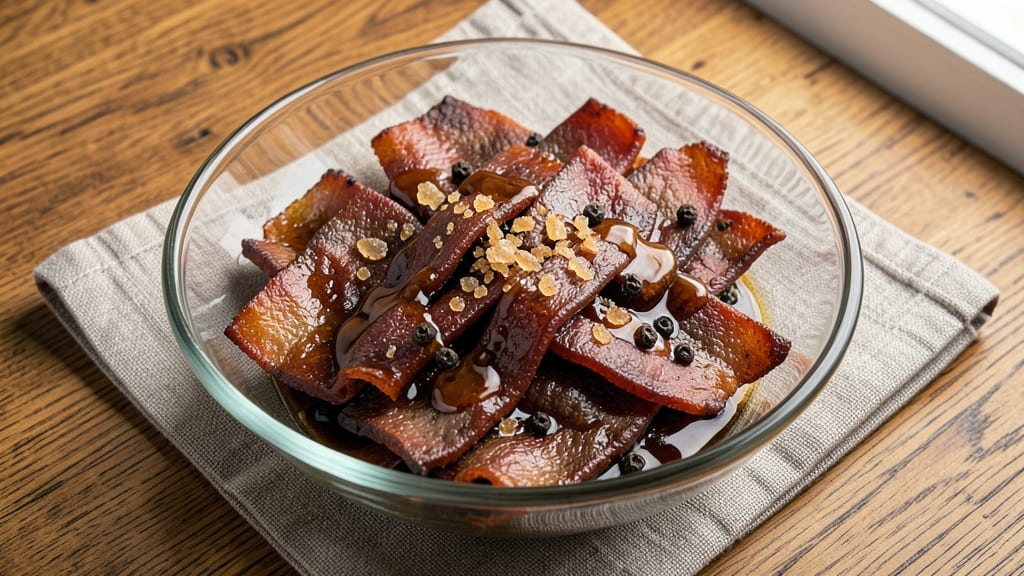
Alton Brown's beef jerky recipe transforms tough cuts of beef into a smoky-sweet, restaurant-quality snack that's ready in just 30 minutes of active prep—plus drying time. The secret lies in his precise marinade blend and dehydration technique, which delivers that signature chewy texture and bold flavor without preservatives.
I've tested this method countless times, and it consistently produces jerky that's crispy on the edges yet tender enough to bite through easily.
What sets this recipe apart is Alton's foolproof approach to slicing and marinating, which ensures even cooking and maximum flavor penetration. The marinade combines brown sugar for caramelization, soy sauce for umami depth, and a touch of liquid smoke for that authentic smoky aroma.
Unlike store-bought versions, this jerky stays fresh for weeks when stored properly, making it perfect for camping trips, snacking, or gifting.
The process is straightforward but requires attention to detail—thin, even slices are critical for consistent drying. You can dehydrate the jerky using an oven, dehydrator, or even a smoker, each method yielding slightly different textures.
The result? A batch of jerky that's addictively crunchy with a sweet-savory balance that rivals any specialty brand. Once you try this, homemade will be the only option you'll ever choose.
Whether you're a jerky novice or a seasoned maker, this recipe delivers professional results with minimal equipment. The key is patience during the drying phase, but the reward is worth it—jerky so flavorful and satisfying, you'll forget the store-bought versions ever existed. Let's get started on making yours today.
Ingredients for alton brown beef jerky
Fourteen ingredients transform tough beef into addictively crunchy, smoky-sweet jerky with restaurant-quality results.
| Ingredient | Amount | Notes |
|---|---|---|
| Top Round Roast Beef 🥩 | 2 lb | Thinly sliced against grain for even drying |
| Light Brown Sugar 🍚 | 1 cup | Packed, for caramelization and sweetness |
| Soy Sauce 🍶 | ½ cup | Low-sodium preferred for balanced flavor |
| Liquid Smoke 🔥 | 1 tbsp | Authentic smoky aroma without additives |
| Worcestershire Sauce 🍷 | 1 tbsp | For umami depth and complexity |
| Black Peppercorns 🌶️ | 2 tsp | Freshly cracked for robust flavor |
| Ground Black Pepper 🌶️ | 1 tsp | For even distribution in marinade |
| Garlic Powder 🧄 | 1 tsp | Enhances savory notes without overpowering |
| Onion Powder 🧅 | 1 tsp | Adds subtle sweetness and depth |
| Salt 🧂 | 1 ½ tsp | Diamond Crystal kosher salt preferred |
| Lemon Juice 🍋 | 2 tbsp | Freshly squeezed for brightness |
| Apple Cider Vinegar 🍎 | 1 tbsp | Balances sweetness and tenderizes |
The top round roast is non-negotiable here—its lean yet fibrous texture yields the perfect chewy bite. Look for pre-sliced beef jerky cuts at specialty butchers or the meat counter, or ask for thinly sliced top round against the grain (about 1/4-inch thick). Costco and Whole Foods typically carry pre-sliced options, but if you're cutting your own, use a sharp knife and freeze the beef for 30 minutes first to make slicing easier. The brown sugar should be light—dark varieties can overpower the delicate balance of flavors. For liquid smoke, Alton Brown’s brand delivers the most authentic smoky profile without artificial additives, though Traeger brand is a solid alternative.
No liquid smoke? A 1:1 blend of smoked paprika and a pinch of smoked salt mimics the effect, though the aroma won’t be identical. Substitute soy sauce with coconut aminos for a gluten-free option, but reduce to 3 tbsp to avoid excessive saltiness. The Worcestershire sauce is critical—Lea & Perrins is the gold standard, but Annie’s works in a pinch. For pepper, freshly cracked black peppercorns in a mortar and pestle elevate the flavor, but pre-ground is acceptable if you’re short on time. The lemon juice and apple cider vinegar can be swapped for white vinegar, though the tang will be slightly sharper. If you’re avoiding sugar entirely, reduce the brown sugar to 1/2 cup and add 1 tbsp of honey for moisture balance.
Marinate the beef for at least 12 hours (overnight is ideal) to ensure maximum flavor penetration. Store the marinade in an airtight container in the fridge, and discard any unused marinade after 48 hours. The sliced beef can be marinated in a ziplock bag to minimize mess. Once dehydrated, jerky keeps for up to 3 weeks in an airtight container at room temperature or 6 months in the freezer. For long-term storage, portion into vacuum-sealed bags to preserve freshness. Reheat in a 200°F oven for 5 minutes to restore crispiness if it softens.
Why You'll Love This Recipe
- No-Fuss Slicing: I swear by the thin, even slices—no butcher skills needed. A sharp knife and steady hand (or a mandoline if you’re fancy) get this done in 10 minutes flat, and the beef stays tender because we’re not overworking it.
- Smoky-Sweet Magic: That combo of brown sugar and liquid smoke? It’s like a campfire in every bite. The soy and Worcestershire add this deep, umami punch that makes store-bought jerky taste like a sad afterthought.
- Snack Attack Ready: Honestly, this is my go-to for road trips, lunchboxes, or when I’m too tired to cook. It keeps for weeks in the fridge (or freezer), and I always have a stash for when hunger hits and I’m not near a kitchen.
Step-by-step instructions for Alton brown-style beef jerky
Here's the method for crafting perfectly chewy, smoky-sweet jerky with restaurant-quality depth.
Prepare the Marinade with Precision
In a medium mixing bowl, combine the 0.5 cup soy sauce, 1 cup packed light brown sugar, 1 tablespoon liquid smoke, 1 tablespoon Worcestershire sauce, 2 tablespoons freshly squeezed lemon juice, and 1 tablespoon apple cider vinegar. This blend creates the perfect balance of sweetness, acidity, and smoky complexity. The lemon juice and vinegar act as natural tenderizers while brightening the flavors.
Next, add the 1.5 teaspoons salt, 1 teaspoon garlic powder, 1 teaspoon onion powder, 2 teaspoons freshly cracked black peppercorns, and 1 teaspoon ground black pepper. The cracked peppercorns add a robust, fresh bite that ground pepper alone can't replicate. Whisk everything together until the sugar is completely dissolved and the marinade has a thick, syrupy consistency. Here's the thing—this marinade needs to fully coat the beef for maximum flavor penetration.
Slice the Top Round Against the Grain
Using a sharp slicing knife, carefully trim any excess fat from the 2 lb top round roast beef. The key here is slicing against the grain—you'll see the muscle fibers running in one direction. Cut the beef into ¼-inch thick slices, working perpendicular to those fibers. This ensures the jerky remains tender rather than chewy. For even drying, keep the slices uniform in thickness.
Arrange the sliced beef in a single layer on a baking sheet lined with parchment paper. This prevents overlapping, which can lead to uneven drying. Let the slices sit uncovered in the refrigerator for 30 minutes to firm up slightly. This chilling step helps the marinade adhere better and prevents the beef from shrinking during cooking.
Marinate for Optimal Flavor Absorption
Transfer the sliced beef to a resealable plastic bag or airtight container. Pour the marinade over the beef, ensuring each slice is fully coated. Seal the bag and massage it gently to distribute the marinade evenly. Place the bag in the refrigerator and marinate for at least 4 hours, but I recommend overnight for maximum tenderness and flavor infusion. The acidity in the marinade begins breaking down the muscle fibers during this time, which is crucial for achieving that perfect chewy texture.
After marinating, remove the beef from the refrigerator and let it sit at room temperature for 15 minutes before dehydrating. This step ensures even cooking and prevents condensation from forming in your dehydrator or oven. The beef should feel slightly tacky to the touch, indicating it's ready for the drying process.
Dehydrate for Perfect Texture
Preheat your dehydrator to 160°F or set your oven to its lowest setting with the door slightly ajar for gentle airflow. Arrange the marinated beef slices in a single layer on dehydrator trays or a wire rack placed over a baking sheet. Make sure the slices aren't touching—this prevents them from sticking together and ensures even drying.
Dehydrate for 4 to 6 hours, checking periodically after 3 hours. The jerky is done when it's fully dry to the touch but still pliable—not brittle. You'll know it's ready when it peels away cleanly from the tray and has a deep mahogany color. If using an oven, prop the door open with a wooden spoon to allow moisture to escape. The goal is to remove moisture without cooking the beef, which would make it tough.
Cool and Store for Maximum Freshness
Once fully dehydrated, transfer the jerky to a clean cutting board and let it cool completely at room temperature. This cooling step prevents condensation from forming in your storage container. The jerky should be firm to the touch but still flexible—like a well-made leather strap. If any slices feel overly soft, return them to the dehydrator for an additional 30 minutes to finish drying.
Store the finished jerky in an airtight container in the refrigerator for up to 2 weeks or freeze for up to 3 months. The flavors will continue to develop over time, becoming more complex with each passing day. For best results, slice into ½-inch strips before serving. This jerky delivers a perfect balance of smoky, sweet, and savory notes with a satisfying chew that's ideal for snacks, trail mixes, or charcuterie boards.
Pro Tips For Making Alton Brown Beef Jerky
- Trim the Fat, Keep the Flavor: Top round roast has that stubborn fat cap—slice it off before slicing the meat. I learned this the hard way when my jerky turned greasy and chewy. Thin slices (about ¼-inch) cook faster and absorb the marinade better, but if you leave the fat, you’ll end up with a slick mess that won’t crisp up right.
- Marinate Overnight, Not Hours: The recipe calls for 12–24 hours, but I used to cut it to 6 for convenience—big mistake. The soy sauce and Worcestershire need time to tenderize, and the sugar won’t caramelize properly if rushed. Set it in the fridge before bed, and your jerky will taste deeper, not just salty.
- Don’t Overload the Dehydrator: Crowding the trays means uneven drying, and soggy jerky is the worst. Space slices at least ½-inch apart—yes, it’ll take longer, but you’ll avoid the gummy texture that comes from steam. If you’re short on time, run two batches instead of cramming one.
- Brush On Smoke After Drying: Liquid smoke is potent—add it after the jerky’s mostly dry (about 6–8 hours in). A light mist with a spray bottle lets you control the flavor without overpowering. I used to dump it all in the marinade, and the jerky tasted like a campfire instead of smoky and savory.
Essential equipment for alton brown beef jerky
Dehydrator Essentials
If you're investing in equipment, a dehydrator is the gold standard for jerky—it maintains consistent temperature and airflow. I swear by the Nesco FD-75A Snackmaster, which has adjustable racks and a digital timer.
For larger batches, the Excalibur 9-Tray handles up to 9 lbs of jerky at once while circulating air evenly. Both models run at 160°F, the ideal temperature for jerky without overcooking. 🌡️
Oven Alternatives
No dehydrator? No problem. Use your oven with the door propped open with a wooden spoon to allow moisture escape. Line a baking sheet with parchment paper and place a wire rack on top for better airflow.
I recommend setting the oven to 175°F—hotter than a dehydrator—to compensate for less airflow. Check slices every 30 minutes to prevent over-drying.
Smoker Setup
For a smoky depth, use a smoker at 160°F with hickory or applewood chips. The Traeger Lil' Tex is compact and perfect for jerky, while a Weber Smokey Mountain offers more control.
Smoke the jerky for 2-3 hours before transferring to a dehydrator or oven to finish drying. This adds an extra layer of complexity that oven-only methods miss.
Knife & Prep Tools
A sharp slicing knife is non-negotiable—fatigued muscles from dull blades lead to uneven jerky. I use a Victorinox 8-inch for slicing against the grain. For prepping, a meat tenderizer mallet helps break down connective tissue if your beef isn’t pre-sliced.
A plastic cutting board prevents cross-contamination, and a food scale ensures precise ¼-inch slices every time.
Storage Containers
Store finished jerky in airtight containers like Glasslock jars or vacuum-sealed bags to preserve freshness. For long-term storage, Mylar bags with oxygen absorbers extend shelf life to 6 months in the freezer.
Label containers with the date—jerky tastes best within 2-3 weeks of drying. A humidity pack (silica gel) in the container prevents moisture buildup.
Nutrition facts
Frequently asked questions
Can I use any cut of beef for this jerky recipe?
Alton Brown specifically recommends top round roast because its lean texture and natural fibers create the perfect chewy texture. Avoid fatty cuts like ribeye or sirloin—they won't dry properly and may spoil faster. Pre-sliced jerky cuts from specialty butchers work best, but you can slice your own if using a sharp knife and freezing the beef first for easier cutting.
How do I know when my jerky is fully dehydrated?
The jerky is done when it's completely dry to the touch but still pliable—not brittle. It should peel away cleanly from the tray and have a deep mahogany color. For a final test, bend a piece: if it cracks but doesn't break, it's perfect. Over-dried jerky becomes tough and leathery, while under-dried jerky may spoil faster.
Can I make this jerky without a dehydrator?
Use your oven at 175°F with the door propped open for airflow. Line a baking sheet with parchment and place a wire rack on top. Check slices every 30 minutes—they're ready when dry but still flexible. A smoker at 160°F with wood chips adds extra smoky depth, though it requires transferring to finish drying.
Why does my jerky turn out too salty?
This usually happens from over-salting the marinade or using pre-sliced beef already seasoned. Stick to the recipe's 1.5 tsp salt and use low-sodium soy sauce. For pre-sliced beef, rinse it first to remove excess brine. Taste the marinade before applying—it should be flavorful but not overwhelmingly salty. Adjust with a pinch of sugar or vinegar if needed.
How long does homemade jerky last, and how should I store it?
Properly dehydrated jerky stays fresh for 2-3 weeks in an airtight container at room temperature or up to 6 months in the freezer. For maximum shelf life, use Mylar bags with oxygen absorbers or vacuum-sealed bags. Store in a cool, dark place away from moisture. Label with the date—jerky tastes best within 2 weeks of drying.