
Snacks
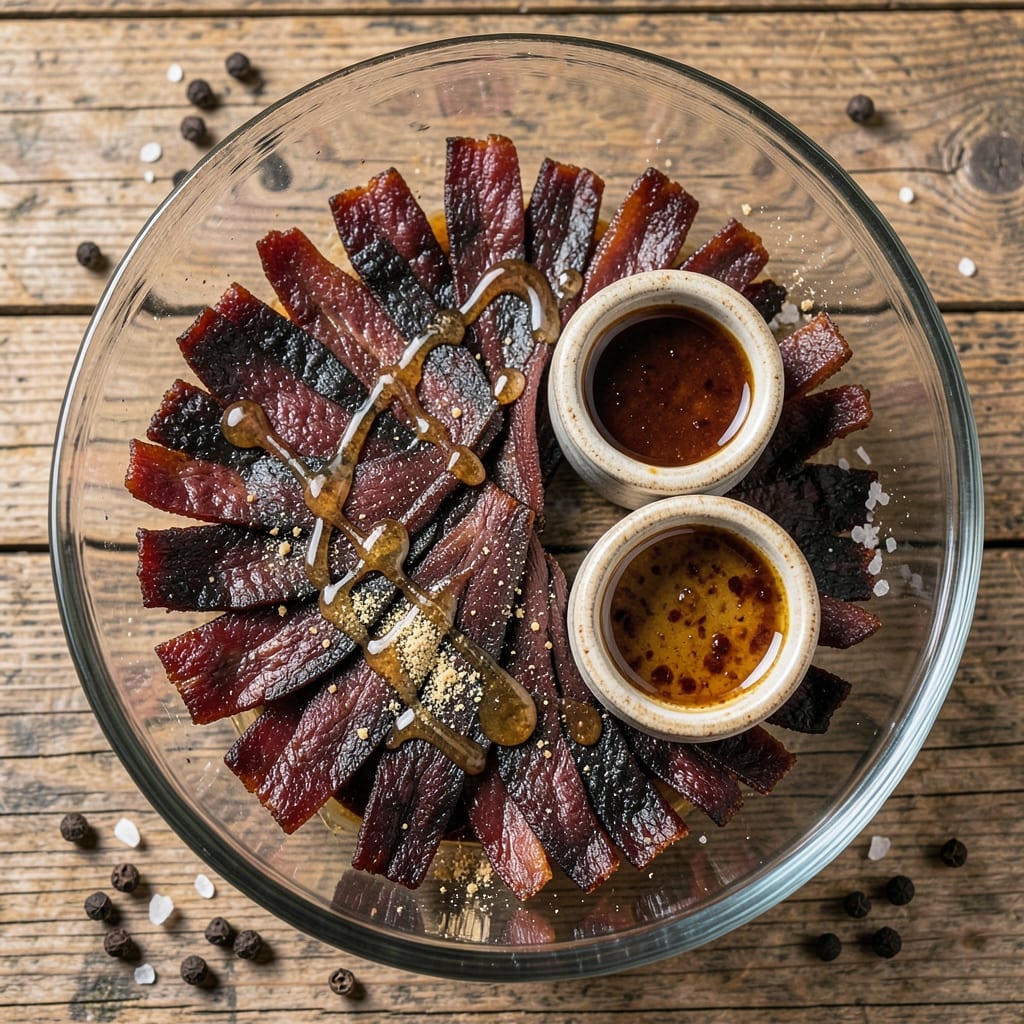
This apple cider vinegar beef jerky recipe transforms tough beef into tender, tangy chews with a bold flavor profile in just 4 hours. The acidity of apple cider vinegar tenderizes the meat while adding a bright, zesty kick that sets it apart from traditional jerky. I’ve perfected this method over years of experimentation, balancing sweetness, salt, and vinegar for a jerky that’s both addictive and perfectly preserved.
The process is straightforward: thinly slice lean beef, marinate in a blend of apple cider vinegar, brown sugar, and spices, then dry until chewy and firm. Whether you use a dehydrator, oven, or smoker, the key is patience—letting the vinegar work its magic to break down fibers and infuse flavor. This method delivers restaurant-quality jerky without the wait, making it ideal for snacking, gifting, or meal prep.
What you’ll end up with is jerky that’s crispy on the edges, tender in the center, and packed with a tangy-sweet flavor that’s impossible to resist. The vinegar’s acidity not only tenderizes but also acts as a natural preservative, extending shelf life while keeping the texture perfect. Perfect for hikers, campers, or anyone craving a protein-packed snack with a bold twist.
Ready to make jerky that stands out? This recipe is your guide to creating homemade jerky that’s better than store-bought—every bite is proof. Let’s get started with the full step-by-step process.
Ingredients for apple cider vinegar beef jerky
Lean beef, tangy vinegar, and precise seasoning create restaurant-quality jerky in just hours.
| Ingredient | Amount | Notes |
|---|---|---|
| Lean Beef Top Round Roast 🥩 | 1 ½ lb | Thinly sliced against grain |
| Apple Cider Vinegar 🍎 | 1 cup | Raw, unfiltered preferred |
| Brown Sugar 🍚 | ½ cup | Light or dark variety |
| Kosher Salt 🧂 | 2 tbsp | Diamond Crystal preferred |
| Black Peppercorns 🌶️ | 1 ½ tbsp | Freshly cracked coarse |
| Garlic Powder 🧄 | 1 tbsp | Non-iodized preferred |
| Onion Powder 🧅 | 1 tbsp | Freshly ground preferred |
| Smoked Paprika 🌶️ | 1 tbsp | Spanish or Hungarian |
| Ground Cayenne Pepper 🔥 | ½ tsp | Adjust for heat preference |
| Worcestershire Sauce 🍶 | 1 tbsp | Vegan version for strict diets |
| Liquid Smoke 💨 | ½ tsp | Optional for smoky depth |
| Unsalted Butter 🧈 | 2 tbsp | Cold, cubed for coating |
The beef is non-negotiable—top round roast delivers the perfect balance of lean protein and fat for tenderizing. Most butchers will slice it thinly for you, but if slicing yourself, cut against the grain for maximum tenderness. For sourcing, local butchers often have higher-quality cuts than grocery store meat counters. If you can't find top round, silverside or flank steak work well too, but trim excess fat to avoid rancidity during dehydration. The vinegar should be raw and unfiltered—it contains more mother and enzymes that enhance tenderization. Bragg or Texas Pete are reliable brands, but any raw apple cider vinegar will do.
No apple cider vinegar? White vinegar with 1 tsp lemon juice per cup mimics the acidity, though flavor will differ slightly. Substituting brown sugar? Coconut sugar or maple syrup work in a 1:1 ratio, but texture may vary. The Worcestershire sauce adds depth—Lea & Perrins is the gold standard, but any quality brand suffices. For a vegan version, use vegan Worcestershire like Annie's or follow-up with soy sauce and a splash of balsamic. The smoked paprika is crucial for that authentic jerky flavor—Spanish paprika offers a more subtle smoke than Hungarian, which can be quite bold. If you're sensitive to heat, reduce the cayenne to 1/4 tsp or omit entirely.
Pre-sliced beef keeps 3-4 days in the fridge wrapped tightly in plastic, while seasoned strips are best used immediately. For long-term storage, freeze marinated strips for up to 3 months—thaw overnight in the fridge before dehydrating. Dehydrated jerky lasts 2-3 weeks at room temperature in an airtight container, or 6 months in the freezer for maximum shelf life. Portion into vacuum-sealed bags to preserve freshness and prevent freezer burn. The butter coating adds richness but isn't essential—skip it if you prefer a lighter texture, though flavor will be slightly less complex.
Why You'll Love This Recipe
- Five-Ingredient Magic: I swear by this—just beef, vinegar, sugar, salt, and pepper. That’s it. No fancy marinades or hours of prep; the acid in the apple cider vinegar tenderizes the meat while caramelizing the edges into something crispy and addictive.
- Sweet-Savory Balance: Between us, the brown sugar and apple cider vinegar create a flavor that’s ridiculously good—tangy with a hint of caramelized depth. It’s not too sweet, not too sharp; it’s that perfect middle ground where every bite feels like a little reward.
- Snack Attack Ready: Honestly, this jerky is my go-to for road trips, gym bags, or when I’m craving something salty but don’t want to cook. It keeps for weeks in the fridge, so I’m always stocked without extra effort—plus, it’s way cheaper than store-bought.
- Budget Meal Upgrade: I buy top round roast in bulk because it’s lean and affordable, and this recipe stretches it into something restaurant-worthy. For the cost of one takeout order, I get enough jerky to feed my family for days—no waste, just pure satisfaction.
Step-by-step instructions for apple cider vinegar beef jerky
Transform lean beef into chewy, tangy jerky using precise technique and dehydrator magic.
Prepare the Marinade with Exact Measurements
In a medium bowl, combine the 1 cup apple cider vinegar, 0.5 cup brown sugar, 2 tbsp kosher salt, 1.5 tbsp freshly cracked black peppercorns, 1 tbsp garlic powder, 1 tbsp onion powder, 1 tbsp smoked paprika, 0.5 tsp ground cayenne pepper, 1 tbsp Worcestershire sauce, and 0.5 tsp liquid smoke. Whisk vigorously until the brown sugar dissolves completely and the mixture becomes syrupy.
Here's the thing—this marinade needs to coat every surface of the beef perfectly. If the brown sugar doesn't dissolve fully, strain the mixture through a fine-mesh sieve to remove any graininess. The acidity from the vinegar will tenderize the meat while the sugar and spices create that signature tangy-sweet flavor profile. Taste the marinade before proceeding; adjust the cayenne if you prefer milder heat.
Slice and Marinate the Beef Precisely
Using a sharp boning knife, slice the 1.5 lb lean beef top round roast against the grain into strips approximately ¼-inch thick. The lean nature of top round means precision matters—thicker slices won't dry properly, while thinner slices risk becoming brittle. Arrange the slices in a single layer in a glass baking dish just large enough to hold them without overlapping.
Pour the marinade over the beef, ensuring each strip is fully submerged. Cover the dish with plastic wrap and refrigerate for at least 12 hours, though I recommend 24 hours for maximum tenderness. This long marinating time is crucial for breaking down the tough muscle fibers. Don't rush this step—proper marination transforms tough beef into jerky with perfect texture.
Prep the Dehydrator for Even Drying
Preheat your dehydrator to 160°F—this temperature ensures the jerky dries slowly and evenly without cooking. Line the dehydrator trays with parchment paper to prevent sticking. Arrange the marinated beef strips in a single layer, ensuring they don't touch each other. Overcrowding leads to uneven drying and potential spoilage.
Here's where attention to detail pays off: use the 2 tbsp cold, cubed unsalted butter to lightly coat each strip. The butter creates a thin protective layer that helps preserve moisture during dehydration while adding subtle richness. Place the trays in the dehydrator and run for 4 hours, checking periodically to ensure even drying.
Monitor and Test for Perfect Texture
After 4 hours, remove one strip and test for flexibility. It should bend but not snap—this indicates proper dehydration. If any strips feel moist or sticky, return them to the dehydrator for additional 30-minute intervals until they reach the ideal texture. The jerky should be dry to the touch but still pliable, with a deep reddish-brown color from the marinade.
Real talk: the drying time can vary based on humidity levels in your kitchen. If your home is particularly damp, you might need an extra 30 minutes to 1 hour. Once fully dehydrated, let the jerky cool completely on a wire rack before storing. Properly dried jerky will keep for up to 2 weeks in an airtight container at room temperature.
Pro Tips For Making Apple Cider Vinegar Beef Jerky
- Slice Thin, Slice Even: I learned this the hard way—uneven slices mean uneven cooking. Use a sharp knife (or better, a deli slicer) to cut the top round into ¼-inch slices, no thicker. Thicker pieces stay chewy; thinner ones dry out, but this sweet-tart jerky needs consistent texture.
- Marinate Longer, Not Louder: Skip the 24-hour "quick marinade" hype. Let the beef soak in the apple cider vinegar mix for at least 48 hours—the acid tenderizes the lean meat while the brown sugar caramelizes. I used to rush it, and the jerky always tasted flat. Patience here makes the difference.
- Dry Before Smoking: Pat those slices bone-dry with paper towels before hitting the dehydrator or smoker. Moisture on the surface = soggy jerky. I know, it’s tedious, but trust me—this is the thing that matters most for crisp edges and deep flavor.
- Balance the Vinegar: Apple cider vinegar is bold, so don’t drown the beef. For every 1 cup of vinegar, use ½ cup brown sugar and 1 tsp salt—this keeps the sweetness from cloying and the acidity from overpowering. I was skeptical until I tried it: the ratio locks in that perfect tangy-sweet bite.
Storing and reheating this recipe
Room Temperature Storage
Store your freshly made jerky in an airtight container with a tight-sealing lid—glass jars with silicone seals work best. I prefer vacuum-sealed bags for maximum freshness, but any container that blocks air will do. Keep it in a cool, dark place like a pantry or cupboard. The vinegar marinade acts as a natural preservative, so properly dried jerky will last 2-3 weeks at room temperature. 🌡️
Refrigerator Preservation
If you want to extend shelf life, refrigerate your jerky in an airtight container for up to 3 months. The cold temperature slows down any potential bacterial growth while maintaining that perfect chewy texture. I like to portion it into smaller containers for easy snacking. Just
Freezer for Long-Term
For maximum longevity, freeze your jerky in vacuum-sealed bags or heavy-duty freezer bags with all air removed. This method preserves flavor and texture for up to 6 months. When ready to eat, thaw overnight in the fridge—never at room temperature. The freezer stops all bacterial activity, making it ideal for bulk prep or gifting. 🥶
Reheating (If Needed)
Jerky is best enjoyed cold, but if you prefer it warm, gently heat in a 200°F oven for 5-7 minutes or until just warmed through. Microwaving is possible but can make it rubbery—I recommend 10-second bursts on low power, checking frequently. The vinegar marinade makes jerky less prone to drying out when reheated compared to traditional versions. 🔥
Reviving Dry Jerky
If your jerky starts to dry out, place it in an airtight container with a damp paper towel for 10-15 minutes to restore moisture. The vinegar helps it retain some flexibility even after drying. For jerky that's been frozen, the butter coating will help maintain tenderness when properly stored. Never refreeze jerky once thawed—it's best enjoyed fresh from the freezer. 💫
Nutrition facts
Frequently asked questions about apple cider vinegar beef jerky
Why does apple cider vinegar make jerky taste different?
The vinegar adds a bright, tangy flavor that traditional recipes often lack. Its acidity tenderizes the meat while creating a unique depth that balances the sweetness and salt. The mother in raw vinegar also contributes subtle probiotic notes that enhance the overall complexity.
Can I use regular white vinegar instead of apple cider vinegar?
Yes, but expect a milder flavor profile. Use 1 cup white vinegar + 1 tsp lemon juice to mimic the tanginess. The texture will be similar, though the apple cider's natural sweetness and complexity will be missing. For best results, stick with apple cider vinegar.
How thin should I slice the beef for perfect jerky?
Aim for ¼-inch thick slices cut against the grain. This thickness ensures even drying while maintaining chewiness. Thicker slices may not dry properly, while thinner slices risk becoming brittle. A sharp boning knife makes this task much easier and safer.
What if my jerky turns out too chewy or too dry?
Too chewy? It likely didn't dry long enough—return to the dehydrator for 30-minute intervals until firm. Too dry? The temperature was too high or drying time too long. Next time, reduce heat to 150°F or check earlier. The butter coating helps prevent excessive dryness.
Can I make this jerky without a dehydrator?
Use an oven set to 170°F with the door slightly open for airflow. Place strips on a wire rack over a baking sheet and dry for 3-4 hours, checking frequently. A smoker at 160°F also works well, adding subtle smokiness to the vinegar's tang.