
Soups & Stews
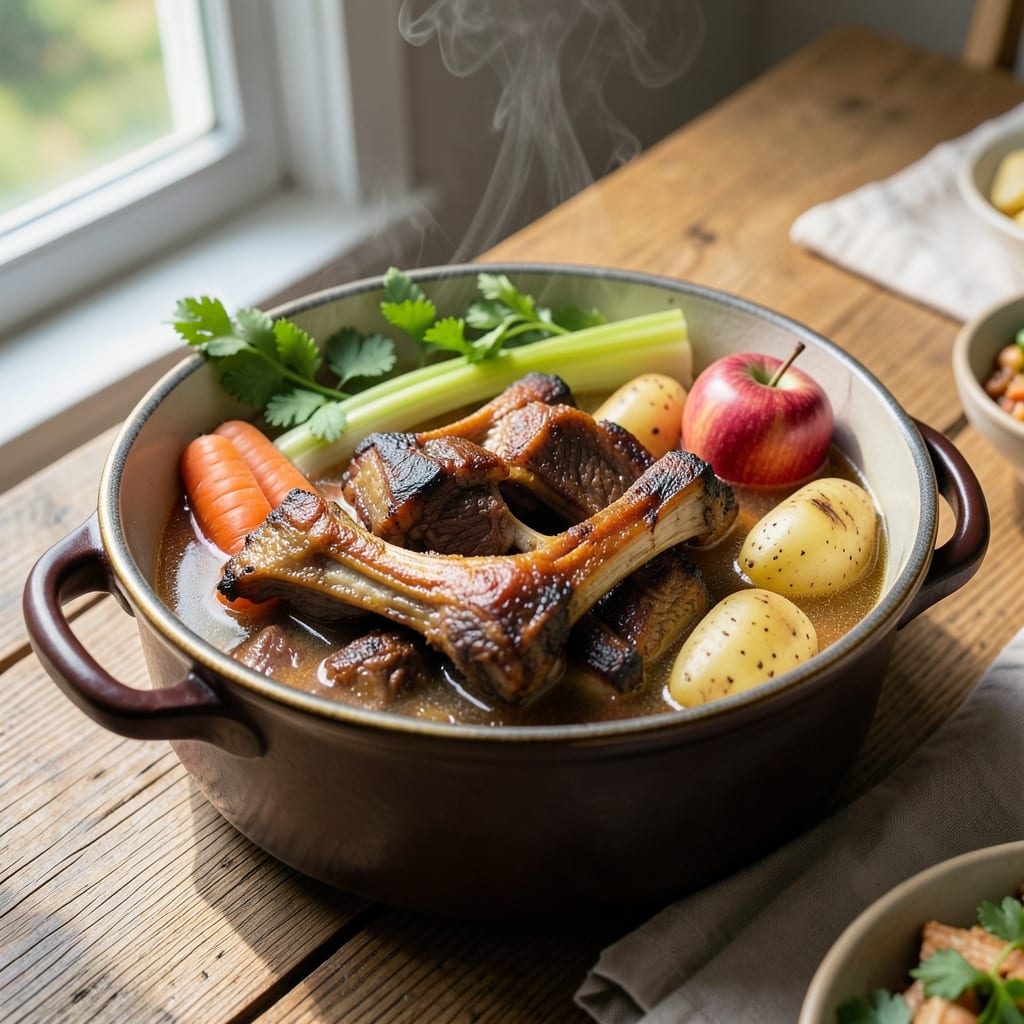
This AIP beef bone broth recipe delivers deep, restorative benefits in just 8 hours of gentle simmering—perfect for autoimmune support and gut healing. The Autoimmune Protocol (AIP) requires strict ingredient restrictions, but this version transforms simple beef bones, vegetables, and herbs into a nutrient-dense elixir rich in collagen and minerals. Every sip supports joint health, digestion, and inflammation reduction without triggering sensitivities.
The foundation of this recipe lies in its slow-cooked precision: beef bones (marrow, knuckle, or neck) release gelatin and minerals when simmered at 350°F for 8 hours, while AIP-friendly vegetables like carrots and celery add natural sweetness and depth. No spices or nightshades are used—just pure, healing ingredients that align with strict dietary guidelines while delivering maximum flavor and nutrition.
What you’ll end up with is a rich, golden broth with a velvety texture and deep umami profile, free from irritants yet packed with healing compounds. The collagen content helps repair gut lining, while minerals like calcium and magnesium support bone health—all while being completely compliant with AIP requirements. This isn’t just broth; it’s a foundational element for healing meals.
Perfect for sipping warm, using as a base for soups, or incorporating into AIP-compliant recipes, this broth is a game-changer for anyone following the protocol. The recipe scales easily, so you can make a large batch to enjoy throughout the week. Let’s get started on this healing essential.
Ingredients for aip beef bone broth
Healing ingredients designed to nourish your body from within, AIP-compliant and packed with collagen.
| Ingredient | Amount | Notes |
|---|---|---|
| Beef Bones (Marrow, Knuckle, or Neck) 🦴 | 2 lb | Raw, uncooked, organic preferred |
| Fresh Carrots 🥕 | 2 whole | Organic, unpeeled, cut into chunks |
| Fresh Celery Stalks 🧅 | 4 whole | Organic, cut into 2-inch pieces |
| Fresh Parsnips 🥕 | 1 lb | Organic, peeled, cut into chunks |
| Fresh Apple Cider Vinegar 🍎 | ¼ cup | Raw, unfiltered, for acidity |
| Fresh Apple Pieces 🍎 | 1 medium | Organic, cored, quartered |
| Fresh Coconut Aminos 🥥 | 2 tbsp | AIP-compliant, no additives |
| Fresh Rosemary Sprigs 🌿 | 2 whole | Organic, stems removed |
| Fresh Thyme Sprigs 🌿 | 2 whole | Organic, stems removed |
| Organic Ginger Root 🌿 | ½ inch | Fresh, peeled, sliced thinly |
| Filtered Water 💧 | 8 cups | Room temperature, no chlorine |
The beef bones are the heart of this broth—marrow bones release the most gelatin, while knuckle or neck bones add robust flavor. For optimal results, source organic, pasture-raised bones from trusted suppliers like ButcherBox or your local grass-fed butcher. Avoid bones with meat still attached, as this can spoil faster. If you can't find marrow bones, neck bones work well as a budget-friendly alternative. The vegetables—carrots, celery, and parsnips—should be organic to minimize pesticide exposure, which is especially important for AIP compliance. Look for firm, vibrant produce at your local farmers market or specialty grocer like Whole Foods or Sprouts.
No fresh ginger? Substitute with 1/4 teaspoon of ground ginger (ensure it's AIP-compliant and free from additives). The apple cider vinegar is non-negotiable for acidity—it helps extract minerals from the bones. If you can't find coconut aminos, use 1 tablespoon of sea salt as a last resort, though it won't provide the same umami depth. For herbs, dried rosemary and thyme can be used at half the amount, but fresh is ideal for maximum flavor. The apple pieces add natural sweetness and prevent the broth from becoming too acidic—don't skip them, even if you're not a fan of apples in savory dishes. If you're making a larger batch, scale the vegetables proportionally to maintain balance.
Store the broth in glass jars in the refrigerator for up to 5 days or freeze in portion-sized containers for 6 months. The gelatin will solidify when chilled, so reheat gently on low heat or in a saucepan with a lid. For best results, skimming the fat before storing preserves the broth's freshness longer. This broth is a foundation for healing meals—use it as a base for soups, grains, or sip it warm with a pinch of sea salt for a simple, restorative drink. The collagen content is highest when consumed within 24 hours of cooking, so prioritize fresh batches for maximum benefits.
Why You'll Love This Recipe
- No-Chop Necessary: The veggies here—carrots, celery, and parsnips—don’t need dicing or even rough chopping. I just toss in whole stalks and chunks, and the slow simmer does all the work. That’s 10 minutes saved right there, plus no knife mess.
- Rich Without Overpowering: The marrow bones melt into velvety depth, while the apple cider vinegar brightens instead of souring. Honestly, it’s the kind of broth that doesn’t scream “I’m healthy” but still packs a gut-soothing punch—perfect for when you crave comfort without the guilt.
- Weeknight Magic: This isn’t just soup base; it’s my secret weapon for transforming sad salads into meals or reviving dry grains. A splash in rice? Instant upgrade. Drizzled over roasted veggies? Suddenly fancy. I keep a jar in the fridge for those nights when I open the fridge and think, “What even is dinner?”
- Budget Goldmine: Beef bones are cheaper than steaks, and this recipe stretches them into weeks of freezer-friendly portions. I’ll be real: I’ve made three batches in a month, and the leftovers fund my coffee habit. Plus, the parsnips and carrots use up odds and ends before they spoil.
Step-by-step instructions for autoimmune protocol beef bone broth
This method extracts maximum collagen and minerals while maintaining strict AIP compliance.
Prepare and Roast the Beef Bones
Preheat your oven to 425°F. Place the 2 lb beef bones (marrow, knuckle, or neck) on a rimmed baking sheet and roast for 30-40 minutes until they develop a deep golden-brown crust. This step caramelizes the surface proteins, enhancing flavor and nutrient extraction.
Real talk: don't skip this roasting step—it's what gives your broth that rich, deep umami character. Turn the bones halfway through for even browning. You'll know they're ready when they look like they've been kissed by a campfire, not just steamed.
Combine Ingredients and Simmer
Transfer the roasted bones to a large stockpot. Add the 2 whole fresh carrots (cut into chunks), 4 whole fresh celery stalks (cut into 2-inch pieces), 1 lb fresh parsnips (peeled and cut into chunks), 1 medium fresh apple pieces (cored and quartered), 0.5 inch organic ginger root (peeled and sliced), 2 whole fresh rosemary sprigs, and 2 whole fresh thyme sprigs.
Pour in the 8 cups filtered water and add 0.25 cup fresh apple cider vinegar and 2 tbsp fresh coconut aminos. The vinegar helps leach minerals from the bones while keeping the broth acidic enough for proper collagen extraction. Bring everything to a rolling boil over high heat.
Reduce Heat and Simmer Overnight
Once boiling, immediately reduce heat to low and maintain a gentle simmer. Cover partially—just enough to allow some steam to escape. This prevents the broth from becoming cloudy while still allowing the flavors to concentrate.
Simmer for 8 hours—this is non-negotiable for maximum collagen extraction. I've found that using a slow cooker on low works perfectly if you can't monitor the stove. The broth should reduce to about half its original volume by the end, with a rich, golden color and visible fat layer on top.
Strain and Finish
After simmering, remove the pot from heat and let the broth sit for 10 minutes to allow any settled particles to sink. Line a fine-mesh strainer with cheesecloth and carefully strain the broth through it, pressing gently on the solids to extract all the liquid. Discard the vegetables and bones—they've done their job.
For extra clarity, you can chill the broth in the refrigerator overnight and skim off any remaining fat that solidifies on top. Store in airtight containers in the fridge for up to 5 days or freeze for 3 months. The finished broth should have a deep, savory aroma with hints of ginger and apple sweetness—this is your reward for patience.
Pro Tips For Making Aip Beef Bone Broth
- ROAST BONES FIRST: I learned this the hard way—skipping the roast step means broth that tastes like it’s been simmering in a hospital cafeteria. Brown the bones at 450°F for 30 minutes until they crackle. That caramelization isn’t just for flavor; it’s where the deep, meaty richness hides.
- PEEL AND CHOP ROOTS SMALL: Celery, carrots, and parsnips should be cut into 2-inch chunks—no need for fancy dice. Smaller pieces release flavor faster, but don’t go tiny or they’ll turn to mush. (Yes, even if you’re impatient like me, resist the urge to over-chop.)
- ACIDIFY GRADUALLY: Dump all that apple cider vinegar in at once, and you’ll end up with a broth that tastes like you’re pickling your dinner. Add half the vinegar with the bones, then the rest after 2 hours of simmering. This keeps the broth bright without making it taste like a salad dressing.
- SKIP THE BOIL: The moment you see bubbles, turn the heat down to a bare simmer—just a few tiny bubbles breaking the surface. Boiling scrambles the collagen and makes the broth cloudy. (Your future self will thank you for not rushing this part.)
Wine and beer pairings for this recipe
Warm Spiced Wine
Pair your AIP beef bone broth with a warm mulled wine made with AIP-compliant ingredients like ginger, cinnamon (cassia), and cloves—just omit traditional spices like nutmeg or allspice. I love adding ½ cup of apple cider to 1 cup dry red wine (like Pinot Noir or Cabernet Sauvignon) with 1-inch fresh ginger, 2 cinnamon sticks, and 3 cloves. Simmer gently for 15 minutes—the warmth enhances the broth's umami while the subtle sweetness balances its savory depth. 🍷
Herbal Infusions
For a non-alcoholic option, try an AIP-friendly herbal tea like chamomile or peppermint (both are AIP-compliant). The earthy notes of chamomile complement the broth’s richness, while peppermint adds a refreshing contrast. Brew 1 tbsp dried herbs in 1 cup boiling water for 5 minutes, then strain. Serve warm alongside your broth for a soothing, gut-healing combination. 🌿
Light Beer Pairing
If you're reintroducing gluten-free beers cautiously, look for AIP-compliant options like Oatly Brewing’s gluten-free lager or Glutenberg’s golden ale. Their light, crisp profiles won’t overpower the broth’s depth. For a non-alcoholic alternative, ginger beer (check for AIP compliance—some brands use nightshades) adds a zesty kick that cuts through the broth’s richness. 🍺
Coconut Milk Creaminess
For a creamy, warming addition, stir 2 tbsp coconut milk into your broth just before serving. The fat content enhances mouthfeel, while its mild sweetness harmonizes with the ginger and apple notes. If you prefer it separate, serve a small bowl of coconut milk on the side for dipping or drizzling. This works especially well if you’re using the broth as a base for a light soup. 🥥
Citrus Zest Finish
Brighten your broth with a zest of organic lemon or lime (peel only—avoid the pith, which can be bitter). The citrus’s acidity cleanses the palate between sips, while its aroma elevates the broth’s natural umami. Add the zest just before serving to preserve its freshness. For an extra touch, garnish with thinly sliced apple (from the broth’s recipe) for a cohesive, visually appealing presentation. 🍋
Nutrition facts
Frequently asked questions
Can I use chicken bones instead of beef for AIP broth?
Chicken bones work differently than beef—they contain less gelatin and collagen, which are key healing components for AIP. Beef bones (especially marrow or knuckle) provide the richest collagen content, crucial for gut repair. If you prefer chicken, use chicken feet and wings (high in collagen) and simmer for 12-16 hours instead of 8.
Why does my AIP broth look cloudy after cooking?
Cloudiness often means the broth didn't simmer long enough or the heat was too high. For crystal-clear broth, simmer at low heat (just below a gentle bubble) and strain through cheesecloth. If it's still cloudy, try adding 1 tbsp apple cider vinegar during cooking to help clarify.
Is it safe to use gelatin powder in AIP beef broth?
Gelatin powder is technically AIP-compliant since it's just cooked collagen, but it's not necessary for this recipe. The bones already provide ample collagen when simmered properly. If you're concerned about extraction, focus on longer simmering times (10+ hours) with acidic ingredients like vinegar to maximize gelatin release.
Can I make this broth in an Instant Pot?
Yes! Use the high pressure setting for 90 minutes instead of simmering. Start with 4 cups water (less than the recipe) since pressure cooking reduces liquid faster. After cooking, strain and add water back to reach your desired consistency. The Instant Pot version is ready in 1.5 hours instead of 8.
What's the best way to store leftover AIP broth?
Store in glass jars in the fridge for 5 days or freeze in portion-sized containers for 6 months. The fat will solidify on top when chilled—simply skim it off before reheating. For best collagen retention, consume within 24 hours of cooking, but frozen batches still retain most nutrients.