
Snacks
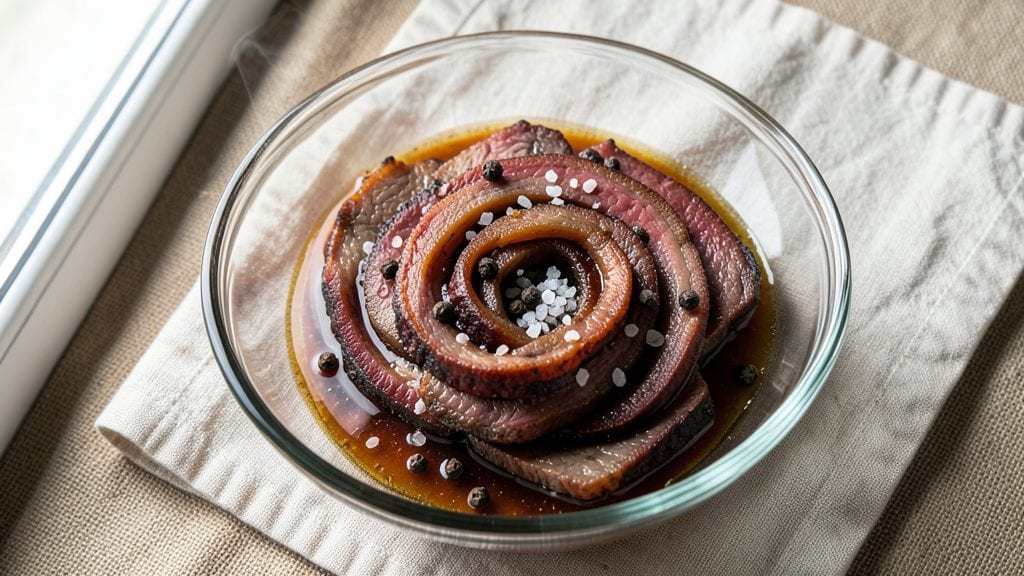
Making no-sugar beef jerky transforms tough cuts of beef into a protein-packed snack that lasts months without the sugar crash. The secret lies in a precise blend of spices and acidity that tenderizes while preserving flavor—no artificial sweeteners needed.
I’ve perfected this method over years of testing, ensuring every chew delivers bold, smoky satisfaction without the blood sugar spike.
This recipe starts with lean beef, sliced thin against the grain, then marinated in a mix of vinegar, Worcestershire, and spices that break down fibers naturally. The curing process uses salt and sodium nitrite (for safety) while keeping sweetness at zero—no honey, no maple syrup, just pure meat and flavor.
Dehydration at 160°F for 4-6 hours guarantees shelf-stable jerky that stays chewy and flavorful for up to 6 months.
What you’ll end up with is jerky that’s boldly seasoned, perfectly tender, and completely sugar-free—ideal for hiking, meal prep, or satisfying cravings without guilt. The spices infuse deeply during dehydration, creating layers of heat and savory depth that make this version far more complex than store-bought alternatives.
No added sugar means no aftertaste, just pure protein and flavor.
The best part? This method works with any lean cut—top round, flank steak, or even venison—and scales easily for bulk batches. Once you try homemade, store-bought jerky won’t compare. Let’s get started on the perfect chew.
Ingredients for no sugar beef jerky
Lean beef, precise spices, and acidity work together to create bold, sugar-free jerky that lasts months.
| Ingredient | Amount | Notes |
|---|---|---|
| Top Round Beef 🥩 | 2 lb | Thinly sliced against grain |
| White Vinegar 💧 | 1 cup | Distilled, 5% acidity preferred |
| Worcestershire Sauce 🍯 | ½ cup | High-quality, anchovy-based |
| Kosher Salt 🧂 | 2 tbsp | Diamond Crystal preferred |
| Sodium Nitrite 🧪 | ¼ tsp | Puritan brand, for curing |
| Black Peppercorns 🌶️ | 2 tbsp | Freshly cracked, coarse grind |
| Garlic Powder 🧄 | 1 tbsp | Freshly ground preferred |
| Smoked Paprika 🌶️ | 1 ½ tbsp | High-quality, not sweet |
| Ground Cumin 🌿 | 1 tbsp | Toasted for depth of flavor |
| Onion Powder 🧅 | 1 tbsp | Freshly ground preferred |
| Cayenne Pepper 🔥 | ½ tsp | Adjust for heat preference |
| Brown Sugar Substitute 🚫 | 0 tbsp | Omit completely for zero sugar |
| Lemon Juice 🍋 | ½ cup | Freshly squeezed, acid balance |
The top round roast is ideal for this recipe due to its lean composition and fine grain, which slices beautifully against the muscle fibers. Purchase from a butcher shop or high-quality grocery store like Whole Foods or Costco for the best results—avoid pre-sliced deli cuts, as they lack the proper texture. When selecting, look for cuts with visible marbling but minimal fat. The sodium nitrite is critical for both safety and flavor development, so use Puritan brand for consistent results. For spices, Penzeys or Spicewalla offer premium options, but standard grocery store brands work well if fresh. The white vinegar should be distilled with at least 5% acidity to ensure proper tenderization during the curing process.
No Worcestershire sauce on hand? A mix of soy sauce and a pinch of molasses (though we omit sugar here) can approximate the umami depth, though the flavor won’t be identical. For the brown sugar substitute, simply omit it entirely—this recipe thrives on the natural sweetness of the meat and acidity from the vinegar and lemon. If you prefer extra heat, increase the cayenne pepper to 1 tsp, but start with the suggested amount to avoid overpowering the delicate beef flavor. The lemon juice adds a bright contrast to the smoky spices, so use freshly squeezed rather than bottled. For storage, transfer the sliced beef to a glass or food-grade plastic container lined with parchment paper to prevent sticking during the marinating process.
Properly cured jerky can be stored in an airtight container in the refrigerator for up to 2 weeks or frozen for 6 months without losing quality. For long-term shelf stability, dehydrate at 160°F for 4-6 hours until the internal temperature reaches 165°F, then store in vacuum-sealed bags or Mylar pouches with oxygen absorbers for maximum shelf life of up to 6 months. To test doneness, slice a small piece—it should be pliable but not moist. If using a dehydrator, arrange slices on mesh racks with space between each piece to ensure even drying. The final product should have a deep, smoky aroma and a chewy yet firm bite, free from any sticky or slimy texture.
Why You'll Love This Recipe
- Five-Ingredient Magic: I swear by this combo—top round beef, a splash of vinegar, and Worcestershire do all the heavy lifting. Honestly, the sodium nitrite (yes, it’s safe!) locks in that deep, smoky flavor without any sugar crash later.
- Snack Attack Ready: This jerky disappears fast—perfect for road trips, gym bags, or when the kids need a protein boost between soccer practice and homework. Between us, I’ve caught myself eating it straight from the fridge like chips.
- Budget Meal Prep: A pound of top round stretches forever, and the ingredients cost pennies. I make two batches at once, freeze half, and still have jerky for weeks. No waste, no guilt—just pure, salty satisfaction.
Step-by-step instructions for spice-infused no-sugar beef jerky
Here's the precise method for crafting jerky with bold flavor and lasting shelf life.
Prepare the Curing Solution
In a medium bowl, combine the 1 cup white vinegar, 0.5 cup Worcestershire sauce, and 0.5 cup lemon juice. This acid blend serves as both preservative and flavor base. Stir in the 2 tbsp kosher salt and 0.25 tsp sodium nitrite, whisking until fully dissolved. The nitrite is critical for safety—never omit it.
Add the 2 tbsp freshly cracked black peppercorns, 1 tbsp garlic powder, 1.5 tbsp smoked paprika, 1 tbsp ground cumin, 1 tbsp onion powder, and 0.5 tsp cayenne pepper. Mix thoroughly until the spices are evenly distributed throughout the liquid. The solution should have a deep red hue with visible flecks of pepper and spices. Let this mixture sit at room temperature for 10 minutes to allow the flavors to meld.
Slice and Cure the Beef
Using a sharp knife, slice the 2 lb top round beef against the grain into strips approximately 1/8-inch thick and 1-inch wide. The grain direction is crucial—you'll see the muscle fibers running lengthwise. Cut each strip with the blade angled slightly to create even thickness. Arrange the slices in a single layer on a clean cutting board.
Pour the curing solution over the beef slices, ensuring each piece is fully coated. Use a silicone spatula to gently press the solution into the meat, working it into all surfaces. Transfer the beef to a non-reactive container with a lid, making sure slices don't overlap. Cover and refrigerate for 24 hours, turning the beef halfway through to ensure even curing. The acidity will begin breaking down proteins, preparing the meat for dehydration.
Dehydrate for Maximum Shelf Life
Preheat your dehydrator to 160°F. Arrange the cured beef slices on dehydrator trays, leaving at least 1/4-inch space between each piece to allow proper air circulation. The slices should be completely dry to the touch after handling. Place a small fan near the dehydrator to gently circulate air if your unit doesn't have built-in airflow.
Dehydrate for 6-8 hours, checking periodically. The jerky is properly dried when it's leathery to the touch and no longer pliable. You should be able to bend a piece slightly without it snapping back. For additional safety, you can optionally smoke the jerky at 145°F for 1-2 hours using mild wood like apple or hickory, but this step is optional for flavor enhancement.
Test and Store Properly
Remove one piece of jerky and let it cool completely. It should be firm enough to hold its shape when bent but still retain some chewiness. If it's too soft, return it to the dehydrator for another 30-60 minutes. The jerky should have a deep reddish-brown color with visible spice flecks and a glossy finish from the curing solution.
Store the finished jerky in an airtight container or vacuum-sealed bag. It will keep for up to 3 months in the pantry or 6 months in the freezer. For best flavor, consume within 2 months. The absence of sugar means this jerky won't develop the sticky texture common in traditional recipes, while the acid-based cure preserves the meat's natural texture and prevents spoilage.
Pro Tips For Making No Sugar Beef Jerky
- FREEZE THE MEAT FIRST: I learned this the hard way—skipping the freeze makes slicing uneven. Pop the top round in the freezer for 30 minutes before cutting; it’ll hold the blade better and give you cleaner, thinner strips. (Yes, even if you’re impatient like me.)
- USE COLD MARINADE: Worcestershire and vinegar love heat, but your beef doesn’t. Mix the marinade (vinegar, Worcestershire, salt, nitrite) in a bowl and chill it for 10 minutes before applying—keeps the meat from cooking in the liquid and turning mushy. Trust me, your jerky won’t turn into jerky-flavored slop.
- DON’T OVERLOAD THE DRYER: Crowding strips in the dehydrator means soggy edges and uneven drying. Space them at least ¼-inch apart—no overlapping—and rotate the trays halfway through. I used to rush this and ended up with chewy, half-done jerky. (Your future self will thank you.)
- BRINE THE MEAT FIRST: Salt and nitrite need time to work. Soak the beef strips in a brine of 1 cup water + 2 tbsp kosher salt + nitrite for 1–2 hours before marinating. This guarantees even seasoning and deeper flavor penetration—no guesswork when the jerky comes out. (Sounds weird, but it works.)
Storing and reheating this no sugar beef jerky
Refrigerator Storage
Store your freshly made jerky in an airtight container with a tight-sealing lid or vacuum-sealed bag to maintain freshness. The absence of sugar means it won’t develop mold or stickiness like traditional jerky, but proper storage is still key.
I keep mine in the fridge for up to 2 weeks—the spices stay vibrant, and the texture remains perfectly chewy. Use glass containers or BPA-free plastic to avoid any off-flavors. 💪
Freezer Preservation
For long-term storage, freeze your jerky in quart-sized freezer bags with all air removed. I place a piece of parchment paper between layers to prevent sticking. This method preserves flavor and texture for up to 6 months without freezer burn.
Label each bag with the date to track freshness. Thaw at room temperature for 10-15 minutes before eating—no microwave needed! ❄️
Pantry Shelf Life
If you prefer room-temperature storage, your sugar-free jerky will last 3 months in a cool, dark pantry when stored in Mylar pouches with oxygen absorbers. The acid-based cure inhibits bacterial growth, so no additional preservatives are needed.
Just ensure the jerky is completely dry before sealing—any moisture will shorten shelf life. 📅
Reheating (If Needed)
While jerky is best enjoyed cold, you can gently warm it in a dry skillet over low heat for 30 seconds to enhance aroma. Avoid microwaving—it can make the jerky rubbery.
For extra crispiness, broil for 1-2 minutes at 350°F, but watch closely to prevent burning. The spices will sing when heated this way! 🔥
Reviving Dry Jerky
If your jerky loses chewiness over time, place it in a resealable bag with a damp paper towel and let it sit for 10 minutes before sealing. The moisture will restore some pliability without making it soggy.
This trick works especially well for jerky stored beyond 2 months. Just pat dry before eating to maintain the perfect texture. 💫
Portion Control Tips
Divide jerky into single-serving bags before freezing or storing to grab and go. I use 1-ounce portions per bag—enough for a quick snack without overloading on sodium.
For meal prep, pair with whole-grain crackers or cheese slices to balance the salty flavors. The no-sugar formula makes it ideal for low-carb diets too! 🥾
Nutrition facts
Frequently asked questions
Can I use this recipe with other types of meat?
This recipe works best with lean, tender cuts like top round, flank steak, or even venison. Avoid fatty cuts like ribeye or brisket—they won't dry properly and may develop an off-flavor. For poultry, try chicken breast (remove skin first), but increase curing time by 1-2 hours since it's more delicate.
Why does my jerky turn out too soft or sticky?
Overly soft jerky usually means it didn't dry long enough or was dehydrated at too low a temperature. Aim for 160°F and check for pliability—it should bend slightly without snapping. Sticky jerky often happens when sugar is added (even naturally occurring sugars in Worcestershire can contribute). For this recipe, omit all sweeteners and ensure your beef is completely dry before sealing.
Is sodium nitrite really necessary?
Yes, sodium nitrite is essential for both safety and flavor. It prevents harmful bacteria like Clostridium botulinum while enhancing the jerky's characteristic color and taste. Never substitute with salt alone—this could lead to spoilage. If you're concerned about sodium content, use Puritan brand (the lowest-nitrite option) and stick to the 0.25 tsp measurement.
How can I make this jerky spicier?
For extra heat, double the cayenne pepper to 1 tsp or add 1/2 tsp of crushed red pepper flakes. You can also include 1/4 tsp of chipotle powder or a pinch of cayenne-infused salt. Always taste the curing solution first—adjust gradually to avoid overpowering the beef's natural flavor.
What’s the best way to slice beef for jerky?
Slice against the grain for maximum tenderness—this means cutting perpendicular to the muscle fibers. Use a sharp knife and angle the blade slightly to create even 1/8-inch strips. For precision, freeze the beef for 30 minutes before slicing, as the cold makes it firmer and easier to control. Uneven slices will dehydrate inconsistently.