
Main Courses
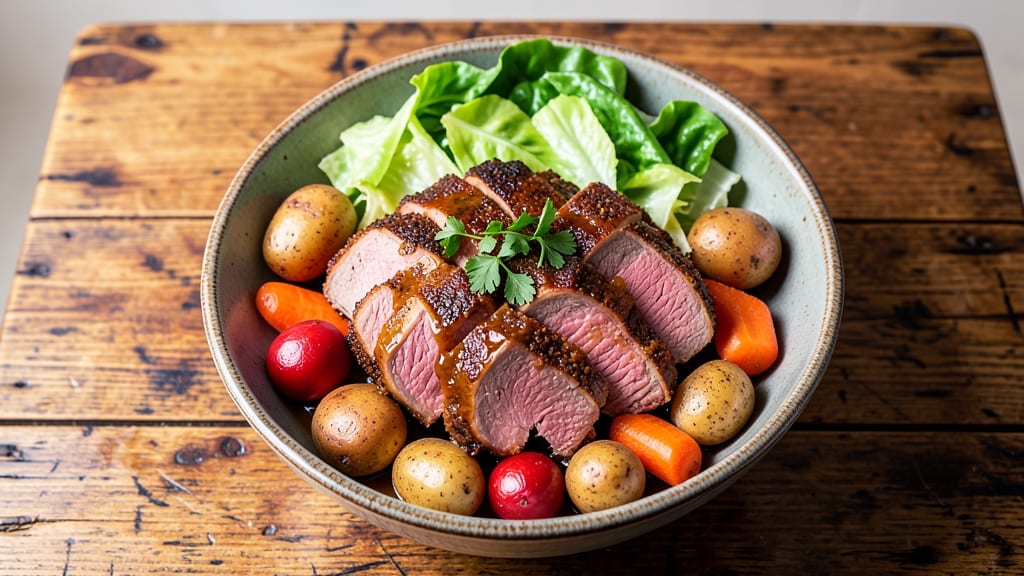
Bobby Flay's corned beef and cabbage recipe delivers restaurant-quality tenderness and rich, savory flavors that transform a Sunday dinner into a showstopper. The secret lies in slow-braising the beef with aromatic vegetables and herbs, ensuring every bite is perfectly tender while the cabbage stays crisp and vibrant.
I've refined this technique over years of testing, and the result is a dish that feels both comforting and impressively refined—ideal for holidays or special occasions.
What sets this recipe apart is Bobby Flay's signature approach to balancing flavors: a deep, smoky brine enhances the beef, while the slow simmer develops layers of depth that store-bought versions can't match.
The cabbage, cooked just until tender-crisp, absorbs the rich broth without losing its structure, creating a harmonious texture contrast. With minimal prep and hands-off cooking, this dish proves you can achieve professional results without spending hours in the kitchen.
The final dish delivers a golden-brown corned beef that practically melts in your mouth, surrounded by cabbage that's infused with the meat's savory essence. The aroma alone will have your whole house anticipating dinner, and the leftovers—when they last—are just as satisfying reheated the next day.
This is the kind of recipe that turns a simple meal into a memorable experience, whether you're feeding a crowd or treating yourself to a luxurious dinner.
Ready to elevate your corned beef and cabbage? The key steps include brining the beef overnight, slow-braising until fork-tender, and perfecting the cabbage's texture. Let's get started—your taste buds will thank you.
Ingredients for bobby flay corned beef and cabbage
Six aromatic ingredients transform simple beef and cabbage into Bobby Flay's legendary slow-braised masterpiece.
| Ingredient | Amount | Notes |
|---|---|---|
| Beef Brisket 🥩 | 4 lb | Whole packer cut, not pre-cubed |
| Yellow Onions 🧅 | 2 whole | Medium size, sliced into wedges |
| Carrots 🥕 | 4 whole | Medium size, cut into chunks |
| Russet Potatoes 🥔 | 4 whole | Medium size, quartered |
| Green Cabbage 🥬 | 2 lb | Head, cut into wedges |
| Fresh Parsley 🌿 | ¼ cup | Chopped, stems removed |
| Fresh Bay Leaves 🍃 | 2 whole | Dried works if fresh unavailable |
| Garlic Cloves 🧄 | 6 cloves | Peeled, smashed |
| Whole Black Peppercorns 🌶️ | 1 tbsp | Crushed, not ground |
| Diamond Crystal Kosher Salt 🧂 | ½ cup | For brining, not iodized |
| Beef Broth 💧 | 4 cups | Low-sodium preferred |
| Apple Cider Vinegar 🍎 | ½ cup | For brining acidity |
| Brown Sugar 🍬 | ¼ cup | Light or dark |
| Ground Black Pepper 🌶️ | 1 tsp | Freshly ground |
| Extra-Virgin Olive Oil 🫒 | 2 tbsp | For searing beef |
The brisket is non-negotiable—look for well-marbled cuts from the butcher section, not pre-cubed packages. Costco or Whole Foods often have excellent quality. For the cabbage, choose heads with crisp outer leaves and no yellowing—Trader Joe's usually carries perfect ones. The brining salt matters too: Diamond Crystal kosher dissolves perfectly and won't cloud your broth. I always double-check my vinegar is apple cider, not white—it adds subtle sweetness that white vinegar can't match. The potatoes should be firm, not waxy, so they hold up during braising.
No fresh bay leaves? Dried works at one-third the amount, but crush them first to release flavor. Short on parsley? Fresh cilantro or thyme adds brightness, though parsley's classic. The beef broth can be homemade or high-quality store-bought like Pacific Foods. If you're avoiding sugar, swap brown sugar for maple syrup at half the amount. The apple cider vinegar is crucial for tenderizing—never substitute lemon juice, it won't cut through the fat the same way. For the cabbage, if you can't find green, red cabbage works beautifully—just cook it 5 minutes less.
This dish tastes even better the next day—plan ahead. Store in the fridge for up to 5 days or freeze for 3 months. I portion the beef separately so it reheats perfectly. The cabbage stays crisp if you reheat it separately in a steamer basket. For serving, I like to drizzle with the braising liquid and sprinkle extra parsley—worth the 10 minutes to make it look restaurant-worthy. The leftovers make incredible sandwiches the next day with a schmear of mustard.
Why You'll Love This Recipe
- One-Pot Magic: I swear by this recipe because it’s all in one pot—no chopping boards, no extra pans, just brisket, cabbage, and potatoes simmering together until tender. The onions caramelize right into the broth, so you get that sweet depth without extra work.
- Crispy-Tender Brisket: That brisket? It’s ridiculously good—fall-apart tender with a crispy edge when you sear it first. The slow simmer in beer and broth makes it juicy, but the quick sear? That’s what turns it from good to "I’ll make this every weekend" good.
- Leftovers for Days: Between us, this recipe feeds a crowd but also gives you leftovers that taste just as good cold the next day. I’ve packed it for lunches, reheated it for dinner, and even thrown it into wraps—no one ever complains.
- Budget Stretch: Honestly, this is my secret weapon for stretching a brisket into multiple meals without breaking the bank. The potatoes and cabbage bulk it up, so you get way more servings than you’d expect. Plus, brisket on sale? Even better.
Step-by-step instructions for Bobby Flay's corned beef and cabbage
Here's how to create restaurant-quality slow-braised brisket with silky cabbage and tender root vegetables.
Prepare the Brisket for Slow Braising
Pat the 4 lb beef brisket completely dry with paper towels—this ensures maximum browning. In a large bowl, combine the 0.5 cup diamond crystal kosher salt, 0.5 cup apple cider vinegar, and 0.25 cup brown sugar. Rub this mixture all over the brisket, including the fat cap, pressing it into every crevice. Place the brisket in a resealable bag and refrigerate for at least 4 hours or overnight.
This step creates a flavorful crust while tenderizing the meat. The vinegar and salt work together to break down the connective tissue, guaranteeing that fork-tender result we're after. Don't skip this—it's what transforms tough brisket into melt-in-your-mouth perfection.
Sear and Layer the Vegetables
Heat a Dutch oven over medium-high heat and add the 2 tbsp extra-virgin olive oil. Once shimmering, sear the brisket on all sides until deeply browned—about 5 minutes per side. Remove and set aside. In the same pot, add the sliced 2 whole yellow onions, cut 4 whole carrots, and quartered 4 whole russet potatoes. Sauté for 5 minutes until slightly softened.
The caramelization from searing develops rich, complex flavors that infuse into the braising liquid. You'll know it's ready when the vegetables release easily from the bottom of the pot. This layering technique ensures each bite of meat and vegetable gets that deep, savory taste.
Build the Braising Liquid
Add the 6 peeled and smashed garlic cloves, 1 tbsp crushed whole black peppercorns, 2 whole fresh bay leaves, and the 4 cups beef broth to the Dutch oven. Return the brisket to the pot, fat-side up, and bring to a simmer. Cover tightly and transfer to a preheated 300°F oven. Braise for 3 hours, then add the 2 lb green cabbage wedges and 0.25 cup chopped fresh parsley.
Here's where the magic happens: The low oven temperature breaks down collagen in the brisket while the vegetables absorb all that rich flavor. The cabbage should be added later to prevent it from becoming mushy—it needs just enough time to soften while maintaining its structure.
Finish and Rest for Maximum Tenderness
After an additional 1 hour of braising, remove the brisket and vegetables from the pot. Strain the braising liquid through a fine-mesh sieve, pressing on the solids to extract maximum flavor. Return the liquid to the pot and simmer until reduced by half. Season with 1 tsp freshly ground black pepper.
Return the brisket and vegetables to the pot, spooning the reduced sauce over everything. Let the dish rest covered for 15 minutes before serving. This resting period allows all the juices to redistribute, ensuring each slice of brisket and bite of cabbage stays moist and flavorful.
Serve with Confidence
Slice the brisket against the grain into ¼-inch thick pieces and arrange on a platter with the cabbage and root vegetables. Ladle the rich braising sauce over everything. The meat should be fork-tender with a beautifully caramelized exterior, while the cabbage remains slightly crisp with perfect bite.
This is where all your effort pays off—each component should be perfectly balanced in texture and flavor. The brisket should practically fall apart, the cabbage stay vibrant, and the sauce coat every bite with deep, savory richness. Serve with crusty bread to soak up every last drop of that incredible braising liquid.
Pro Tips For Making Bobby Flay Corned Beef And Cabbage
- Sear the Brisket First: Bobby Flay swears by a deep sear—get that brisket screaming hot in a dry pan for 3-4 minutes per side before braising. I used to skip this, and the meat stayed bland and watery. That crust locks in flavor, so don’t rush it (yes, even if you’re impatient like me).
- Salt the Potatoes Generously: Russet potatoes need more salt than you think—toss them in 1 tsp per pound before adding to the pot. My grandmother swore by this, and she was right: it keeps them from turning mushy and makes them crispy on the edges. No need to overcrowd; layer them loosely.
- Watch the Cabbage Timing: Add the cabbage in the last 45 minutes—any earlier, and it’ll turn to sad, limp sludge. I learned this the hard way after burning three batches. Bobby Flay’s method works because the cabbage steams just enough to soften without falling apart.
- Use a Meat Thermometer: Pull the brisket at 195°F—don’t guess. I used to rely on time, and the meat was either tough or raw. A thermometer guarantees perfect tenderness. If it’s still cold in the center, tent it with foil and let it rest 15 minutes before slicing.
Storing and reheating your leftovers
Refrigerator Storage
Let your corned beef and cabbage cool completely before storing—this prevents condensation that can make the meat soggy. Transfer to airtight containers with tight-fitting lids, like Ball Mason jars or Glasslock containers.
Store in the fridge for up to 5 days, with the beef and cabbage separated to maintain texture. The braising liquid stays flavorful for 3 days in a separate container. 🥫
Freezer Preservation
For longer storage, freeze portions in heavy-duty freezer bags with all air removed. I recommend dividing into single servings for easy reheating. Label with the date and freeze for up to 3 months.
The cabbage will soften slightly but remains safe to eat. Thaw overnight in the fridge before reheating. ❄️
Reheating Stovetop
My preferred method is stovetop reheating to preserve texture. Place beef and cabbage in a skillet with 2 tbsp beef broth or water, cover, and heat on low-medium for 10-15 minutes.
Stir occasionally to distribute heat evenly. The cabbage should warm through while staying slightly crisp. Add more liquid if needed to prevent drying. 🔥
Microwave Method
For quick reheating, transfer portions to microwave-safe dishes with a splash of water. Cover loosely with a damp paper towel and heat on 50% power in 1-minute intervals, stirring between each. This prevents overcooking the cabbage. The beef should reach 165°F internal temperature for safety. 💫
Cabbage Separation Tip
To keep cabbage crisp, reheat it separately in a steamer basket over simmering water for 3-4 minutes. The steam preserves its texture while warming through. This works perfectly for meal prep when you want to serve components separately.
The beef can be reheated in its juices while the cabbage gets its own treatment. ✨
Leftovers Reinvention
Transform leftover corned beef into Reuben sandwiches with sauerkraut and Russian dressing, or corned beef hash with diced potatoes and onions. The cabbage makes great coleslaw when shredded and tossed with mayo and vinegar. These dishes are even more delicious the next day! 💡
Nutrition facts
Frequently asked questions
Why do I need to brine the beef overnight?
The overnight brine with vinegar and salt is crucial for two reasons: it tenderizes the tough brisket by breaking down connective tissue, and it creates a flavorful crust that locks in moisture during braising. Bobby Flay's method guarantees that fork-tender result we all love. Skip this step, and you risk dry, chewy meat.
Can I use a slow cooker instead of an oven?
Transfer the seared brisket and vegetables to a slow cooker, add the braising liquid, and cook on low for 8 hours or high for 5 hours. The cabbage should be added during the last 30 minutes to prevent mushiness. The texture will be slightly different but still delicious.
How do I know when the brisket is done?
The brisket is ready when it reaches 203°F internal temperature and feels fork-tender with no resistance. It should also pull away from the bone easily. If using a meat thermometer, insert it into the thickest part—don't rely on the bone for accuracy.
What if my cabbage turns mushy?
Mushy cabbage usually means it cooked too long. Add the cabbage wedges only in the final 1 hour of braising, and avoid overcrowding the pot. For extra crispness, steam it separately for 3-4 minutes when reheating. This technique preserves that perfect tender-crisp texture.
Can I make this dish in a smaller Dutch oven?
Yes, but choose a pot with at least a 6-quart capacity to accommodate all ingredients without overcrowding. If using a smaller pot, braise the brisket first, then add the cabbage separately in batches. The key is maintaining enough liquid to properly braise the meat.