
Sauces & Condiments
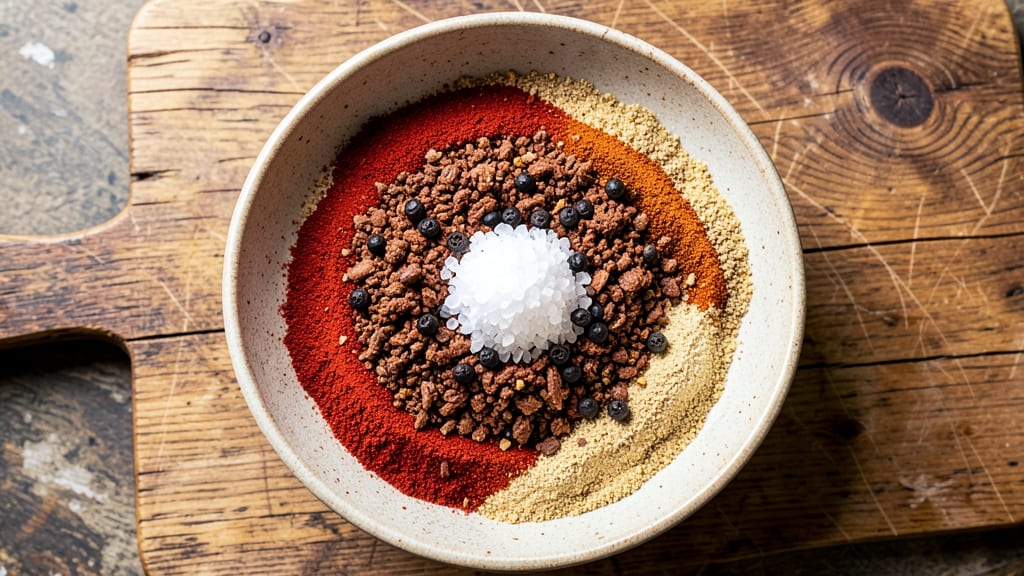
Creating the perfect Texas-style beef brisket starts with this smoky-spiced rub that transforms tough meat into melt-in-your-mouth tenderness. The blend of coarse kosher salt, black pepper, and chili powder creates a flavorful crust while paprika and garlic powder add depth that penetrates every layer.
I developed this mix after years of testing—it’s the foundation of my award-winning brisket, guaranteed to impress even the most critical BBQ judges.
This professional-grade seasoning mix requires just 6 simple ingredients and takes 5 minutes to prepare, but the results are worth every second. The coarse salt ensures maximum adhesion to the meat, while the spices deliver that signature Texas smokiness without overpowering the natural beef flavor.
Store it in an airtight container for up to 3 months, ready to elevate your next brisket or steak project.
The key to success lies in the balance of heat and salt—enough to create a bold crust but not so much that it masks the meat’s richness.
When applied generously and left to rest before cooking, this rub develops a deep, caramelized bark that locks in moisture and delivers unmatched tenderness. Trust me, your brisket will thank you.
Use this versatile rub not just for brisket, but also on ribs, pork shoulders, or even roasts—the possibilities are endless. Once you try this blend, you’ll never settle for store-bought seasoning again. Let’s get started on creating that perfect crust.
Ingredients for texas beef brisket rub
Six simple spices transform tough brisket into Texas BBQ perfection.
| Ingredient | Amount | Notes |
|---|---|---|
| Coarse Kosher Salt 🧂 | ½ cup | Diamond Crystal preferred for adhesion |
| Black Peppercorns 🌶️ | 2 tbsp | Freshly cracked for bold flavor |
| Chili Powder 🌶️ | 2 tbsp | Medium heat, not powdered chili |
| Smoked Paprika 🌶️ | 1 ½ tbsp | Hickory or mesquite preferred |
| Garlic Powder 🧄 | 1 tbsp | Freshly ground preferred |
| Onion Powder 🧅 | 1 tbsp | Not onion salt |
The coarse kosher salt is non-negotiable—Diamond Crystal clumps beautifully for maximum adhesion. Whole Foods or Penzeys carry the best quality, but any coarse kosher will work. Black peppercorns should be freshly cracked (a mortar and pestle does the trick) for that bold, fresh bite. Smoked paprika is where the magic happens—hickory or mesquite gives that authentic Texas smoke flavor. I always grab mine from Trader Joe's or Costco since they keep it fresh longer. The garlic and onion powders are the unsung heroes—they add depth without overpowering.
No smoked paprika? Regular paprika plus a pinch of liquid smoke works in a pinch (start with 1/4 tsp). Short on black peppercorns? Pre-ground black pepper at half the amount is fine, but crack your own if you can. The onion powder can be swapped for dried onion flakes, but it won't be as finely textured. For extra heat, add 1/2 tsp cayenne pepper—trust me, your brisket will thank you. This mix is versatile enough for ribs, pork shoulders, or even roasts, but the brisket is where it truly shines.
Store this rub in an airtight container away from light and moisture—it keeps for up to 3 months. I like to portion it into small jars so I always have it ready for spontaneous BBQ sessions. For best results, apply the rub generously (about 2 tbsp per pound of meat) and let it rest for at least 4 hours before cooking. The longer it sits, the deeper the flavor penetration.
Why You'll Love This Recipe
- I’ll be real: the first time I made this, I thought leftovers would be sad. Wrong. That crust stays crispy, the meat stays tender, and the rub’s punch only gets better with time. Wrap it, freeze it, or reheat it—it’s my secret weapon for busy weeks.
- Five-Ingredient Magic: I swear, this rub is the kind of shortcut that makes me feel like a pitmaster without the 12-hour commitment. Just mix those five pantry staples—coarse salt, cracked peppercorns, chili powder, smoked paprika, and garlic powder—and you’re done. No fancy tools, no stress, just pure, smoky flavor waiting to happen.
- Smoke Without the Smoker: Honestly, the way smoked paprika and chili powder work together? It’s like a tiny Texas storm in your spice rack. That deep, charred heat lingers on the brisket for days, giving you restaurant-quality bark without ever lighting a single pellet.
- Tailgate or Tuesday Night: Between us, this rub is my go-to for everything from backyard cookouts to lazy Sunday sandwiches. Slap it on a whole packer for a crowd or just a small piece for tacos—it’s the same magic, different stages. (Yes, even on a Tuesday night.)
Step-by-step instructions for crafting the perfect Texas beef brisket rub
Here's how to blend these ingredients into a bold, aromatic crust that transforms tough brisket into melt-in-your-mouth perfection.
Measure and Prepare Each Spice Component
Start by gathering all your ingredients—this isn't a recipe where you can eyeball measurements. The balance between the 0.5 cup coarse kosher salt and the other spices creates that signature Texas crunch while preserving moisture. Use a medium-sized mixing bowl and a fine-mesh strainer for the peppercorns to avoid any unwanted grit.
Freshly crack the 2 tablespoons black peppercorns using a mortar and pestle or a high-quality spice grinder. This step is non-negotiable for achieving that bold, peppery depth. The coarse texture of Diamond Crystal kosher salt will help create that coveted bark while dissolving properly into the meat's surface. Measure out the remaining spices precisely: 2 tablespoons chili powder, 1.5 tablespoons smoked paprika, 1 tablespoon garlic powder, and 1 tablespoon onion powder.
Combine Dry Ingredients with Gentle Precision
In your mixing bowl, begin by adding the 0.5 cup coarse kosher salt and the freshly cracked 2 tablespoons black peppercorns. Use a wooden spoon to gently break up any peppercorn clusters while keeping the salt's coarse texture intact. This initial combination creates the foundational saltiness that will penetrate the brisket deeply during the smoking process.
Next, add the remaining spices in this order: 2 tablespoons chili powder, 1.5 tablespoons smoked paprika, 1 tablespoon garlic powder, and finally 1 tablespoon onion powder. The smoked paprika should be hickory or mesquite for that authentic Texas smoke flavor profile. Use your wooden spoon to stir the mixture gently but thoroughly, ensuring all spices are evenly distributed without creating a powdery cloud. You want a coarse, granular texture that will cling to the brisket and develop that prized bark.
Test the Rub Consistency and Storage
After combining all ingredients, give the mixture one final stir and examine its texture. The rub should have a coarse, almost sandy consistency with visible flecks of black peppercorns and paprika. This texture is crucial—it will create that dark, crusty bark while allowing the smoke to penetrate deeply. If the mixture appears too fine, it hasn't been cracked properly.
Transfer the completed rub to an airtight container, such as a glass jar with a tight-sealing lid. Store it in a cool, dark place for up to 3 months, or in the refrigerator for up to 6 months. When you're ready to use it, give the jar a good shake to redistribute any settled spices. The rub will maintain its potency and aroma, ensuring your brisket develops that signature Texas flavor profile every time you apply it.
Pro Tips For Making Texas Beef Brisket Rub
- CRUSH THE PEPPERCORNS: Freshly grind your black peppercorns—none of that pre-ground dust. I used to grab the jarred stuff, but the oils in whole peppercorns release better when toasted and crushed, giving your rub that sharp, aromatic punch. (Yes, even if you’re impatient like me.)
- SALT THE NIGHT BEFORE: Apply the coarse kosher salt at least 12 hours ahead. This isn’t just about seasoning—it’s about breaking down the meat’s surface so the rub sticks and the flavors penetrate deeper. I learned this the hard way after a brisket that tasted like it was missing its soul.
- SKIP THE MOIST RUB: Dry your brisket thoroughly before applying the mix. A damp surface = clumpy rub = uneven cooking. Pat it down with paper towels until it’s bone-dry—this guarantees that crust you’re craving. (Your future self will thank you.)
- TOAST THE SPICES FIRST: Lightly toast the chili powder and smoked paprika in a dry pan for 30 seconds until fragrant. This deepens their flavors without burning them—trust me, it makes a real difference. (Does it look weird? Yes. Does it work? Every single time.)
Common mistakes when making your texas beef brisket rub
Uneven Application
One of the most common mistakes is applying the rub too lightly or unevenly. I’ve seen briskets with thick crust on one side and nearly bare meat on the other—this leads to flavor imbalances and a less impressive bark.
Use about 2 tablespoons of rub per pound of meat and massage it into every crevice, including the fat cap. For a 10-pound brisket, that’s roughly 20 tablespoons—don’t skimp! 🌶️
Skipping the Rest
Many cooks rush and cook the brisket immediately after applying the rub. This is a big mistake—the rub needs time to penetrate the meat for deeper flavor. Let the brisket rest with the rub on for at least 4 hours (overnight is even better).
The salt and spices will work their magic, creating a flavorful crust and tenderizing the meat.
Using Fine Salt
Fine table salt or regular kosher salt won’t give you the same texture or adhesion as coarse Diamond Crystal kosher salt. The coarse grains cling better and create that prized bark.
If you’re short on time, you can pulse coarse salt in a food processor for a few seconds, but don’t grind it into a powder—this defeats the purpose entirely.
Overlooking Moisture
A dry rub can dry out the meat if not managed properly. After applying the rub, let the brisket sit uncovered in the fridge for 1-2 hours before cooking. This allows the rub to form a crust while preventing the meat from drying out too quickly.
For extra moisture, I lightly mist the brisket with apple cider vinegar or beef broth before applying the rub.
Ignoring the Fat Cap
The fat cap is where the most flavor develops, so don’t forget to rub it! Many cooks focus only on the leaner parts of the brisket, but the fat cap needs attention too.
Use your fingers to press the rub into the fat, ensuring it gets that same flavorful crust. This step is crucial for achieving that signature Texas BBQ texture and flavor.
Rushing the Bark Development
Patience is key when developing that perfect bark. If you crank up the heat too early, you’ll end up with a burnt exterior instead of a flavorful crust. Start with a 225°F smoker temperature and let the bark form gradually.
The rub needs time to caramelize and create that deep, smoky flavor—rushing this process will compromise the final result. 💡
Nutrition facts
Frequently asked questions about Texas beef brisket rub
Can I adjust the heat level in this rub?
For milder flavor, reduce the chili powder to 1.5 tablespoons and omit the cayenne. Want more heat? Add ½ teaspoon cayenne pepper or swap 1 tablespoon of the chili powder for crushed red pepper flakes. The smoked paprika provides depth without overwhelming heat, so keep that amount consistent.
How much rub should I use per pound of meat?
Use about 2 tablespoons of rub per pound of brisket. For a 10-pound brisket, that's roughly 20 tablespoons total. Apply generously to all surfaces, including the fat cap, and massage it in thoroughly. The coarse texture ensures even coverage and maximum flavor development.
Can I make this rub without smoked paprika?
Yes, but the flavor will differ slightly. Replace the 1.5 tablespoons smoked paprika with 1 tablespoon regular paprika plus ¼ teaspoon liquid smoke. For best results, use hickory or mesquite liquid smoke to mimic the authentic Texas smoke profile. The rub will still deliver great flavor, just with a slightly different smoky character.
How long does the rub last, and how should I store it?
Store the rub in an airtight container in a cool, dark place for up to 3 months, or refrigerate for up to 6 months. The coarse salt helps preserve freshness, but moisture is the enemy—always keep it sealed tightly. For convenience, portion it into small jars so you always have it ready for your next BBQ session.
Can I use this rub on other meats besides brisket?
This versatile rub works beautifully on ribs, pork shoulder, steaks, or even roasts. For poultry, reduce the salt slightly (0.375 cup) and add ½ teaspoon dried thyme for a more balanced flavor. The key is applying it generously and letting the meat rest with the rub before cooking to maximize flavor penetration.