
Soups & Stews
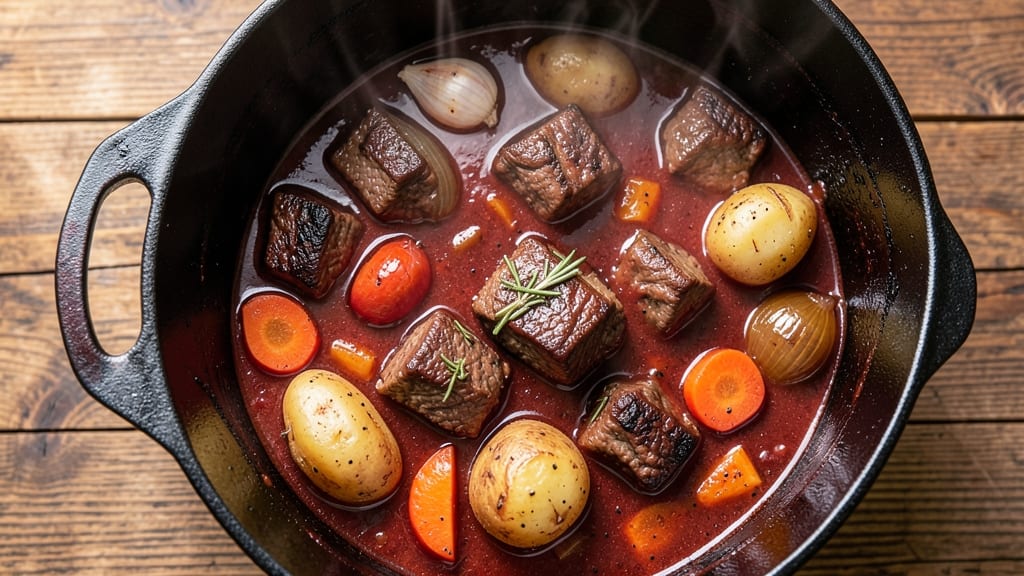
This beef stew Dutch oven recipe transforms tough cuts of beef into melt-in-your-mouth tenderness through slow-simmered magic. The Dutch oven’s cast iron embrace creates a rich, deeply flavorful broth that harmonizes with tender potatoes and sweet carrots, delivering restaurant-quality comfort from your kitchen.
I’ve perfected this technique over years of testing, ensuring every bite delivers that perfect balance of hearty meat, velvety vegetables, and aromatic herbs.
The secret lies in the Dutch oven’s ability to distribute heat evenly while locking in moisture, allowing the stew to develop complex flavors over hours. You’ll start with a properly browned beef base—this step is non-negotiable for building depth—and then let everything simmer until the meat falls apart effortlessly.
The potatoes and carrots soften to perfect tenderness while absorbing the rich, savory broth.
What you’ll end up with is a steaming bowl of beef stew that smells like home and tastes like a labor of love. The beef becomes fork-tender, the vegetables melt in your mouth, and the sauce reduces to a perfect consistency that coats every spoonful.
This isn’t just dinner—it’s a meal that brings people together, especially on chilly evenings when warmth and comfort are most needed.
Serve with crusty bread for soaking up every last drop of that flavorful broth. The Dutch oven keeps everything warm while you enjoy the meal, making this the ultimate one-pot wonder for family dinners or cozy nights in. Let’s get started on creating this timeless classic.
Ingredients for beef stew dutch oven
Six hearty ingredients plus the magic of slow-simmered Dutch oven cooking.
| Ingredient | Amount | Notes |
|---|---|---|
| Chuck Roast 🥩 | 3 lb | Well-marbled, cut into 1.5-inch cubes |
| Yellow Onions 🧅 | 2 whole | Medium, sliced into half-moons |
| Carrots 🥕 | 4 whole | Medium, peeled and cut into chunks |
| Russet Potatoes 🥔 | 2 lb | Peeled, cut into 1-inch cubes |
| Garlic Cloves 🧄 | 6 cloves | Peeled, smashed with side of knife |
| Tomato Paste 🍅 | ½ cup | Smooth, not chunky |
| Beef Broth 💧 | 4 cups | Low-sodium preferred |
| Red Wine 🍷 | 1 cup | Dry, like Cabernet Sauvignon |
| Fresh Thyme 🌿 | 2 tbsp | Leaves only, chopped |
| Fresh Rosemary 🌿 | 1 tbsp | Needles chopped, not stems |
| Bay Leaves 🍃 | 2 whole | Dried, standard size |
| All-Purpose Flour 🌾 | 2 tbsp | For browning beef |
| Olive Oil 🫒 | 2 tbsp | Extra-virgin, for searing |
| Salt 🧂 | 1 ½ tsp | Kosher or sea salt |
| Black Pepper 🌶️ | 1 tsp | Freshly cracked |
The chuck roast is non-negotiable—marbling is key for that melt-in-your-mouth tenderness. Grab the pre-cut cubes from Costco or Walmart to save time, but if you're buying a whole roast, ask the butcher to trim off any large fat caps. The onions and carrots should be fresh, not limp—Trader Joe's has great organic options. For the potatoes, RussetsSwanson or Pacific Foods are my go-tos for quality.
No red wine? Substitute with beef broth plus 1 tbsp balsamic vinegar—it adds depth without alcohol. Fresh thyme and rosemary can be swapped for dried at one-third the amount, but trust me, fresh is worth the extra minute. The tomato paste? Trader Joe's squeeze tubes are perfect—no waste, and they keep forever. For the flour, King Arthur or Gold Medal brands work best for browning. If your carrots are small, use baby carrots (peeled), but avoid pre-shredded—they get mushy. The bay leaves? Don't skip them—they add that subtle earthy note that makes this stew sing.
This stew tastes even better the next day, so make a double batch if you can. Store in the fridge for 4-5 days or freeze portions for up to 3 months. I like to portion it into glass containers—they reheat faster and keep flavors sealed in. For serving, keep the Dutch oven on low heat to stay warm. The crusty bread? Store-bought sourdough from the bakery section works perfectly—no need to bake from scratch.
Why You'll Love This Recipe
- One-Pot Magic: I swear by this—dump everything in the Dutch oven, walk away, and come back to actual dinner. No dirty dishes piling up, no last-minute scrambling to find a second pot. That chuck roast practically melts into tender perfection while you’re chopping veggies, and honestly? The best part is the smell filling your kitchen like a warm hug.
- Deep Umami Bomb: The slow-cooked beef develops this rich, almost smoky depth—like a hug from a campfire. Those onions and garlic caramelize into something sweet and savory, while the potatoes soak up all the juices until they’re fluffy on the inside with a crispy edge. (Yes, even on a Tuesday night.)
- Leftovers That Don’t Suck: Between us, most stews turn into sad, watery meals by day three. Not this one. The flavors intensify the longer it sits, and reheating it? Just a splash of broth, a minute in the microwave, and boom—it’s like you’re eating fresh again. My freezer’s always stocked with portions for lazy days.
- Budget Feast for Everyone: A chuck roast is cheap, but it feels like a fancy meal. You’re feeding a crowd for under $15, and no one will guess it’s not some overpriced bistro dish. My college roommates called it “the poor man’s Sunday dinner,” and they weren’t wrong. Plus, the potatoes stretch it into a full meal—no side dishes needed.
Step-by-step instructions for beef stew Dutch oven recipe
Here's how to create a deeply flavorful beef stew with melt-in-your-mouth potatoes and tender carrots.
Sear the Chuck Roast for Maximum Flavor
Heat the 2 tablespoons olive oil in your Dutch oven over medium-high heat until shimmering but not smoking. Pat the 3 lb chuck roast dry with paper towels and cut into 1.5-inch cubes as specified. Working in batches to avoid crowding, add the beef to the pot and sear for 3-4 minutes per side until deep golden brown with crisp edges.
This searing step is non-negotiable—it develops the rich, caramelized crust that forms the flavor foundation. I press down gently on the beef cubes during the first minute to prevent curling. Once all pieces are browned, transfer them to a plate and set aside. The beef will continue cooking slowly in the stew, but that initial sear creates the depth of flavor we're after.
Build the Aromatic Base with Onions and Carrots
In the same Dutch oven, reduce heat to medium and add the 2 whole yellow onions sliced into half-moons and 4 whole carrots cut into chunks. Cook for 8-10 minutes, stirring occasionally, until the onions soften and the carrots begin to caramelize at the edges. This process releases their natural sweetness and builds complex flavors.
Here's where it gets aromatic: Add the 6 cloves garlic cloves smashed with the side of your knife, 2 tablespoons fresh thyme leaves, and 1 tablespoon fresh rosemary needles. Cook for another 1-2 minutes until the garlic is fragrant but not browned—this prevents bitterness. Stir in the 2 whole bay leaves and 0.5 cup tomato paste, coating everything evenly. The tomato paste will deepen the stew's color and add umami richness.
Create the Perfect Browning Paste
Sprinkle the 2 tablespoons all-purpose flour evenly over the vegetables in the Dutch oven. Stir vigorously for 1-2 minutes until the flour turns a rich golden brown color. This creates a roux-like paste that will thicken our stew beautifully. Immediately pour in the 1 cup red wine and scrape up any browned bits from the bottom—this is where all the concentrated beef flavor lives.
Let the wine simmer for 3-4 minutes until reduced by half. This reduction intensifies the wine's flavor and prepares the stew for the long simmer ahead. The alcohol will cook off completely, leaving behind just the rich, fruity notes we want in our final dish.
Simmer the Stew Until Tender Perfection
Pour in the 4 cups beef broth and bring the mixture to a gentle boil. Return the seared beef to the Dutch oven, along with the 2 lb russet potatoes cut into 1-inch cubes. Add the 1.5 teaspoons salt and 1 teaspoon freshly cracked black pepper. Stir everything together, then reduce heat to low and cover the Dutch oven with a tight-fitting lid.
Simmer for 2.5 to 3 hours, checking occasionally to ensure there's enough liquid. The potatoes should be fork-tender and the beef should easily pull apart with a fork. If the stew gets too thick before the beef is tender, add ½ cup water or broth to maintain moisture. The long simmering time is what transforms tough chuck roast into melt-in-your-mouth beef.
Adjust Seasoning and Serve Warm
Once the stew reaches perfect tenderness, taste and adjust the seasoning if needed. You might need a bit more salt to balance the rich flavors, especially if you used low-sodium beef broth. Remove and discard the bay leaves before serving. Ladle the stew into bowls, making sure each serving gets its share of tender beef, potatoes, and carrots.
This stew tastes even better the next day as the flavors continue to meld, but it's impossible to wait that long. Serve with crusty bread to soak up every last drop of that delicious, aromatic broth. The combination of tender beef, caramelized vegetables, and herby broth makes this Dutch oven beef stew a true comfort food winner.
Pro Tips For Making Beef Stew Dutch Oven
- SEAR THE ROAST FIRST: High heat for 5 minutes per side—don’t skimp. That crust locks in flavor and keeps the meat from turning into mush later, even if you’re impatient and want to rush to the liquid stage.
- CUT POTATOES UNEVENLY: Large chunks on one side, smaller on the other—this ensures some potatoes soak up broth while others stay firm. I used to slice them all the same size and ended up with a mushy mess.
- ADD POTATOES LAST: Wait until the beef is halfway done (about 2 hours in) before tossing them in. They’ll absorb flavor instead of turning to glue, and you’ll avoid the sad, watery stew that happens when you dump everything in at once.
- SKIP THE PEEL ON CARROTS: Leave the skin on for color and texture—it adds a subtle earthiness and cuts down on prep time. I was skeptical until I tried it, and now I peel them only if someone’s watching.
Troubleshooting great beef stew dutch oven
Undercooked Beef Fix
If your beef isn’t tender after 3 hours, don’t panic—simmer uncovered for another 30-45 minutes on low heat. The exposed surface will create a crust that locks in moisture while the center cooks through.
I’ve rescued many a tough batch this way. Just check liquid levels and add ½ cup broth if needed to prevent drying.
Mushy Vegetables
Overly soft carrots or potatoes? They likely cooked too long. Next time, add them only 30 minutes before the beef is done. For immediate fixes, remove the veggies, mash them slightly with a fork, and return to the pot—they’ll absorb flavor but won’t turn to mush. 🥕
Broth Too Thin
If your stew is watery, uncover the pot and simmer on medium heat for 10-15 minutes to reduce the liquid. For instant thickening, mix 1 tbsp cornstarch with 2 tbsp cold water, stir into the stew, and simmer 2-3 minutes until thickened.
Avoid over-stirring—this can break down the beef’s texture.
Burnt Onions
Dark brown or blackened onions? Reduce heat to medium-low immediately and stir in 1 tbsp red wine or beef broth to deglaze. The acidity will cut through the bitterness.
For future batches, keep stirring every 3-4 minutes during the initial sauté to prevent sticking. A wooden spoon works best for scraping up browned bits.
Meat Too Tough
If your chuck roast remains chewy, the issue is likely under-searing or insufficient simmering time. Next time, sear the beef until it’s deep golden brown on all sides (about 4-5 minutes per side), then simmer for the full 3 hours.
For a quick fix, shred the beef with two forks and return it to the pot—it’ll absorb the flavors and soften further.
Lid Won’t Stay On
If your Dutch oven lid keeps popping off, your heat is too high. Reduce to low heat and use a tight-fitting lid—I recommend a Lodge cast iron lid with a handle.
For extra security, place a small pot or bowl on top of the lid to weigh it down slightly. Never force the lid—this can cause warping or even cracks over time.
Nutrition facts
Frequently asked questions
Can I use a different cut of beef instead of chuck roast?
For similar tenderness, try stew beef or chuck shoulder. Avoid lean cuts like sirloin—they won’t become tender. If using brisket, cut it into 1-inch cubes and simmer 30-45 minutes longer since it’s denser. The key is marbling—fat keeps the meat juicy during slow cooking.
Why does my Dutch oven stew need to simmer so long?
The long simmer—2.5-3 hours—is what transforms tough chuck into melt-in-your-mouth beef. The low-and-slow method breaks down collagen in connective tissue, creating a rich, gelatinous broth that coats the meat. Skipping this step leaves the beef chewy. Think of it like a pressure cooker’s magic, but with deeper flavor development.
Can I make this stew ahead of time?
This stew tastes even better the next day as flavors meld! Store in an airtight container in the fridge for 4-5 days or freeze for up to 3 months. Reheat on low heat in the Dutch oven with ½ cup broth to restore moisture. The texture improves with time—just avoid reheating on high, which can make the broth watery.
What if I don’t have red wine?
No problem! Substitute with 1 cup beef broth + 1 tbsp balsamic vinegar for depth, or use apple cider vinegar for tang. For a non-alcoholic option, try 1 cup cranberry juice (unsweetened). The acidity helps tenderize the beef, while the vinegar adds complexity. Just reduce the wine substitute by ⅓ if using a thicker liquid.
How do I know when the beef is perfectly tender?
Use the fork test: Insert a fork into the largest piece of beef—it should slide in with no resistance and the meat should pull apart easily. The beef should also look glossy and moist, not dry. If it’s still firm after 3 hours, simmer uncovered for 15-20 more minutes. Overcooking won’t happen here—the Dutch oven’s even heat prevents it.