Main Courses
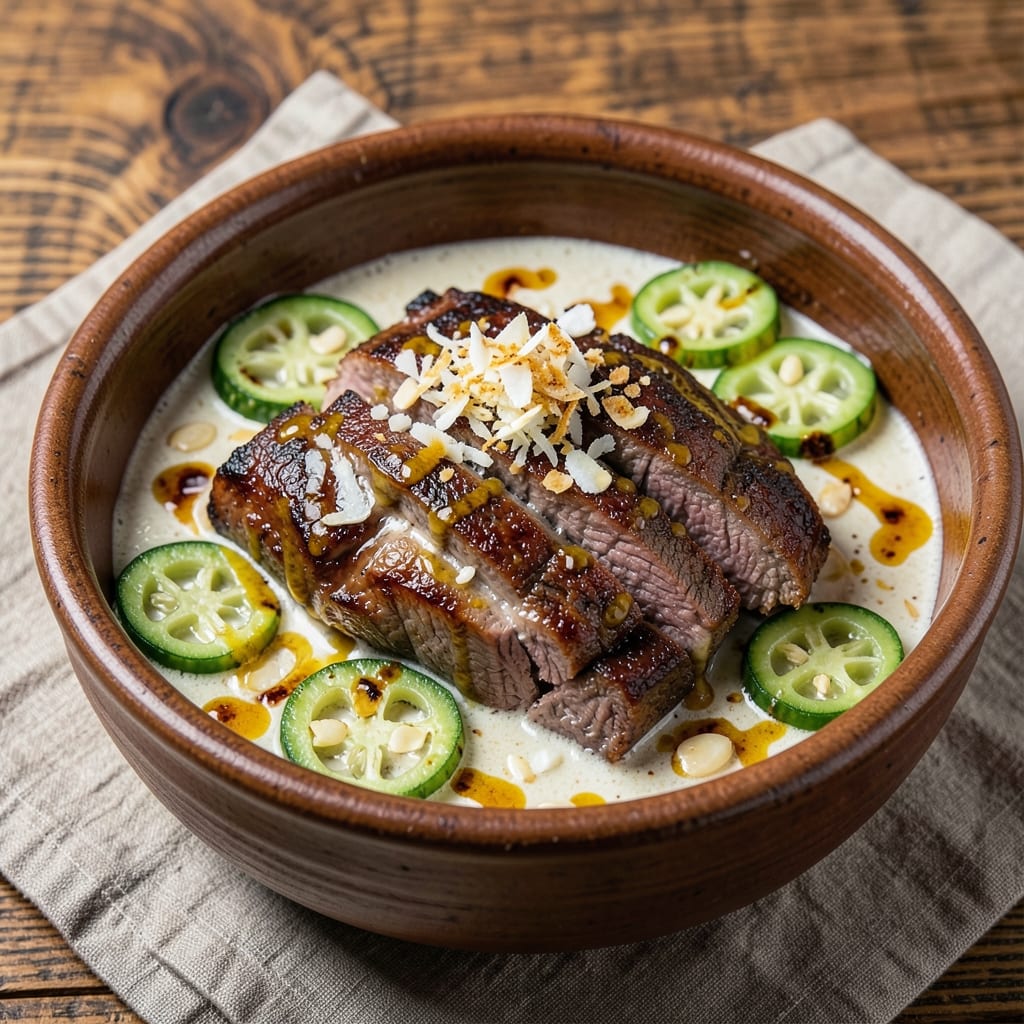
This beef ampalaya tausi recipe delivers the soul-soothing warmth of Filipino home cooking, where tender beef and bitter melon blend into a rich, coconut-infused stew. 🌟 The secret lies in slow simmering—transforming tough beef into melt-in-your-mouth bites while the ampalaya softens into velvety perfection. I’ve perfected this dish over years of family gatherings, where the aroma alone brings everyone to the table. What makes this recipe special is the balance: the natural bitterness of ampalaya is mellowed by coconut milk and sweetened with just enough sugar, while crispy bread hugs (or pan de sal) soak up every last drop of the savory broth. The dish is hearty enough for a weeknight dinner but elegant enough for gatherings, with layers of umami from soy sauce and depth from ginger and garlic. By the time you serve it, you’ll have a steaming pot of beef that’s fork-tender, ampalaya that’s tender yet retains its signature texture, and a sauce thickened just enough to coat every bite. The crispy bread hugs add a satisfying contrast, turning this into a meal that’s as comforting as it is impressive. Serve with steamed rice to soak up the rich flavors, and don’t forget to save some sauce for dipping. Here’s how to make it—step by step.
Ingredients for beef ampalaya tausi
Rich, comforting flavors start with these 15 Filipino pantry staples and fresh finds.
| Ingredient | Amount | Notes |
|---|---|---|
| Beef Chuck Roast 🥩 | 1 ½ lb | Cut into 1-inch cubes |
| Ampalaya (Bitter Melon) 🍈 | 2 medium | Sliced into 1-inch pieces |
| Coconut Milk 🥥 | 1 can (13.5 oz) | Full-fat preferred |
| Yellow Onions 🧅 | 2 whole | Thinly sliced |
| Garlic Cloves 🧄 | 6 cloves | Minced |
| Fresh Ginger 🌿 | 2 tbsp | Grated finely |
| Tomato Paste 🍅 | 2 tbsp | Squeeze tube preferred |
| Soy Sauce 🥄 | 2 tbsp | Light or regular |
| White Sugar 🍚 | 1 tbsp | Or brown sugar |
| Salt 🧂 | 1 tsp | Kosher or sea salt |
| Black Peppercorns 🌶️ | ½ tsp | Freshly ground |
| Vegetable Oil 🫒 | 2 tbsp | For frying bread hugs |
| Pan de Sal (Bread Hugs) 🍞 | 4 whole | Sliced into 1-inch pieces |
| Fresh Bay Leaves 🌿 | 2 whole | Optional, for aroma |
| White Vinegar 💧 | 1 tbsp | For ampalaya prep |
The beef is the star here—chuck roast gives you that melt-in-your-mouth texture after slow simmering. Look for well-marbled cuts at your local Filipino grocery store or the meat department at Whole Foods. If you can't find chuck, round roast works too. Ampalaya can be tricky to find outside Filipino markets, but Asian grocery stores usually carry it fresh or frozen. The coconut milk? Full-fat canned is non-negotiable—light versions won't give you that creamy richness. For the ginger, freshly grated always wins over powdered, but if you're in a pinch, use 1 tsp ground ginger per 2 tbsp grated.
No ampalaya? Substitute with zucchini or eggplant—they won't be identical but work in a pinch. Running low on soy sauce? Coconut aminos or tamari are great swaps. The pan de sal (bread hugs) can be replaced with French bread or even croutons if you're not near a Filipino bakery. For the tomato paste, those little squeeze tubes from Trader Joe's are perfect—no waste, and they keep forever. The bay leaves are optional but add that authentic Filipino aroma—skip them if you're not feeling traditional.
This dish tastes even better the next day, so make extra if you can. The beef and ampalaya keep well for 4-5 days in the fridge, and the sauce freezes beautifully for up to 3 months. I like to portion the beef and sauce separately before freezing—thaw and reheat just the portions you need. The bread hugs? Toast them fresh before serving so they stay crispy. Store any leftover ampalaya in a sealed container with a splash of water to keep it from drying out.
Why You'll Love This Recipe
- One-Pot Magic: I swear by this recipe when I’m too tired to wash a million dishes. The beef and ampalaya simmer together in the same pot—no extra pans, no stress—just rich, layered flavors that taste like they took hours (but didn’t).
- Coconut-Garlic Bomb: That first bite of tender beef with the crisp-tender ampalaya swimming in creamy coconut milk? It’s like a hug in a bowl. The garlic and onions caramelize just enough to make your whole kitchen smell like a Filipino comfort food dream.
- Leftovers That Beg for More: Honestly, I almost always make extra because it reheats like a champ. The next day, the beef stays juicy and the ampalaya holds its bite—perfect for quick lunches or when guests drop by unannounced. (Yes, even on a Tuesday night.)
- Budget-Friendly Feast: Beef chuck roast is forgiving and affordable, and ampalaya stretches into a hearty meal without breaking the bank. I’ve fed my whole family plus a few neighbors with one big pot—proof that good food doesn’t need to cost a fortune.
Step-by-step instructions for beef ampalaya tausi
Here's how to create this comforting Filipino classic with tender beef and crispy bread hugs.
🍳 Step 1: Prepare the Ampalaya and Sear the Beef
First, slice the 2 medium ampalaya (bitter melon) into 1-inch pieces and soak them in cold water with the 1 tablespoon white vinegar for 10 minutes. This removes bitterness while keeping the texture intact. Drain and set aside.
Heat 2 tablespoons vegetable oil in a large pot over medium-high heat. Add the 1.5 lb beef chuck roast cut into 1-inch cubes and sear for 3-4 minutes until golden brown on all sides. This initial sear builds deep flavor and prevents the beef from becoming tough during the long simmer. Remove the beef and set aside temporarily.
👨🍳 Step 2: Sauté the Aromatics and Build the Base
In the same pot, add 2 tablespoons vegetable oil if needed and sauté the 2 whole yellow onions (thinly sliced) for 3-4 minutes until soft and translucent. Add the 6 cloves minced garlic and 2 tablespoons finely grated ginger, cooking for 30 seconds until fragrant—this is where the magic happens.
Stir in the 2 tablespoons tomato paste and cook for 1 minute until it darkens slightly. Pour in 2 tablespoons soy sauce and 1 tablespoon white sugar, stirring to combine. This creates the rich, savory foundation for the stew. The sugar helps balance the bitterness of the ampalaya while adding depth to the sauce.
🥘 Step 3: Simmer the Beef and Ampalaya Together
Return the seared beef to the pot and add the drained ampalaya pieces. Pour in the 1 can (13.5 oz) coconut milk, ensuring all ingredients are well-coated. Add 1 teaspoon salt and 0.5 teaspoon freshly ground black peppercorns, plus the 2 whole fresh bay leaves for aromatic depth.
Bring the mixture to a gentle boil, then reduce heat to low and cover partially. Let it simmer for 1.5 to 2 hours, stirring occasionally, until the beef is fork-tender and the ampalaya is soft but still holding its shape. The liquid should reduce to a thick, flavorful sauce that coats the back of a spoon. Here's where patience pays off—don't rush this step or the beef will turn out chewy.
🔥 Step 4: Fry the Crispy Bread Hugs
While the stew simmers, heat 2 tablespoons vegetable oil in a separate pan over medium heat. Add the 4 whole pan de sal (bread hugs) sliced into 1-inch pieces and fry for 3-4 minutes until golden brown and crispy on all sides. Drain on paper towels to remove excess oil—this is the perfect textural contrast to the rich stew.
Real talk: Don't skip frying these separately. The bread hugs absorb flavor from the stew when added later, but frying them first ensures that perfect crunch that makes this dish irresistible. Keep them warm in a 200°F oven while you finish the stew.
🍽️ Step 5: Serve with Crispy Bread Hugs
Once the beef and ampalaya are perfectly tender, taste and adjust seasoning if needed—you might need a touch more soy sauce or sugar to balance flavors. Ladle the stew into bowls and top each serving with the crispy fried bread hugs. The contrast of textures—tender beef, soft ampalaya, and crispy bread—is what makes this dish so special.
Serve immediately while the bread hugs are still crispy. The aroma alone will have everyone at the table eager to dig in. This dish tastes even better the next day, so consider making extra for leftovers—just reheat gently to maintain that crispy texture of the bread hugs.
Pro Tips For Making Beef Ampalaya Tausi
- Trim the Ampalaya Right: Cut the bitter melon lengthwise first, then slice into half-moons—this keeps the pieces intact while cooking. I learned this the hard way after watching mine turn to mush in the pot. (Yes, even if you’re impatient like me, resist the urge to dice it small.) ---
- Sear the Beef Deep: Use a cast-iron or heavy pot and let the beef chuck roast brown undisturbed for 4-5 minutes per side until it’s dark and crusty. The longer you linger here, the richer the sauce will taste later—don’t rush it. ---
- Simmer, Don’t Boil: Once the beef and veggies are in the coconut milk, keep the heat at a gentle simmer (small bubbles, occasional swirls). Boiling turns the ampalaya slimy and the beef tough—this is where patience actually pays off. ---
- Toast the Onions Low: Cook the sliced onions in oil over medium-low heat until they’re golden and sweet, not burnt. I was skeptical until I tried it—it cuts through the bitterness of the ampalaya and adds depth the recipe didn’t need before.
Regional styles of this recipe
Visayan Heartland
The Visayan region of the Philippines—particularly Cebu and Negros—is where beef ampalaya tausi thrives as a homestyle comfort dish. Here, chuck roast is often replaced with beef short ribs for extra richness, and the stew is traditionally served with garlic rice instead of plain white rice. The Visayans add a splash of calamansi juice at the end to brighten the dish, balancing the coconut milk's creaminess. 🌶️
Local cooks in this region also incorporate dried shrimp (about 2 tbsp) during the simmering process, adding a briny depth that elevates the broth. If you can’t find dried shrimp, a pinch of fish sauce works in a pinch. The bread hugs here are often toasted in the oven rather than fried, keeping them lighter but still crispy.
Manila Urban Twist
In Manila, this dish gets a more refined touch, often served in upscale Filipino restaurants. The key difference? A splash of brandy or rum (about 1 tbsp) is added when sautéing the aromatics, giving the stew a subtle boozy warmth. Chefs here also blanch the ampalaya in boiling water for 1 minute before adding it to the stew, which softens it faster while preserving its shape.
Another Manila specialty is serving the stew with crispy pork cracklings on top of the bread hugs, adding a salty crunch. For an extra layer of flavor, some restaurants finish the dish with a drizzle of toasted sesame oil and a sprinkle of crushed peanuts. This version feels more celebratory, perfect for gatherings or special occasions.
Mindanao Spice Route
In Mindanao, particularly in Davao and Cotabato, the dish takes on a spicier profile. Locals add 1-2 tbsp of chili paste (like Datu Puti) when building the base, giving the stew a slow-building heat. The region’s proximity to Indonesia also means turmeric (about ½ tsp) is often included in the simmering process, lending a golden hue and earthy warmth to the broth.
Mindanao cooks also char the ampalaya lightly over an open flame before adding it to the stew, which deepens its flavor and caramelizes the edges. The bread hugs here are sometimes replaced with banana cue (sweet fried plantains), offering a sweet-savory contrast that’s uniquely Mindanao. This version is heartier and more aromatic, reflecting the region’s bold culinary traditions.
Bicol’s Coconut Abundance
The Bicol region, known for its coconut farms, takes beef ampalaya tausi to another level by using double the coconut milk (about 2 cans) for an ultra-creamy texture. Here, the stew is often simmered longer (up to 2.5 hours) to let the flavors meld even deeper. Bicolanos also add a handful of young coconut meat (about ½ cup) during the final 30 minutes of cooking, adding a subtle sweetness and texture.
For the bread hugs, Bicol cooks sometimes brush them with a mix of coconut milk and sugar before frying, creating a caramelized crust. The stew is often served with grilled string beans on the side, a local vegetable that pairs beautifully with the rich, coconut-forward flavors. This version is richer and more decadent, perfect for cooler weather.
Nutrition facts
Frequently asked questions
Why does the recipe call for soaking ampalaya in vinegar?
Ampalaya (bitter melon) has a naturally bitter taste that can overpower the dish. Soaking it in vinegar for 10 minutes removes excess bitterness while preserving its signature texture. The vinegar also helps soften the vegetable slightly, making it more tender during the long simmer. Skip this step only if you love intense bitterness!
Can I substitute beef with another protein?
Yes! For a vegetarian version, use chickpeas or tofu (extra-firm works best). If you prefer pork, pork shoulder is ideal—simmer it for 1.5 hours instead of 2. For chicken, use thighs or drumsticks and reduce simmering time to 45-60 minutes. Just adjust cooking times based on protein density.
How do I know when the beef is tender enough?
The beef should be fork-tender—meaning it should easily pierce with a fork but still hold its shape. Press a piece gently; if it crumbles slightly, it's ready. For extra assurance, cut into a small piece and check the center. The ampalaya should also be soft but not mushy, holding its shape when lifted with a spoon.
What if I don’t have pan de sal (bread hugs)?
No problem! Use French bread, croutons, or even garlic bread for a similar crunch. For a Filipino touch, toast saba bananas or plantain chips as a substitute. If you're feeling adventurous, fry rice cakes (puto) for a sweeter contrast. The key is to keep the texture crispy to balance the rich stew.
Can I make this dish ahead of time?
This dish tastes even better the next day. Store the beef and ampalaya stew (without bread hugs) in an airtight container for up to 5 days in the fridge. Reheat gently on low heat, adding a splash of water if needed. Fry the bread hugs fresh before serving to maintain crispiness. For freezing, portion the stew separately and freeze for up to 3 months.