
Soups & Stews
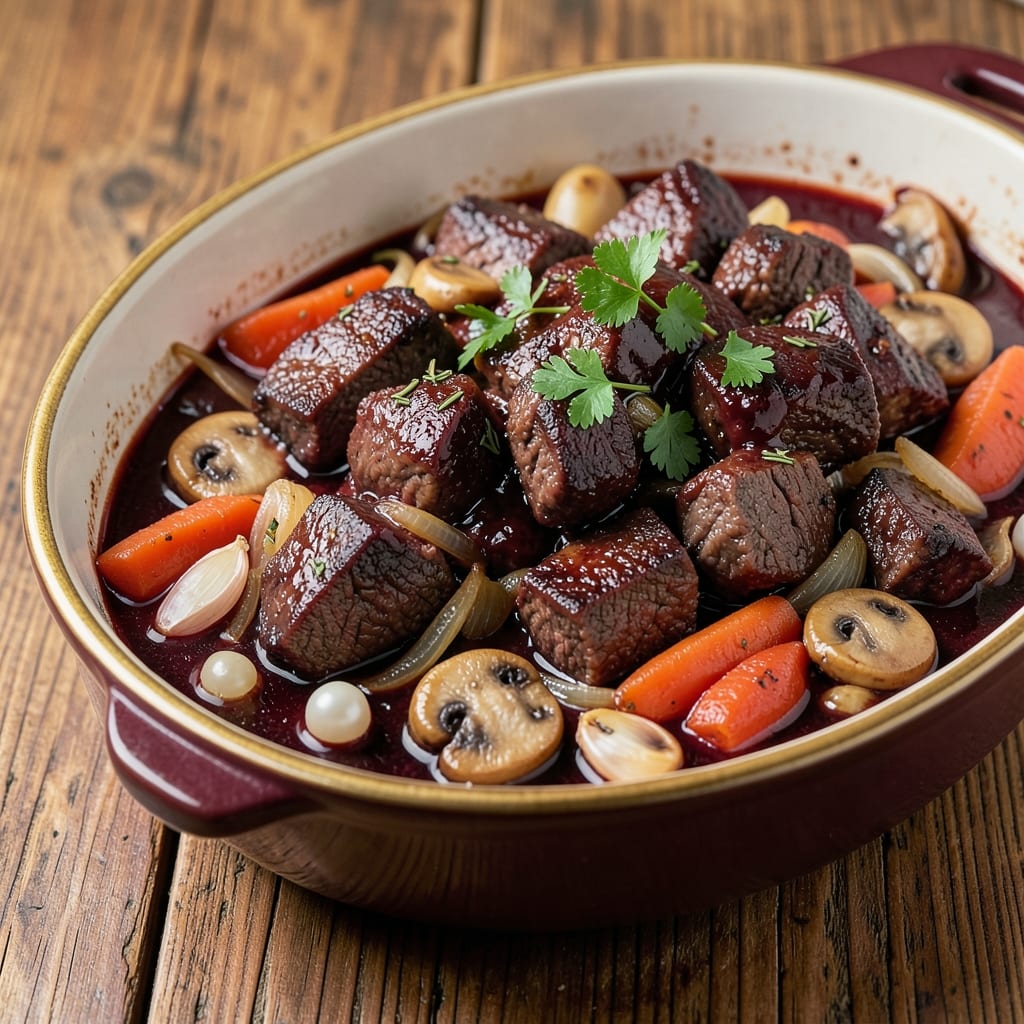
This Barefoot in Paris beef bourguignon recipe transforms a simple pot into a restaurant-worthy masterpiece with deep wine flavors and tender beef. The secret lies in slow braising—searing beef and vegetables first, then deglazing with red wine to create a rich, aromatic sauce. I’ve adapted the classic technique for home cooks, ensuring every bite delivers that cozy, French bistro experience without fuss.
The dish starts with beef chuck roast cut into chunks, seared until golden in a Dutch oven—this step builds flavor that carries through the long braise. Carrots, onions, and mushrooms join the pot, absorbing the wine reduction and herbs as they simmer for hours. The result? A sauce so velvety and complex, it rivals any Parisian bistro’s version, with tender beef that falls apart at the touch of a fork.
What makes this recipe special is its versatility—serve it over mashed potatoes, crusty bread, or even buttered egg noodles to soak up every drop of that wine-infused sauce. The aroma alone will have your kitchen smelling like a Parisian café, and the taste? Pure comfort food elevated to something extraordinary. Ready to master this one-pot wonder?
Perfect for chilly evenings or special occasions, this bourguignon is the kind of dish that improves with time, developing deeper flavors as it simmers. The key is patience—let the wine reduce slowly, and the beef tenderize completely. Trust the process, and you’ll have a dish that feels like a hug in every bite.
Ingredients for barefoot in paris beef bourguignon
Wine, beef, and patience create this restaurant-worthy French classic with simple yet transformative ingredients.
| Ingredient | Amount | Notes |
|---|---|---|
| Beef Chuck Roast 🥩 | 2 lb | Cut into 1.5-inch chunks |
| Yellow Onion 🧅 | 1 whole | Sliced into 1/2-inch pieces |
| Carrots 🥕 | 4 medium | Peeled and cut into chunks |
| Cremini Mushrooms 🍄 | 8 oz | Trimmed and halved |
| Garlic Cloves 🧄 | 4 cloves | Minced for deglazing |
| All-Purpose Flour 🌾 | 2 tbsp | For dredging beef |
| Dry Red Wine 🍷 | 2 cups | Bold Cabernet Sauvignon |
| Beef Broth 💧 | 2 cups | Low-sodium preferred |
| Fresh Thyme 🌿 | 2 sprigs | Or 1 tsp dried thyme |
| Fresh Parsley 🌿 | ¼ cup | Chopped for garnish |
| Olive Oil 🫒 | 2 tbsp | Extra-virgin for searing |
| Salt 🧂 | 1 ½ tsp | Kosher salt preferred |
| Black Pepper 🌶️ | 1 tsp | Freshly ground |
| Tomato Paste 🍅 | 1 tbsp | For depth of flavor |
| Bay Leaves 🌿 | 2 whole | Removed before serving |
The beef is non-negotiable here—chuck roast delivers that melt-in-your-mouth texture after hours of braising. Look for well-marbled cuts at Whole Foods or your local butcher, as the fat renders down to create a silky sauce. If you're buying pre-cut chuck, opt for 1.5-inch chunks for even cooking. The carrots should be firm and vibrant, not rubbery or shriveled. For mushrooms, cremini or baby bella work best—their meaty texture holds up during the long simmer. Fresh thyme and parsley add bright notes that cut through the richness, so don't skimp on quality here.
No red wine? Substitute with beef broth and a splash of balsamic vinegar—it won't be identical, but it'll still taste amazing. The tomato paste can be swapped for 1/4 cup crushed tomatoes if you're avoiding it, though it adds a deeper umami punch. If you're using dried herbs, reduce to one-third the amount of fresh. For the flour, all-purpose works fine, but if you're gluten-sensitive, use cornstarch instead. The beef broth should be low-sodium—you'll be adding plenty of salt during cooking. And if you can't find cremini mushrooms, white button mushrooms will do in a pinch, though they'll release more moisture.
This dish tastes even better the next day, so make extra if you can. Store leftovers in an airtight container in the fridge for up to 5 days, or freeze for 3 months. The sauce thickens as it cools, so add a splash of broth when reheating. For serving, keep the bay leaves in during cooking but remove them before plating—they're not meant to be eaten. The beef will be fork-tender, so use a slotted spoon to transfer it to plates, letting any excess sauce drip back into the pot for second helpings.
Why You'll Love This Recipe
- One-Pot Magic: I swear by this recipe when I don’t want to dirty a dozen dishes. The beef chuck roast practically cooks itself in the same pot where the onions and mushrooms caramelize—minimal chopping, no extra pans.
- Deep Umami Love: That slow simmer with red wine and thyme? It transforms tough beef into melt-in-your-mouth perfection. The cremini mushrooms soak up all the rich sauce, and the garlic? Oh, it’s there—in the best way.
- Leftover Luxury: Between us, this tastes even better the next day. I make a double batch on Sundays, freeze half, and pull it out for lazy nights when I’m craving something fancy but don’t feel like cooking.
- Budget-Friendly Feast: A chuck roast stretches across meals, and the veggies (onions, carrots, mushrooms) are cheap but pack serious flavor. Honestly, it’s the kind of dish that makes me feel like I’m treating myself—without breaking the bank.
Step-by-step instructions for wine-reduced beef bourguignon
This classic French technique transforms tough beef into tender, wine-braised perfection.
Sear the Beef Chuck Roast for Maximum Flavor
Pat the 2 lb beef chuck roast dry with paper towels and cut it into 1.5-inch chunks. Season generously with 1.5 tsp salt and 1 tsp black pepper, pressing the spices into the meat so they adhere well. Heat 2 tbsp olive oil in a large Dutch oven over medium-high heat until shimmering.
Working in batches to avoid crowding, add the beef chunks and sear for 3-4 minutes per side until deeply browned. The key here is patience—don't rush the searing or the beef won't develop that rich, caramelized crust that forms the flavor base. Transfer the seared beef to a plate and set aside. You'll notice the pan will be covered in beautiful browned bits, which we'll use later for depth of flavor.
Build the Flavor Base with Vegetables and Wine
In the same Dutch oven, add the sliced 1 whole yellow onion and the 4 medium carrots cut into chunks. Cook for 5-6 minutes, stirring occasionally, until the vegetables begin to soften. Add the 8 oz cremini mushrooms (trimmed and halved) and cook for another 3-4 minutes until they release their moisture and begin to brown.
Stir in the 1 tbsp tomato paste and cook for 1 minute to deepen the flavor. Add the 4 cloves minced garlic and cook for 30 seconds until fragrant. Here's where the magic happens: Pour in the 2 cups dry red wine and scrape up all those browned bits from the bottom of the pan with a wooden spoon. This deglazing step captures all the concentrated flavors we've built. Let the wine reduce by half, about 5-6 minutes, until it coats the back of a spoon.
Create the Rich Sauce with Broth and Herbs
Return the seared beef to the Dutch oven. Add the 2 cups beef broth, 2 sprigs fresh thyme, and 2 whole bay leaves. Bring to a gentle simmer, then reduce heat to low. Cover and let it cook for 1 hour and 30 minutes, stirring occasionally. The beef is tender when it easily pulls apart with a fork. You'll smell the rich, wine-infused aroma developing—this is when you know you're on the right track.
Real talk: Don't be tempted to peek too often. Every time you lift the lid, you lose valuable heat and moisture. The liquid should reduce to a thick, glossy sauce that coats the beef. If it looks too thin after 1 hour, remove the lid and simmer uncovered for the remaining time to thicken it properly.
Finish with Fresh Parsley and Rest
Remove the 2 sprigs fresh thyme and 2 whole bay leaves before serving. Stir in the 0.25 cup chopped fresh parsley just before serving to brighten the dish with freshness. The parsley should be added last to maintain its vibrant color and flavor. Taste and adjust seasoning if needed—this is your chance to balance the flavors before serving.
Let the bourguignon rest for 10 minutes before serving. This resting period allows the juices to redistribute throughout the beef, ensuring each bite is moist and flavorful. Serve immediately with crusty bread or mashed potatoes to soak up that rich, wine-infused sauce. The beef should be fork-tender with a beautiful mahogany color, and the sauce should coat the back of a spoon with a velvety texture.
Pro Tips For Making Barefoot In Paris Beef Bourguignon
- SEAR THE CHUCK ROAST: The first 5 minutes in a screaming-hot Dutch oven make all the difference—don’t skimp on the heat or the time. I used to rush this, and the meat just turned gray instead of golden. Let it go until it’s deep brown in spots, then flip once.
- CUT ONIONS IN EVEN SLICES: Thin, even strips cook faster and stay tender instead of turning mushy. My grandmother swore by this, and she was right: no one wants to bite into a chewy onion in their bourguignon. Aim for ¼-inch thickness—consistent cuts matter more than you’d think.
- DEGLAZE WITH THE RED WINE: Don’t just pour the wine over the meat—let it simmer for 2-3 minutes first to break down the browned bits. That’s where the flavor lives. I learned this the hard way after tasting a version that tasted flat because I rushed the deglazing.
- ADD MUSHROOMS LAST: They’ll turn into mush if they sit too long in the braise. Tuck them in the last 20 minutes—just enough time to soften without disappearing. If you’re impatient (like me), save a few for garnish at the end for that restaurant-worthy look.
Essential equipment for great barefoot in paris beef bourguignon
Dutch Oven Essentials
A 5-6 quart Dutch oven is non-negotiable for this recipe—it needs to handle the searing, braising, and sauce reduction all in one pot. I use a Lodge cast iron Dutch oven for its even heat distribution and durability, but any heavy-gauge enameled cast iron will work. Avoid thin, non-stick pans—they can't maintain consistent heat during the long braise. If you don’t own one, borrow or invest in this workhorse tool—it’s worth every penny for dishes like bourguignon. 🔥
Measuring Tools
Precision matters in braising, so grab a stainless steel measuring cup for liquids and a digital kitchen scale for the beef. I weigh my 2 lb chuck roast to ensure accuracy—even a slight variation can affect cooking time. A fine-mesh strainer also comes in handy if you want to strain the sauce for a smoother texture before serving. For herbs, a sharp chef’s knife and cutting board are essential for mincing garlic and chopping parsley efficiently. 🌿
Wine and Deglazing Tools
Use a wooden spoon (not metal) to deglaze the pan after searing—the wine reacts with the browned bits, creating a flavorful base. A wine funnel helps pour the 2 cups dry red wine cleanly, minimizing spills. For measuring wine, a liquid measuring cup with clear markings ensures you use the exact amount. Pro tip: Keep a small bowl nearby to catch any wine splatters during deglazing. 🍷
Thermometer for Perfect Doneness
A meat thermometer is your best friend—insert it into the thickest piece of beef to check for doneness at 203°F. This ensures the beef is fork-tender without overcooking. I recommend the ThermoWorks Smoke for its accuracy and durability. If you don’t have one, test with a fork: the beef should easily pull apart when done. 🌡️
Optional Upgrades
For a thicker sauce, a wire whisk helps incorporate any flour slurry if needed. A fine-mesh sieve strains out herbs for a refined presentation. If you love crusty bread, a baguette slicer makes perfect slices for serving. For reheating leftovers, a slow cooker on low keeps the sauce velvety instead of drying it out. 🥖
Nutrition facts
Frequently asked questions
Can I use a different cut of beef instead of chuck roast?
While chuck roast is ideal for its marbling and tenderness, you can substitute with chuck shoulder or stew beef. Avoid lean cuts like sirloin—they won't become tender enough during braising. If using a tougher cut, increase cooking time by 30-45 minutes to ensure fork-tender results.
What's the best red wine to use for this recipe?
A bold, dry red like Cabernet Sauvignon or Merlot works perfectly, but avoid overly tannic wines. Pinot Noir also adds a lighter touch. If you don't have wine, substitute with 2 cups beef broth + 2 tbsp balsamic vinegar—it won't be identical, but still delicious.
How do I prevent the sauce from being too thin?
Simmer uncovered for the last 15-20 minutes to reduce the liquid naturally. For extra thickness, mix 1 tbsp cornstarch with 2 tbsp cold water, stir into the sauce, and simmer for 5 minutes until glossy. Avoid adding flour directly to the pot—it can make the sauce grainy.
Can I make this recipe in a slow cooker?
Yes! Sear the beef first, then transfer everything to a 6-quart slow cooker on LOW for 8 hours or HIGH for 4-5 hours. The sauce may need thickening afterward—stir in 1 tbsp cornstarch slurry and cook on the stove for 5 minutes to finish.
Why does my beef bourguignon taste bland?
Bland flavor usually means the wine didn't reduce enough or the beef wasn't seared properly. Next time, let the wine reduce by half before adding broth, and ensure the beef is deeply browned. Boost flavor by adding 1 tsp smoked paprika or 1/2 tsp mustard powder during cooking. Taste before serving—seasoning adjustments are key!