
Soups & Stews
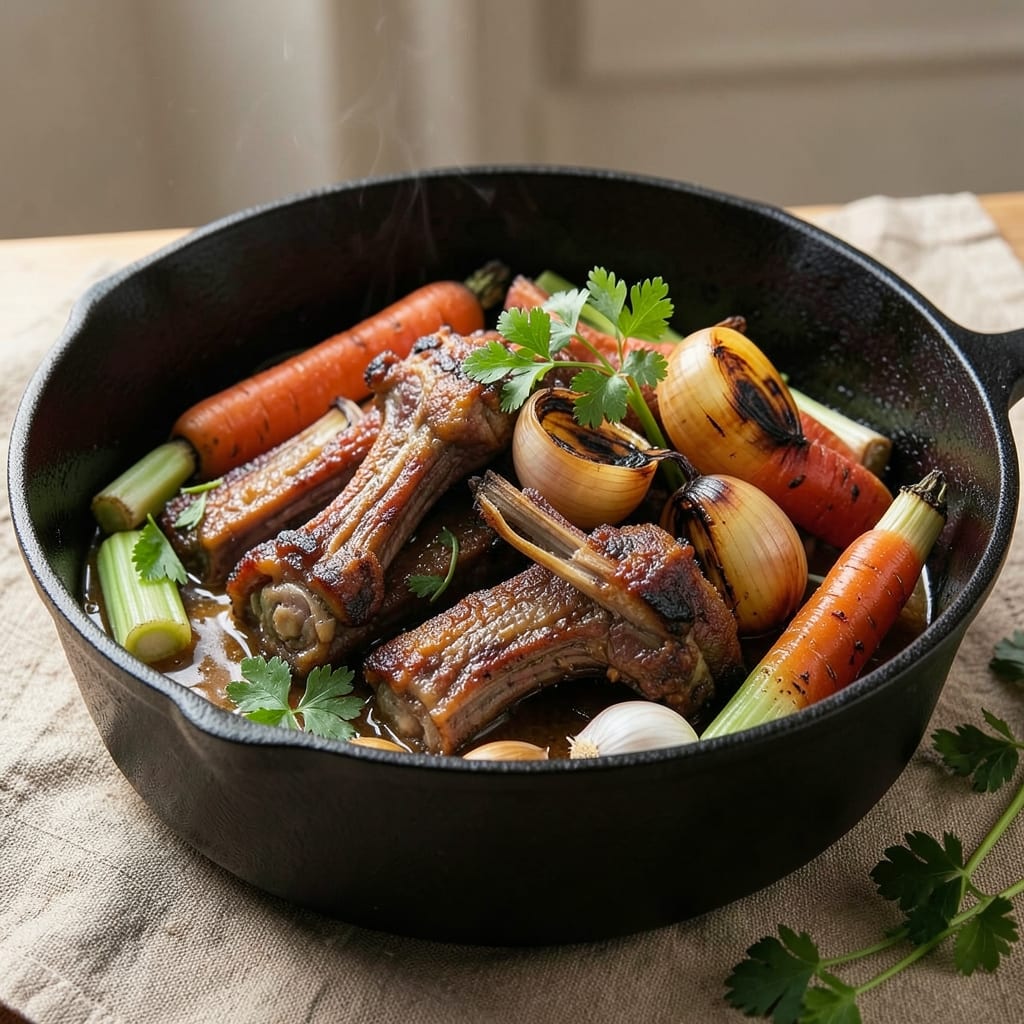
This Barefoot Contessa beef stock recipe transforms simple bones and aromatics into liquid gold—deep, rich, and packed with umami that elevates any dish. The secret lies in slow extraction, where roasted bones and caramelized vegetables infuse the broth with layers of flavor that no store-bought version can match. I’ve perfected this method to balance approachability with professional results, ensuring even beginners can achieve restaurant-quality depth.
The process begins with roasting bones and vegetables until they develop a deep caramelization, unlocking flavors that simmer into the stock over hours. No special equipment is needed—just a large pot, patience, and a few key ingredients like onions, carrots, and celery. The slow cook creates a velvety texture while preserving the natural richness of the beef, making it versatile for soups, risottos, or braised dishes.
What sets this stock apart is its foolproof technique for extracting maximum flavor without bitterness. By skimming impurities and straining carefully, you’ll end up with a clear, golden broth that’s aromatic and deeply savory. The result? A foundation for meals that tastes like it’s been simmering all day—even if you only have a few hours to spare.
Use it immediately in recipes like beef bourguignon or freeze it for months; this stock keeps giving. Here’s how to make it—step by step—for a pantry staple that’s as rewarding to create as it is to use.
Ingredients for barefoot contessa beef stock
Roasted bones and aromatic vegetables create restaurant-quality depth in this umami-rich beef stock.
| Ingredient | Amount | Notes |
|---|---|---|
| Beef Bones 🦴 | 4 lb | Roasted until deep brown |
| Yellow Onions 🧅 | 2 whole | Cut into large chunks |
| Carrots 🥕 | 4 whole | Scrubbed, cut into chunks |
| Celery Stalks 🌿 | 4 whole | Cut into 2-inch pieces |
| Garlic Cloves 🧄 | 8 cloves | Smashed, unpeeled |
| Fresh Parsley 🌿 | ¼ cup | Stems included, chopped |
| Fresh Thyme 🌿 | ¼ cup | Stems included, chopped |
| Tomatoes 🍅 | 2 whole | Roma or vine-ripened, halved |
| Bay Leaves 🌿 | 4 whole | Dried, standard size |
| Black Peppercorns 🌶️ | 1 tbsp | Crushed, not ground |
| Salt 🧂 | 1 tbsp | Diamond Crystal preferred |
| Cold Water 💧 | 16 cups | Filtered preferred |
| Extra-Virgin Olive Oil 🫒 | 2 tbsp | For roasting |
The bones are the foundation—look for marrow-rich beef bones from the butcher section, ideally a mix of knuckle and shin bones for maximum flavor. Costco or local butchers often carry them pre-packaged, but if not, ask for beef bones marked for stock. Freshness matters: bones should smell clean, not fishy or sour. For the vegetables, organic produce ensures no waxy residues that can cloud the stock. The onions, carrots, and celery form the classic 'mirepoix' base—don't peel the carrots or celery too aggressively, as their skins add subtle earthiness. Roast everything until deeply caramelized; this step unlocks the Maillard reaction, which transforms simple ingredients into complex, savory compounds.
No beef bones? Pork or chicken bones work in a pinch, though the flavor profile shifts slightly. Substitute the tomatoes with 1 cup tomato paste if fresh aren't available, but don't skip them—they add acidity that balances the richness. Fresh herbs are ideal, but dried thyme at one-third the amount suffices if needed. For the olive oil, avoid 'light' or refined oils—extra-virgin has the highest smoke point and adds fruity depth. The water should be cold to prevent immediate cloudiness; if using tap water, let it sit out for 30 minutes to release chlorine. For a quicker version, pressure cook the bones for 2 hours instead of simmering, though traditionalists argue the slow method yields superior clarity and depth.
This stock peaks after 8-12 hours of simmering, but it's worth the wait. Strain through a fine-mesh sieve or cheesecloth for maximum clarity—discard the solids. Store in glass jars or airtight containers in the fridge for up to 5 days or freeze in ice cube trays for up to 6 months. Label with the date; frozen stock retains its flavor but may develop a slight off-taste if kept beyond this time. For best results, use within 3 months. The stock reduces slightly as it cools, so plan to make 10-15% more than needed for recipes. Leftovers can be repurposed into soups, risottos, or even a quick pan sauce by reducing on the stovetop.
Why You'll Love This Recipe
- No-Chop, No-Fuss Start: I swear by this stock—just toss the whole onion, carrots, and celery (peels on!) into the pot with the bones. No dicing, no fuss. The bones break down slow, and that’s the magic—deep flavor with almost zero effort.
- Umami Goldmine: That first sip? Rich, savory, and layered—thanks to the roasted bones and garlic cloves. It’s the kind of stock that makes even a simple pasta or risotto taste like a restaurant dish. Honestly, I’ll use it in everything now.
- Weeknight Workhorse: Freeze it in ice cube trays for quick broth boosts later. Need a soup base? A braise? A pot roast? This stock’s the backbone. Between us, it’s saved my dinner more times than I can count—especially when I’m staring at a half-empty pantry.
- Pantry Stretch: Beef bones are cheap, and this recipe turns them into liquid treasure. I make a big batch, freeze it, and—poof—instant flavor without breaking the bank. My wallet and my meals thank me every time.
Step-by-step instructions for Barefoot Contessa beef stock
Transform simple ingredients into velvety, umami-rich stock with this methodical approach.
Roast the Beef Bones for Deep Flavor
Preheat your oven to 425°F. Spread the 4 lb beef bones on a rimmed baking sheet in a single layer, ensuring they don't touch. Drizzle evenly with the 2 tbsp extra-virgin olive oil and toss to coat completely. Roast for 30-40 minutes until the bones develop a deep mahogany color and you can smell that caramelized, meaty aroma.
Here's the thing—roasting the bones before simmering unlocks complex flavors through the Maillard reaction. You'll know they're ready when they're uniformly browned and the edges show slight charring. This step is non-negotiable for developing that signature depth of flavor that separates good stock from extraordinary stock.
Sauté Aromatics Until Fragrant
While the bones roast, prepare a large stockpot by adding the 2 whole yellow onions, 4 whole carrots, 4 whole celery stalks, and 8 smashed garlic cloves. Pour in the 16 cups cold water and bring to a boil over medium-high heat. Once boiling vigorously, reduce heat to medium-low and simmer for 10 minutes to soften the vegetables.
After the initial simmer, add the 2 whole tomatoes, 4 bay leaves, 1 tbsp crushed black peppercorns, and 1 tbsp salt. The tomatoes will break down into the liquid, adding acidity that balances the richness. The peppercorns and bay leaves infuse subtle warmth and earthiness that elevate the stock's complexity. This aromatic base forms the flavor foundation for your stock.
Add Roasted Bones and Simmer Gently
Carefully transfer the roasted beef bones to the stockpot using tongs. The bones should be submerged completely—if not, add enough hot water to cover them by at least 2 inches. Bring the mixture back to a gentle simmer, then reduce heat to maintain a barely perceptible bubble at the surface. This low-and-slow approach prevents cloudiness and extracts maximum gelatin from the bones.
Simmer uncovered for 3-4 hours, skimming any foam or impurities that rise to the surface with a fine-mesh skimmer. The stock should gradually deepen in color and develop a rich, meaty aroma. I check the consistency periodically by tasting—it should be flavorful but not overly salty, and the bones should easily separate from the meat when tested with tongs.
Strain and Finish with Herbs
After simmering, remove the stockpot from heat and let the contents settle for 10 minutes. Line a fine-mesh strainer with cheesecloth or a coffee filter to create an extra-fine filter. Pour the stock through the strainer into a clean bowl, discarding the solids. This careful straining removes any remaining impurities, resulting in crystal-clear stock.
Return the strained stock to the pot and stir in the 0.25 cup fresh parsley and 0.25 cup fresh thyme, including stems for maximum flavor extraction. Simmer gently for another 10 minutes, then remove from heat. The herbs add bright, fresh notes that cut through the richness of the beef. For best results, use the stock immediately or refrigerate it to solidify the fat, which can be skimmed off before reheating or using.
Pro Tips For Making Barefoot Contessa Beef Stock
- BLISTER THE BONES FIRST: Don’t skip the char—sear the beef bones in batches over high heat until they’re deep brown in spots. I learned this the hard way: skipping this step means your stock will taste flat, no matter how long you simmer. (Yes, even if you’re impatient like me.)
- CHOP VEGETABLES UNIFORM: Cut onions, carrots, and celery into 1-inch chunks—not too small, or they’ll turn to mush. My grandmother swore by this, and she was right: consistent sizing means even cooking and no bitter, overbrowned bits.
- SKIP THE CROWDED POT: Packing the pot too tight traps steam and slows browning. Spread the bones and veg in a single layer first, then add water—this guarantees a proper sear before the simmer. (Your future self will thank you.)
- ADD GARLIC LATE: Toss the garlic cloves in with the bones early, but don’t crush them—just peel and leave whole. After 2 hours of simmering, smash them lightly with the back of a knife. This keeps the flavor balanced, not bitter or overpowering. (Sounds weird, but it works.)
Perfect pairings for this recipe
Classic Stock Uses
This rich beef stock is the backbone of countless dishes. Use it to make a creamy beef bourguignon by simmering 1 cup stock with 8 oz mushrooms, 1 cup red wine, and 2 lbs beef chuck for 3 hours. For a comforting beef barley soup, combine 4 cups stock with 1 cup pearl barley, 2 carrots, and 1 onion, then simmer for 45 minutes. 🥘
Pasta Perfection
Elevate your beef ravioli or pappardelle by cooking pasta in 4 cups stock instead of water, then finishing with a splash of the reserved stock and 2 tbsp butter. For a beef stroganoff, sauté 1 lb sliced beef in 2 tbsp olive oil, then deglaze with 1 cup stock and ½ cup sour cream. The stock adds depth without overpowering the dish.
Sauce Foundation
Reduce 2 cups stock on the stovetop until it reaches ½ cup for a silky beef demi-glace—perfect for drizzling over steak frites or braised short ribs. For a quick pan sauce, add 1 tbsp cornstarch to 1 cup stock, simmer until thickened, then stir in 2 tbsp brandy and a pat of butter. This sauce transforms simple proteins into restaurant-worthy meals.
Garnish & Finish
Use chilled stock as a garnish for soups or stews—simply pour a ladleful over the top before serving. For risotto, replace water with 3 cups stock and stir in ½ cup grated Parmesan at the end. The stock’s umami richness enhances the creamy texture, making every bite more flavorful. A splash of stock also revives dried-out dishes—just heat gently and stir in 1 tbsp butter.
Beverage Pairings
Pair your stock-based dishes with a bold red wine like Cabernet Sauvignon or Syrah—their tannins complement the beef’s richness. For lighter options, try a crisp white wine such as Chardonnay or a dry Riesling. Beer lovers should opt for a dark lager or stout, as their maltiness echoes the stock’s depth. A chilled sparkling water with lemon also refreshes the palate between bites. 🍷
Nutrition facts
Frequently asked questions
Can I use chicken or pork bones instead of beef?
You can substitute pork or chicken bones, but the flavor profile will change significantly. Pork bones create a sweeter, more delicate stock, while chicken yields a lighter, milder broth. For a beef-like depth, use a mix of beef and pork bones (like ham hocks) for richer umami. If you're committed to chicken, add extra mushrooms or soy sauce for meaty flavor.
How do I prevent my stock from getting cloudy?
Cloudiness usually comes from impurities or high heat. Skim foam regularly during simmering and avoid boiling vigorously—keep it at a gentle simmer instead. For extra clarity, strain through cheesecloth after simmering. If using tap water, let it sit out for 30 minutes to release chlorine before adding to the pot.
Can I make this stock in a slow cooker or Instant Pot?
For a slow cooker, roast the bones first, then add everything and cook on low for 8-10 hours. For an Instant Pot, roast bones, then pressure cook on high for 2 hours (natural release). The pressure method speeds things up but may yield slightly less gelatin. Always skim impurities during cooking for the best results.
Why does my stock taste bitter?
Bitterness often comes from overcooking or using burnt bones/vegetables. Roast bones until caramelized but not charred, and simmer gently—never boil. If the stock tastes bitter, strain out the bones and vegetables, then reduce the liquid by half to concentrate flavors. Adding a splash of lemon juice or vinegar can also balance the taste.
How long can I store this stock, and how do I revive it?
Store in airtight containers in the fridge for 5 days or freeze for up to 6 months. To revive, thaw overnight in the fridge, then heat gently on the stove. For frozen stock, break it into chunks and simmer until fully melted. If it smells off or has a grayish tint, discard it—these are signs of spoilage.