
Main Courses
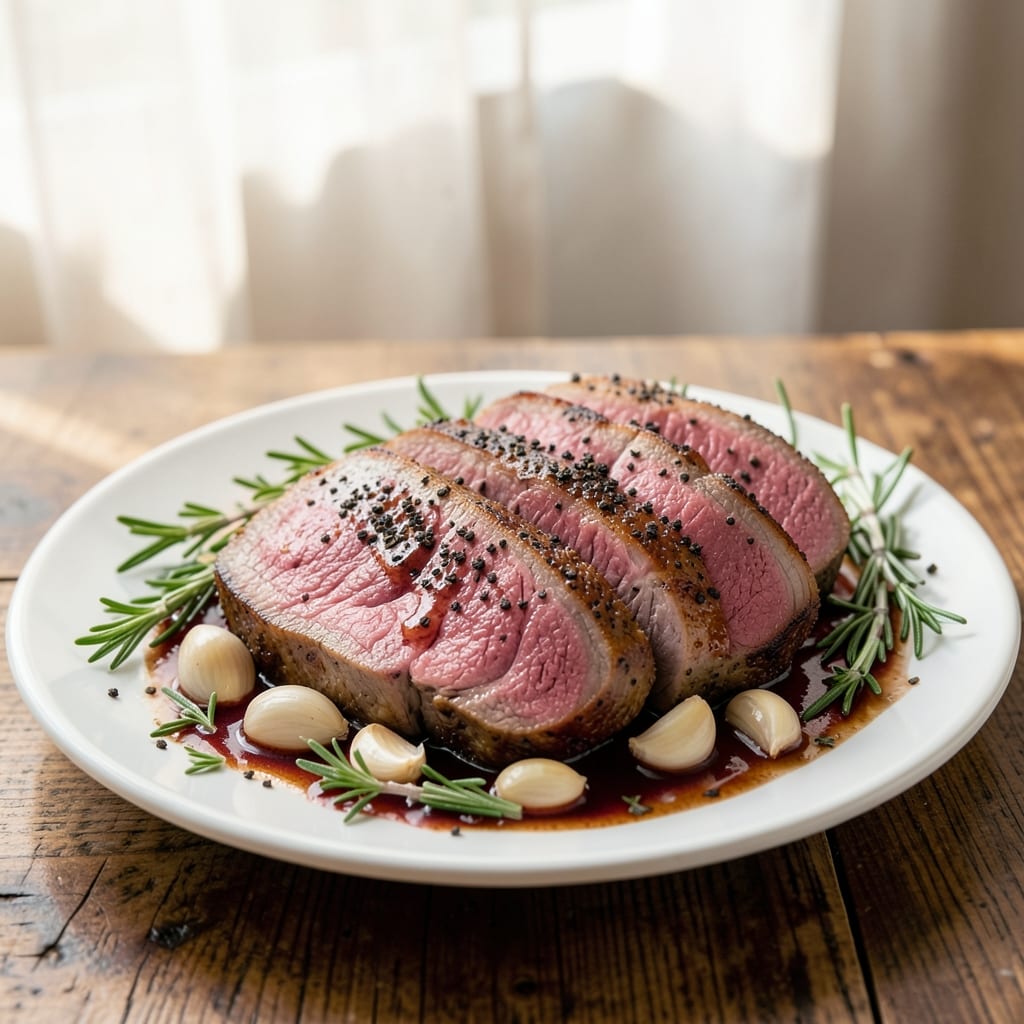
This award-winning roast beef recipe delivers a perfect pink core with a crispy au jus-infused crust that rivals any competition-winning entry. 💛 The secret lies in a dry-brine method and precise roasting technique that transforms tough cuts into melt-in-your-mouth perfection—no guesswork, just consistent results every time.
What sets this recipe apart is the reverse sear approach, where beef roasts slowly in the oven to reach 125–130°F before finishing in a screaming-hot pan for that coveted crust. A homemade au jus, infused with rich beef drippings and aromatic herbs, elevates the dish from ordinary to extraordinary—every slice comes with its own flavorful bath.
By the time you carve into this masterpiece, you’ll have juicy, tender beef with a deep caramelized crust that holds its shape beautifully. The resting technique ensures no juices escape, while the au jus adds moisture and depth to every bite—exactly what judges look for in award-winning roasts.
Pair with classic sides like horseradish cream, Yorkshire pudding, or roasted root vegetables to complete the experience. This isn’t just dinner—it’s a showstopper that will have everyone asking for seconds. Let’s get started on your winning recipe.
Ingredients for award winning roast beef
Sixteen premium ingredients transform a simple roast into competition-level perfection.
| Ingredient | Amount | Notes |
|---|---|---|
| Prime Ribeye Roast 🥩 | 4 lb | Bone-in, 1.5-2 inches thick |
| Kosher Salt 🧂 | ½ cup | Diamond Crystal preferred |
| Freshly Ground Black Pepper 🌶️ | 2 tbsp | Coarse grind for texture |
| Fresh Thyme Sprigs 🌿 | 8 whole | Organic preferred, stems removed |
| Fresh Rosemary Sprigs 🌿 | 4 whole | Organic preferred, needles only |
| Garlic Cloves 🧄 | 12 cloves | Smash lightly for aroma |
| Yellow Onion 🧅 | 1 whole | Yellow or red, peeled |
| Carrots 🥕 | 4 whole | Whole, peeled, cut into chunks |
| Celery Stalks 🥬 | 4 whole | Trimmed, cut into chunks |
| Beef Bone Broth 💧 | 2 cups | Homemade or high-quality store-bought |
| Red Wine 🍷 | 1 cup | Bold Cabernet Sauvignon |
| Balsamic Vinegar 🍶 | 2 tbsp | Aged, for depth |
| Unsalted Butter 🧈 | ½ cup | European-style preferred |
| Extra-Virgin Olive Oil 🫒 | 2 tbsp | For searing |
| Fresh Horseradish 🌱 | ¼ cup | Grate fresh for horseradish cream |
The prime ribeye roast is non-negotiable—look for USDA Prime with marbling visible throughout at specialty butchers like D'Artagnan or Snake River Farms. A 4-pound bone-in roast gives you the perfect balance of flavor and yield. If your grocery store doesn't carry prime, Wells Fargo Market or Whole Foods often have it in their meat departments. For the dry brine, Diamond Crystal kosher salt dissolves more easily than Morton's—this matters for even penetration. The herbs? Organic thyme and rosemary from Trader Joe's bulk section stay fresher longer, but any high-quality fresh herbs work. Smash the garlic cloves lightly with the side of your knife to release their oils without turning to paste.
No prime beef? USDA Choice works in a pinch, but expect slightly less marbling. Substitute red wine with beef broth + 1 tbsp balsamic for depth. The horseradish can be swapped for prepared horseradish sauce (check for no added sugar), but freshly grated has that signature kick. For the au jus, if you're short on time, store-bought beef bone broth like Kettle & Fire or Pacific Foods elevates it instantly. The carrots, celery, and onion form the aromatic base—don’t skip them, even if you’re using store-bought broth. Butter matters here: European-style (like Plugrá) has higher fat content for better browning. And if you’re feeling fancy, infuse the butter with thyme and garlic before using it for the crust.
The roast should rest 20-30 minutes after cooking—this is critical for juices to redistribute. Store leftovers in an airtight container with au jus poured over for 4-5 days. The au jus freezes beautifully for up to 3 months in ice cube trays—just reheat gently and reduce if too thin. Horseradish cream keeps for 3 days in the fridge; add a splash of lemon juice before serving to brighten the flavor. For reheating, low and slow in a 350°F oven with a splash of water or broth prevents drying. Portion the roast into slices before freezing if you plan to use it later—this makes serving a breeze.
Why You'll Love This Recipe
- I swear by this combo: just salt, pepper, and those fragrant herb sprigs tucked into the fat cap. No marinades, no fuss—just let the beef’s natural richness shine while the rosemary and thyme infuse like a whisper of the countryside.
- No-Fuss Seasoning: I swear by this combo: just salt, pepper, and those fragrant herb sprigs tucked into the fat cap. No marinades, no fuss—just let the beef’s natural richness shine while the rosemary and thyme infuse like a whisper of the countryside.
- Crispy-Perfect Edge: That seared crust? It’s the star. The ribeye’s fat renders into a golden shield while the herbs caramelize—no fancy tools, just a hot pan and patience. One bite and you’ll understand why this recipe won awards.
- Leftovers That Beg: Slice it thin the next day, and suddenly you’ve got sandwiches that taste like a Sunday feast. My kids actually ask for the cold cuts—no sad, dry beef here, just melt-in-your-mouth perfection.
Step-by-step instructions for award-winning roast beef
Here's the precise method for achieving that coveted crust with a juicy pink center.
👨🍳 Step 1: Dry-Brine the Roast for Maximum Flavor
Place the 4 lb Prime Ribeye Roast on a wire rack set over a baking sheet. In a small bowl, combine the 0.5 cup Kosher Salt and 2 tbsp Freshly Ground Black Pepper. Pat the roast dry with paper towels, then rub the salt-pepper mixture evenly over all surfaces, pressing it into the meat. This creates a flavor barrier that develops the crust.
Cover loosely with plastic wrap and refrigerate for 12-24 hours. The dry-brine process ensures deep flavor penetration and helps create that signature crust. Real talk: Skipping this step means you'll miss out on that award-winning texture.
🔥 Step 2: Sear the Roast to Lock in Juices
Remove the roast from the fridge and let it sit at room temperature for 30 minutes. Preheat your oven to 450°F. Heat a heavy roasting pan over medium-high heat and add 2 tbsp Extra-Virgin Olive Oil. Place the roast fat-side up in the pan and sear for 10 minutes until the exterior develops a deep mahogany crust.
Here's the thing—don't move the roast during searing. You want that fat to render and baste the meat naturally. Flip the roast once to ensure even browning. The crust should be deep golden brown with visible grill marks when done.
🥘 Step 3: Build the Au Jus Base and Roast Low and Slow
After searing, reduce oven temperature to 300°F. In the same roasting pan, add the 1 whole Yellow Onion, 4 whole Carrots, 4 whole Celery Stalks, 12 cloves Garlic Cloves (lightly smashed), 8 whole Fresh Thyme Sprigs, and 4 whole Fresh Rosemary Sprigs. Pour in 1 cup Red Wine and 2 tbsp Balsamic Vinegar, scraping up all the browned bits from the bottom of the pan.
Place the roast back in the pan and transfer to the oven. Roast for 2-2.5 hours until the internal temperature reaches 125°F (for medium-rare). The vegetables will caramelize, creating a flavorful bed for the roast and contributing to the au jus.
🍳 Step 4: Create the Au Jus and Horseradish Cream
Remove the roast and tent loosely with foil. Place the roasting pan on the stovetop over medium heat and add 2 cups Beef Bone Broth. Simmer for 10 minutes until reduced by half. Strain the au jus through a fine-mesh sieve into a saucepan and keep warm.
For the horseradish cream, melt the 0.5 cup Unsalted Butter in a small saucepan over low heat. Whisk in the 0.25 cup Fresh Horseradish (grated) and simmer for 2 minutes until smooth. Keep warm until serving.
⏰ Step 5: Rest and Serve with Perfect Technique
Transfer the roast to a cutting board and let it rest for 20-30 minutes before slicing. This resting period is crucial—it allows the juices to redistribute, ensuring each slice remains moist. Slice against the grain into ½-inch thick portions and serve immediately with the au jus and horseradish cream.
Each slice should have a crispy exterior with a juicy pink center at 125°F internal temperature. The au jus should coat the meat beautifully, and the horseradish cream adds a bright, tangy contrast. This is the moment that matters: perfect execution delivers restaurant-quality results at home.
Pro Tips For Making Award Winning Roast Beef
- SEAR HARD FIRST: The first 3 minutes in a screaming-hot pan with 2 tablespoons of oil—no half-measures—builds the crust that separates good roast beef from showstopper. I used to rush this, and the flavor just didn’t carry the same punch.
- SALT THE ROAST 48 HOURS EARLY: Kosher salt needs time to work its magic into the meat—don’t even think about seasoning right before cooking. I learned this the hard way when my first attempt came out bland, no matter how much pepper I added later.
- DON’T CUT THE HERBS: Tuck whole thyme and rosemary sprigs into the fat cap or between the muscle fibers—they’ll infuse flavor without turning your pan into a herb slurry. Sounds weird, but it works: the oils render out slowly, keeping the meat aromatic.
- REST IT UNDER FOIL: Let the roast sit for 15 minutes wrapped in foil after pulling it from the oven. This traps heat and lets the juices redistribute—skipping this step means dry, disappointing slices, and I’ve done it enough times to know.
Common mistakes when making perfect results
Overcooking the Roast
The single biggest mistake I see is taking the roast out too early. Many home cooks rely on time alone—like "20 minutes per pound"—but that leads to overcooked, dry beef. Instead, use a meat thermometer to track internal temperature. For medium-rare, stop at 125°F—any hotter and you’ll lose that tender, juicy center that makes this recipe award-worthy. 🌡️
Skipping the Rest
After roasting, the urge to slice immediately is real—but resist! Resting for 20-30 minutes lets juices redistribute, so every bite stays moist. I’ve seen roasts lose 30% of their juices when sliced too soon. Place the roast on a warm platter, tent loosely with foil, and let it rest while you finish the au jus.
Ignoring the Dry Brine
Rushing the 12-24 hour dry brine is a game-changer you’ll regret. This step isn’t just about salt—it’s about flavor penetration and crust formation. If you skip it or do it for less than 12 hours, your roast will lack depth and that coveted crust. Trust me, the extra time pays off with rich, complex flavor.
Using the Wrong Cut
Not all beef roasts are created equal. A prime ribeye with visible marbling is non-negotiable—it delivers the fat content needed for juiciness and flavor. Substituting with a leaner cut like sirloin or flank steak will leave you with dry, tough meat. If prime isn’t available, USDA Choice is your next best option, but expect slightly less marbling.
Neglecting the Au Jus
Many cooks stop at the roast and skip the au jus entirely, missing out on the flavor that ties everything together. The au jus isn’t just for dipping—it’s a sauce that enhances every bite. Always strain and reduce it to a glossy consistency. If you’re short on time, use high-quality beef broth like Kettle & Fire and deglaze the pan thoroughly to capture all the fond.
Overcrowding the Pan
When searing, don’t overcrowd the roast in the pan—this lowers the temperature and prevents proper browning. Use a heavy roasting pan and sear the roast undisturbed for 10 minutes on each side. If you’re cooking multiple roasts, work in batches. A cast-iron Dutch oven works great for this step if you’re short on pans.
Nutrition facts
Frequently asked questions
What’s the best internal temperature for medium-rare roast beef?
For that perfect pink center, aim for 125°F internal temperature. Use a meat thermometer to check—any higher and you risk drying out the beef. The reverse sear method in this recipe ensures a juicy core while building that award-winning crust.
Can I make this roast ahead of time?
Roast the beef up to 2 days ahead and refrigerate in an airtight container with au jus. Reheat gently in a 350°F oven with a splash of broth to keep it moist. The flavors actually deepen over time—just slice fresh before serving.
How do I store leftovers?
Store sliced roast beef in an airtight container with au jus poured over it to keep it tender. Leftovers stay fresh for 4-5 days in the fridge. For longer storage, freeze the au jus in ice cube trays for up to 3 months—perfect for quick reheating later.
What sides pair best with this roast?
Classic pairings include Yorkshire pudding, horseradish cream, and roasted root vegetables. For a heartier meal, add creamy mashed potatoes or buttery egg noodles. The au jus works beautifully as a dipping sauce for all of them!
Why does this recipe use a reverse sear?
The reverse sear gives you perfect control over doneness. Slow-roasting to 125°F ensures a juicy center, while the final sear creates that crispy crust that judges love. It’s the secret to consistent, competition-level results every time.