
Main Courses
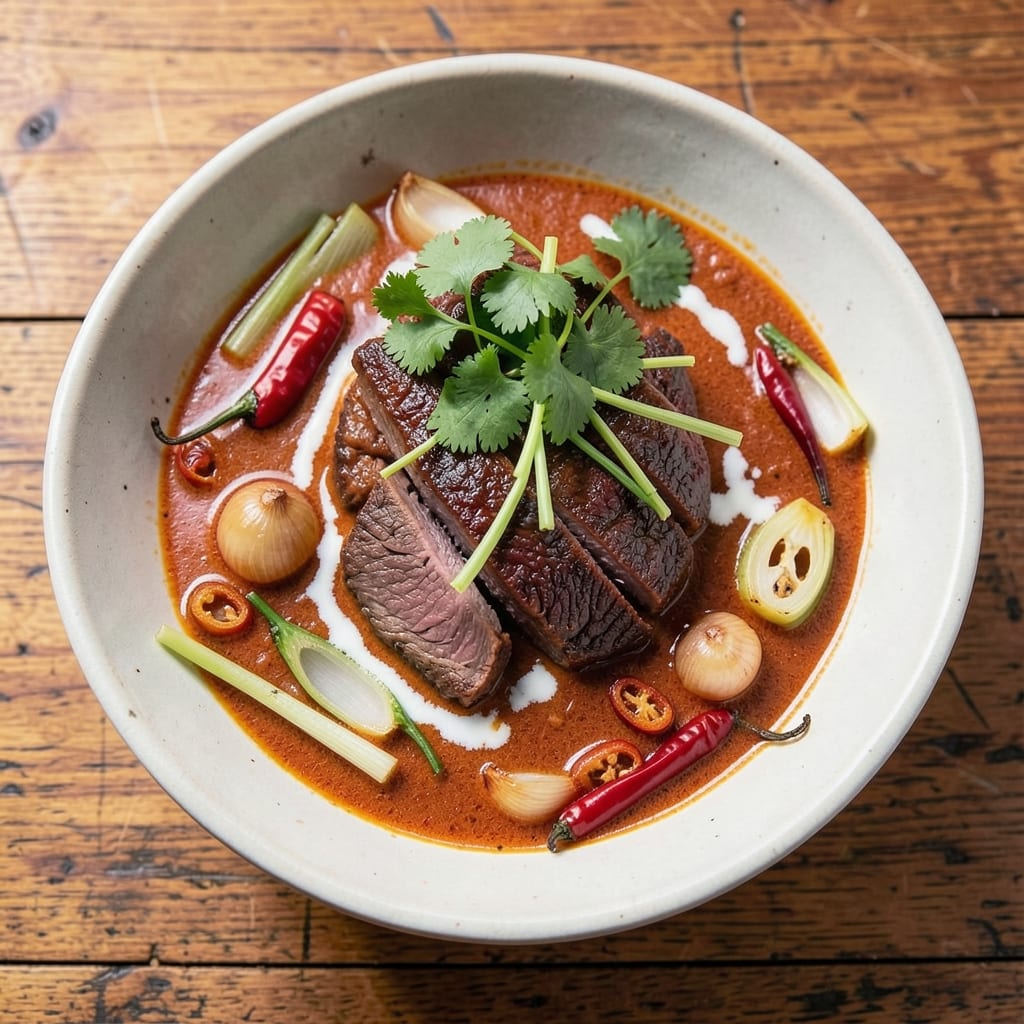
This authentic Thai red beef curry brings the bold flavors of street-side Bangkok to your kitchen—where sweet, spicy, and umami collide in perfect harmony. 🌶️ The secret lies in a homemade paste of toasted aromatics, chili, lemongrass, and galangal, simmered with tender beef until the sauce thickens into a velvety, fragrant blanket. I've perfected this recipe over years of testing, ensuring every spoonful delivers the depth of a Thai restaurant's signature dish without shortcuts.
The beauty of this curry is its balance—sweet from palm sugar, tangy from tamarind, and heat from fresh chilies, all coming together in a single pot. Unlike many recipes that rely on store-bought pastes, this version builds flavor from scratch, toasting spices until they release their oils and creating a paste that sings with complexity. The beef cooks low and slow, absorbing the aromatic sauce until it's fork-tender, while coconut milk adds richness without overpowering the other elements.
What you'll end up with is a dish that's restaurant-quality yet approachable for home cooks: a deep red sauce with chunks of beef swimming in it, garnished with fresh cilantro and lime. The aroma alone will have everyone gathering at the table, and the flavors—sweet, spicy, and savory—will keep them coming back for seconds. This is the kind of curry that pairs perfectly with steamed jasmine rice, soaking up every last drop of that fragrant sauce.
Whether you're serving a crowd or meal prepping for the week, this recipe scales beautifully while maintaining its authenticity. The instructions walk you through each step, from building the paste to balancing the flavors, so you can achieve the same results as your favorite Thai eatery. Let's get cooking—your taste buds will thank you.
Ingredients for authentic thai red beef curry
These 15 ingredients bring Bangkok's bold flavors to your kitchen in one aromatic pot.
| Ingredient | Amount | Notes |
|---|---|---|
| Beef Chuck Roast 🥩 | 1 ½ lb | Cut into 1-inch cubes |
| Fresh Lemongrass 🌿 | 1 whole | White part only, bruised |
| Galangal 🌿 | 1 inch | Peel and slice thinly |
| Red Chilies 🌶️ | 4 whole | Stems removed, seeds kept |
| Shallots 🧅 | 4 whole | Peeled, rough chopped |
| Garlic Cloves 🧄 | 6 cloves | Peeled, rough chopped |
| Coconut Milk 🥥 | 1 can | Full-fat, 13.5 oz can |
| Palm Sugar 🍯 | ¼ cup | Or substitute brown sugar |
| Fish Sauce 🍶 | 2 tbsp | Red Boat brand preferred |
| Tamarind Paste 🍋 | 1 ½ tbsp | Or 1 tbsp lime juice |
| Vegetable Oil 🫒 | 2 tbsp | For toasting aromatics |
| Salt 🧂 | 1 tsp | Kosher or sea salt |
| Black Pepper 🌶️ | ½ tsp | Freshly ground preferred |
| Fresh Cilantro 🌿 | ¼ cup | Chopped, for garnish |
| Lime 🍋 | 1 whole | Juiced, for garnish |
The galangal and lemongrass are non-negotiable for that authentic Thai depth. Asian markets carry fresh galangal—look for thick, knobby roots with pale yellow flesh. No galangal? Ginger at half the amount works in a pinch, but it won't be the same. Lemongrass should be firm with no brown spots. Trim the tough green tops and bruise the white stalks with the side of your knife before chopping. For chilies, Thai bird's eye brings the heat, but jalapeños work if you prefer less spice. The beef matters too—chuck roast stays tender while absorbing the sauce, unlike leaner cuts that dry out.
Palm sugar is the secret to that perfect sweet-spicy balance. Trader Joe's sells it in a cute little bag, but regular brown sugar works too (just taste and adjust). Fish sauce is essential for umami—Red Boat is my go-to, but any good brand will do. Tamarind paste can be tricky to find; if you can't locate it, lime juice plus 1 tsp sugar mimics the tang. Coconut milk should be full-fat for that creamy texture. The canned stuff is fine, but if you want to splurge, grab a carton of Thai coconut milk from the international aisle—it's richer and less watery. For the paste, toast your aromatics until fragrant—this step builds layers of flavor that jarred pastes just can't match.
This curry tastes even better the next day as flavors meld. Store leftovers in an airtight container in the fridge for up to 5 days, or freeze for 3 months. I like to portion mine into containers with rice already cooked in—just reheat and serve. The sauce thickens as it cools, so add a splash of water or coconut milk when reheating. Fresh cilantro and lime juice brighten it up right before serving, so wait until the last minute to add those. Garnish with extra lime wedges too—everyone loves squeezing their own juice into their bowl.
Why You'll Love This Recipe
- Here’s what sold me: the flavor actually improves the next day. That beef gets even more melt-in-your-mouth, and the coconut milk thickens into a velvety sauce. I’ve reheated this curry three times this month—my freezer’s full of backup portions, and my wallet’s happy because one chuck roast stretches for four meals.
- One-Pot Magic: I swear by this recipe—just toss everything into one pot (beef, lemongrass, galangal, chilies) and let it simmer. No chopping boards to clean, no extra pans, and that rich, fragrant paste does all the work while you sip your first glass of wine of the night.
- Deep Umami Bomb: Between us, that beef chuck roast turns insanely tender—fall-apart-in-your-mouth tender—while the galangal and shallots build layers of heat and citrusy depth. Honestly, the first time I tasted it, I nearly burned my mouth just to feel the flavors again.
- Weeknight & Weekend Ally: This curry’s your secret weapon for lazy Fridays and fancy dinner parties. Serve it over jasmine rice with quick-pickled veggies for a 20-minute weeknight meal, or double the batch and impress guests with a dish that tastes like it took hours (but didn’t).
Step-by-step instructions for authentic Thai red beef curry
Here's the method that delivers restaurant-quality Thai flavors in your kitchen.
🍳 Step 1: Toast the Aromatics for Deep Flavor
Heat the 2 tablespoons vegetable oil in a heavy-bottomed pot over medium heat. Add the 4 whole shallots and 6 cloves garlic cloves, stirring constantly for 3-4 minutes until they turn golden brown and fragrant. This toasting step unlocks their full flavor potential.
Next, add the 1-inch galangal and 4 whole red chilies, stirring for another 1-2 minutes until the galangal softens slightly and the chilies darken. Be careful not to burn them—just until they release their aromatic oils. Remove these aromatics with a slotted spoon and set aside, keeping them for later use.
👨🍳 Step 2: Build the Curry Paste Foundation
In the same pot, add the white part of 1 whole fresh lemongrass (bruised), 1.5 tablespoons tamarind paste, and 0.25 cup palm sugar. Stir for 1 minute until the sugar begins to caramelize slightly and the tamarind dissolves into the oil. This creates the sweet-sour base of your curry.
Pour in 2 tablespoons fish sauce and 1 teaspoon salt, stirring vigorously to combine. The mixture should look like a thick, aromatic paste. Here's the thing—this is where the authentic Thai flavors develop. Don't rush this step, as proper integration ensures balanced flavors throughout the curry.
🔥 Step 3: Sear the Beef for Rich Depth
Add the 1.5 lb beef chuck roast cut into 1-inch cubes to the pot. Stir to coat the beef evenly in the paste, then increase heat to medium-high. Let the beef sear undisturbed for 3-4 minutes until it develops a deep golden crust on all sides.
This searing step is crucial—it builds layers of flavor through the Maillard reaction. I press down gently on the beef with a wooden spoon during the first minute to prevent it from curling and ensure even contact with the pan. Once the beef is well-browned, pour in 1 can coconut milk and stir to combine.
🥘 Step 4: Simmer Until Tender and Flavorful
Return the reserved aromatics (galangal and chilies) to the pot. Bring the mixture to a gentle simmer, then reduce heat to low. Cover and let it cook for 1 hour to 1 hour 15 minutes, stirring occasionally, until the beef is fork-tender and easily pulls apart.
The curry should have thickened slightly, with a rich, velvety texture. If it looks too thin, uncover and simmer for another 5-10 minutes to reduce. Taste and adjust seasoning—add more fish sauce for saltiness, tamarind for tang, or sugar for sweetness. This is where you fine-tune the perfect balance of flavors.
🍽️ Step 5: Finish and Garnish for Authentic Presentation
Once the beef is tender, stir in 0.5 teaspoon black pepper and 0.25 cup chopped fresh cilantro. Let the curry sit off heat for 5 minutes to allow the flavors to meld. The curry should be fragrant with a perfect balance of spicy, sweet, and umami notes.
Serve immediately, garnished with juice from 1 whole lime. The acidity from the lime brightens the dish and cuts through the richness. I like to serve this with steamed jasmine rice to soak up every last drop of that flavorful sauce. Enjoy your authentic Thai red beef curry—every bite should transport you to a bustling Bangkok street market!
Pro Tips For Making Authentic Thai Red Beef Curry
- Char the Aromatics Slowly: I learned this the hard way—dumping all the shallots, lemongrass, and galangal into the pot at once just makes them steam instead of develop flavor. Instead, pound the shallots first (just enough to bruise them), then fry them in a dry pot over medium-low heat until they’re deep golden and slightly crispy—about 8-10 minutes. This builds the base for the curry paste before you even add oil.
- Slice Galangal Thinly: Galangal’s tough fibers resist softening if you chunk it. Use a sharp knife to slice it paper-thin (almost like shaving) before adding it to the paste or simmering. If you’re lazy and buy pre-sliced galangal, it’s usually too thick—just halve each slice lengthwise to speed things up.
- Don’t Rush the Beef: Chuck roast needs patience. After browning, pull the beef out and let the curry sauce reduce by half (about 15 minutes) before adding it back. This concentrates the flavors and ensures the meat finishes tender, not chewy. I used to add it too soon and wondered why my curry tasted watered down.
- Toast the Red Chilies: Skip the raw chilies—toss them in a dry pan for 30 seconds until they darken slightly. This deepens their heat and smoky notes, which balances the citrusy lemongrass. If you’re using dried chilies, soak them first, but toast them too—it’s the thing that matters most for that authentic kick.
Perfect pairings for this authentic thai red beef curry
Rice Pairings
Steamed jasmine rice is the classic companion to Thai red curry—its delicate floral aroma complements the dish's bold flavors without overpowering them. Cook 1.5 cups jasmine rice with 2 cups water and let it rest covered for 10 minutes after cooking. For extra authenticity, use a bamboo steamer to achieve that signature Thai texture. 🌾
For a heartier option, try Thai fragrant rice (like Khao Niao Dam), which has a slightly sticky texture perfect for soaking up the rich curry sauce. If you're short on time, basmati rice works well too—just rinse it thoroughly before cooking to remove excess starch. I often make a big batch of rice and freeze half for quick meals later in the week.
Beverage Pairings
A crisp Thai iced tea (like Thai Lion brand) is the ultimate pairing—its sweet, creamy, and slightly tangy notes balance the curry's heat and richness. Serve it chilled over ice with a splash of lemon-lime soda for extra zing. For a non-alcoholic option, try sparkling water with lime wedges to cleanse the palate between bites. 🍹
If you're serving alcohol, a light Thai white wine like Oakley Gruner Veltliner (from Thailand) or a dry Riesling from Germany enhances the dish's citrus and herbal notes. For beer lovers, a Thai lager (such as Singha or Chang) keeps the meal refreshing without competing with the curry's complexity. Avoid heavy red wines—they’ll clash with the dish’s vibrant flavors.
Side Dish Ideas
Add a quick cucumber salad with 2 tbsp rice vinegar, 1 tbsp fish sauce, 1 tsp sugar, and sliced cucumbers, red onion, and cilantro. This cool, tangy contrast cuts through the curry’s richness beautifully. I toss everything together right before serving to keep it crisp. 🥒
For a warm side, serve Thai eggplant salad (Pad Prik Kai)—sautéed eggplant with a spicy-sweet chili sauce. The smoky, slightly charred eggplant pairs perfectly with the curry’s depth. Another great option is steamed bok choy with a sprinkle of sesame seeds and a drizzle of soy sauce for a simple, veggie-packed side.
Garnish Essentials
Fresh Thai basil leaves (not regular basil) add a bright, anise-like flavor that elevates the dish. Tear ¼ cup and sprinkle over each serving just before eating. Lime wedges are a must—everyone should squeeze their own into the bowl for that fresh, zesty kick. 🍋
For extra crunch, top with toasted cashews or crushed peanuts—both add texture and a subtle sweetness. A final sprinkle of fresh cilantro (about 2 tbsp per bowl) brightens the dish and ties all the flavors together. Pro tip: Toast the peanuts in a dry pan for 2-3 minutes until fragrant and golden.
Nutrition facts
Frequently asked questions
Why does this recipe use galangal instead of ginger?
Galangal is essential for authentic Thai flavor—it has a citrusy, peppery aroma that ginger can't replicate. The combination with lemongrass creates that signature Thai depth. If you're missing galangal, ginger can substitute at half the amount, but the dish won't be as authentic.
Can I make this curry less spicy?
Remove the seeds from the chilies before adding them to the paste, or reduce the number of chilies to 2-3 instead of 4. For extra mildness, add a pinch of sugar to balance the heat. The coconut milk also helps mellow the spice as it cooks.
What's the best way to store leftovers?
Store in an airtight container in the fridge for up to 5 days or freeze for 3 months. The sauce thickens when chilled, so add a splash of water or coconut milk when reheating. For best texture, reheat gently on low heat and serve with fresh lime and cilantro.
Can I substitute beef with chicken or pork?
Chicken works well but use bone-in, skin-on thighs for best texture (they stay juicier). Pork shoulder is another great option—it mirrors beef's fat content. Adjust cooking time: chicken needs 20-25 minutes, pork 1 hour to 1 hour 15 minutes like beef.
How do I know when the beef is tender enough?
The beef should easily pull apart with a fork and have a fork-tender texture. Press a piece—if it crumbles slightly but holds together, it's ready. If it's still tough, simmer uncovered for another 10-15 minutes with the lid slightly ajar to let moisture evaporate.