
Soups & Stews
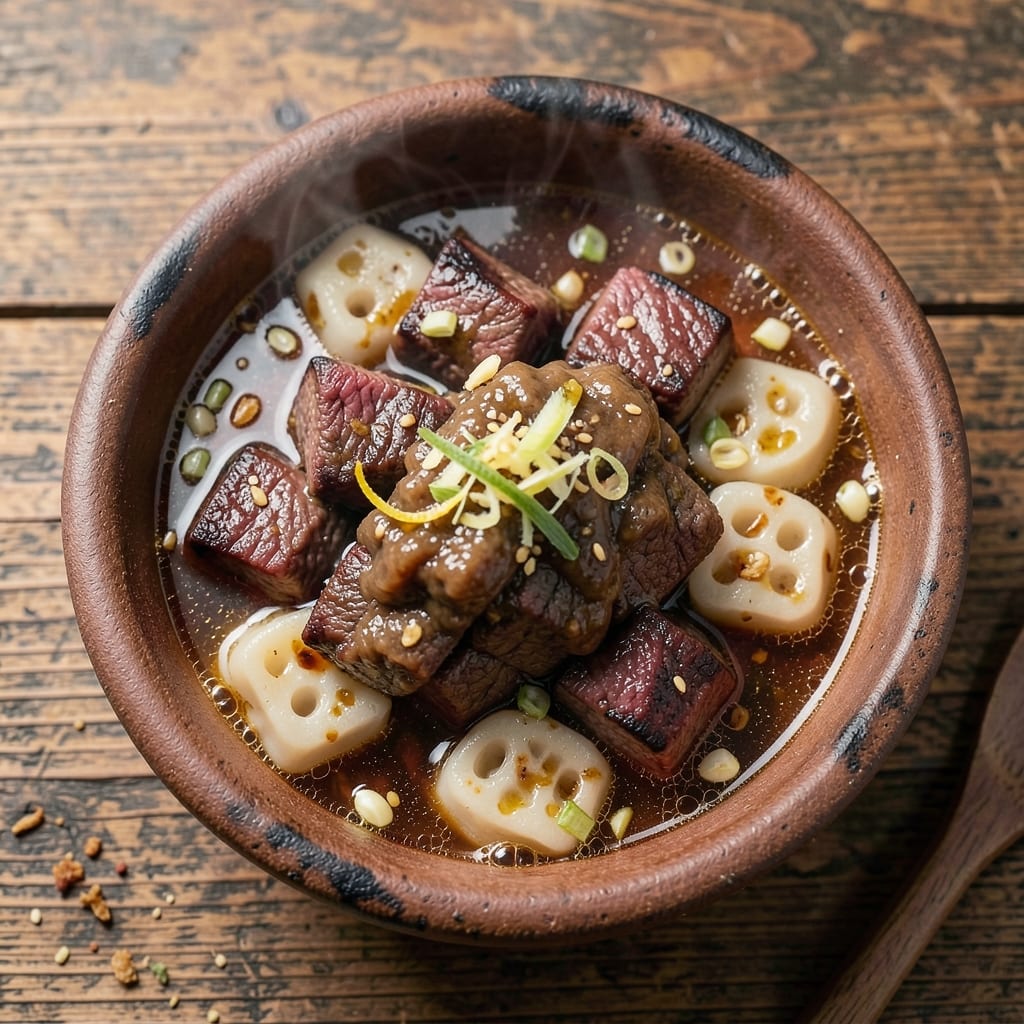
This authentic Korean beef stew delivers the deep, umami-rich flavors of galbi jjim—tender beef braised in fermented soybean paste and silky rice cakes until melt-in-your-mouth perfection. The secret lies in slow cooking, where the beef absorbs the complex, savory-sweet broth infused with traditional Korean ingredients like anchovy and sesame oil. What sets this apart is the balance of textures: crisp rice cakes contrasting with velvety beef and a glossy, aromatic sauce that clings to every bite.
The recipe begins with a marinade of fermented soybean paste (doenjang), garlic, and ginger, which tenderizes the beef while building layers of flavor. Unlike quick stews, this dish rewards patience—simmering for 90 minutes transforms tough cuts into fall-apart tenderness. The rice cakes (tteok) add a delicate chew and soak up the rich broth, making each spoonful a harmonious blend of textures and tastes.
By the time you serve this stew, your kitchen will smell like a Korean hanjeongsik (traditional meal), and every bite will reveal the depth of authentic techniques. The dish pairs beautifully with steamed rice and a side of kimchi to complete the experience. Whether you're cooking for a family gathering or a cozy weeknight dinner, this recipe delivers restaurant-quality results at home.
For those new to Korean cooking, don’t skip the anchovy broth—it’s the backbone of the flavor, adding a subtle saltiness that enhances the fermented notes. The stew also freezes beautifully, so you can prep ahead and enjoy this comforting dish whenever cravings strike. Let’s get started on creating a stew that tastes like a piece of Korea in your own kitchen.
Ingredients for authentic korean beef stew
Fermented flavors and silky rice cakes transform simple beef into restaurant-quality Korean stew.
| Ingredient | Amount | Notes |
|---|---|---|
| Beef Chuck Roast 🥩 | 1 ½ lb | Cut into 1.5-inch cubes |
| Fermented Soybean Paste (Doenjang) 🥫 | ½ cup | Korean fermented soybean paste |
| Korean Rice Cakes (Tteok) 🍡 | 1 package | 12 oz, chewy variety |
| Anchovy Broth 🐟 | 2 cups | Homemade or store-bought |
| Garlic Cloves 🧄 | 6 cloves | Minced for marinade |
| Fresh Ginger 🌿 | 2 tbsp | Finely grated, peeled |
| Sesame Oil 🫒 | 1 tbsp | Toasted sesame oil |
| Soy Sauce 🥫 | ¼ cup | Korean soy sauce preferred |
| Sugar 🍚 | 2 tbsp | White or brown sugar |
| Green Onions 🧅 | 4 whole | Cut into 1-inch pieces |
| Salt 🧂 | 1 tsp | Kosher or sea salt |
| Ground Black Pepper 🌶️ | ½ tsp | Freshly ground preferred |
| Water 💧 | 2 cups | For anchovy broth |
The beef chuck is non-negotiable—it needs that marbled fat for rich flavor. Korean grocery stores often carry pre-cut beef for stews, but the butcher section at Whole Foods or H Mart has excellent options. If you can't find doenjang, miso paste works in a pinch, but it won't be authentic. The rice cakes? Korean markets sell them in packages—look for the chewy kind labeled for stews. Fresh ginger and garlic should smell bright and pungent; if they don't, they're past their prime. Sesame oil is your secret weapon—use the toasted kind for that nutty depth.
No anchovies? Dashi powder with a dash of fish sauce mimics the umami punch. Short on doenjang? Double the soy sauce and add 1 tbsp miso. The rice cakes can be swapped for mochi or thick-cut apple slices if needed, though texture will differ. For the broth, if you're making it from scratch, toast the anchovies lightly before blending with water—this deepens the flavor. The sugar balances the fermented bite, so don't skip it, but if you're watching calories, reduce to 1 tbsp. Green onions add freshness, but scallions work too—just chop them finer.
This stew tastes even better the next day as flavors meld. Store in an airtight container for up to 5 days in the fridge, or freeze for 3 months. The rice cakes soften as they soak up broth, so add them 15 minutes before serving if you want them to hold their shape. For meal prep, portion into containers with a splash of broth—reheat gently on low to avoid breaking the rice cakes. Leftovers reheat beautifully, making this a perfect make-ahead dish for busy weeks.
Why You'll Love This Recipe
- One-Pot Magic: The beef chuck roast practically melts into tender perfection while you stir—no fancy techniques, just simmering. I swear by the slow cook on low for hours, where the doenjang and anchovy broth work their deep, savory magic without a single extra dish.
- Umami Bomb: That first spoonful of stew—where the fermented soybean paste hits like a flavor grenade, the garlic cloves add sharp punch, and the rice cakes soak up every last bit of broth? Honestly, it’s the kind of taste that makes you pause mid-bite. The beef comes out so rich, you’ll want to eat it straight from the pot.
- Leftovers That Beg: This stew only gets better the next day, when the flavors marry into something even deeper. Between us, I’ve reheated portions for lunch three times in a row, and my family never complains. The rice cakes stay chewy, the broth thickens just right, and the beef? Still falling apart at the touch.
- Budget Feast: A chuck roast stretches across multiple meals, and doenjang plus anchovy broth cost pennies compared to fancy sauces. I’ll be real: this is the kind of dish that makes grocery day feel like a victory. Plus, it’s the rare recipe where the cheapest cut becomes the star.
Step-by-step instructions for authentic Korean beef stew
This rich, umami-packed stew delivers deep fermented flavors and tender beef every time.
Marinate the Beef for Maximum Flavor
In a large bowl, combine the 1.5 lb beef chuck roast cut into 1.5-inch cubes, the 0.5 cup fermented soybean paste (doenjang), 6 cloves minced garlic cloves, 2 tbsp finely grated fresh ginger, 0.25 cup soy sauce, 2 tbsp sugar, 1 tsp salt, and 0.5 tsp ground black pepper. Using your hands, massage the marinade into the beef until every piece is thoroughly coated and the flavors penetrate deeply.
Let the beef marinate at room temperature for at least 30 minutes (I prefer 1 hour for maximum flavor development). This step is crucial—it ensures the beef absorbs the fermented soybean paste's complex umami and the garlic-ginger-sugar blend creates a perfect balance of sweet, savory, and aromatic notes. The beef will look glossy and dark from the marinade, signaling it's ready for cooking.
Build the Anchovy Broth Base
While the beef marinates, prepare the anchovy broth by combining 2 cups anchovy broth and 2 cups water in a saucepan. Bring to a gentle simmer over medium heat and let it reduce by half—this concentrates the anchovy flavor and creates a deeper base for the stew. You'll know it's ready when the liquid reduces to about 1 cup and the aroma becomes intensely savory.
Strain the reduced broth through a fine-mesh sieve to remove any impurities, then return it to the clean saucepan. Keep it warm over low heat—this broth will form the heart of your stew, carrying all the flavors together. The anchovy broth adds a unique depth that's essential for authentic Korean stews, so don't skip this reduction step.
Sear the Beef for Rich, Caramelized Depth
Heat 1 tbsp sesame oil in a large, heavy pot over medium-high heat until shimmering. Working in batches to avoid crowding, sear the marinated beef for 2-3 minutes per side until deeply browned and caramelized. This step is where all the magic happens—the Maillard reaction creates those beautiful browned crusts that pack intense flavor.
As each batch sears, remove the beef and set it aside in a bowl. Don't rinse the pot—those browned bits (fond) are pure flavor. After all the beef is seared, pour in the reduced anchovy broth and scrape up all the fond from the bottom of the pot with a wooden spoon. This deglazing step captures every last bit of flavor that will infuse into your stew.
Simmer the Stew to Tender Perfection
Return all the seared beef to the pot along with any accumulated juices. Bring the mixture to a gentle simmer over medium-low heat, then reduce to a bare simmer. Cover partially and let it cook for 1.5 to 2 hours, stirring occasionally, until the beef is fork-tender and falls apart easily. The stew should reduce slightly, creating a thick, rich sauce that coats the beef beautifully.
About 30 minutes before the stew is done, add the 1 package Korean rice cakes (tteok) to the pot. They'll absorb some of the stew's flavors and add a delightful chewy texture. Keep an eye on the liquid level—if it gets too thin, uncover and simmer longer to reduce it. The rice cakes should be fully submerged but not mushy, so adjust the cooking time accordingly.
Finish with Fresh Aromatics and Serve
Once the beef is tender, stir in the 4 whole green onions cut into 1-inch pieces and cook for an additional 5 minutes to wilt them slightly and infuse their fresh, bright flavor into the stew. Taste and adjust seasoning if needed—you might need a touch more soy sauce for saltiness or a splash of water if the stew is too thick.
Ladle the steaming hot stew into serving bowls, making sure each portion includes both beef and rice cakes. The stew should be rich and deeply flavored with a perfect balance of umami from the doenjang, sweetness from the sugar, and freshness from the green onions. Serve immediately with steamed rice to soak up every last drop of that incredible broth.
Pro Tips For Making Authentic Korean Beef Stew
- SEAR THE ROAST FIRST: After slicing the beef chuck roast thinly, toss it in a hot pan with just 1 tablespoon of oil—no crowding—and let it brown in batches. I used to skip this, thinking the stew would flavor the meat later, but that crisped surface locks in the doenjang’s deep umami when it simmers. (Yes, even if you’re impatient like me, don’t rush this.)
- SOAK TTEOK IN BROTH: Dump those rice cakes straight into the anchovy broth before adding the beef, and let them sit for 10 minutes. They’ll plump up and absorb the base flavor instead of turning to mush later. I learned this the hard way—dry tteok in a hot stew just falls apart. (Your future self will thank you.)
- CONTROL THE DOENJANG HEAT: When you stir in the fermented soybean paste, turn the heat to medium-low and let it bloom for 2 minutes before adding the beef. That paste packs serious heat, and dumping it in too fast can make the stew taste bitter. Think of it like making a roux—patience here makes all the difference.
- GARLIC: MINCE IT FINE: No, "chopped" isn’t good enough—grate or finely mince those garlic cloves so they dissolve into the broth instead of sitting as chunks. I was skeptical until I tried it: the flavor spreads evenly, and you won’t spend the whole meal picking out surprises. (Does it look weird? Yes. Does it work? Every single time.)
Flavor customization for this dish
Spicy Heat Boost
For those who love heat, add 1 tbsp gochujang (Korean chili paste) to the marinade and another 1 tbsp to the broth during simmering. This deepens the spicy-sweet profile while keeping the stew balanced. If you prefer milder heat, try ½ tsp Korean red pepper flakes in the final 5 minutes of cooking. 🌶️
For a smoky kick, stir in ½ tsp toasted sesame seeds and ½ tsp smoked paprika with the green onions. This adds complexity without overpowering the fermented flavors. I’ve found that 1-2 slices of kimchi (squeeze out excess liquid first) added in the last 10 minutes of cooking also brings a tangy, spicy punch.
Sweet & Tangy Twist
Balance the richness with a tangy-sweet profile by adding 2 tbsp apple cider vinegar and 1 tbsp honey to the broth. This brightens the stew and cuts through the umami depth. For extra depth, simmer 1 thinly sliced pear (peeled) with the rice cakes—it adds natural sweetness and softens as it cooks.
For a citrusy touch, zest 1 small Korean pear (or regular pear) into the marinade and add 1 tbsp pear juice to the broth. The acidity enhances the fermented flavors, making each bite more vibrant. Trust me, this small adjustment elevates the entire dish.
Umami-Forward Variations
Boost umami with 1 tbsp fish sauce or 1 tbsp mushroom powder in the broth. I’ve also used ½ cup finely chopped shiitake mushrooms (soaked in warm water first) for a meatier texture and deeper savory notes. These work especially well if you’re skipping the anchovy broth.
For a nutty depth, stir in 1 tbsp toasted sesame paste (or tahini) with the green onions. This adds a rich, earthy layer that pairs beautifully with the doenjang. If you’re feeling adventurous, a splash of 1 tsp soy sauce (instead of water) in the anchovy broth reduction intensifies the savory base.
Vegetable Add-Ins
Add 1 cup sliced daikon radish or 1 cup baby potatoes (parboiled first) for heartier texture. These vegetables absorb the broth beautifully and add a subtle sweetness. For a pop of color and crunch, toss in ½ cup sliced shiitake mushrooms in the last 10 minutes of cooking.
For a spring-inspired version, stir in ½ cup blanched bok choy or 1 cup spinach just before serving. The greens wilt quickly and add freshness to the rich stew. I’ve also used 1 cup corn kernels (fresh or frozen) for a slight sweetness and texture contrast.
Nutrition facts
Frequently asked questions
Can I substitute doenjang with miso paste?
While miso adds umami, it won't replicate doenjang's fermented depth. For authenticity, use ½ cup doenjang + 2 tbsp soy sauce. If you must substitute, choose dark miso (more fermented) and reduce sugar by 1 tbsp—it's sweeter than doenjang. The texture will differ slightly, but the flavor profile remains close.
How do I make anchovy broth if I can't find it?
Blend 2 tbsp anchovy fillets (or 1 tbsp anchovy paste) with 2 cups water and 1 tsp salt. Simmer 5 minutes, then strain. For extra depth, add ½ tsp toasted sesame oil to the broth. If you avoid anchovies, use 1 tbsp fish sauce + 1 tsp soy sauce in the marinade instead.
Why are my rice cakes turning mushy?
Rice cakes absorb liquid quickly—add them 15-20 minutes before serving to maintain chewiness. If they're already too soft, strain the stew slightly before serving or serve them on the side. For firmer texture, use smaller rice cakes (cut larger ones in half) and reduce simmering time by 10 minutes.
Can I make this stew in a slow cooker?
Yes! Brown beef first, then transfer everything (except rice cakes) to the slow cooker. Cook on low for 6-7 hours or high for 3-4 hours. Add rice cakes in the last 30 minutes. The slow cooker method actually enhances tenderness. For best results, use 1 cup broth instead of 2 to prevent a watery stew.
What's the best cut of beef for this recipe?
Beef chuck roast is ideal—it's flavorful and becomes tender when slow-cooked. Other good options: brisket or short ribs. Avoid lean cuts like sirloin—they won't develop the rich texture. If using short ribs, reduce cooking time by 30 minutes as they cook faster.