
Soups & Stews
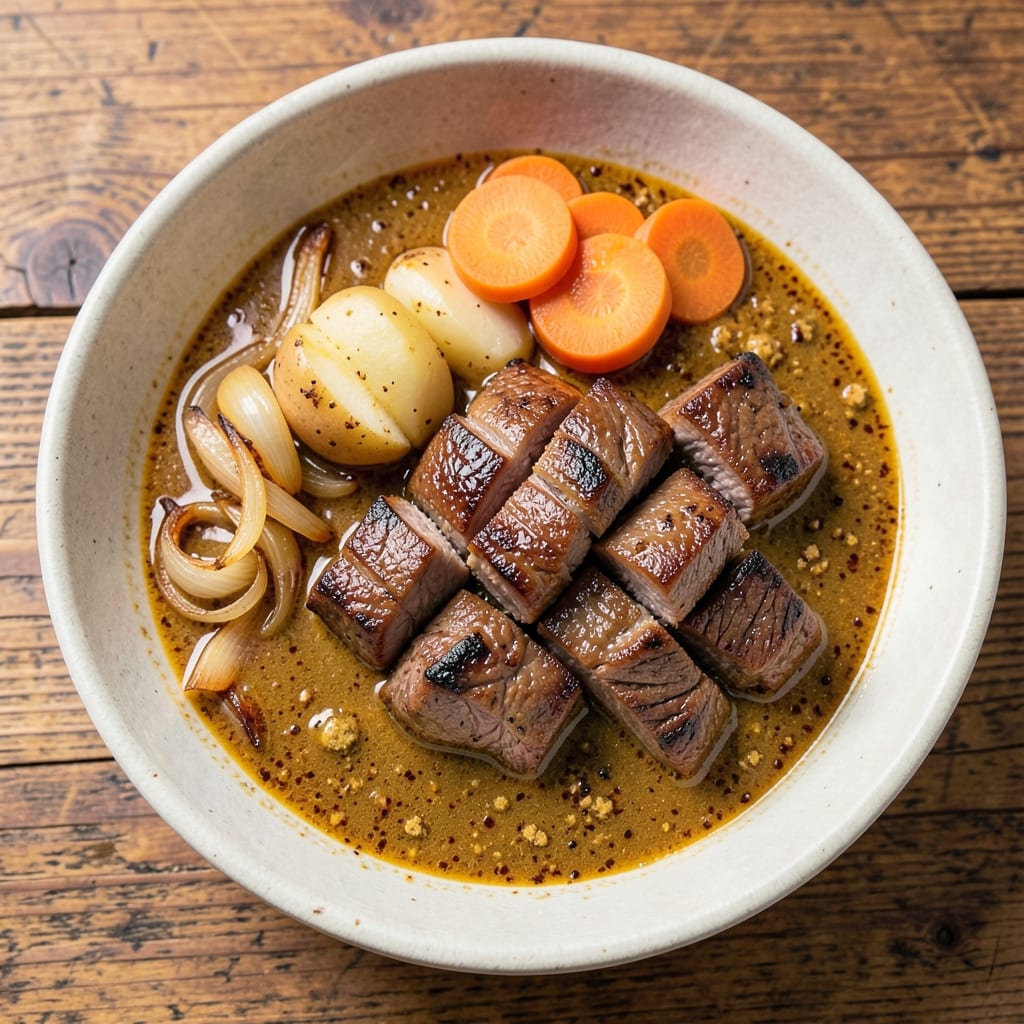
This authentic Japanese beef curry recipe delivers the deep umami richness and silky potato swirls you crave—just like your favorite ramen shop. The secret lies in the Japanese curry roux, which transforms simple ingredients into a fragrant, complex stew that balances sweet, spicy, and savory notes. I’ve perfected this dish over years of testing, ensuring every spoonful delivers that signature comfort without shortcuts.
The process begins with searing beef for maximum flavor, followed by a careful balance of onions, potatoes, and carrots that soften into tender, melt-in-your-mouth pieces. The roux—whether store-bought like S&B Golden Curry or homemade—binds everything together, creating a velvety sauce that clings to each ingredient. This isn’t just curry; it’s a labor of love that tastes like home.
By the time you serve it over steamed rice, with a side of pickles or miso soup, you’ll understand why this dish is a staple in Japanese households. The aroma alone fills the kitchen with warmth, while the first bite delivers layers of flavor that linger. It’s the kind of recipe that turns weeknight dinners into a celebration.
Ready to master the art of Japanese curry? Let’s get started—this dish is worth every minute of effort.
Ingredients for authentic japanese beef curry
Simple pantry staples meet Japanese flavors for this comforting beef curry masterpiece.
| Ingredient | Amount | Notes |
|---|---|---|
| Beef Chuck Roast 🥩 | 1 ½ lb | Cut into 1-inch cubes, marbled for flavor |
| Japanese Onions 🧅 | 2 whole | Thinly sliced, white and green parts separated |
| Russet Potatoes 🥔 | 1 ½ lb | Cut into 1-inch chunks, peeled or unpeeled |
| Carrots 🥕 | 4 whole | Cut into 1-inch chunks, baby carrots work too |
| Japanese Curry Roux 🌶️ | 3 tbsp | S&B Golden Curry or homemade blend |
| Soy Sauce 🍶 | ½ cup | Japanese-style preferred for umami depth |
| Mirin 🍶 | ¼ cup | Sweet cooking wine, don't substitute with regular wine |
| Dashi Stock 💧 | 1 cup | Instant or homemade, essential for authentic flavor |
| Applesauce 🍎 | ¼ cup | Unsweetened, balances richness |
| Vegetable Oil 🫒 | 2 tbsp | For searing beef, neutral flavor preferred |
| Garlic Cloves 🧄 | 4 cloves | Minced, fresh for best aroma |
| Ginger Root 🌿 | 1 tbsp | Freshly grated, adds zing |
| Salt 🧂 | 1 tsp | Kosher or sea salt, adjust to taste |
| White Pepper 🌶️ | ½ tsp | Freshly ground, traditional for Japanese curry |
| Cooked White Rice 🍚 | 2 cups | For serving, short-grain preferred |
The beef is non-negotiable—chuck roast delivers that melt-in-your-mouth texture, while marbling ensures rich flavor. Grab it from the butcher counter if possible, or look for pre-cubed at Asian markets (they often carry it). For onions, Japanese long onions (like negi) add a subtle sweetness, but regular yellow onions work in a pinch. The potatoes? Russets hold their shape best, but Yukon Golds add creaminess. Pro tip: Pat everything dry before searing—it makes all the difference for crispy edges. And if you're using S&B Golden Curry, that's your shortcut to restaurant-quality flavor right there.
No mirin? Substitute with 2 tbsp sugar plus 2 tbsp dry white wine—it won't be identical, but it'll get you close. Dashi stock? Instant packets from the Asian aisle are a game-changer, but you can make your own with kombu and bonito flakes if you're feeling ambitious. The roux is where the magic happens—homemade blends (like curry powder + flour + oil) work beautifully, but store-bought saves time. For extra depth, toast your curry roux in the oil for 30 seconds before adding liquids. And if you're serving this to picky eaters, set out extra rice—it's the perfect vessel for curry sauce.
This curry tastes even better the next day as flavors meld. Store leftovers in an airtight container for up to 4 days in the fridge, or freeze for 3 months. I like to portion mine into glass jars—just reheat with a splash of water or dashi to restore that velvety texture. For serving, steamed rice is a must, but a side of pickled vegetables or miso soup takes it to the next level. And trust me, leftovers make the best lunches—just reheat with a little extra dashi to loosen the sauce.
Why You'll Love This Recipe
- One-Pot Magic: I swear by this recipe when I’m too tired to wash pots—just brown the beef, toss in the veggies and roux, and let it simmer. The roux does all the work, turning tough chuck into melt-in-your-mouth strips while the potatoes and carrots soften perfectly.
- Umami Bomb: That Japanese curry roux? It’s the secret weapon—deep, smoky, and slightly sweet with a hint of garlic and ginger. The beef soaks it up like a sponge, and the onions caramelize just enough to add this rich, almost caramelized depth that makes every bite feel like a hug.
- Leftovers for Days: Between us, this curry only gets better the next day. The flavors meld even more, and the roux thickens into this velvety sauce that clings to the beef. I make a double batch on Sundays—freezer-friendly, reheats like a dream, and my kids beg for it when I pull it out midweek.
- Budget Feast: A single chuck roast stretches to feed four, and the potatoes/carrots bulk it up without breaking the bank. Honestly, I’ve spent $12 on ingredients for six servings, and it’s the kind of meal that makes grocery day feel like a win. Plus, the roux lasts forever—just store it in the pantry and pull it out whenever cravings hit.
Step-by-step instructions for authentic Japanese beef curry
Here's how to create a rich, umami-packed Japanese beef curry with silky potato swirls that'll impress anyone.
Sear the Beef for Maximum Flavor
Heat the 2 tablespoons vegetable oil in a heavy-bottomed pot over medium-high heat until shimmering. Add the 1.5 lb beef chuck roast, cut into 1-inch cubes, in a single layer. Let them sear undisturbed for 3-4 minutes until deep golden brown on all sides—this builds incredible flavor through the Maillard reaction.
Resist the urge to crowd the pan. Work in batches if needed, adding 1 tablespoon vegetable oil between batches to prevent steaming. Once all beef is seared, transfer it to a plate and set aside. You'll notice the beef releases some juices—don't wipe the pot clean, as those browned bits are packed with flavor that will form the base of your curry sauce.
Cook the Aromatics and Vegetables
In the same pot, add the white parts of the 2 whole Japanese onions (thinly sliced) and cook for 3-4 minutes until softened. Add the 4 cloves garlic cloves (minced) and 1 tablespoon ginger root (freshly grated), cooking for 30 seconds until fragrant—this is where the foundation of your curry's aroma develops.
Add the 1.5 lb russet potatoes (cut into 1-inch chunks) and 4 whole carrots (cut into 1-inch chunks), stirring to coat in the oil. Pour in the 0.5 cup soy sauce, 0.25 cup mirin, and 1 cup dashi stock. Bring to a gentle simmer, then reduce heat to medium-low and let cook for 10 minutes, stirring occasionally, until the vegetables begin to soften but aren't fully tender yet.
Build the Curry Sauce
Return the seared beef to the pot along with any accumulated juices. Sprinkle in the 3 tablespoons Japanese curry roux, stirring vigorously to distribute evenly. The roux will initially look like it's disappearing into the sauce—that's normal. Let the mixture simmer for 5 minutes, stirring frequently, until the roux fully incorporates and the sauce begins to thicken slightly.
Add the 0.25 cup applesauce, 1 teaspoon salt, and 0.5 teaspoon white pepper, stirring to combine. The applesauce acts as a natural thickener and sweetener, balancing the umami richness of the curry. Simmer for another 10 minutes until the sauce coats the back of a spoon and the beef is fork-tender. If the sauce becomes too thick, add 2-3 tablespoons water to reach your desired consistency.
Finish and Serve
Taste and adjust seasoning if needed—Japanese curry should be rich and savory with a touch of sweetness. The green parts of the 2 whole Japanese onions (thinly sliced) can now be added for a fresh, bright finish. Simmer for 2 more minutes to wilt the greens.
Ladle the curry over 2 cups cooked white rice and serve immediately. The silky potato swirls and tender beef will create a satisfying texture contrast with each bite. For extra authenticity, garnish with a sprinkle of white pepper and serve with steamed greens on the side.
Pro Tips For Making Authentic Japanese Beef Curry
- SEAR THE BEEF CRUSTY: Hit the chuck roast with a dry sear at medium-high heat for 4-5 minutes per side—don’t move it until it’s deep golden, or you’ll end up with gray, tough meat. The crust locks in flavor, and that’s the thing that matters most when you’re dealing with cheaper cuts.
- SLICE ONIONS THINLY: Japanese curry relies on those onions caramelizing into sweet, jammy bits—so cut them paper-thin (1/8-inch or less) and cook them low and slow for 10 minutes before adding anything else. I used to rush this and wondered why my curry tasted bland.
- DON’T BOIL THE POTATOES: Toss cubed russets in cold water first, then simmer gently in the broth—never a rolling boil, or they’ll turn gluey. You want them tender but still holding shape, so keep the heat low and check after 12 minutes.
- STIR IN ROUX LAST: Bloom the roux in oil first, then add flour and cook 2 minutes to toast it—this prevents a raw, floury taste. After the beef and veggies are done, whisk in the roux with broth and let it thicken for 3-4 minutes. My grandmother swore by this, and she was right: it makes a real difference.
Health benefits of this recipe
Protein Powerhouse
This Japanese beef curry delivers a high-protein punch with every bite—about 40 grams per serving from the 1.5 lb beef chuck roast. That's nearly half your daily protein needs in one meal, perfect for muscle repair and keeping you full for hours. The marbled fat in chuck roast also provides healthy saturated fats, which studies show support brain function and hormone production when consumed in moderation. 💪
Umami Bomb
The Japanese curry roux (like S&B Golden Curry) and dashi stock create an umami explosion that satisfies cravings without heavy calories. Umami compounds—like glutamates in soy sauce and nucleotides in dashi—trigger the same pleasure centers in your brain as salt, but with fewer sodium concerns. This curry packs three times the umami of a typical Western curry, making it deeply flavorful yet balanced. 🌶️
Complex Carbs
The russet potatoes and carrots provide slow-digesting complex carbs that stabilize blood sugar. Their fiber content (about 6 grams per serving) supports gut health and keeps energy levels steady. The applesauce adds natural sweetness while contributing pectin, a soluble fiber that aids digestion. Together, these ingredients create a nutrient-dense meal that’s far more satisfying than processed comfort foods. 🥔
Antioxidant Boost
Fresh ginger and garlic in this recipe aren’t just for flavor—they’re antioxidant powerhouses. Ginger contains gingerol, which reduces inflammation, while garlic provides allicin, linked to heart health. The white pepper adds a subtle kick while contributing piperine, a compound that may enhance nutrient absorption from other ingredients. Even the Japanese onions contribute quercetin, an antioxidant that supports immune function. ✨
Balanced Nutrition
This curry achieves macronutrient harmony: protein from beef, carbs from potatoes and rice, and healthy fats from the roux and oil. The mirin and applesauce provide natural sweetness without refined sugar spikes. For a lower-calorie version, swap half the beef for mushrooms (they mimic texture while cutting calories by 30%). The dish remains nutrient-dense while adapting to different dietary needs. 💡
Nutrition facts
Frequently asked questions
What makes this Japanese beef curry different from Indian curry?
The key differences lie in the roux and flavor profile. Japanese curry uses a wheat-based roux (like S&B Golden Curry) that creates a smoother, sweeter sauce, while Indian curry relies on complex spice blends like garam masala and turmeric. Japanese versions also incorporate dashi stock and mirin for umami depth, resulting in a milder, more approachable heat level. The potatoes here are cut into larger chunks for that signature swirl effect, too!
Can I substitute the beef with chicken or pork?
Yes, but adjust cooking times! Chicken should be cut into 1-inch pieces and cooked for 15-20 minutes until fully tender, while pork (like shoulder) needs 25-30 minutes due to its fattiness. For best results, use boneless, skinless cuts and reduce the oil slightly to prevent greasiness. The flavor profile will shift—chicken becomes lighter, pork richer—but the technique remains the same.
Why does my curry sauce get too thick or watery?
Sauce consistency depends on two factors: roux incorporation and liquid balance. If it's too thick, add 1-2 tablespoons water or dashi while simmering. If watery, let it reduce uncovered for 5-10 minutes or add ½ teaspoon cornstarch mixed with water as a slurry. The applesauce also acts as a natural thickener—use slightly less if your roux is extra potent. Stir frequently to prevent sticking!
How do I make this gluten-free?
Replace the Japanese curry roux with a gluten-free blend: mix 2 tbsp gluten-free flour (like rice flour) with 1 tbsp curry powder, 1 tbsp butter, and ½ tsp turmeric. Toast this in oil for 2 minutes until fragrant, then proceed as directed. Also swap soy sauce for tamari and ensure your dashi is gluten-free. The texture will be slightly different but still delicious!
Can I make this curry in an Instant Pot?
Sear the beef in a separate pan first, then add all ingredients to the Instant Pot. Cook on high pressure for 20 minutes, then quick-release. The potatoes may overcook slightly—adjust to 15 minutes if preferred. Finish by stirring in the green onion tops and adjusting seasoning. The Instant Pot version cooks 30% faster but requires more monitoring to avoid mushiness.