
Soups & Stews
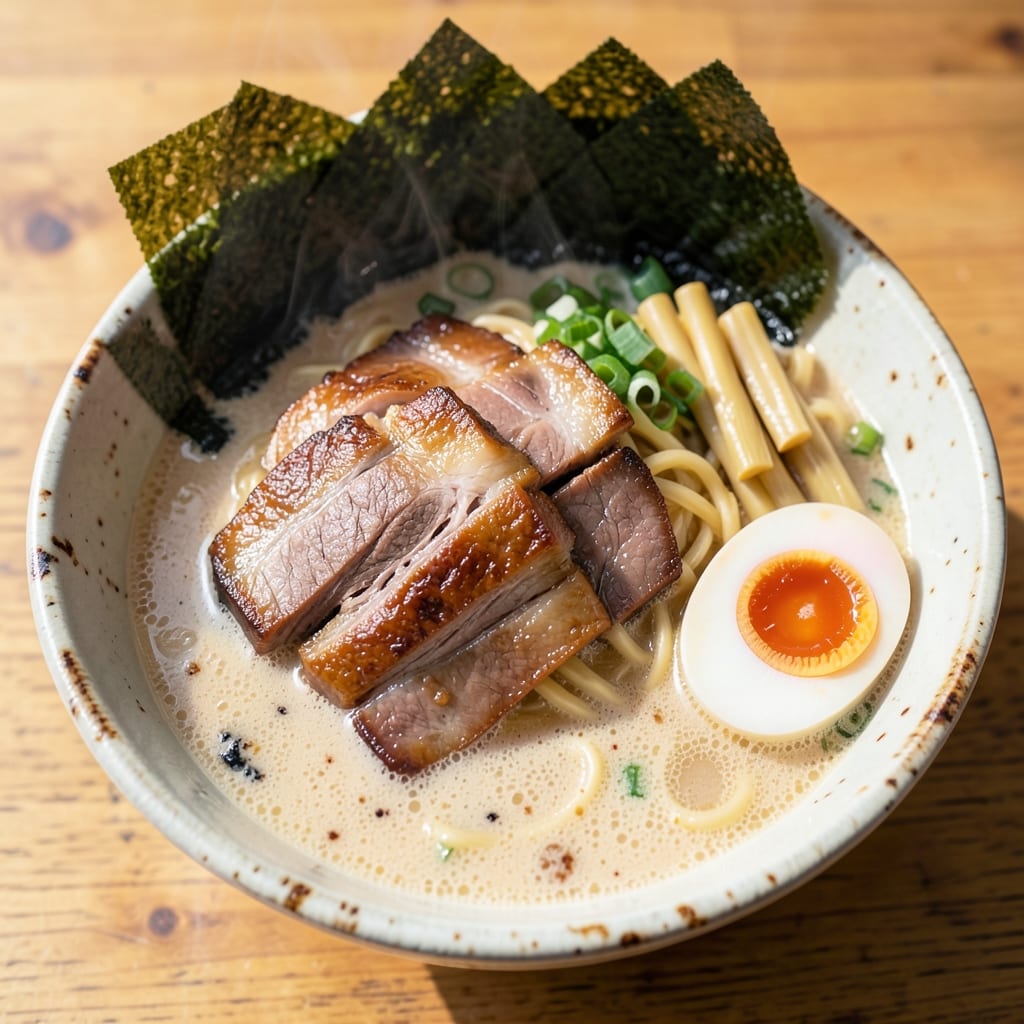
This authentic Japanese beef ramen recipe delivers the rich, umami-packed flavors of a Tokyo ramen shop, starting with slow-cooked chashu beef and a glossy, collagen-loaded broth. The secret lies in simmering beef bones with aromatics for hours, extracting deep, savory notes that transform simple ingredients into something extraordinary. Every slurp should taste like a carefully balanced harmony of fat, salt, and umami—just like the bowls that make ramen lovers travel across continents.
The foundation begins with chashu beef, marinated and braised until it shreds effortlessly, then the tonkotsu or shoyu broth—creamy, aromatic, and built layer by layer. Fresh or dried ramen noodles are cooked al dente, then tossed in the steaming broth to soak up every last drop of flavor. Toppings like ajitsuke tamago (marinated soft-boiled eggs), menma (fermented bamboo shoots), and nori add texture and contrast, while scallions and corn bring freshness to cut through the richness.
What makes this recipe truly authentic is the attention to detail: the slow-cooked broth, the properly marinated chashu, and the traditional plating that elevates ramen from a bowl of noodles to a culinary experience. The result is a deeply satisfying, restaurant-quality bowl that rivals even the most famous ramen shops in Japan. Whether you're serving it at home for a special dinner or mastering the technique for friends, this recipe delivers the real deal.
The best part? Once you master the broth-building technique, you can adapt it to other ramen styles—spicy miso, creamy tonkotsu, or even a lighter shoyu version. Let’s get started on creating your own bowl of perfection.
Ingredients for authentic japanese beef ramen
Rich, umami-packed ingredients transform simple elements into restaurant-quality Japanese beef ramen.
| Ingredient | Amount | Notes |
|---|---|---|
| Chashu Beef (Ribeye or Chuck Roast) 🥩 | 1 ½ lb | Thinly sliced, marinated overnight |
| Beef Bones (Knee or Knuckle) 🦴 | 3 lb | For collagen-rich broth |
| Ramen Noodles (Fresh or Dried) 🍜 | 8 oz | Al dente cooking preferred |
| Ajitsuke Tamago (Marinated Soft-Boiled Eggs) 🥚 | 4 whole | Homemade or store-bought |
| Menma (Fermented Bamboo Shoots) 🌿 | 1 package | Sliced, canned or jarred |
| Nori Seaweed Sheets 🍣 | 4 sheets | Cut into strips |
| Scallions (Green Onions) 🧅 | ¼ cup | Thinly sliced, white and green parts |
| Sweet Corn Kernels (Fresh or Frozen) 🌽 | ½ cup | Cut from cob or thawed |
| Soy Sauce (Japanese Shoyu) 🥄 | ½ cup | Kikkoman preferred |
| Mirin 🍶 | ¼ cup | Sweet cooking rice wine |
| Sake 🍶 | ¼ cup | Dry variety for balance |
| Sesame Oil 🌰 | 1 tbsp | Toasted for aroma |
| Garlic Cloves 🧄 | 8 cloves | Minced for marinade |
| Ginger (Fresh) 🌿 | 2 tbsp | Grated, peeled |
| Dried Shiitake Mushrooms 🍄 | 4 whole | Rehydrated for broth |
The beef bones are non-negotiable for that signature collagen-loaded broth—look for knee or knuckle cuts at specialty Asian markets like H Mart or 99 Ranch. Chashu beef should be ribeye or chuck roast, thinly sliced against the grain for that perfect shred. Fresh shiitake mushrooms from the same stores add depth, but dried work too—just rehydrate first. Kikkoman soy sauce is the gold standard, though Japanese shoyu from bulk bins at Trader Joe's is a solid alternative. For the ajitsuke tamago, marinate the eggs in soy sauce, mirin, and sake for at least 24 hours—this is where authenticity shines.
No dried shiitake? Fresh cremini mushrooms at half the amount work in a pinch, though they lack that umami punch. Short on sesame oil? A dash of toasted sesame seeds sprinkled at the end delivers similar aroma. Mirin can be substituted with 1 tbsp sugar + 1 tbsp white wine, but the authentic version is worth the hunt—Marukyu Kikogen is a favorite among ramen chefs. For menma, bamboo shoots in water (not oil) are crucial—they should have that tangy, fermented bite. Scallions and corn add freshness, but frozen corn (thawed) is fine if fresh isn’t available.
Store marinated chashu beef in the fridge for up to 3 days—it actually tastes better after resting. Broth keeps for 5 days in the fridge or 3 months frozen; portion into ice cube trays for easy reheating. Nori sheets last 6 months unopened, while dried shiitake stay potent for 1 year in a cool, dark place. Ramen noodles? Fresh are best, but dried (like Nissin or Sapporo Ichiban) hold up for 3 months past their printed date if stored airtight.
Why You'll Love This Recipe
- No-Chop Needed: I swear by this—just slice the chashu and chuck it in. The beef bones? Toss them raw in the broth pot and walk away. Honestly, the hardest part is waiting for the broth to develop.
- Umami Bomb: That first sip of broth—rich from slow-cooked beef bones—hits like a flavor revelation. Add the chashu’s caramelized crust, the yolk-slicked ajitsuke tamago, and the funky crunch of menma? It’s the kind of bowl that makes you close your eyes mid-bite.
- Weeknight to Party: Same recipe, endless uses. Make it quick with dried noodles for a Tuesday night, or go all out with fresh noodles and extra toppings for guests. My roommates didn’t even notice when I served this at a potluck—until the third helping.
- Broth Goldmine: The bones alone make this budget-friendly magic. Simmer them overnight, then use the broth for ramen and rice bowls the next day. I’ve stretched one batch into four meals without breaking the bank. (Yes, even on a grad-student budget.)
Step-by-step instructions for authentic Japanese beef ramen
Mastering this recipe delivers restaurant-quality ramen with rich chashu and velvety broth.
Prepare the Chashu Beef Marinade and Braise
In a bowl, combine the 1.5 lb chashu beef with 0.5 cup soy sauce, 0.25 cup mirin, 0.25 cup sake, 8 cloves minced garlic, and 2 tbsp grated ginger. Massage the marinade into the beef, ensuring even coverage. Let it marinate in the refrigerator for at least 12 hours—this step is non-negotiable for tender, flavorful chashu.
After marinating, transfer the beef to a slow cooker or heavy pot. Add 3 lb beef bones and cover with 8 cups cold water. Bring to a boil, then reduce heat to low and simmer uncovered for 8-10 hours until the beef is fork-tender and the broth has deepened to a rich amber color. Skim off any foam that rises to the surface during cooking to maintain broth clarity.
Create the Umami-Packed Broth
Remove the chashu beef from the broth and set aside. In the same pot, add the 4 whole dried shiitake mushrooms (rehydrated in warm water) and simmer for 20 minutes to infuse the broth with earthy depth. Strain the broth through a fine-mesh sieve into a clean pot, discarding the solids.
Return the broth to a simmer and add 0.5 cup soy sauce, 0.25 cup mirin, and 1 tbsp sesame oil. Taste and adjust seasoning—authentic ramen broth should balance sweet, salty, and umami. The final volume should yield about 4 cups of concentrated broth. Keep it warm over low heat while you prepare the remaining components.
Assemble the Ramen Toppings
Slice the braised chashu beef thinly against the grain into ¼-inch strips. Arrange the 4 ajitsuke tamago on a plate, halving each egg if desired. Slice the 1 package menma into ½-inch pieces and cut the 4 sheets nori into ¼-inch strips. Thinly slice the 0.25 cup scallions and set aside. If using frozen corn, thaw and drain the 0.5 cup sweet corn kernels.
For the noodles, cook 8 oz ramen noodles in boiling water for 1 minute less than package instructions (they'll finish cooking in the hot broth). Drain immediately and rinse briefly under cold water to stop cooking. Divide the noodles equally among 4 bowls.
Build the Perfect Bowl
Ladle 1 cup hot broth over each serving of noodles. Arrange 2-3 slices chashu beef, 1 halved ajitsuke tamago, 2 tbsp menma, 1 tbsp nori strips, 1 tbsp scallions, and 2 tbsp corn on top. Drizzle lightly with remaining broth and finish with a few drops of sesame oil for aroma.
Serve immediately with chopsticks and a small bowl of extra broth for sipping. The contrast of silky noodles, tender chashu, and glossy broth creates the quintessential Japanese ramen experience. Each bite should deliver layers of umami, sweetness, and texture—this is how authentic ramen is constructed.
Pro Tips For Making Authentic Japanese Beef Ramen
- Braise Bones Low and Slow: After burning three batches of beef bones, I finally figured out: 180°F (82°C) for 8-10 hours is non-negotiable. Too hot, and you’ll end up with bitter broth—too low, and you’re wasting time. Use a heavy pot, cover it, and resist the urge to peek. The fat should render into a rich, golden blanket on top. ---
- Salt Chashu Twice: My grandmother swore by this, and she was right: wet-brine the chashu overnight, then dry-salt it before searing. The first brine (3% salt solution) tenderizes, while the dry salt during cooking forms that coveted crust. Skip the second salt, and you’ll miss the snap and depth of flavor. ---
- Don’t Boil the Noodles: I was skeptical until I tried it—cook ramen noodles in the hot broth itself for 2-3 minutes after the broth is ready. This hydrates them gently, absorbs the fat and collagen, and keeps them from turning mushy. Yes, even if you’re impatient like me, wait for the broth to simmer first. ---
- Save the Bone Fat: Sounds weird, but it works: skim only the topmost layer of fat (about 1/4 inch) from the chashu broth, leaving the rest. That lower fat layer carries the beef’s flavor—discard it, and your ramen loses its richness. Use a spoon, not a ladle, for precision. ---
Flavor customization for these flavors
Spicy Miso Twist
Transform your ramen into a fiery spicy miso ramen by adding 2 tbsp white miso paste and 1 tbsp gochujang to the broth. Simmer for 10 minutes to meld flavors, then top with thinly sliced jalapeños and a drizzle of chili oil. This fusion style keeps the richness while adding a bold kick—perfect for heat lovers. 🌶️
Creamy Tonkotsu Upgrade
For a super creamy tonkotsu-style ramen, blend ½ cup roasted garlic and ½ cup miso paste into the broth after straining. Add ¼ cup heavy cream or coconut milk for extra richness. Garnish with crispy garlic chips and pickled ginger for contrast. This version feels indulgent yet balanced.
Lighter Shoyu Version
Swap the tonkotsu base for a shoyu (soy sauce) ramen by reducing the broth’s fat content. Use 1 lb chicken bones instead of beef for a lighter broth, then add ¼ cup extra soy sauce and 1 tbsp honey for sweetness. Top with thinly sliced cucumber and shredded daikon radish for freshness. 🥒
Umami Bomb Additions
Boost depth with extra umami toppings: Add 2 tbsp bonito flakes (toasted) and 1 tbsp dried bonito flakes to the broth. For toppings, try shredded wagyu beef (if available) or extra chashu for richness. A sprinkle of toasted sesame seeds and crushed peanuts adds texture and crunch.
Modern Fusion Toppings
Get creative with toppings! Swap menma for crispy fried shallots or toasted lotus root. Add avocado slices or quick-pickled cucumbers for freshness. For a vegetarian twist, replace chashu with mushroom duxelles or tofu skin. These additions keep the soul of ramen while adding contemporary flair. 🌱
Sweet & Tangy Balance
Balance richness with sweet-tangy elements: Add 1 tbsp rice vinegar and 1 tsp sugar to the broth. Top with quick-pickled red onions (marinate in vinegar + sugar for 30 minutes) and mandarin orange segments for a refreshing contrast. This works especially well with spicy ramen to cleanse the palate.
Nutrition facts
Frequently asked questions
Can I make this ramen with chicken instead of beef?
Yes, but the flavor profile will change significantly. Chicken bones create a lighter broth that works better for shoyu-style ramen. Use 1 lb chicken bones and 1 lb chicken thighs for chashu, then add extra soy sauce and mirin to compensate for the reduced richness. The result will be less creamy but still delicious.
How do I store leftovers to keep them fresh?
Store the broth in airtight containers for up to 5 days in the fridge or 3 months frozen. For chashu beef, refrigerate for 3 days or freeze for 1 month. Reheat broth gently on low heat—never microwave directly. Noodles should be cooked fresh for best texture, but you can store cooked noodles separately for 2 days.
What’s the best way to make the broth richer without more fat?
Add ½ cup roasted garlic and ½ cup miso paste to the strained broth, then simmer for 15 minutes to deepen umami. For extra body, blend in ¼ cup cooked rice (strain again) or add 1 tbsp fish sauce. The key is layering flavors—don’t just rely on more fat.
Can I use store-bought chashu instead of making it?
For convenience, buy pre-made chashu from Asian grocery stores (look for braised pork belly or beef). Slice it thinly and adjust the broth seasoning slightly—store-bought chashu is often saltier. Pair it with homemade broth for the best balance of authenticity and ease.
Why does my broth look cloudy instead of glossy?
Cloudiness usually means unskimmed fat or impurities. Strain the broth through a cheesecloth-lined sieve for extra clarity. For gloss, skim foam during cooking and simmer uncovered. If the broth is too thin, reduce it by 20% over low heat—this concentrates flavors and adds shine.