
Soups & Stews
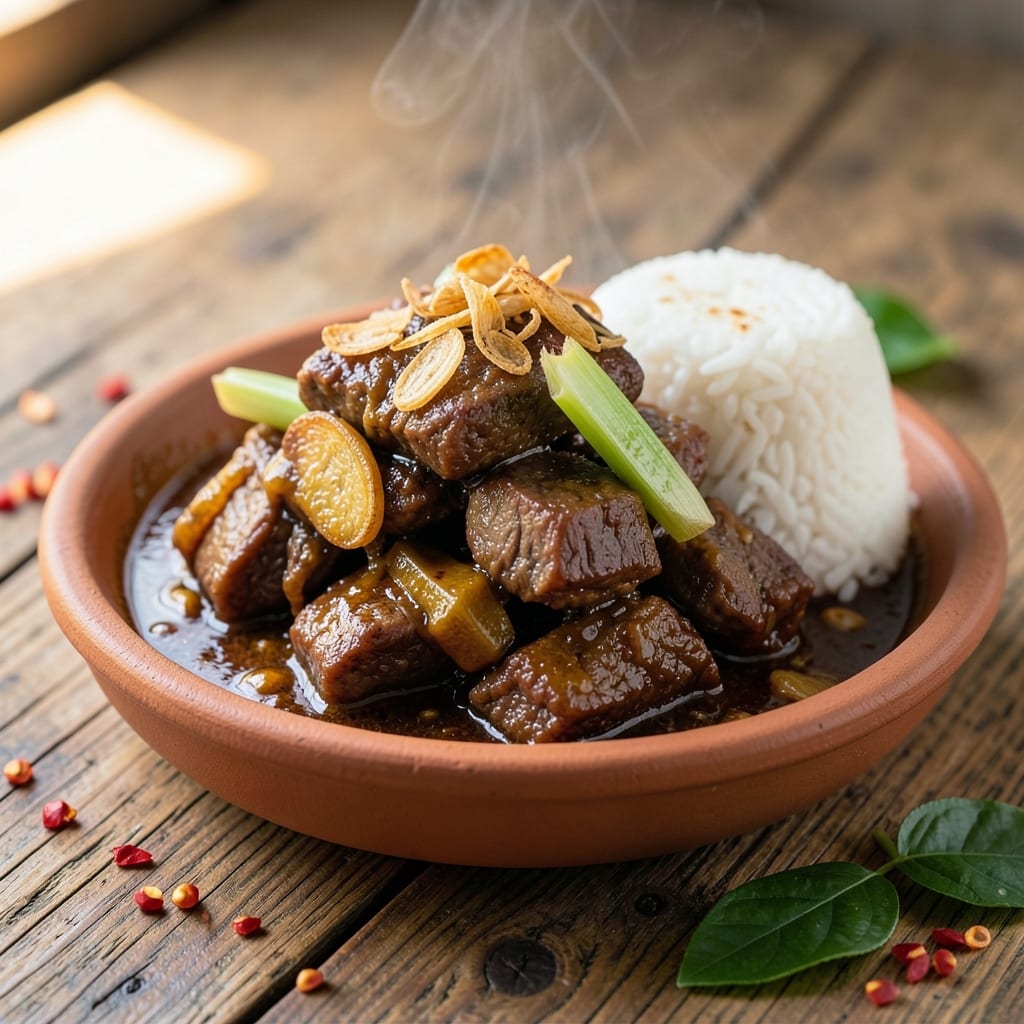
Authentic Indonesian beef rendang delivers the rich, complex flavors of West Sumatra’s most celebrated dish—slow-cooked until the beef practically melts in your mouth. 🌟 This recipe captures the harmony of aromatic spices like turmeric, lemongrass, and galangal, balanced by creamy coconut milk that reduces into a thick, caramelized sauce. The key lies in patience: hours of simmering transform tough beef into tender, spice-infused perfection.
The process begins with a vibrant paste of fresh herbs and spices, toasted to deepen their flavors before being combined with coconut milk and slow-cooked until the sauce darkens into a glossy, sticky glaze. Every element—from the fragrant spices to the tender beef—works together to create a dish that’s both deeply comforting and undeniably authentic. The result? A restaurant-quality rendang that tastes like home, even if you’re miles away from Indonesia.
What sets this recipe apart is the attention to tradition—no shortcuts, just the time-honored method that delivers that signature caramelized depth. The beef becomes fork-tender, infused with layers of spice, while the sauce clings to each bite, offering a balance of heat, sweetness, and umami. Serve it over steamed jasmine rice and pair with a crisp cucumber salad to complete the meal.
Ready to master this iconic dish? The slow cook brings out the best in the flavors, ensuring every spoonful is packed with the warmth and complexity of Indonesian cuisine. Let’s get started—your taste buds will thank you.
Ingredients for authentic indonesian beef rendang
Sixteen ingredients, hours of slow cooking, and a dish that tastes like home.
| Ingredient | Amount | Notes |
|---|---|---|
| Beef Chuck Roast 🥩 | 3 lb | Cut into 1.5-inch cubes |
| Coconut Milk 🥥 | 2 cans | Full-fat, 13.5 oz each |
| Galangal 🌿 | 1 piece | Fresh, peeled, sliced thin |
| Lemongrass 🌿 | 2 stalks | Fresh, bruised, cut into 2-inch pieces |
| Turmeric Powder 🌶️ | 2 tbsp | Freshly ground preferred |
| Coriander Seeds 🌿 | 2 tbsp | Toasted lightly for aroma |
| Cumin Seeds 🌿 | 1 tbsp | Toasted lightly for aroma |
| Shallots 🧅 | 6 whole | Peeled, finely minced |
| Garlic Cloves 🧄 | 8 cloves | Peeled, finely minced |
| Kaffir Lime Leaves 🍃 | 4 leaves | Torn into strips |
| Brown Sugar 🍚 | ½ cup | Packed, light variety |
| Salt 🧂 | 1 ½ tsp | Diamond Crystal preferred |
| Black Peppercorns 🌶️ | 1 tsp | Crushed |
| Coconut Oil 🫒 | 2 tbsp | For toasting spices |
| Jasmine Rice 🍚 | 2 cups | Uncooked, for serving |
The beef is non-negotiable—chuck roast gives you that signature tender texture. Look for cuts with good marbling at Whole Foods or your local Asian market (they often carry the best quality). If you can't find galangal, ginger is a decent swap, though it won't be identical. For the coconut milk, full-fat is a must—skip the light version. The spices need to be toasted in coconut oil first (don't skip this step—it's what builds the depth of flavor). Penzeys sells pre-ground spices if you're short on time, but toasting whole seeds gives you that restaurant-quality aroma.
No galangal? Ginger plus a pinch of cardamom gets you close. Running low on kaffir lime leaves? Regular lime zest plus a splash of lime juice adds brightness. The brown sugar can be swapped for coconut sugar if you prefer, but don't use white sugar—it won't caramelize the same way. For the lemongrass, if you bruise it well (banging it on a cutting board), you'll get more flavor without needing to buy extra. The shallots and garlic can be pre-minced from the store if you're in a rush, but freshly minced makes all the difference. And trust me on the full-fat coconut milk—light versions just won't cut it.
This dish tastes even better the next day as the flavors meld. Store leftovers in an airtight container for up to 5 days in the fridge, or freeze for 3 months (portion into containers first). The sauce thickens as it cools, so add a splash of water or coconut milk when reheating. Serve over steamed jasmine rice—2 cups uncooked rice makes about 6 cups cooked, which is perfect for this recipe. The rice should be fluffy, not mushy, so don't overcook it. Leftovers reheat beautifully—just add a little water to loosen the sauce.
Why You'll Love This Recipe
- One-Pot Magic: I swear by this—just sear the beef, dump in the spices, and let the coconut milk do its thing. No extra pans, no stress, and that slow simmer? Pure hands-off bliss.
- Deep Umami Love: Honestly, the galangal and lemongrass make this taste like a hug from a spice market in Jakarta. The turmeric gives it that golden glow, but the real star is how the beef melts into the sauce—tender, rich, and impossible to resist.
- Weeknight to Party Hero: Between us, I keep this in my back pocket for everything. Taco Tuesday? Yes. Date night? Absolutely. Even my mom’s book club begged for leftovers. The sauce thickens beautifully, so it’s just as good reheated as it is fresh.
- Leftovers That Don’t Suck: Here’s what sold me—this stuff improves overnight. The flavors deepen, the sauce clings to the beef like glue, and it’s still restaurant-quality the next day. Plus, it’s cheap to make—beef chuck on sale and coconut milk stretch forever. Win.
Step-by-step instructions for authentic Indonesian beef rendang
Here's how to craft this legendary dish with deep, complex flavors and tender beef.
🔥 Step 1: Toast the Spices for Maximum Flavor
Heat a dry skillet over medium heat and add the 2 tbsp coriander seeds and 1 tbsp cumin seeds. Toast for 2-3 minutes until fragrant and lightly golden—you'll smell that warm, nutty aroma that's the soul of rendang. Transfer to a bowl and let cool slightly.
In the same skillet, add the 2 tbsp coconut oil and toast the 6 whole shallots and 8 cloves garlic cloves over medium-low heat for 5-6 minutes until golden brown. This step develops deep, caramelized flavors that form the base of your rendang. Be patient—rushing will make them bitter.
🍳 Step 2: Build the Spice Paste
Transfer the toasted spices to a food processor along with the 1 piece galangal (peeled and sliced), 2 stalks lemongrass (bruised), 4 leaves kaffir lime leaves (torn), 2 tbsp turmeric powder, 0.5 cup brown sugar, 1.5 tsp salt, and 1 tsp black peppercorns. Process until you get a thick, smooth paste—this should take about 2 minutes of continuous blending.
Here's the thing—this paste is where the magic happens. The galangal and kaffir lime bring that authentic Indonesian brightness, while the turmeric gives it that signature golden hue. If it's too dry, add a splash of water; if too wet, add more shallots from the toasted batch to bind it.
🥘 Step 3: Sear the Beef and Develop the Base
Heat a large Dutch oven over medium-high heat and add the spice paste. Cook for 5-7 minutes, stirring constantly, until the paste darkens and becomes aromatic. This is your flavor foundation—don't walk away, or it'll burn.
Add the 3 lb beef chuck roast (cut into 1.5-inch cubes) and sear for 5 minutes, turning occasionally, until the beef develops a deep brown crust. This step locks in those caramelized flavors that will infuse the beef throughout the long cook. Once browned, pour in 1 can of coconut milk and stir well to coat the beef completely.
⏰ Step 4: Simmer Low and Slow for Deep Flavor
Bring the mixture to a gentle simmer, then reduce heat to low. Cover and cook for 1.5 hours, stirring occasionally. Here's where the real transformation happens—the beef will start to break down, and the coconut milk will reduce into a thick, aromatic sauce.
After 1.5 hours, add the second can of coconut milk and continue simmering uncovered for another 1-2 hours until the sauce thickens dramatically and the beef is fork-tender. The sauce should coat the back of a spoon and have a glossy sheen. This slow cooking is non-negotiable—it's what gives rendang its signature texture and depth of flavor.
🍽️ Step 5: Finish and Serve with Jasmine Rice
Once the beef is tender and the sauce has reduced to a thick, glossy consistency, let the rendang rest for 10 minutes off the heat. This allows the flavors to meld even more. Taste and adjust seasoning if needed—you might need a touch more salt or brown sugar to balance the flavors.
Serve the beef rendang hot over 2 cups of steamed jasmine rice. The rice should be perfectly cooked—firm at the edges but tender in the center. The rich, spiced beef will soak into the rice, creating the perfect harmony of textures and flavors. For an authentic touch, garnish with fresh cilantro if you like, though traditional rendang is often served plain to let the complex flavors shine.
Pro Tips For Making Authentic Indonesian Beef Rendang
- Char First, Simmer Slow: Sear the beef chuck in batches over high heat until deep brown—this builds flavor that won’t dissolve later. Then drop the heat to a bare simmer (just bubbles occasionally) for 3-4 hours, or until the sauce clings like syrup. I used to rush the simmering, and the beef stayed tough; patience here makes all the difference. ---
- Grate That Galangal: Skip the pre-peeled galangal from jars—freshly grated galangal (peel included) adds a peppery bite that dried versions miss. Use a box grater or knife to get fine shreds, then pound it lightly with turmeric and lemongrass in a mortar for 2 minutes. (Yes, even if you’re impatient like me.) ---
- Strain the Coconut Milk: The first time I made rendang with store-bought coconut milk, the sauce turned greasy and watery. Now I strain thick coconut milk (or even better, fresh coconut flesh blended with water) through a cheesecloth-lined sieve before adding it to the pot. This removes excess oil and keeps the sauce rich but balanced. ---
- Reduce in Stages: Don’t dump all the coconut milk in at once—add half first and reduce it to a thick paste before adding the rest. This prevents the sauce from splitting and ensures the beef cooks in its own caramelized juices, not a watery broth. (Your future self will thank you.)
Flavor customization for this recipe
Spice Level Control
For a milder rendang, reduce the black peppercorns to ½ tsp and skip adding fresh chili. If you love heat, add 1-2 tbsp of sambal oelek (Indonesian chili paste) during the final 30 minutes of cooking. I’ve found that 1 tsp of cayenne pepper mixed into the spice paste gives a subtle kick without overpowering the dish. 🌶️
Sweetness Balance
The brown sugar creates a caramelized depth, but you can adjust it to taste. For a less sweet rendang, reduce it to ¼ cup and add 1 tsp of palm sugar (or coconut sugar) for an authentic touch. If you prefer a sweeter profile, increase it to ⅔ cup and add 1 tbsp of tamarind paste for complexity. Trust me, the sugar isn’t just for sweetness—it helps the sauce thicken beautifully.
Creamy vs. Dry Texture
Traditional rendang has a thick, almost dry sauce, but you can customize it. For a creamier version, add ½ cup of coconut cream during the final 30 minutes of cooking. To achieve the classic dry texture, simmer uncovered for an extra 30-45 minutes after the beef is tender. I’ve found that stirring occasionally while uncovered helps evaporate excess moisture without burning the sauce.
Herb Variations
Swap kaffir lime leaves for ½ cup of lime zest if unavailable, but add 1 tbsp of lime juice to compensate for the missing aroma. For a deeper herbal note, add 1 stalk of fresh turmeric (peeled and sliced) to the spice paste. If you’re feeling adventurous, toss in 2 sprigs of fresh thyme during the final 20 minutes of cooking—it adds a subtle earthiness that pairs beautifully with the coconut and spices.
Protein Swaps
While beef is traditional, you can use chicken thighs (bone-in for flavor) or pork shoulder (trimmed of fat). For a vegetarian version, replace the beef with extra-firm tofu (pressed and cubed) or mushrooms (shiitake or oyster). If using tofu, marinate it in 1 tbsp of soy sauce and 1 tsp of turmeric for 30 minutes before adding to the pot. The mushrooms will absorb the flavors beautifully, though the texture will differ.
Finishing Touches
Brighten the dish with a final 1 tbsp of lime juice or a sprinkle of toasted coconut flakes for crunch. For a smoky depth, add ½ tsp of smoked paprika during the last 10 minutes of cooking. I love finishing with fresh cilantro or Thai basil—just 2 tbsp chopped—right before serving. This adds freshness and balances the rich, spiced flavors. ✨
Nutrition facts
Frequently asked questions about authentic Indonesian beef rendang
Why does traditional rendang have such a long cooking time?
The slow cooking process is essential for developing the dish's signature depth of flavor. Simmering for 3-4 hours allows the beef to become fork-tender while the coconut milk reduces into a thick, caramelized sauce. This gradual breakdown creates the perfect balance of sweet, spicy, and umami notes that define authentic rendang.
Can I make rendang in a slow cooker or Instant Pot?
For a slow cooker, brown the beef and spices first, then transfer everything to the pot and cook on low for 6-8 hours or high for 4-5 hours. For an Instant Pot, use the high pressure setting for 30 minutes followed by a natural release, then reduce the sauce uncovered on sauté mode for 30-45 minutes to achieve that signature dry texture.
What's the best way to store and reheat leftovers?
Store rendang in an airtight container in the fridge for up to 5 days or freeze for 3 months. To reheat, add a splash of water or coconut milk to loosen the sauce, then warm gently on the stove over low heat. The flavors actually improve after the first night as the spices meld further.
How do I know when the beef is tender enough?
The beef should easily pull apart with a fork or two—no need for tough chewing! Test a piece after 2.5 hours of cooking. If it's still slightly resistant, continue cooking uncovered for another 30-45 minutes to let the sauce thicken further and the meat become more tender.
What's the difference between rendang and other Indonesian beef dishes?
Unlike satay (grilled skewers) or beef rendang's cousin beef rendang (which exists but is less common), authentic rendang is what makes it special: the dry, caramelized sauce and slow-cooked beef. While dishes like soto ayam or gado-gado feature beef in soups or salads, rendang's unique texture comes from its long simmering process that creates that signature sticky yet dry coating.