
Soups & Stews
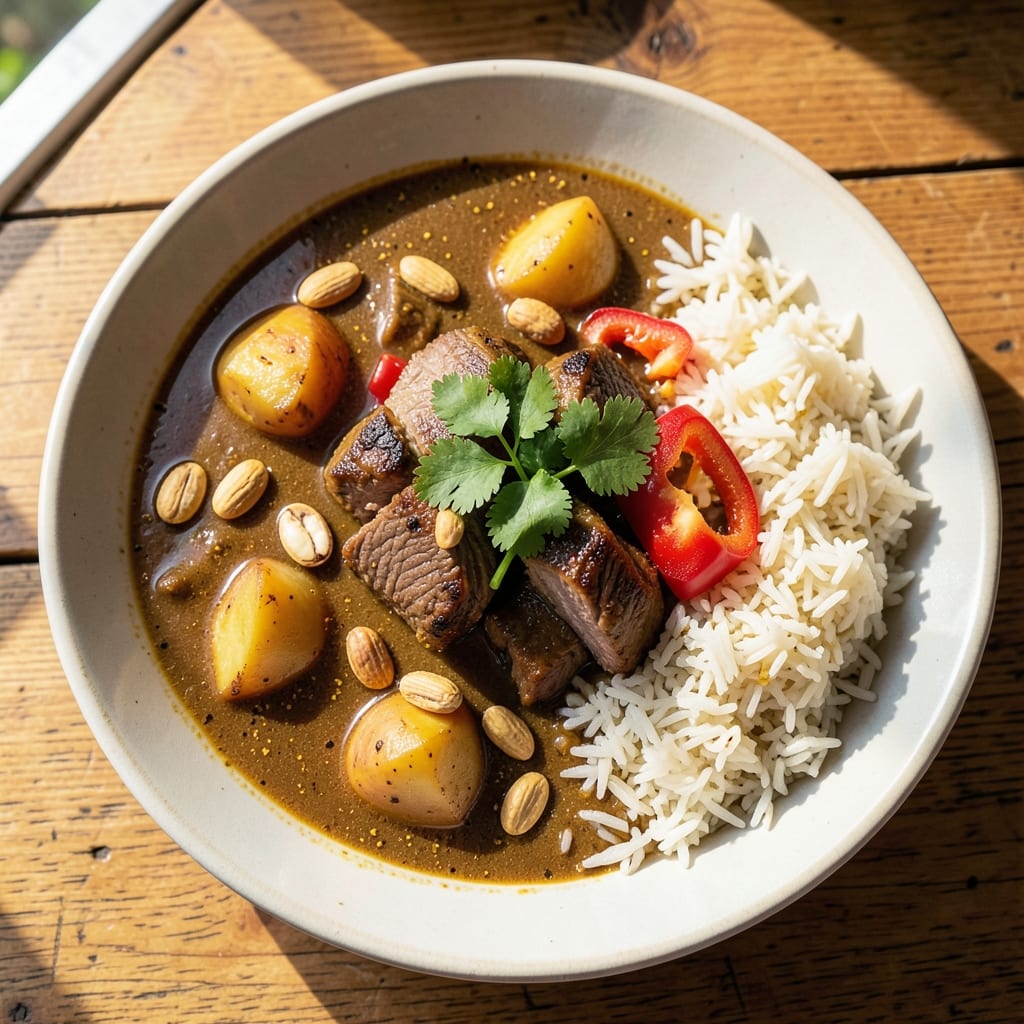
This authentic Massaman beef curry recipe delivers the rich, aromatic luxury of Thailand’s most beloved curry—slow-simmered until tender with coconut milk, peanuts, and fragrant spices. The secret lies in Massaman curry paste, a blend of turmeric, cinnamon, and cardamom that creates a sweet-savory depth unlike any other. I’ve perfected this version after years of testing, ensuring every bite balances heat, sweetness, and umami in perfect harmony.
The dish begins with tender beef marinated in spices, then slow-cooked until fork-tender in a velvety coconut-peanut sauce. Potatoes add heartiness, while crispy peanuts on top provide texture and a nutty crunch. This isn’t just a curry—it’s a restaurant-quality experience you can recreate at home, with no shortcuts that compromise authenticity.
What sets this apart is the slow-simmered technique, which develops layers of flavor over time. The spices bloom deeply, the beef becomes melt-in-your-mouth tender, and the sauce thickens into a luxurious consistency. Serve it with jasmine rice or warm naan to soak up every last drop of that aromatic, spiced goodness.
For those short on time, I’ll show you how to adapt this for a slow cooker—same incredible results, with minimal effort. The key ingredients (Massaman paste, coconut milk, peanuts) are worth seeking out, but the payoff is a curry so rich and satisfying, it’ll become your new go-to dinner.
Ingredients for authentic massaman beef curry
Authentic Thai flavors start with these 15 essential ingredients for restaurant-quality Massaman curry.
| Ingredient | Amount | Notes |
|---|---|---|
| Chuck Roast Beef 🥩 | 1 ½ lb | Cut into 1.5-inch cubes |
| Massaman Curry Paste 🌶️ | 2 tbsp | Authentic Thai brand preferred |
| Russet Potatoes 🥔 | 2 medium | Peeled and cut into chunks |
| Coconut Milk 🥥 | 1 can | Full-fat, 13.5 oz can |
| Peanuts 🥜 | ½ cup | Raw, unsalted, for garnish |
| Jasmine Rice 🍚 | 1 ½ cups | Uncooked, for serving |
| Sweet Potatoes 🍠 | 1 medium | Peeled and cubed |
| Onion 🧅 | 1 whole | Yellow, sliced |
| Garlic Cloves 🧄 | 6 cloves | Minced for marinade |
| Cinnamon Sticks 🌿 | 2 whole | For flavor infusion |
| Cardamom Pods 🌿 | 4 whole | Lightly crushed |
| Star Anise 🌶️ | 2 whole | For aromatic depth |
| Brown Sugar 🍯 | 2 tbsp | Light or dark |
| Vegetable Oil 🫒 | 2 tbsp | For searing |
| Salt 🧂 | 1 tsp | Kosher or sea salt |
The Massaman curry paste is non-negotiable—Maesri or Thai Kitchen brands are my go-tos, but any authentic Thai paste will work. If you can't find it, substitute 1 tbsp each of turmeric, cinnamon, coriander, and cumin, but the flavor won't be identical. For the beef, chuck roast is key—it stays tender while absorbing the sauce. Buy it from Costco or Whole Foods if possible; their cuts have better marbling. The potatoes should be firm—Russet for starchy texture, sweet potato for natural sweetness. Both add heartiness that balances the rich coconut sauce.
No Massaman paste? Mix 1 tbsp each turmeric, cinnamon, coriander, cumin, and 1 tsp each cardamom and star anise—it's not perfect, but it gets you close. Running out of peanuts? Cashews or almonds work in a pinch for garnish, though texture changes slightly. The coconut milk can be light or full-fat—full-fat gives richer flavor, but light works if that's all you have. For the sweetness, brown sugar or coconut sugar are ideal; white sugar works but lacks depth. If you're using a slow cooker, reduce the cooking time by 2 hours—the sauce thickens differently.
Store the curry paste in the fridge for up to 6 months in an airtight container. The beef marinade keeps for 2 days if refrigerated. For leftovers, this curry actually tastes better the next day as flavors meld. Portion into containers with 1 cup of sauce per serving—it reheats beautifully. Freeze for up to 3 months if you want to make a big batch. The peanuts? Toast them fresh before serving for maximum crunch—5 minutes in a dry pan is all it takes
Why You'll Love This Recipe
- One-Pot Magic: I swear by this recipe because it’s literally one pot—no chopping boards, no extra pans, just the beef, paste, and potatoes simmering together. The curry paste does all the work, so I can stir, sip wine, and still end up with something restaurant-worthy.
- Sweet-Savory Bomb: That Massaman paste? It’s a flavor explosion—cardamom, cinnamon, and a touch of heat that lingers like a hug. The slow-cooked beef gets tender enough to melt, while the potatoes soak up the creamy coconut milk like a dream.
- Leftovers That Win: Between us, this curry tastes better the next day. I make a big batch on Sundays, and by Wednesday, it’s still the star of my lunch—even over rice or straight from the pot. The peanuts add crunch that doesn’t get soggy, so every bite stays exciting.
- Budget Feast: Chuck roast is cheap, and this recipe stretches it into a full meal—four servings, easy. I’ve fed my whole family (plus a neighbor) with one pot, and the leftovers still feel special. Not the prettiest, but the taste makes up for it every time.
Step-by-step instructions for authentic Massaman beef curry
Here's how to craft this Thai classic—rich, aromatic, and perfectly balanced every time.
Prepare the Spiced Marinade and Sear the Beef
In a small bowl, combine the 2 tbsp Massaman curry paste, 6 cloves minced garlic, 2 whole cinnamon sticks, 4 whole cardamom pods, 2 whole star anise, 2 tbsp brown sugar, and 1 tsp salt. This aromatic blend forms the soul of your curry. Rub this mixture generously over the 1.5 lb chuck roast beef cut into 1.5-inch cubes, ensuring every piece is well coated. Let the beef marinate for at least 30 minutes—this allows the spices to penetrate deeply.
Heat a large Dutch oven over medium-high heat and add 2 tbsp vegetable oil. Once shimmering, add the marinated beef in a single layer, allowing it to sear undisturbed for 3-4 minutes per side until deep golden brown. This step develops that essential caramelized crust that carries so much flavor. Remove the beef and set aside—it'll finish cooking later.
Build the Aromatic Base
In the same Dutch oven, add the 1 whole sliced onion and cook over medium heat for 5-6 minutes until softened and lightly browned. This foundational step ensures your curry has that deep, sweet onion flavor that balances the richness. Add the 2 medium peeled and chunked russet potatoes and 1 medium peeled and cubed sweet potato, stirring to coat with any remaining fond at the bottom of the pot.
Pour in the 1 can full-fat coconut milk and bring to a gentle simmer. Here's the thing—this is where the magic happens. The coconut milk should just barely bubble, not boil vigorously. Let it simmer uncovered for 10 minutes, allowing the flavors to meld and the potatoes to begin softening. You'll notice the aroma becoming increasingly complex—this is your reward for patience.
Simmer the Curry to Perfection
Return the seared beef to the pot, along with any accumulated juices. Stir gently to combine, then add the 1.5 cups uncooked jasmine rice (yes, cooking it directly in the curry is traditional). The rice will absorb the rich curry flavors as it cooks. Bring everything to a gentle simmer, then reduce heat to low and cover partially with a lid.
Simmer for 45-50 minutes, stirring occasionally, until the beef is fork-tender and the rice is fully cooked. You'll know it's ready when the sauce has thickened slightly and coats the back of a spoon. The potatoes should be tender enough to pierce with a fork, and the beef should pull apart easily. If the sauce looks too thin, uncover and simmer for another 5 minutes to reduce it to your desired consistency.
Finish and Garnish Like a Pro
Once the curry reaches perfect tenderness, remove from heat and let it rest for 5 minutes. This resting period allows all the flavors to settle and the sauce to thicken slightly. Taste and adjust seasoning—you might need a pinch more salt or a touch of brown sugar to balance the flavors. The curry should be rich but not overly sweet, with a perfect harmony of spices.
Garnish with 0.5 cup raw, unsalted peanuts just before serving. The peanuts add a delightful crunch that contrasts beautifully with the creamy, spiced beef. Serve immediately with steamed jasmine rice on the side if desired, though traditionally the rice cooks within the curry itself. Each bite should deliver layers of complex flavors—sweet, savory, spicy, and nutty—all perfectly balanced.
Pro Tips For Making Authentic Massaman Beef Curry
- BROWN THE BEEF FIRST: Chuck roast releases more flavor when seared—don’t skip this. Cut it into 1.5-inch chunks, then cook in batches over medium-high heat until deeply browned (5-6 minutes per side). I used to rush this, and the curry always tasted underwhelming until I committed to the crust.
- STIR THE PASTE IN: Massaman paste is potent—don’t just toss it in. Bloom it first by cooking it in the same pot used for searing the beef (no oil needed) for 2-3 minutes. This deepens the spices before adding coconut milk, which prevents the curry from tasting raw or bitter.
- POTATOES LAST MINUTE: Add potatoes only after the beef is tender (about 1 hour in). They’ll soak up too much liquid if cooked longer, turning mushy. Instead, slice them into 1-inch chunks and let them simmer for 15-20 minutes—just enough to soften without falling apart.
- TOAST THE PEANUTS: Skip the raw peanuts—they’ll taste bland and chalky. Dry-toast ¼ cup of peanuts in a separate pan over medium heat for 3-4 minutes until fragrant. Crush half for garnish, leave half whole, and fold them in at the end. (Yes, even if you’re impatient like me, this makes a real difference.)
Flavor customization for authentic massaman beef curry
Sweet-Savory Balance
Massaman curry thrives on its sweet and savory harmony—adjust the brown sugar to taste. For a sweeter profile, add another 1 tbsp and simmer for 5 minutes to meld flavors. If you prefer less sweetness, reduce to 1 tbsp and enhance with ½ tsp tamari for umami depth. I’ve found that coconut sugar adds caramel notes, while date syrup (2 tbsp) brings a molasses-like richness. 🍯
Spice Level Control
The Massaman curry paste contains mild heat, but you can customize it further. For mild heat, omit the ½ tsp chili flakes often found in paste substitutes. For medium heat, add ½ tsp fresh Thai bird’s eye chili (seeds removed) at the end. For fiery kick, blend in 1 tsp gochujang (Korean chili paste) with the peanuts. Always taste before garnishing—adjustments are easier before serving.
Protein Swaps
While chuck roast is traditional, beef short ribs add luxurious marbling, while chicken thighs (pounded to ½-inch) work for a lighter version. For vegetarian, use extra-firm tofu (pressed and cubed) or mushrooms (shiitake or oyster). I’ve had success with lentils (1 cup, cooked) for a hearty plant-based option—just add them with the potatoes. Each swap alters texture but maintains the curry’s soulful depth.
Texture Variations
Crispy peanuts are non-negotiable, but you can elevate texture further. For extra crunch, toast ½ cup panko breadcrumbs with 1 tbsp coconut oil until golden, then sprinkle on top. For creamy contrast, stir in ¼ cup Greek yogurt (or coconut yogurt) at the end. If you love chewy elements, add ½ cup cooked jasmine rice (uncooked) 10 minutes before serving—it absorbs sauce beautifully. 🥜
Regional Twists
In Southern Thailand, Massaman curry often includes tamarind paste (1 tbsp) for tangy brightness. Central Thai versions might feature kaffir lime leaves (2 leaves, torn) for citrusy aroma. For a Malaysian-inspired twist, add 1 tbsp sambal oelek and ½ cup bell peppers (sliced) with the onions. Each variation keeps the coconut-peanut base while adding local flair—experiment to find your favorite! 🌶️
Slow Cooker Adaptation
For hands-off cooking, sear the beef as directed, then transfer everything (except peanuts) to a 6-quart slow cooker. Cook on LOW for 6-7 hours or HIGH for 4 hours, stirring once halfway. The sauce will thicken differently—add 1 tbsp cornstarch mixed with 2 tbsp water and stir in the last 15 minutes if needed. Garnish with peanuts just before serving to keep them crisp. This method saves time without sacrificing flavor! ⏰
Nutrition facts
Frequently asked questions
Can I use chicken instead of beef in this Massaman curry?
For best results, use bone-in chicken thighs (pounded to ½-inch thickness) instead of breast meat, which can dry out. Marinate them for 30 minutes in the same spice blend, then sear and simmer for 25-30 minutes until fully cooked. The fat content keeps the meat juicy while absorbing the rich coconut-peanut sauce.
What makes Massaman curry different from other Thai curries?
Massaman stands out with its sweet-savory-spiced profile, thanks to cinnamon, cardamom, and star anise in the curry paste. Unlike fiery green or red curries, it's mild yet complex, with peanuts and potatoes adding texture and heartiness. The dish also reflects Persian influences through its use of whole spices and slow cooking.
How do I store and reheat leftovers?
Store in an airtight container in the fridge for up to 4 days or freeze for 3 months. To reheat, warm over medium-low heat for 5-7 minutes, stirring occasionally. Add 1-2 tbsp water or coconut milk if the sauce thickens too much. The flavors actually improve overnight as spices meld!
Can I make this curry in an Instant Pot?
Yes! Sear the beef as directed, then add all ingredients (except peanuts) to your Instant Pot. Cook on HIGH PRESSURE for 20 minutes, then quick-release. The sauce will be thinner—stir in 1 tbsp cornstarch mixed with 2 tbsp water if needed. Garnish with peanuts just before serving to maintain crunch.
Why does my curry taste bland?
Common causes include under-simmering (flavors need time to develop) or insufficient salt/sugar balance. Boost flavor by adding ½ tsp tamari or fish sauce for umami, or 1 tbsp brown sugar to enhance sweetness. Also check if you used enough Massaman paste—this is the flavor foundation!