
Main Courses
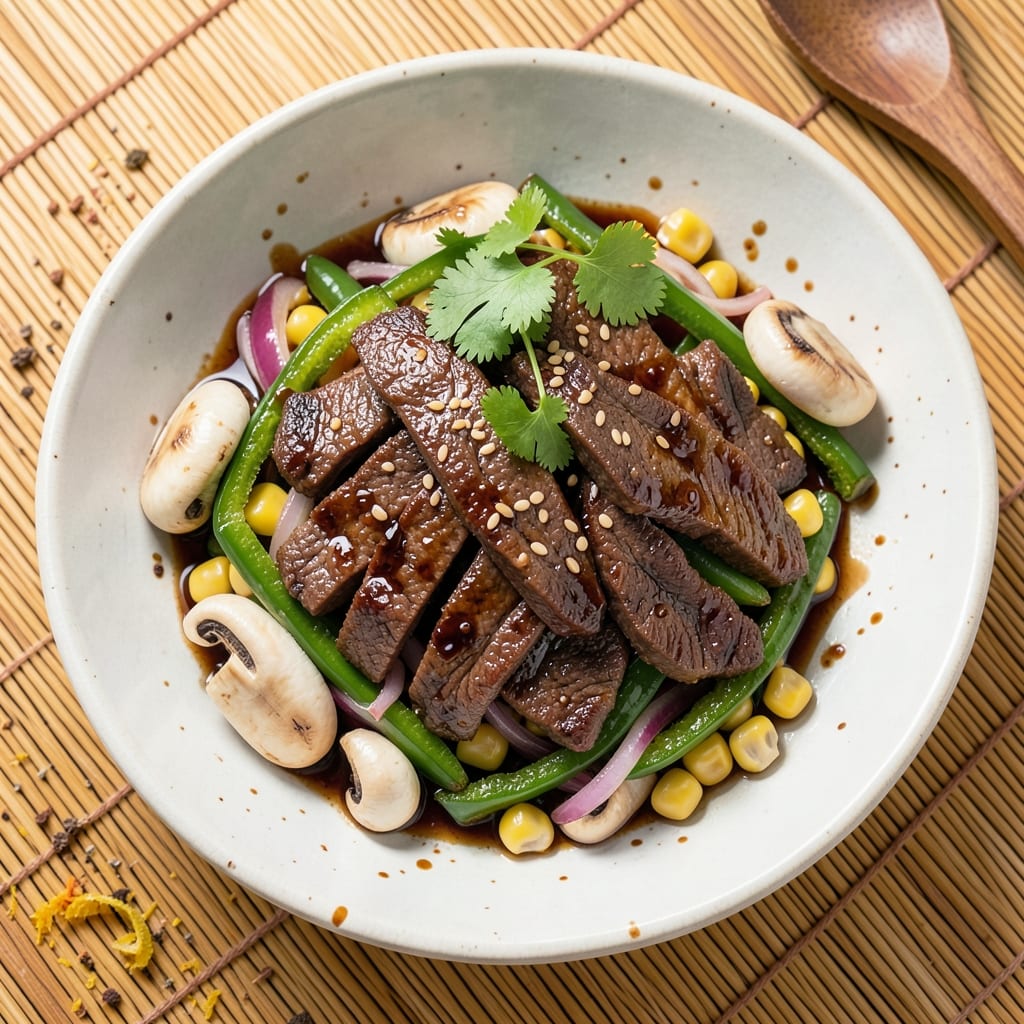
This authentic Chinese beef stir fry delivers restaurant-quality results with tender, velvety beef and crisp-tender vegetables, all achieved through precise wok techniques and traditional seasonings. The secret lies in marinating the beef with cornstarch and soy sauce to create that signature silken texture, while high-heat stir-frying locks in juiciness and develops the iconic "wok hei" aroma. I've perfected this recipe after years of testing—no shortcuts, just authentic Chinese home-cooking methods that transform simple ingredients into a flavor-packed meal.
The foundation of this dish is a balance of five key flavors: salty (soy sauce), sweet (oyster sauce), umami (dark soy sauce), aromatic (garlic and ginger), and fresh (scallions). Unlike many Westernized versions, this recipe skips heavy sauces and instead relies on proper cooking techniques—like searing the beef in batches to render fat and develop flavor—to create depth without overpowering the natural taste of the ingredients. The vegetables (bell peppers, onions, and snap peas) stay crisp-crunchy, providing the perfect textural contrast to the tender beef.
What sets this stir fry apart is the velvety texture of the beef—achieved through a simple cornstarch slurry—that practically melts in your mouth while maintaining structure. The sauce is glossy, aromatic, and just sticky enough to cling to every bite, thanks to a reduction of soy sauces and a touch of sesame oil for depth. Serve it over steamed jasmine rice to soak up every last bit of that flavorful sauce, or pair it with a simple cucumber salad to cut through the richness.
This recipe is designed for both authenticity and adaptability—use it as a weeknight dinner or impress guests with a dish that tastes like it came straight from a Beijing wok. The method is straightforward but requires attention to heat control and timing, which is why I've included detailed tips to ensure success. Let's get cooking—your taste buds will thank you.
Ingredients for authentic chinese beef stir fry
Authentic Chinese stir fry relies on precise ingredients and proper techniques for velvety beef and crisp vegetables.
| Ingredient | Amount | Notes |
|---|---|---|
| Flank Steak 🥩 | 1 ½ lb | Thinly sliced against grain for tenderness |
| Cornstarch 🌾 | ½ cup | For velvet texture slurry |
| Light Soy Sauce 🥄 | ½ cup | Kikkoman preferred for authentic flavor |
| Dark Soy Sauce 🥄 | 1 tbsp | For deep color and umami |
| Oyster Sauce 🍶 | 2 tbsp | Lee Kum Kee for authentic taste |
| Sesame Oil 🫒 | 1 tbsp | Toasted for aromatic depth |
| Garlic Cloves 🧄 | 6 cloves | Minced for aromatic base |
| Fresh Ginger 🌿 | 2 tbsp | Grated, for zesty brightness |
| Red Bell Pepper 🍅 | 1 whole | Sliced into thin strips |
| Yellow Onion 🧅 | 1 whole | Sliced into half-moons |
| Snap Peas 🌱 | 1 cup | Fresh or frozen, thawed |
| Scallions 🌿 | 4 whole | Thinly sliced for garnish |
| Neutral Oil 🫒 | ½ cup | Peanut or vegetable oil |
| White Peppercorns 🌶️ | ¼ tsp | Freshly ground for subtle heat |
| Salt 🧂 | 1 tsp | Diamond Crystal kosher preferred |
The flank steak is non-negotiable for this dish—its lean yet tender texture becomes silken when sliced thinly against the grain. Purchase from a well-stocked Asian market or high-quality butcher for optimal marbling. If you can't find flank, sirloin works in a pinch, but it won't be as tender. The cornstarch slurry (mixed with soy sauce) transforms the beef into that signature restaurant-style texture—don't skip this step. For the soy sauces, Kikkoman light soy and Lee Kum Kee oyster sauce are industry standards, though any quality brand will suffice if unavailable. The dark soy sauce provides both color and depth, so don't substitute with regular soy.
No oyster sauce? Hoisin sauce at half the amount works in a bind, though it lacks the umami complexity. Fresh ginger should be bright yellow with no mold—the best comes from Asian markets, often sold in small jars. For the sesame oil, use only the toasted variety (the clear kind is flavorless). The neutral oil can be peanut, vegetable, or canola—just ensure it has a high smoke point. If you can't find snap peas, frozen peas work fine, but thaw them completely before using. The scallions add freshness—use the green parts too for maximum flavor. For extra authenticity, toast the white peppercorns in a dry pan for 30 seconds before grinding.
Store the flank steak in the coldest part of your fridge, wrapped tightly, and use within 3 days. The ginger keeps for 2 weeks in the fridge if wrapped in damp paper towels. For longer storage, freeze the ginger whole and grate only what you need. The cornstarch should be kept in an airtight container in a cool, dark place for up to 6 months. This stir fry reheats beautifully—stir-fry again over high heat for 2-3 minutes to restore crispness. The flavors actually improve the next day as the sauce melds further, so double the batch if you're feeding a crowd.
Why You'll Love This Recipe
- Here’s what sold me: this stir-fry improves the next day. The flavors meld even better, and reheating it (even in the microwave) keeps that texture intact. Pack it for lunches, freeze portions, or just reheat for a lazy night—it’s my go-to for avoiding takeout.
- No-Fuss Protein Prep: I swear by the cornstarch trick—tossing the flank steak in that powder before cooking gives it that signature crisp-tender bite with zero fuss. Five minutes of marinating (or even less if you're in a rush) transforms tough cuts into melt-in-your-mouth perfection.
- Umami Bomb Combo: That dark soy sauce and oyster sauce duo? Chef’s kiss. The dark soy adds depth and color, while the oyster sauce brings that rich, savory punch—no weird aftertaste, just pure satisfaction. Honestly, the balance is so spot-on, I’ve made it for picky eaters, and they still ask for seconds.
- Leftover Goldmine: Here’s what sold me: this stir-fry improves the next day. The flavors meld even better, and reheating it (even in the microwave) keeps that texture intact. Pack it for lunches, freeze portions, or just reheat for a lazy night—it’s my go-to for avoiding takeout.
Step-by-step instructions for authentic Chinese beef stir fry
Master the velvet texture and perfect wok hei with these precise techniques.
Prepare the Flank Steak for Maximum Tenderness
Slice the 1.5 lb flank steak thinly against the grain into ¼-inch thick strips. This is critical—thin slices cook quickly and remain tender. Place the sliced beef in a bowl and add the 0.5 cup cornstarch, tossing gently to coat evenly. Let it sit for 15 minutes while you prep the vegetables. The cornstarch creates a translucent coating that transforms tough beef into silken strips.
Here's the thing—don't skip the resting time. The cornstarch needs to adhere properly, and the beef will absorb just enough moisture to prevent drying during cooking. If you're using frozen snap peas, thaw them completely by soaking in cold water for 10 minutes while you work.
Build the Flavor Base with Aromatics
Heat 0.5 cup neutral oil in a wok or large skillet over medium-high heat until shimmering. Add the 6 cloves minced garlic and 2 tbsp grated fresh ginger, stirring constantly for 30 seconds until fragrant but not browned. The oil should be hot enough that the aromatics sizzle immediately upon contact—this prevents burning and unlocks their full flavor.
Add the 1 whole yellow onion sliced into half-moons and 1 whole red bell pepper in thin strips. Stir-fry for 2-3 minutes until the onions soften slightly but retain their shape. This step develops the foundational flavors while preparing the vegetables to absorb the sauce. If the onions start to brown too quickly, reduce the heat slightly to medium.
Cook the Beef to Perfect Doneness
Working in batches if needed, add the cornstarch-coated beef to the wok in a single layer. Let it sear undisturbed for 1-2 minutes until the edges turn light golden brown. This initial sear creates the Maillard reaction that builds deep flavor. Then stir-fry vigorously for 2-3 minutes until the beef is 80% cooked—it should still have a slight pink center.
Remove the beef to a clean plate and set aside. The reason we don't fully cook it here is that the residual heat from the wok will finish cooking the beef when we combine everything. Overcooking at this stage leads to dry, chewy strips. If your wok isn't hot enough, you'll notice the beef steaming rather than searing—adjust the heat immediately.
Create the Signature Silken Sauce
Return the wok to medium-high heat and add 0.5 cup light soy sauce, 1 tbsp dark soy sauce, 2 tbsp oyster sauce, and 1 tbsp toasted sesame oil. Stir constantly for 1-2 minutes until the sauce begins to simmer and thicken slightly. The dark soy sauce adds that signature deep color while enhancing umami. Taste and adjust seasoning with an additional ½ tsp salt if needed—Chinese sauces should balance sweet, salty, and umami.
Add the 1 cup snap peas and 4 whole scallions sliced thinly, stirring for 1-2 minutes until the peas brighten in color. The peas should remain crisp with a slight crunch—overcooking turns them mushy. Here's where it gets fun: toss the beef back into the wok and stir-fry for another 1-2 minutes until everything is evenly coated and heated through. The beef should now be fully cooked with that signature silken texture.
Finish with Wok Hei and Garnish
Transfer the stir-fry to a serving platter and let it rest for 2-3 minutes. This brief resting period allows the juices to redistribute, ensuring each bite is moist and flavorful. Garnish with additional thinly sliced scallions and a drizzle of toasted sesame oil for that authentic restaurant finish.
Serve immediately over steamed jasmine rice. The contrast between the silken beef, crisp vegetables, and fluffy rice creates the perfect balance of textures. For maximum authenticity, serve family-style in a hot wok at the table—this maintains the "wok hei" or "breath of the wok" that defines Chinese stir-fry.
Pro Tips For Making Authentic Chinese Beef Stir Fry
- Slice Thin, Slice Even: I learned this the hard way—uneven slices mean some beef gets tough while others stay raw. Use a sharp knife and slice against the grain at a 45-degree angle, aiming for ¼-inch thickness. If your knife isn’t up to it, freeze the steak for 20 minutes first—it tightens the fibers for cleaner cuts.
- Marinate, But Not Too Long: Flank steak needs just enough time to absorb the cornstarch coating (15–20 minutes max) without turning mushy. Skip the overnight soak—this isn’t tenderizing beef, it’s about creating that signature crust. Pat it dry first; moisture is the enemy of a good sear.
- Watch the Heat—Start Hot, End Fast: Crank your wok or pan to smoking-hot before adding oil. The beef should sizzle immediately, then reduce heat to medium-high once it’s browned—overcooking turns it rubbery. Stir-fry in batches if needed; crowding steams instead of sears.
- Save the Dark Soy for Last: That glossy finish? It’s not just for looks. Add the dark soy sauce after the beef is mostly cooked, letting it caramelize in the last 30 seconds of stir-frying. Too early, and it burns; too late, and the dish lacks depth. A splash of light soy earlier balances the flavor.
Creative variations of these flavors
Silken Beef Variations
For an even more tender result, try quick-braising the beef before stir-frying. After coating the beef in cornstarch, sear it in batches as directed, then remove and set aside. In the same wok, add ½ cup water and 1 tbsp light soy sauce, scraping up any browned bits. Return the beef to the wok, cover, and simmer for 3-4 minutes over medium-low heat until the sauce reduces slightly. This method creates an extra-silken texture that's especially popular in Hong Kong-style stir-fries. 💫
Vegetable Swaps
Customize your veggies based on seasonality and preference. Swap snap peas for bok choy (cut into wedges) or Chinese broccoli (blanched for 30 seconds before stir-frying). For a spicy kick, add 1 tbsp doubanjiang (fermented chili bean paste) when building the flavor base. If you prefer sweeter vegetables, include ½ cup pineapple chunks (add them last to prevent overcooking).
Protein Alternatives
This technique works for other proteins too! For chicken, use 1.5 lb boneless thighs (sliced thinly) and reduce the cornstarch to 0.3 cup. For shrimp, toss 1.5 lb peeled shrimp with 0.25 cup cornstarch and 1 tbsp light soy sauce before cooking. Tofu lovers can use 1.5 lb extra-firm tofu (pressed, cubed, and pan-fried until crispy before stir-frying). Each protein requires slight adjustments to cooking time—always check for doneness.
Regional Twists
Transform this into a Sichuan-style stir-fry by adding 1 tbsp chili crisp and 1 tsp Sichuan peppercorns (toasted and ground) to the sauce. For a Cantonese version, include ½ cup water chestnuts (sliced) and finish with 1 tsp sugar to balance flavors. In Taiwan, this dish often features moo shu mushrooms (sautéed separately) and a drizzle of black vinegar for tanginess. Each regional take keeps the core technique but adds local ingredients.
Sauce Customizations
Experiment with sauces to match your taste. For a sweeter profile, replace 1 tbsp oyster sauce with 1 tbsp hoisin sauce. A tangier version swaps 1 tbsp dark soy sauce for 1 tbsp black vinegar. For extra umami, add 1 tbsp fish sauce (reduce other soy sauces by ½ tbsp to balance). Always taste as you go—Chinese sauces are all about harmony, not overwhelming single flavors. ✨
Make-Ahead Adaptations
Prep components ahead for a stress-free cook. Marinate the beef (cornstarch + soy sauce) up to 4 hours in advance, then refrigerate. Pre-chop all vegetables and store in airtight containers for 2 days. For a one-pan meal, cook the beef and set aside, then reheat with fresh veggies and sauce. To freeze, cook the stir-fry completely, cool, and store in a single layer before transferring to a freezer bag. Reheat over medium heat with 1 tbsp water to restore moisture—avoid microwaving for best texture.
Nutrition facts
Frequently asked questions
Why does the beef need to be sliced against the grain?
The grain direction determines muscle fiber alignment—cutting against it shortens the fibers, making the beef tender and silken instead of chewy. Flank steak has long muscle fibers, so slicing at a 45-degree angle across the grain creates those signature bite-sized pieces that melt in your mouth. Skip this step, and you'll end up with tough, stringy beef.
Can I use a regular skillet instead of a wok?
While a wok gives the best wok hei (breath of the wok), a 12-inch cast-iron skillet or heavy stainless steel pan works perfectly. The key is maintaining high heat—preheat your pan for 3-5 minutes before cooking to mimic a wok's heat retention. Just stir-fry in batches if needed to avoid crowding.
What's the secret to crispy vegetables in stir-fry?
Three things: high heat, short cooking time, and proper prep. Cook veggies in a single layer and stir constantly to prevent steaming. Add harder veggies (like bell peppers) first, then quicker-cooking ones (snap peas) last. If using frozen peas, thaw them completely before adding—ice crystals make veggies soggy.
How do I fix beef that's too chewy?
If the beef turns out tough, it likely wasn't sliced thin enough or cooked too long. For next time: slice even thinner (⅛-inch max) and cook in one batch at high heat for 2-3 minutes total. The cornstarch coating should be light and even—don't over-marinate, or it'll make the beef gummy.
Can I make this dish spicier?
For heat, add 1 tsp chili flakes or ½ tsp ground Sichuan peppercorns (toasted first) to the sauce. For depth, stir in 1 tbsp doubanjiang (fermented chili bean paste) when building the aromatic base. Start with small amounts—Chinese cuisine balances heat with other flavors, so go gradual!