
Main Courses
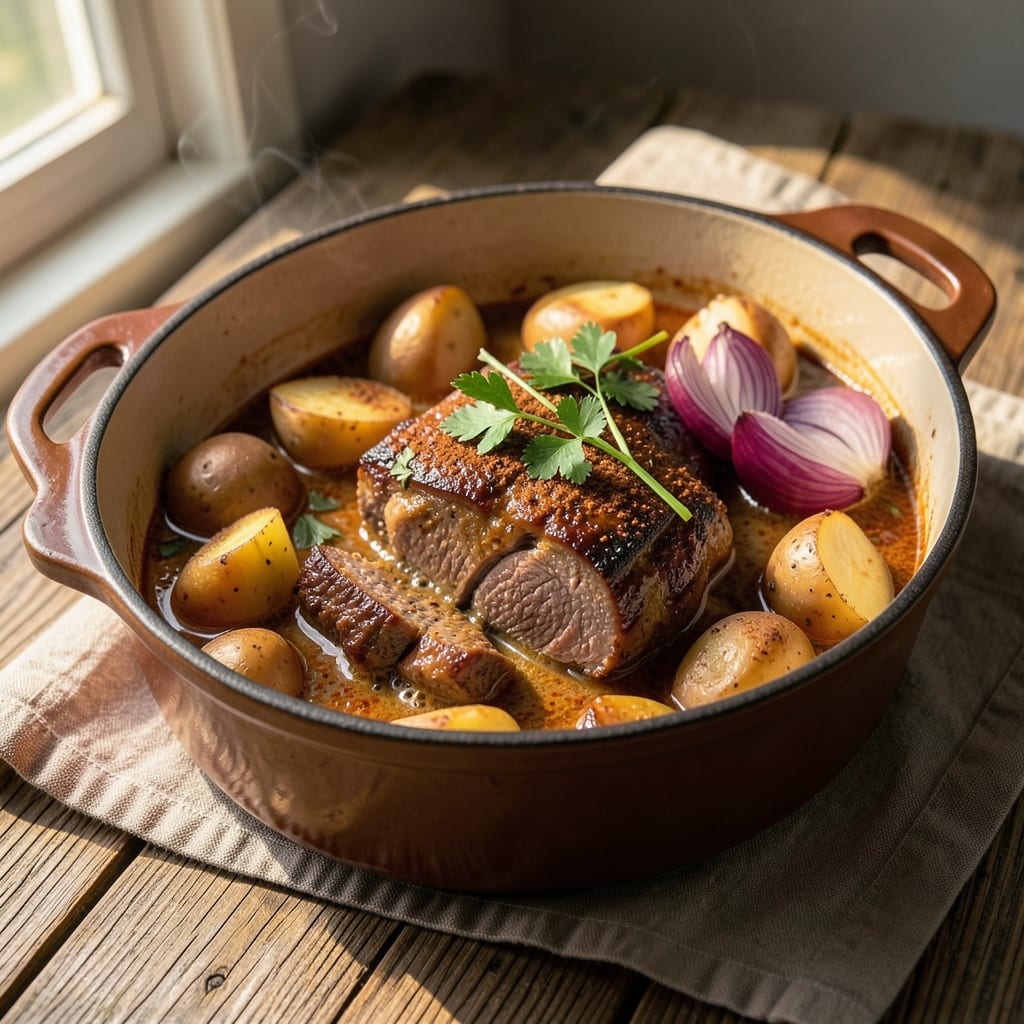
This authentic beef stifado recipe transports you to a Greek taverna with its deep, paprika-rich flavors and tender beef that practically melts in your mouth. The secret lies in slow cooking—letting the onions caramelize and the spices meld into a velvety sauce that coats every bite. I've perfected this version after years of testing, ensuring the balance of sweet, smoky, and slightly tangy notes that define stifado. What sets this recipe apart is the traditional technique of browning the beef and onions thoroughly before adding the aromatic spices like cinnamon and allspice. The red wine deglazes the pan, infusing the dish with depth, while tomatoes add a touch of brightness. Potatoes soak up the rich sauce, creating a hearty, comforting meal that's perfect for family dinners or special occasions. By the time you serve this dish, you'll have a pot of golden-brown beef swimming in a sauce that's both complex and comforting. The onions are sweet and caramelized, the potatoes are tender yet hold their shape, and the beef is fork-tender with layers of flavor. It's the kind of meal that makes you feel like you're dining in Greece. Serve it with crusty bread to soak up every last drop of that luscious sauce. Here's how to make it the traditional way.
Ingredients for authentic beef stifado
Simple ingredients for a dish that tastes like a Greek taverna feast.
| Ingredient | Amount | Notes |
|---|---|---|
| Beef Chuck Roast 🥩 | 2 lb | Cut into 1.5-inch cubes |
| Yellow Onions 🧅 | 3 large | Peeled and sliced into wedges |
| Russet Potatoes 🥔 | 2 lb | Peeled and quartered |
| Sweet Paprika 🌶️ | 2 tbsp | Hungarian preferred for authenticity |
| Ground Cinnamon 🌿 | 1 tsp | Freshly ground for best flavor |
| Ground Allspice 🌶️ | ½ tsp | Or substitute nutmeg at same amount |
| Garlic Cloves 🧄 | 6 cloves | Peeled and smashed |
| Red Wine 🍷 | 1 cup | Dry, bold variety like Cabernet |
| Tomato Paste 🍅 | 2 tbsp | Or 0.5 cup crushed tomatoes |
| Beef Broth 💧 | 2 cups | Low-sodium preferred |
| Olive Oil 🫒 | ¼ cup | Extra-virgin for richness |
| Salt 🧂 | 1 ½ tsp | Kosher or sea salt |
| Black Pepper 🌶️ | ½ tsp | Freshly ground preferred |
| Fresh Parsley 🌿 | ¼ cup | Chopped for garnish |
The beef is everything here—chuck roast breaks down beautifully into tender chunks. Costco or local butchers usually have it pre-cut, but if you're buying a whole roast, ask for the chuck section. Look for good marbling—those little white flecks mean more flavor. The onions? Yellow or red both work, but yellow caramelizes better. I always grab extra because they're the base of the sauce. For the paprika, Hungarian sweet is the gold standard—it's got that deep, smoky flavor that defines stifado. If you can only find regular paprika, toast it in a dry pan for 30 seconds first to bring out its flavor.
No red wine? Beef broth with 1 tbsp balsamic vinegar works in a pinch, though it won't be quite as rich. Fresh parsley is ideal, but dried Italian seasoning at half the amount gets you close. The tomato paste can be swapped for crushed tomatoes, but you'll need about half a cup instead of two tablespoons. For the potatoes, russets or Yukon golds hold up best—they absorb the sauce without falling apart. If you're using baby potatoes, leave them whole and cut them in half. The spices? Allspice is key—it's what gives stifado its unique warmth. No allspice? A pinch of nutmeg plus a dash of clove powder comes close.
This sauce gets better as it sits, so make it a day ahead if you can. Store it in the fridge for up to 5 days, or freeze portions for 3 months. I always make extra because it reheats beautifully—just warm it gently on the stove with a splash of broth. The potatoes will soak up the sauce, so if you're serving it with bread, save some sauce to drizzle on top. The beef stays tender, but if you're reheating from frozen, add a little extra broth to keep it moist. Trust me, it's worth the effort.
Why You'll Love This Recipe
- One-Pot Magic: I swear by this—just brown the beef, toss in onions and potatoes, then let the paprika and cinnamon work their slow-cook wonder. No extra pans, no fuss, and honestly? The cleanup is almost nonexistent.
- Spice That Stays: That first bite of tender beef with the paprika’s smoky warmth and cinnamon’s subtle depth? It’s the kind of flavor that lingers, making you reach for seconds without even thinking. The potatoes soak up all the richness—no dry bites here.
- Leftovers That Shine: Between us, this dish actually improves the next day. The beef gets even more fall-apart tender, and the sauce thickens into something heartier. I make double batches on Sundays because reheating it for lunch is my secret to stress-free weeknights.
- Budget-Friendly Feast: A whole chuck roast and a bag of potatoes stretch across multiple meals, and the spices? A pinch goes a long way. It’s the kind of recipe where you’re feeding a crowd for less than takeout, and everyone leaves happy—no one’s picking at their plate.
Step-by-step instructions for authentic beef stifado
Here's how to make this rich, paprika-infused Greek classic with tender beef and aromatic vegetables.
Sear the Beef for Deep Flavor
Heat the 0.25 cup olive oil in a large Dutch oven over medium-high heat until shimmering. Working in batches if needed, add the 2 lb beef chuck roast cut into 1.5-inch cubes and sear for 2-3 minutes per side until deeply browned. This step develops the Maillard reaction, creating that deep, caramelized flavor that's the foundation of stifado.
Don't crowd the pan—searing too many pieces at once will steam them instead of browning. You want each piece to develop a rich crust. Once browned, remove the beef and set aside on a plate. Here's the thing—you'll notice the beef releases juices as it browns, but that's normal and actually adds flavor to your sauce later.
Build the Spice Base
In the same Dutch oven, reduce heat to medium and add the 3 large yellow onions sliced into wedges. Cook for 8-10 minutes until softened and beginning to caramelize at the edges. This slow cooking develops their natural sweetness, which balances the spicy paprika.
Add the 2 tbsp sweet paprika, 1 tsp ground cinnamon, 0.5 tsp ground allspice, 1.5 tsp salt, and 0.5 tsp black pepper, stirring constantly for 30 seconds to toast the spices and release their aromas. You'll smell that warm, earthy paprika scent—this is where the authentic stifado flavor starts building.
Deglaze and Simmer the Sauce
Pour in the 1 cup red wine and scrape up all the browned bits from the bottom of the pot with a wooden spoon. This deglazing step captures all that concentrated flavor. Let the wine simmer for 3-4 minutes until reduced by half, then stir in the 2 tbsp tomato paste and 2 cups beef broth.
Return the beef to the pot and bring to a gentle simmer. Here's where it gets important: cover partially and let it cook for 1 hour at a steady simmer. You want the beef to become fork-tender but not fall apart. I check periodically to ensure there's enough liquid—if it gets too dry, add a splash of water or broth.
Add Potatoes and Complete the Braise
After the initial hour, add the 2 lb russet potatoes cut into quarters and the 6 cloves garlic that have been peeled and smashed. Stir gently to distribute everything evenly. The potatoes should absorb the rich beef and spice flavors as they cook.
Continue simmering uncovered for another 30-40 minutes until the potatoes are tender and the sauce has thickened slightly. You'll know it's ready when the potatoes pierce easily with a fork and the sauce coats the back of a spoon. The beef should be so tender it practically falls apart with gentle pressure.
Finish and Garnish
Remove from heat and let the stifado rest for 5 minutes. This resting period allows all the flavors to meld together perfectly. Stir in the 0.25 cup fresh parsley just before serving—this adds a bright, fresh contrast to the rich, spiced beef.
Serve immediately with crusty bread or over buttered egg noodles. Each spoonful should deliver tender beef, sweet onions, earthy spices, and a perfect balance of wine and tomato flavors. The sauce should be thick enough to coat the back of a spoon but still have a silky texture.
Pro Tips For Making Authentic Beef Stifado
- Sear the Onions Slowly: I learned this the hard way—dumping chopped onions into hot oil and ending up with bitter, burned bits instead of sweet, caramelized flavor. For stifado, cook them on medium heat for at least 15 minutes, stirring occasionally, until they’re deep golden. The patience pays off in every spoonful.
- Use Two Types of Paprika: Sweet paprika alone won’t cut it—add a pinch of smoked paprika (about ½ teaspoon) for depth. My grandmother swore by this, and it’s the thing that makes the sauce taste like it’s been simmering for hours, not 30 minutes. Trust me, it’s worth the extra step.
- Don’t Rush the Potatoes: Tossing raw potatoes into the stew at the end? Big mistake. Parboil them for 8–10 minutes first, then add them to the pot. This keeps them tender without turning to mush—especially crucial for Russets, which can get gummy if overcooked.
- Deglaze with Wine, Then Reduce: After browning the beef, pour in a splash of dry red wine (about ¼ cup) and let it bubble for 2 minutes. Then reduce it by half before adding the tomatoes. This step locks in flavor—skip it, and the sauce will taste flat. (Yes, even if you’re impatient like me.)
Serving suggestions for this authentic beef stifado
Crusty Bread Pairing
Nothing complements stifado like warm, crusty bread to soak up that rich paprika-infused sauce. I love using a freshly baked bougatsa (Greek phyllo bread) or a rustic sourdough from my local bakery. For extra authenticity, sprinkle the bread with a pinch of dried oregano before serving—it enhances the Mediterranean flavors beautifully. 🥖
Buttered Egg Noodles
For a heartier option, serve stifado over fresh egg noodles tossed in melted butter and a pinch of fresh parsley. The egg noodles add a neutral base that lets the beef and sauce shine. I like to cook the noodles al dente and toss them with 1 tbsp butter and 1 tbsp chopped parsley right before plating. This keeps the dish balanced and satisfying.
Greek Salad Contrast
A crisp Greek salad with tomatoes, cucumbers, red onion, and feta cuts through the richness of the stifado. The acidity from the tomatoes and the saltiness of the feta balance the deep, spiced flavors of the braise. I always add a drizzle of extra-virgin olive oil and a squeeze of lemon to brighten the dish even more.
Lemon Wedges
Serve lemon wedges on the side to squeeze over each portion. The bright citrus acidity cleanses the palate between bites and adds a refreshing contrast to the warm, spiced beef. It’s a simple touch that elevates the entire meal—trust me, it makes a world of difference. 🍋
Warm Flatbread
For a quicker alternative, warm pita bread in the oven for 5 minutes at 375°F until golden and crisp. The soft interior soaks up the sauce beautifully, while the crispy edges add texture. I like to brush the pita with a little garlic-infused olive oil before serving for extra flavor.
Garnish Like a Pro
Finish each serving with a sprinkle of fresh parsley and a few toasted pine nuts for crunch. The parsley adds freshness, while the pine nuts bring a subtle nuttiness that complements the paprika. For a final touch, drizzle a little extra sauce over the top—it’s the perfect way to make your stifado look and taste restaurant-quality. ✨
Nutrition facts
Frequently asked questions
Can I make stifado with chicken or rabbit instead of beef?
Traditional stifado is made with beef, but chicken or rabbit can work beautifully! For chicken, use bone-in thighs and drumsticks (they stay juicier) and reduce cooking time to 45-50 minutes after adding the potatoes. Rabbit requires 1.5 hours total braising time—its delicate flavor absorbs the spices wonderfully. Just remember: the cooking time decreases with smaller, leaner meats.
Why does my stifado sauce turn out too thin or too thick?
Sauce consistency depends on timing and liquid control. For a thicker sauce, simmer uncovered for 10-15 extra minutes to reduce it naturally. Too thin? Stir in 1 tbsp tomato paste or 2 tbsp cornstarch mixed with water. The key is patience—traditional stifado should coat the back of a spoon but not be gluey. If using potatoes, they'll absorb excess liquid as they cook.
Can I prepare stifado ahead of time?
This dish actually tastes better the next day. Store in an airtight container in the fridge for up to 5 days—the flavors deepen as the spices meld. For freezing, portion into containers with sauce (it reheats beautifully). Thaw overnight in the fridge, then reheat gently on the stove with a splash of broth to restore moisture.
What's the best way to reheat leftover stifado?
Never microwave it—this makes the sauce watery. Instead, warm in a pot over low-medium heat with 2-3 tbsp beef broth or water to prevent drying. Stir occasionally for 10-15 minutes until heated through. For crispy edges, transfer to an oven-safe dish at 350°F for 10 minutes after reheating on the stovetop.
Is Hungarian paprika really necessary?
While Hungarian sweet paprika is traditional, regular paprika works in a pinch. For better results, toast 1 tbsp regular paprika in a dry pan for 1 minute to intensify its flavor. The key difference is Hungarian paprika's deeper, slightly smoky taste—it's worth seeking out for authentic results. If unavailable, combine 1.5 tbsp regular paprika + 0.5 tsp smoked paprika for a similar effect.