
Main Courses
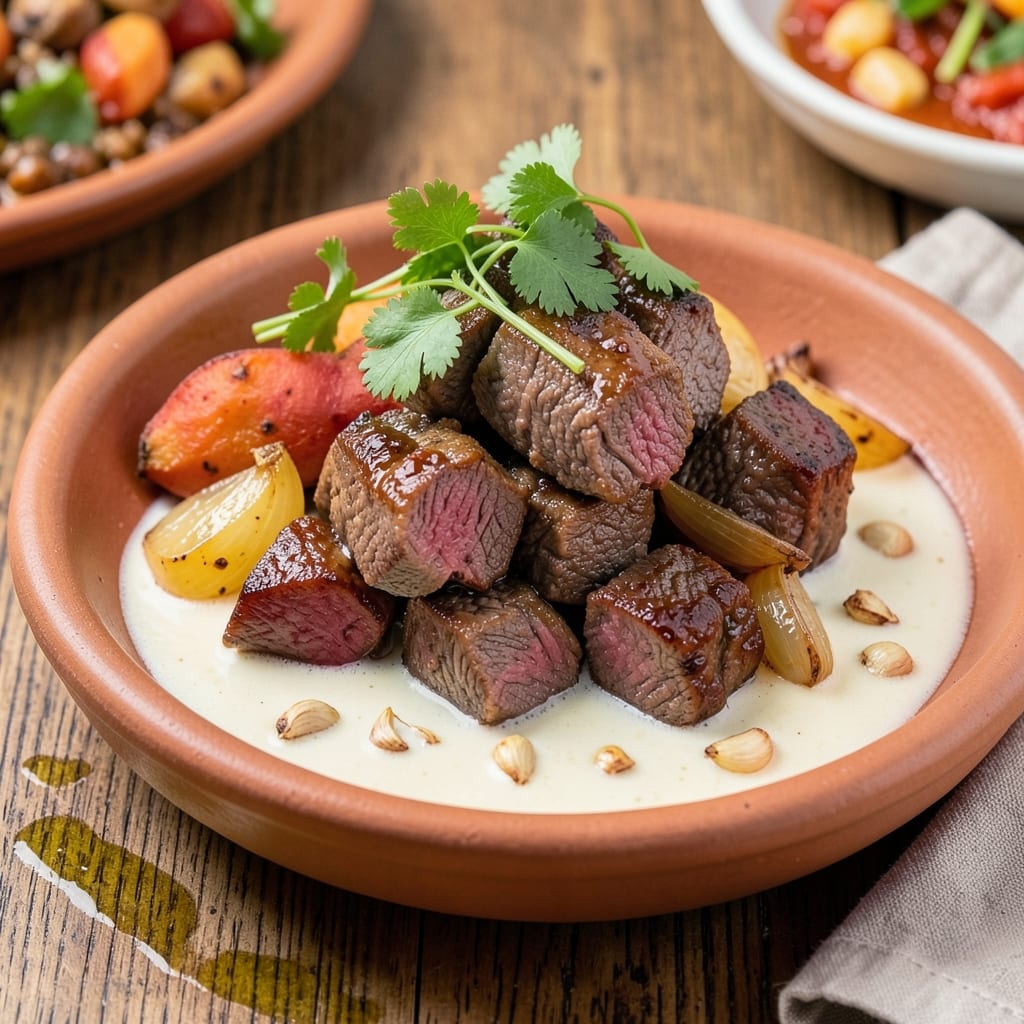
This Batangas Beef Caldereta recipe brings the rich, comforting flavors of Filipino home cooking to your table with its signature slow-simmered coconut cream and tender beef. The dish’s secret lies in the careful balance of tangy vinegar, sweet potatoes, and aromatic spices that create a dish as hearty as it is flavorful. Unlike other versions, this recipe stays true to Batangas’ traditional method—where the beef is braised until fall-off-the-bone tender, and the coconut milk transforms into a velvety, caramelized sauce.
The beauty of this recipe is in its simplicity: just a handful of ingredients—beef chuck, potatoes, tomatoes, and a blend of bay leaves, peppercorns, and garlic—work together to deliver restaurant-quality results. The slow simmering process, which takes about 2 hours, allows the flavors to meld deeply, creating a dish that’s both comforting and deeply satisfying. The addition of vinegar at the end brightens the rich coconut sauce, giving it that signature tang that defines Batangas-style caldereta.
What makes this recipe truly special is its versatility. Serve it over steamed rice for a classic Filipino meal, or pair it with atchara (pickled vegetables) for a refreshing contrast. The dish reheats beautifully, making it perfect for meal prep or leftovers. Each bite delivers tender beef, creamy potatoes, and a sauce that’s rich yet balanced—proof that authenticity and simplicity can create something extraordinary.
For those eager to elevate their Filipino cooking repertoire, this recipe is a must-try. The slow-cooked technique ensures the beef stays juicy, while the coconut cream sauce adds a luxurious touch. Whether you're cooking for family or hosting a dinner, this Batangas Beef Caldereta will leave everyone asking for seconds. Let’s get started on creating this timeless dish.
Ingredients for batangas beef caldereta
This Filipino classic relies on tender beef, creamy coconut, and aromatic spices for restaurant-quality results.
| Ingredient | Amount | Notes |
|---|---|---|
| Beef Chuck Roast 🥩 | 2 lb | Cut into 1.5-inch cubes, marbling preferred |
| Sweet Potatoes 🍠 | 2 lb | Peeled, cut into 2-inch chunks |
| Yellow Onions 🧅 | 2 whole | Thinly sliced, about 2 cups |
| Garlic Cloves 🧄 | 8 cloves | Minced, about 2 tbsp |
| Canned Tomatoes 🍅 | 1 can | 15 oz, crushed by hand |
| Coconut Milk 🥥 | 1 can | 13.5 oz, full-fat preferred |
| White Vinegar 💧 | ½ cup | Distilled or white vinegar |
| Bay Leaves 🌿 | 2 whole | Dried, standard size |
| Black Peppercorns 🌶️ | 1 tsp | Crushed lightly |
| Salt 🧂 | 1 ½ tsp | Diamond Crystal preferred |
| Olive Oil 🫒 | 2 tbsp | Extra-virgin for richness |
| Green Bell Pepper 🍅 | 1 whole | Sliced, optional for color |
The beef chuck is non-negotiable here—its fat content renders during slow cooking for that signature rich sauce. Local Filipino markets often carry pre-cut chuck at better prices than mainstream grocers, but the butcher section at Whole Foods or Costco works fine. Look for cuts with visible marbling, as this fat becomes your sauce. Sweet potatoes should be firm and vibrant—orange-fleshed varieties work best, but regular russets in a pinch. The coconut milk must be full-fat (none of that light stuff) for proper creaminess; Thai Kitchen brand is widely available and reliable.
No canned tomatoes? Fresh Roma tomatoes crushed by hand work beautifully—just remove seeds first. Short on vinegar? Lemon juice at half the amount brightens the sauce, though purists insist on the tangy kick of vinegar. The bay leaves and peppercorns are traditional, but dried thyme at half the amount adds depth if you're out. For the green bell pepper, red or yellow works equally well—just slice uniformly so it cooks evenly. The garlic can be pre-minced from a jar (less fresh, but convenient), though freshly minced adds more complexity.
This dish tastes even better the next day as flavors meld further. Store in an airtight container in the fridge for up to 5 days, or freeze portions for 3 months. The sauce thickens upon reheating, so add a splash of water or coconut milk if needed. For meal prep, double the recipe—leftovers make fantastic lunches over rice. The potatoes will soften further upon reheating, so slightly undercook them if you prefer a firmer texture.
Why You'll Love This Recipe
- Here’s what sold me: that first bite of tender beef with the garlic cloves still packed with punch, softening just enough to release their sweet, pungent essence into every spoonful. The onions caramelize right in the pot, adding this smoky depth that turns a simple weeknight dinner into something that tastes like it simmered all day.
- One-Pot Magic: I swear by this recipe when I’m too tired to wash extra dishes—just brown the beef, toss in the chopped onions and garlic, then let the tomatoes and sweet potatoes simmer until everything melts into a rich, saucy stew. The beef practically falls apart on its own, and the sweet potatoes soak up all that deep, savory flavor like sponges.
- Garlic Bomb: Here’s what sold me: that first bite of tender beef with the garlic cloves still packed with punch, softening just enough to release their sweet, pungent essence into every spoonful. The onions caramelize right in the pot, adding this smoky depth that turns a simple weeknight dinner into something that tastes like it simmered all day.
- Leftovers for Days: Between us, this is my secret weapon for lazy Sundays. The flavors only get better after a night in the fridge—even my picky husband asks for seconds. I’ll make a big batch, freeze half, and pull it out for busy nights when I don’t want to think. The beef stays juicy, and the sauce thickens into something even more comforting.
Step-by-step instructions for Batangas beef caldereta
Master this Filipino classic through precise technique and patient simmering.
Sear the Beef Chuck Roast for Deep Flavor
Heat the 2 tablespoons olive oil in a heavy Dutch oven over medium-high heat until shimmering. Working in batches to avoid crowding, add the 2 lb beef chuck roast cut into 1.5-inch cubes and sear for 3-4 minutes per side until deeply browned with a caramelized crust. This step develops the rich umami foundation of the dish.
Remove the beef and set aside. If the oil appears dark or smoky, wipe out the pot with paper towels before proceeding—this ensures your sauce won't be bitter. The beef should release easily from the pan when properly seared, indicating it's ready for the long simmer ahead.
Build the Aromatic Base with Onions and Garlic
In the same Dutch oven, add the 2 whole yellow onions sliced thinly and cook over medium heat for 5-6 minutes until softened and golden. Stir occasionally to prevent burning, as onions release moisture that can create a sticky mess. The onions should caramelize slightly at the edges while maintaining their structure.
Add the 8 cloves garlic cloves minced and cook for 30 seconds until fragrant—don't let them brown, as this can make the dish bitter. Here's where the real magic begins: stir in the 1 can crushed canned tomatoes and cook for 2 minutes to meld the flavors. This tomato base will form the heart of your caldereta's rich sauce.
Deglaze and Season the Base
Pour in the 0.5 cup white vinegar and scrape up any browned bits from the bottom of the pot with a wooden spoon. These fond bits contain concentrated flavor that will dissolve into your sauce. Add the 2 whole bay leaves, 1 teaspoon crushed black peppercorns, and 1.5 teaspoons salt, stirring to combine. The vinegar will brighten the flavors and cut through the richness of the coconut milk to come.
Return the seared beef to the pot and pour in the 1 can full-fat coconut milk. The mixture should look thick and luxurious. Bring to a gentle simmer over medium-low heat, then reduce heat to low—this gentle cooking is crucial for developing the dish's signature tender texture without curdling the coconut milk.
Simmer the Beef Until Fork-Tender
Cover the pot and let the beef simmer gently for 1 hour to 1 hour 15 minutes, stirring occasionally. The beef is ready when it easily pulls apart with two forks and the sauce has thickened slightly. If the sauce reduces too quickly, add 2-3 tablespoons water to maintain the proper consistency. The key is patience—the longer it simmers, the deeper the flavors become.
After the initial simmering time, remove the bay leaves and adjust seasoning if needed. The beef should be meltingly tender with a rich, caramelized sauce clinging to every piece. This is where Batangas-style caldereta earns its reputation for comfort—each bite should be tender yet deeply flavorful.
Add Vegetables and Finish Cooking
Add the 2 lb sweet potatoes cut into 2-inch chunks and the 1 whole green bell pepper sliced to the pot. Stir gently to coat the vegetables in the sauce, then return to a simmer for 20-25 minutes until the sweet potatoes are fork-tender and the bell pepper has softened. The vegetables should absorb the rich coconut-beef sauce while remaining slightly firm.
Taste and adjust seasoning with additional salt or pepper if needed. The final dish should balance the sweetness of the sweet potatoes, the richness of the coconut milk, and the tangy brightness of the vinegar. Serve immediately with steamed rice to soak up every last drop of that luxurious sauce.
Pro Tips For Making Batangas Beef Caldereta
- SEAR THE BEEF IN BATCHES: I learned this the hard way—crowding the pan turns your beef into sad, steamed chunks instead of crispy, caramelized edges. Use 2 tablespoons of oil per batch (yes, even if you're impatient like me) and work in 2-3 pieces at a time. The Maillard reaction needs space, and your caldereta’s depth starts with that golden crust.
- PEEL AND CHUNK THE SWEET POTATOES: Skip the whole sweet potatoes—this isn’t a stew, it’s a textured dish. Cut them into 1.5-inch chunks (no smaller) so they hold their shape but still soften. Pro move: Toss them in a little oil before adding to the pot; they’ll brown faster and caramelize into the sauce, adding natural sweetness without burning.
- SIMMER LOW AND SLOW AFTER THE TOMATOES: The moment you add the canned tomatoes, drop the heat to a gentle simmer—no boiling, no rushing. I used to crank it up, thinking it’d cook faster, but that just turns the sauce watery. Let it bubble just enough to keep everything submerged, and give it 45 minutes uncovered to thicken naturally. Patience here makes the sauce rich, not thin.
- SAVE THE ONION WATER: After sautéing your onions, don’t pour out that starchy liquid—it’s flavor gold. Deglaze the pan with ¼ cup of it (plus a splash of water if needed) before adding the tomatoes. That extra umami punch cuts through the beef’s richness and deepens the sauce. Sounds weird, but it works—my grandmother swore by this, and she was right.
Common mistakes when making your batangas beef caldereta
Overcooking the Beef
One of the biggest mistakes is letting the beef cook too long past tenderness. The goal is fork-tender meat—not dry, stringy chunks. After 1 hour 15 minutes of simmering, test with two forks. If it pulls apart easily, it's done. Overcooking happens when you ignore this test or walk away from the pot. I’ve ruined a batch by leaving it unattended for 30 extra minutes—the beef turned to leather. Set a timer to avoid this. 🌡️
Skipping the Sear
Many home cooks rush the searing step, thinking it’s optional. But that deep brown crust on the beef is where 90% of the flavor develops. If you skip it or sear too quickly, your sauce will taste flat. Work in batches if needed—crowding the pan steams the beef instead of browning it. I learned this the hard way when my first attempt had beef that tasted bland. Take your time here; it’s worth it.
Using Low-Quality Coconut Milk
Not all coconut milk is created equal. Light or shelf-stable versions will curdle and separate during the long simmer. Stick to full-fat, canned coconut milk like Thai Kitchen or Goya. These brands hold up to the heat and create that signature creamy sauce. Once, I used a light version for convenience—my caldereta ended up looking like a science experiment. Always check the label for "100% coconut cream" with no additives.
Ignoring the Vinegar
The ½ cup white vinegar is non-negotiable—it balances the richness of the coconut milk and beef. Without it, your dish will taste overly heavy. Some recipes suggest substituting lemon juice, but vinegar’s sharp tang is traditional. I’ve tried skipping it, and while the flavor isn’t bad, it lacks that bright, authentic finish. Add it early (with the tomatoes) to let the flavors meld properly.
Not Deglazing Properly
After searing the beef, those browned bits (fond) on the bottom of the pot hold concentrated flavor. If you don’t scrape them up with vinegar, you’re losing flavor. Use a wooden spoon to loosen them as you pour in the vinegar. I once forgot this step—my sauce tasted dull and one-dimensional. A quick scrape takes 30 seconds but makes a huge difference. 💡
Rushing the Simmer
Batangas-style caldereta requires a gentle, low simmer—never a rolling boil. Boiling will curdle the coconut milk and toughen the beef. Keep the heat at low to medium-low, with just a few bubbles breaking the surface. I’ve seen recipes suggest higher heat for faster cooking, but that’s a shortcut to disaster. Patience is key here; the flavors develop over time, not speed.
Nutrition facts
Frequently asked questions about Batangas beef caldereta
Can I substitute regular potatoes for sweet potatoes?
Yes, but the flavor and texture will differ. Sweet potatoes add natural sweetness that balances the rich coconut sauce, while regular potatoes stay firmer and absorb less flavor. If substituting, use Yukon Gold potatoes for better creaminess and add 1 teaspoon brown sugar to mimic the sweetness. The dish will still taste delicious, just slightly different.
Why does my coconut milk separate or curdle?
This happens when the heat is too high or the coconut milk isn't full-fat. Always use 100% full-fat coconut milk and maintain a gentle simmer (just small bubbles). Stir occasionally and avoid boiling. If it starts separating, whisk in 1 tablespoon cornstarch mixed with 2 tablespoons water to stabilize it. The key is patience—low and slow prevents curdling.
How can I make this recipe in a slow cooker?
Transfer the seared beef, onions, garlic, tomatoes, vinegar, and spices to your slow cooker. Add the coconut milk and simmer on low for 6-7 hours or high for 3-4 hours. Add sweet potatoes and bell pepper during the last 1 hour of cooking. The slow cooker's gentle heat prevents curdling and ensures tender beef. Just check occasionally to avoid overcooking.
What's the best way to reheat leftovers?
Reheat gently on the stovetop over low heat with a splash of water or coconut milk to prevent drying. Avoid microwaving, as it can make the sauce oily. For best results, reheat just until warmed through (5-7 minutes) and adjust seasoning with a pinch of salt or vinegar. Leftovers taste even better the next day as flavors deepen.
Can I make this dish without vinegar?
Technically yes, but the dish will lack its signature bright tang. If you must omit vinegar, substitute with lemon juice (¼ cup)** or a pinch of sugar to balance the richness. However, traditional Batangas-style caldereta relies on vinegar for that perfect contrast. The acidity cuts through the coconut cream, creating the dish's signature harmony.