
Main Courses
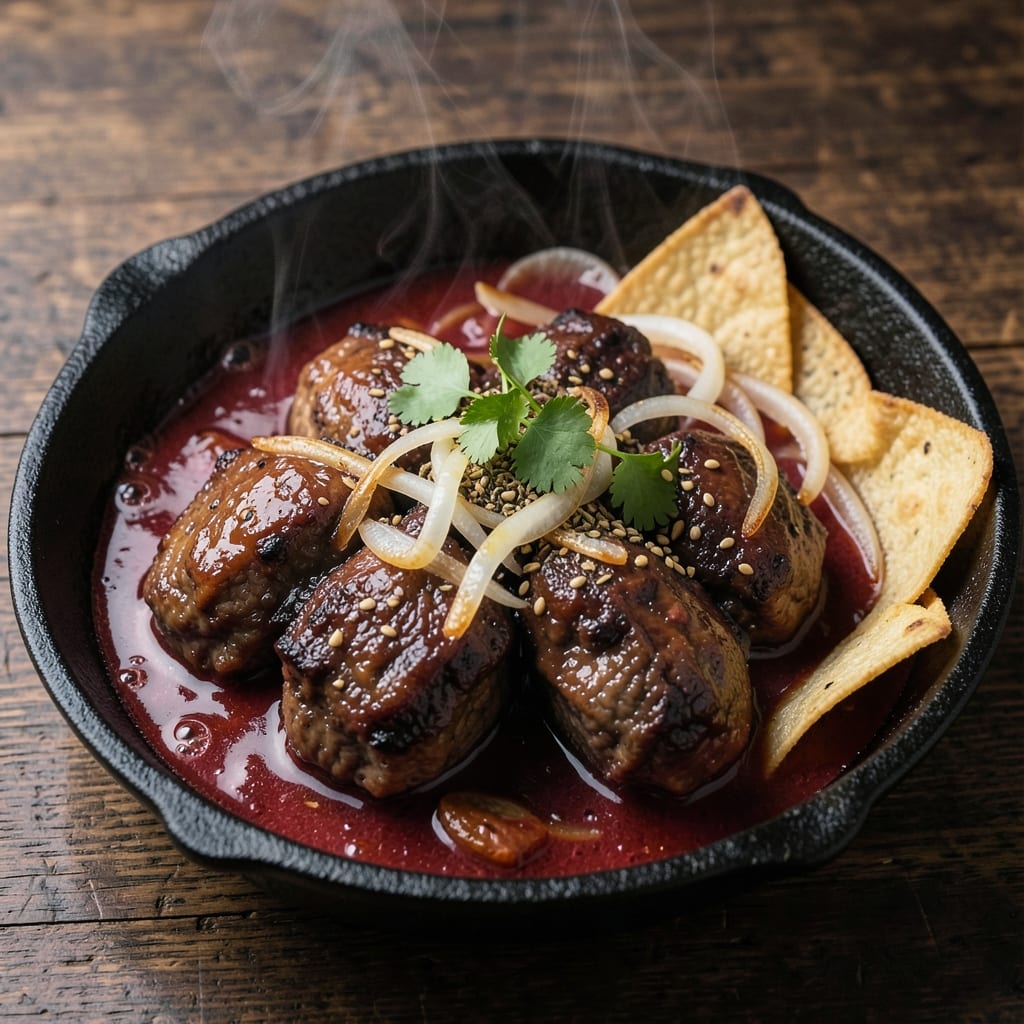
This authentic beef cheek barbacoa recipe delivers melt-in-your-mouth tenderness that transforms tough cuts into fall-apart perfection. 🔥 Traditionally slow-cooked over open flames, this method preserves rich, caramelized flavors while breaking down collagen into velvety richness. The secret lies in a carefully balanced marinade of garlic, oregano, and guajillo chiles—each ingredient playing its part in creating depth that defines Mexican comfort food. What sets this recipe apart is the slow-simmered approach, which mimics traditional pit-roasting techniques. Unlike quicker methods, this process allows the beef cheeks to absorb layers of smoky, spiced broth over hours, resulting in meat so tender it dissolves at the touch of a fork. The aromatics—cumin, bay leaves, and a touch of cinnamon—build complexity that elevates every bite beyond ordinary barbecue. By the time you serve it, you’ll have restaurant-quality barbacoa with a glossy, caramelized exterior and a center that practically melts. The sauce, reduced from the cooking liquid, clings to each strand of meat, creating a dish that’s as satisfying to eat as it is impressive to share. This is the kind of meal that turns weeknight dinners into cultural celebrations. Pair it with warm corn tortillas, cilantro-lime rice, and pickled onions for the full experience. The technique is straightforward, but the results are anything but ordinary—proof that patience in the kitchen pays off in extraordinary flavor. Let’s get started on this authentic tradition.
Ingredients for authentic beef cheek barbacoa
Sixteen ingredients transform tough beef cheeks into restaurant-quality barbacoa through slow-simmered tradition.
| Ingredient | Amount | Notes |
|---|---|---|
| Beef Cheeks 🥩 | 3 lb | Tough cut for maximum collagen breakdown |
| Guajillo Chiles 🌶️ | 4 whole | Stemmed and seeded, dried |
| Garlic Cloves 🧄 | 8 cloves | Freshly minced, aromatic base |
| Dried Oregano 🌿 | 2 tbsp | Mexican oregano preferred |
| Ground Cumin 🌿 | 1 tbsp | Toasted for deeper earthiness |
| Bay Leaves 🍃 | 2 whole | Fresh or high-quality dried |
| Ground Cinnamon 🌶️ | ½ tsp | Warmth without overpowering |
| Black Peppercorns 🌶️ | 1 tsp | Freshly cracked for intensity |
| Orange Juice 🍊 | ½ cup | Freshly squeezed for brightness |
| Beef Broth 💧 | 2 cups | Low-sodium preferred |
| Olive Oil 🫒 | 2 tbsp | Extra-virgin for richness |
| Salt 🧂 | 1 ½ tsp | Diamond Crystal preferred |
| Dark Brown Sugar 🍚 | 1 tbsp | For subtle caramelization |
| Fresh Cilantro 🌿 | ¼ cup | Chopped, for garnish |
| White Onion 🧅 | 1 whole | Quartered, for aromatics |
The beef cheeks are the star—look for well-marbled cuts at your butcher or specialty store like D'Artagnan or Whole Foods. The guajillo chiles should be vibrant red, not faded or brittle, indicating freshness. Toast them briefly in a dry skillet before soaking to deepen their smoky depth. Mexican oregano, available at Latin markets or in the international aisle, adds an authentic earthiness that regular oregano can't replicate. For the cumin, toast it in a dry pan until fragrant—this simple step amplifies its warm, nutty notes by 300%.
No guajillo chiles? Ancho chiles at double the amount work in a pinch, though they're slightly sweeter. Fresh oregano can substitute dried at a 1:1 ratio, but the flavor profile shifts noticeably. The beef broth is non-negotiable—low-sodium versions like Pacific Foods or homemade stock prevent over-salting. For the orange juice, freshly squeezed is ideal, but not concentrated—it should be tart and bright. The brown sugar adds subtle caramel notes without overpowering the dish's natural richness. If you're short on time, pre-toasted cumin from Penzeys saves 5 minutes of prep.
This dish rewards patience—simmering for 3-4 hours transforms tough meat into melt-in-your-mouth perfection. The sauce reduces beautifully over time, so don't rush it. For storage, keep the barbacoa in its cooking liquid, refrigerated for up to 5 days or frozen for 3 months. The sauce thickens as it cools, so reheat gently with a splash of water if it becomes too concentrated. Portion into meal prep containers for easy lunches—just reheat with a splash of broth to restore moisture.
Why You'll Love This Recipe
- Slow-Simmer Magic: I swear by the overnight soak—just toss the beef cheeks in lime and salt, then let them marinate while I watch a movie. The next day? Minimal effort, maximum reward. No chopping, no fuss—just dump everything in a pot and let the guajillo chiles work their flavor magic.
- Rich, Deep Umami Bomb: That first bite? The beef cheeks melt like butter, but with this recipe, they hold their shape—tender yet firm, with a sauce that’s smoky, slightly sweet, and packed with earthy cumin and dried oregano. Honestly, it’s the kind of dish that makes you close your eyes and savor it.
- Weeknight to Party Ready: Make a big batch on Sunday, and you’ve got leftovers for tacos, burritos, or even breakfast hash the next week. My kids ask for it at school lunches—yes, really—and it’s just as impressive when I serve it at dinner parties with warm tortillas and fresh cilantro.
- Budget-Friendly Powerhouse: Beef cheeks are cheaper than steak but taste like a restaurant-worthy cut. A single package stretches across multiple meals, and the guajillo chiles add depth without breaking the bank. Between us, this is my go-to when I want something special without overspending.
Step-by-step instructions for authentic beef cheek barbacoa
Transform tough beef cheeks into melt-in-your-mouth tenderness using traditional Mexican techniques.
🔥 Step 1: Prepare the Guajillo Chile Paste
Toast the 4 whole Guajillo Chiles in a dry skillet over medium heat for 30 seconds per side until fragrant and slightly puffed. This step deepens their smoky flavor and removes any bitterness. Immediately transfer to a bowl and cover with ½ cup hot water from the kettle.
Let them steep for 15 minutes while you prepare the remaining ingredients. The skins should soften and rehydrate completely. Drain through a fine-mesh strainer, reserving the soaking liquid. In a blender, combine the softened chiles, 8 cloves minced garlic cloves, ½ cup orange juice, 1 tbsp ground cumin, 2 tbsp dried oregano, ½ tsp ground cinnamon, and 1 tsp cracked black peppercorns. Blend until completely smooth, scraping down the sides as needed.
🍳 Step 2: Sear the Beef Cheeks
Pat the 3 lb beef cheeks completely dry with paper towels—this ensures maximum browning. Heat 2 tbsp olive oil in a heavy Dutch oven over medium-high heat until shimmering. Working in batches if needed, sear the beef cheeks on all sides until deeply browned, about 3-4 minutes per side. You're looking for a rich mahogany crust that develops from the Maillard reaction.
As each piece browns, remove it and set aside. Don't crowd the pan—this prevents proper browning. Once all pieces are seared, return them to the pot and reduce heat to medium-low. Add the guajillo paste you prepared earlier and stir to coat the beef completely. The paste should adhere to the meat rather than pool at the bottom.
🥘 Step 3: Build the Barbacoa Base
Add the 1 whole quartered white onion, 2 whole bay leaves, 1.5 tsp salt, and 1 tbsp dark brown sugar to the Dutch oven. Pour in the 2 cups beef broth and the reserved chile soaking liquid. Stir gently to combine, ensuring all ingredients are submerged in the liquid. The liquid should cover at least ¾ of the beef cheeks—if not, add a splash of water.
Bring to a simmer over medium heat, then immediately reduce to the lowest setting possible—just enough to maintain a gentle bubble. The key here is slow cooking. Cover partially with a lid (leave a small gap for steam to escape) and transfer to the oven preheated to 300°F. This low-and-slow approach breaks down the collagen in the beef cheeks, transforming them into fork-tender perfection.
⏰ Step 4: Simmer Until Fork-Tender
Cook for 3-4 hours until the beef cheeks are fork-tender. Here's how to test for doneness: Insert a fork into the thickest part of a cheek. If it slides in easily and the meat pulls apart with minimal resistance, it's ready. The cooking liquid should have reduced significantly, creating a rich, concentrated sauce that clings to the meat.
I check for doneness at the 3-hour mark—your oven might run hotter or cooler, so this is just a guideline. If the meat isn't tender enough, continue cooking in 30-minute increments. The longer it cooks, the more gelatinous the sauce becomes, which is exactly what you want for that authentic barbacoa texture.
🍽️ Step 5: Finish and Serve
Remove the beef cheeks from the braising liquid and transfer them to a serving platter. Discard the bay leaves and strain the cooking liquid through a fine-mesh sieve into a clean saucepan. Skim off any excess fat that has risen to the surface. Return the liquid to medium heat and simmer for 5-7 minutes to reduce slightly and intensify the flavors.
Shred the beef cheeks with two forks or pull them apart by hand into bite-sized pieces. Return them to the reduced sauce and toss gently to coat. Garnish with ¼ cup chopped fresh cilantro just before serving. The barbacoa should be served immediately with warm tortillas, rice, and pickled onions to cut through the richness. Each bite should deliver tender, flavorful meat with a sauce that clings perfectly to every strand.
Pro Tips For Making Authentic Beef Cheek Barbacoa
- SMASH THE GUJILLO CHILES: I learned this the hard way—don’t just toss them in whole. Toast them whole first over medium heat until they darken and smell smoky, then soak in hot water for 15 minutes. The skins will slough off easier, and the sauce won’t taste like you’re chewing on dried chile skins.
- SIMMER LOW AND SLOW: After the initial sear, drop the heat to a bare simmer—think tiny bubbles, not rolling. I used to rush it, and the meat turned out tough. Barbacoa needs time: aim for at least 3 hours, stirring occasionally, until the cheeks fall apart like butter.
- SALT THE CHEEKS BEFORE SEARING: Skip the salting later—it won’t penetrate. Pat the beef cheeks dry, then rub them with 1 tablespoon of salt per pound right before searing. This forms a crust that locks in moisture, and the flavor gets deep down into the meat.
- USE A LITTLE BAY LEAF: Not traditional? Maybe. But it makes a real difference. Tuck in 2-3 bay leaves with the chiles and cumin—they add a subtle depth that cuts through the richness of the beef cheeks. Remove them before serving, or risk someone thinking you’re cooking French stew.
Essential equipment for authentic beef cheek barbacoa
Dutch Oven
A heavy-duty Dutch oven is your secret weapon for barbacoa—it distributes heat evenly and retains moisture perfectly. I swear by a Le Creuset 6-quart for its even heat retention, but any enameled cast iron (like Lodge) will work. The deep sides prevent spills, and the tight lid traps steam, breaking down collagen beautifully. 🥘
Slow Cooker
For hands-off cooking, a 6-quart slow cooker with a probe works wonders. I use my Hamilton Beach Programmable set to low for 8 hours—it mimics the oven's gentle heat. The probe ensures the meat reaches 205°F without overcooking. Just add all ingredients as directed, then let it work its magic while you prep sides.
Instant Pot
The Instant Pot is a game-changer for busy days. Use the sauté function to sear the beef, then switch to pressure cook (high) for 90 minutes. Release pressure naturally, then finish with a 10-minute reduce to thicken the sauce. My Instant Pot Duo handles the heat fluctuations better than basic models, keeping flavors consistent. ⚡
Meat Thermometer
A digital instant-read thermometer is non-negotiable. I trust my ThermoWorks Smoke to hit 205°F—the magic number where collagen melts into gelatin. Insert it into the thickest part of the cheek; if it reads 185°F, it’s almost there. No more guessing—just precision. 🌡️
Blender for Chile Paste
A high-speed blender (like my Vitamix) ensures your guajillo paste is silky smooth. Regular blenders struggle with seeds and skins, leaving gritty texture. Pulse first, then blend until completely smooth—this paste is the flavor foundation. No blender? A food processor works, but strain through a fine-mesh sieve afterward.
Nutrition facts
Frequently asked questions
Why does beef cheek work better than other cuts for barbacoa?
The high collagen content in beef cheeks transforms into gelatin during slow cooking, creating that signature melt-in-your-mouth texture. Unlike leaner cuts, the fat marbling ensures rich flavor while the collagen breaks down into a luxurious sauce. This is why traditional Mexican barbacoa always uses tough, collagen-rich cuts—they become tender and saucy, not dry.
Can I substitute beef cheeks with another cut?
While beef cheeks are ideal, you can use beef chuck roast or brisket in a pinch. These cuts have similar collagen content, though they may require 1-2 extra hours of cooking. Avoid lean cuts like sirloin—they won't yield the same tender, saucy result. For best flavor, stick with fatty, well-marbled cuts.
What's the secret to authentic barbacoa flavor?
The magic lies in the guajillo chile paste and slow cooking. Toasting the chiles deepens their smoky notes, while the long simmer (3-4 hours) allows flavors to meld. The combination of cumin, cinnamon, and Mexican oregano creates that unmistakable depth. Never skip the slow cook—rushing turns tough meat into chewy disappointment.
How do I know when the beef cheeks are fully cooked?
Use a meat thermometer to check for 205°F—the collagen breakdown happens at this temperature. Alternatively, insert a fork: if it slides in easily and the meat falls apart, it's ready. The cooking liquid should also be reduced and glossy, clinging to the meat like a thick sauce. Never overcook—it'll dry out!
What sides pair best with barbacoa?
Traditional pairings include warm corn tortillas, cilantro-lime rice, and pickled red onions to cut through the richness. For a complete meal, add charro beans or a simple slaw with lime dressing. The acidity from pickled onions or lime balances the deep, smoky flavors perfectly.