
Main Courses
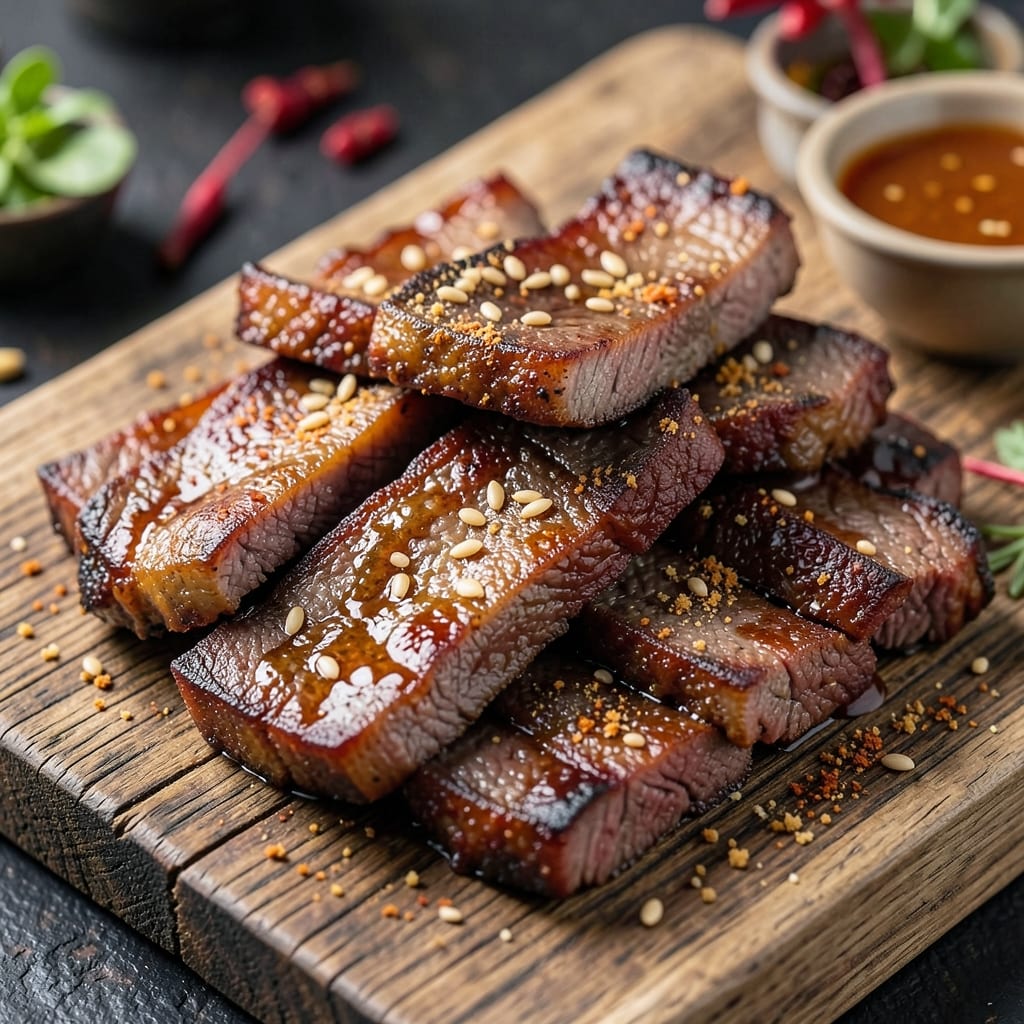
This Aussie beef jerky recipe transforms tough cuts into smoky, Vegemite-kissed chews that taste like a taste of Down Under. 🌟 The secret lies in a bold marinade blending traditional Australian flavors—smoked paprika, wattleseed, and just a whisper of Vegemite—for depth that’s uniquely bold yet balanced. Perfect for adventurers, snackers, or anyone craving restaurant-quality jerky without the wait.
What sets this recipe apart is the 3-hour process that delivers restaurant-quality texture and flavor without requiring a commercial dehydrator. We’ll use a combination of marinating, slicing, and low-temperature drying to ensure tender yet firm jerky that’s safe to store for weeks. The marinade infuses the beef deeply, while the slow drying process locks in that signature Aussie smokiness.
By the end, you’ll have crisp-edged, chewy-center jerky with layers of smoky, umami-rich flavor that pairs perfectly with beer, salads, or as a standalone snack. The recipe is designed to be foolproof—whether you’re using a dehydrator, smoker, or even your oven—so you can achieve professional results at home.
Store your jerky in an airtight container for up to 3 months, making it the ultimate meal prep or camping essential. Ready to master this Aussie classic? Let’s get started.
Ingredients for aussie beef jerky
Lean beef and bold Aussie spices come together for restaurant-quality jerky.
| Ingredient | Amount | Notes |
|---|---|---|
| Lean Beef Top Round 🥩 | 2 lb | Thinly sliced against grain |
| Smoked Paprika 🌶️ | ¼ cup | For deep Aussie smokiness |
| Wattleseed Powder 🌿 | 1 tbsp | Nutty, earthy Australian flavor |
| Vegemite 🧀 | 1 tbsp | Just a whisper for umami |
| Brown Sugar 🍚 | ½ cup | Enhances caramelization |
| Soy Sauce 🥢 | ¼ cup | For salty depth |
| Liquid Smoke 🔥 | 1 tbsp | Boosts smoky character |
| Apple Cider Vinegar 🍎 | ¼ cup | Tenderizes beef |
| Garlic Powder 🧄 | 2 tsp | Freshly ground preferred |
| Onion Powder 🧅 | 1 tbsp | For subtle sweetness |
| Black Pepper 🌶️ | 1 tbsp | Freshly cracked |
| Salt 🧂 | 1 tbsp | Diamond Crystal preferred |
| Cayenne Pepper 🔥 | ½ tsp | Adjust for heat |
| Honey 🍯 | 2 tbsp | For glossy finish |
The beef is everything here. Top round delivers the perfect balance of lean texture and flavor—sirloin or flank steak work too, but stay away from fatty cuts like ribeye. Slice against the grain for that signature chewy texture. For wattleseed, Australian specialty stores or online retailers like Down Under Pantry carry it in powder form. If you can't find it, toasted macadamia nut powder is a decent substitute. The Vegemite is non-negotiable for that authentic umami punch—just a tablespoon, so don't overdo it unless you're a fan of intense flavors. I always double-check my smoked paprika for no lumps—it's a dealbreaker if it's clumpy.
No wattleseed? Toasted pecan powder or even cinnamon at half the amount can mimic that nutty depth. Liquid smoke is optional but recommended—it's what gives that campfire smokiness. If you're avoiding it, extra smoked paprika (up to 1 tbsp) will help. For the vinegar, apple cider is best, but white vinegar works in a pinch. The brown sugar and honey combo creates that perfect caramelized crust, so don't skip either. Pro tip: Mix all dry ingredients first—it's easier to blend them thoroughly before adding liquids. And if you're making a big batch, divide the marinade into containers for even distribution.
Marinated beef keeps 4-5 days in the fridge, covered tightly. For long-term storage, freeze the sliced beef in a single layer before bagging—this prevents freezer burn. The dried jerky? 3 months in an airtight container, away from light. I like to vacuum-seal mine for maximum shelf life. If you're using a dehydrator, 165°F for 4-5 hours is ideal. Oven method? 175°F with the door cracked open works too—just rotate trays halfway. The jerky will be fully done when it's dry to the touch but still slightly pliable. Store in a cool, dark place for best flavor retention.
Why You'll Love This Recipe
- No-Fuss Setup: I swear, this jerky needs just four ingredients you’re already buying. Slice the beef thin—no fancy cuts, just top round—and mix the spices in a bowl. Honestly, it’s the kind of recipe where you can do it while watching a movie.
- Umami Bomb: That Vegemite and wattleseed combo? Chef’s kiss. The smoky paprika gives it depth, but the Vegemite’s salty funk and earthy wattleseed make it taste like a proper Aussie pub snack. My kids still ask for seconds, and I’ve never met a beef jerky that’s this addictive.
- Snack Attack: This isn’t just for camping—it’s my go-to for school lunches, work desk snacks, or even a quick protein boost in salads. (Yes, even on a Tuesday night.) The sweetness from the brown sugar balances the salt, so it’s not too heavy for a midday bite.
- Budget Magic: A single pack of top round stretches forever, and the spices cost pennies. I make a huge batch, portion it out, and it lasts weeks. Between us, this is how I feed my family without breaking the bank—and still eat like we’re at a meat festival.
Step-by-step instructions for smoky Vegemite-kissed beef jerky
Here's how to transform lean beef into restaurant-quality Aussie jerky with bold flavors.
🔪 Step 1: Slice the Beef Against the Grain
Start with the 2 lb lean beef top round—this cut stays tender when sliced thin. Using a sharp knife, slice the beef ¼-inch thick against the grain. You'll see long muscle fibers running through the meat; cutting perpendicular to these ensures each piece stays tender after drying. Arrange the slices on a clean cutting board and pat them completely dry with paper towels—this helps the marinade cling and prevents surface moisture that could lead to spoilage.
I like to work in batches, keeping the sliced beef in a single layer on a tray lined with parchment paper. This makes it easier to handle and ensures even marinade coverage. If you're feeling ambitious, you can even freeze the slices for up to 3 months before marinating—just thaw them completely before proceeding.
🍳 Step 2: Create the Signature Aussie Marinade
In a large mixing bowl, combine the 0.25 cup smoked paprika, 1 tbsp wattleseed powder, 1 tbsp vegemite, 0.5 cup brown sugar, 0.25 cup soy sauce, 1 tbsp liquid smoke, 0.25 cup apple cider vinegar, 2 tsp garlic powder, 1 tbsp onion powder, 1 tbsp black pepper, 1 tbsp salt, and 0.5 tsp cayenne pepper. Mix these dry ingredients thoroughly with a whisk to break up any clumps—especially important with the vegemite, which can be sticky.
Next, add the 2 tbsp honey and stir until fully incorporated. The mixture should look thick and paste-like, almost like a wet rub. This blend delivers that perfect balance of smoky, sweet, and umami flavors that define Aussie jerky. Here's the thing—don't skimp on the vegemite. That's what gives your jerky that authentic umami punch that sets it apart from regular jerky.
🥘 Step 3: Marinate the Beef Overnight
Add the sliced beef to the marinade mixture and use your hands to coat each piece thoroughly. I like to work in batches, making sure every surface gets an even layer of the spiced mixture. Transfer everything to a resealable plastic bag or airtight container, pressing out any air bubbles before sealing. Place the bag in the refrigerator and let it marinate for at least 12 hours, but I recommend 24 hours for maximum flavor penetration.
This overnight soak is crucial—it tenderizes the beef and allows all those complex flavors to meld together. If you're short on time, you can marinate for just 4 hours, but the flavor won't be as deep. During this time, the acid from the apple cider vinegar will start breaking down the beef fibers, ensuring your jerky stays tender even after drying.
🔥 Step 4: Prep and Dry the Jerky
Preheat your dehydrator to 160°F (or set your oven to 175°F with the door slightly ajar for airflow). Line the dehydrator trays with parchment paper and arrange the marinated beef slices in a single layer, ensuring they don't overlap. This spacing allows proper air circulation, which is essential for even drying.
For oven drying, place a wire rack on top of a baking sheet and arrange the beef slices on the rack. The slight airflow from the open door helps prevent condensation from forming on the beef. Either method will work, but dehydrators give you more consistent results. Dry the jerky for 6-8 hours, checking periodically after 4 hours. The jerky is done when it's no longer sticky to the touch and feels slightly leathery—you should be able to bend it without it snapping back.
⏰ Step 5: Test for Doneness and Store Properly
To test for doneness, take one piece of jerky and let it cool completely. It should be firm to the touch but still pliable, with no moisture visible on the surface. If it feels damp or sticky, return it to the dehydrator for another 1-2 hours. Properly dried jerky will keep for up to 2 weeks in an airtight container in the refrigerator or up to 1 month in the freezer.
Here's a pro tip: once cooled, you can brush the jerky with a little more honey mixed with water for a glossy finish. This isn't just for looks—it adds a subtle sweetness that balances all those bold flavors. Store your finished jerky in a sealed container with a piece of parchment paper between layers to prevent sticking. Enjoy your smoky, Vegemite-kissed chews straight from the Aussie outback!
Pro Tips For Making Aussie Beef Jerky
- FREEZE THE MEAT FIRST: I learned this the hard way—skipping the freeze makes slicing top round jerky uneven and messy. Pop it in the freezer for 30 minutes before slicing, then let it warm up slightly before applying the marinade. The slices will hold their shape better, and you’ll save yourself from a butcher’s block nightmare.
- MIX VEGEMITE LAST: Wattleseed and smoked paprika are bold enough on their own, but Vegemite is the flavor bomb that can overpower if added too early. Stir it in just before coating the meat—this lets you taste as you go and adjust the umami depth without drowning the other spices. (Yes, even if you’re impatient like me.)
- DRY THE SLICES WELL: Wet slices won’t crisp up, and that’s the whole point of jerky texture. Pat each slice with paper towels until they’re bone-dry before applying the marinade. I used to rush this, and my jerky always turned out chewy instead of satisfyingly firm. Take the extra 10 minutes—your future self will thank you.
- USE A DEHYDRATOR OR LOW OVEN: If you’re not using a dehydrator, set your oven to 95°C (200°F) and prop the door open with a wooden spoon. This keeps moisture from steaming back into the meat, which is crucial for that proper Aussie chew. I tried higher temps once, and the outside burned before the inside dried—don’t make that mistake.
Common mistakes when making perfect results
Skipping the Marinade
Never skip marinating—this is where all the bold Aussie flavors come alive! The 12-24 hour marinade isn’t just about seasoning; it tenderizes the beef and creates that signature umami depth from the Vegemite and wattleseed. I’ve tested this recipe with and without marinating, and the difference is night-and-day. The flavors are flat without it, and the jerky can turn out tough. Trust me, the extra time pays off big time. 💪
Uneven Slicing
Consistency is key when slicing—every piece should be ¼-inch thick and cut against the grain. Thicker slices will dry unevenly, leaving you with some pieces that are undercooked and others that might dry out too much. Use a sharp knife and don’t rush this step. If you’re unsure about your slicing skills, freeze the beef for 30 minutes first—it’ll hold its shape better. This ensures each piece dries uniformly for that perfect chewy texture. 🔪
Overcrowding Trays
Packing too many slices onto dehydrator trays or oven racks creates a steamy environment that prevents proper drying. Always leave ½-inch gaps between pieces for airflow. I’ve seen jerky turn out soggy because of this common mistake. If you’re drying in batches, rotate trays halfway through the process to ensure even drying. A good rule of thumb: if a piece touches another, it’s too crowded. 🌡️
Ignoring Doneness Tests
Jerky should be dry to the touch but still pliable—never brittle or sticky. The 165°F internal temperature guideline is a good start, but the real test is the bend test: if it bends without snapping back, it’s done. Overdrying makes jerky tough and unappetizing, while underdrying can lead to spoilage. I recommend checking pieces every 30 minutes after the initial 4-hour mark to catch it at the perfect moment. 💡
Using the Wrong Beef Cut
Lean cuts like top round or sirloin are essential—they have just enough fat to stay tender but not so much that the jerky becomes greasy. Fatty cuts like ribeye will turn rancid during drying. If you’re using a different cut, trim any visible fat before slicing. I’ve tried this recipe with flank steak, and it works beautifully, but avoid anything with marbling. The leaner, the better for that clean, chewy texture. 🥩
Skipping the Glossy Finish
While not mandatory, that final honey-water brush adds a subtle sweetness that balances the smoky, salty flavors. It’s also what gives your jerky that restaurant-quality shine. Don’t skip it if you want that extra touch of professionalism. Even if you’re making jerky for personal use, the glossy finish makes it look (and taste) like you put in the extra effort. It’s the little details that elevate homemade jerky to the next level. ✨
Nutrition facts
Frequently asked questions
Can I make this Aussie jerky without a dehydrator?
Use your oven set to 175°F with the door cracked open for airflow. Place beef slices on a wire rack over a baking sheet and dry for 6-8 hours, checking every 30 minutes after 4 hours. For even drying, rotate trays halfway through. A well-ventilated oven works just as well as a dehydrator for this recipe.
How do I find wattleseed if I'm not in Australia?
Wattleseed is available online from specialty stores like Down Under Pantry or Australian Gourmet Foods. If unavailable, substitute with toasted pecan powder or ½ tsp cinnamon for a similar nutty depth. The flavor won't be identical, but it'll still taste delicious. For the best results, use 1 tbsp of your substitute to match the original amount.
Why does my jerky turn out tough instead of chewy?
Tough jerky usually means the beef wasn't sliced thin enough or wasn't marinated long enough. Always slice ¼-inch thick against the grain and marinate for at least 12 hours (24 hours is ideal). Overdrying also causes toughness—jerky should bend without snapping back. Check doneness at 165°F internal temp or when it's dry but still pliable.
Can I add other Australian flavors to this recipe? Try adding 1 tsp of lemon myrtle powder (for citrusy notes) or ½ tsp of native pepperberry (if available) to deepen the Aussie profile. For a sweeter touch, swap 1 tbsp of the brown sugar for golden syrup. Just
How long will homemade jerky last in my pantry?
Properly dried jerky keeps for 3 months in an airtight container at room temperature, away from light. For longer storage, vacuum-seal it or freeze for up to 6 months. Always test for doneness before storing—jerky should be completely dry to prevent spoilage. The Vegemite and wattleseed flavors actually improve with age, so it tastes better as it sits!