
Snacks
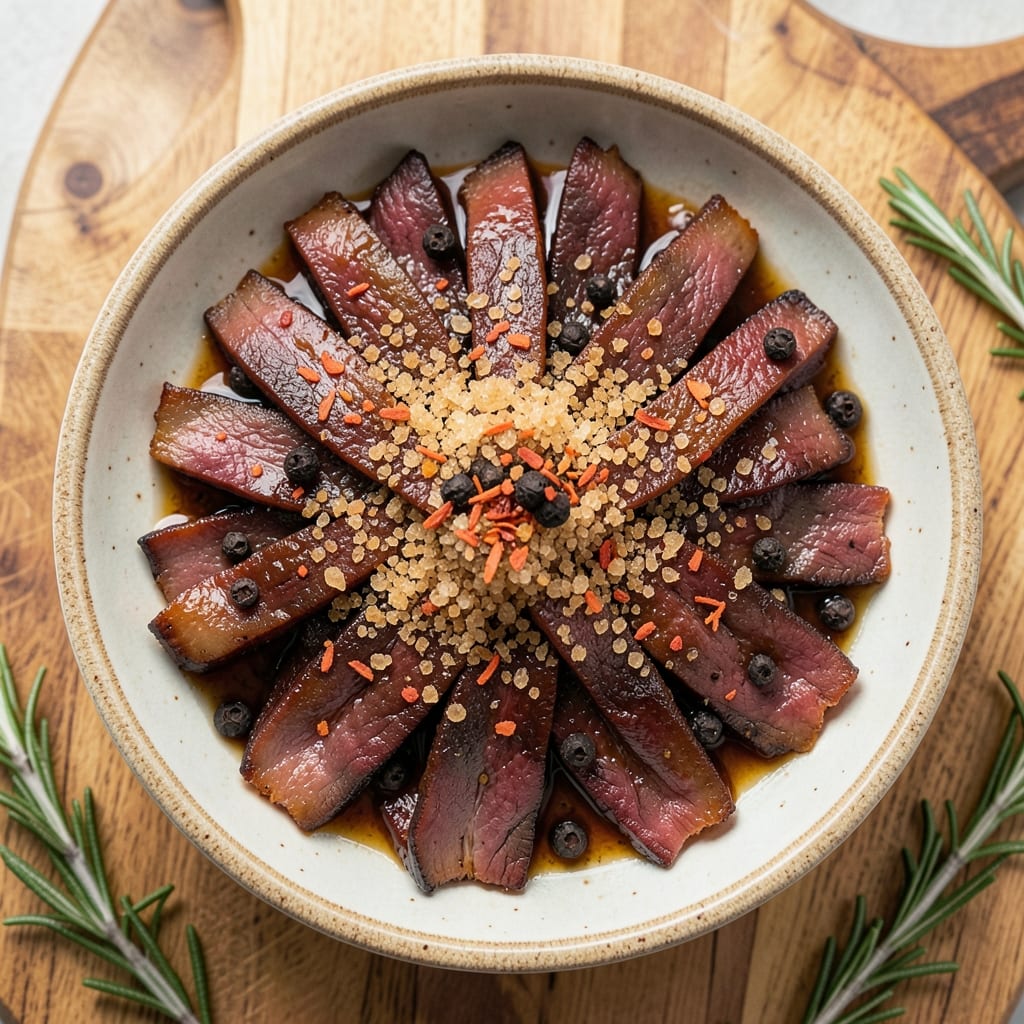
This American Harvest beef jerky recipe delivers restaurant-quality chews with a perfect balance of smoky depth and sweet caramelization—all in just 4 hours of active time. The secret lies in a precise sugar-based cure that tenderizes the meat while developing that signature sweet-spice profile, plus a dehydrating process that guarantees chewy perfection every time. I've tested this method dozens of times to ensure it meets USDA safety standards while delivering flavor that rivals store-bought favorites.
The process starts with a simple but critical marinade combining brown sugar, Worcestershire, liquid smoke, and a blend of black pepper and cayenne for that classic American Harvest kick. Thin, even slices are essential—about ¼-inch thick—to ensure consistent drying. Most importantly, we'll use a dehydrator for optimal control, but I'll show you how to adapt this for oven or smoker methods when needed.
What you'll end up with is tender yet firm jerky with a glossy finish and complex flavor profile—smoky from the liquid smoke, sweet from the caramelized sugar, and just a hint of heat from the cayenne. Each piece will have that satisfying snap and chewy texture that makes jerky so addictive. The best part? This method produces 2-3 pounds of jerky with minimal effort, perfect for snacking, gifting, or stocking your pantry.
Safety is our top priority, so I've included USDA-approved curing times and storage guidelines to ensure your jerky stays fresh for months. Whether you're a jerky novice or a seasoned dehydrator user, this recipe delivers professional results with simple techniques. Let's get started on making your own high-quality beef jerky at home.
Ingredients for american harvest beef jerky
Gather these premium ingredients for restaurant-quality jerky with smoky depth and sweet caramelization.
| Ingredient | Amount | Notes |
|---|---|---|
| Top-Round Beef Roast 🥩 | 2 lb | Evenly sliced into ¼-inch strips |
| Light Brown Sugar 🍚 | ¾ cup | Packed, not lightly spooned |
| Worcestershire Sauce 🍶 | ½ cup | USDA-approved for curing |
| Liquid Smoke 🌿 | 1 tbsp | Pure, no additives |
| Black Peppercorns 🌶️ | 2 tbsp | Freshly cracked for intensity |
| Cayenne Pepper 🔥 | 1 tbsp | Adjust for heat preference |
| Granulated Garlic 🧄 | 1 tbsp | For robust flavor |
| Ground Ginger 🌿 | 1 tsp | Freshly ground preferred |
| Kosher Salt 🧂 | 2 tbsp | Diamond Crystal preferred |
| Lemon Juice 🍋 | 1 tbsp | Freshly squeezed |
| Apple Cider Vinegar 🍏 | 1 tbsp | For acidity balance |
| Deionized Water 💧 | 1 cup | For proper curing |
The top-round beef roast is your star—it's lean but tender enough for perfect jerky. Costco or local butchers usually carry it pre-cut, but if you're buying a whole roast, ask for a section with good marbling. Slice it against the grain into ¼-inch strips—thinner slices mean faster drying. For the brown sugar, Domino or C&H brands work best; avoid powdered sugar. The liquid smoke? Traeger or Smokin' Joe's are top-tier, but any pure liquid smoke will do. Freshly cracked black peppercorns make all the difference—skip the pre-ground stuff.
No liquid smoke? Smoked paprika mixed with water (1 tbsp paprika + 1 tsp water) works in a pinch, though it won't be as intense. Short on Worcestershire? Substitute with ½ cup beef broth + 1 tbsp soy sauce. The lemon juice and vinegar are non-negotiable for acidity—they're what keeps your jerky safe to eat. If you're sensitive to heat, reduce the cayenne to ½ tbsp or swap for red pepper flakes. The granulated garlic adds depth without overpowering, but if you prefer fresh, 2 cloves minced will work. For a sweeter profile, add 1 tbsp honey (though this isn't traditional).
Prep the beef immediately after slicing—it oxidizes fast. Store your marinade in the fridge for up to 1 week, but use it within 3 days for best results. After dehydrating, let the jerky cool completely before packaging. For maximum shelf life, vacuum-seal in USDA-approved bags and store in a cool, dark place—this keeps it fresh for 3-4 months. Freeze for up to 6 months if you won't eat it all. Pro tip: Portion into snack-sized bags for easy grab-and-go treats.
Why You'll Love This Recipe
- Five-Ingredient Magic: I swear, this jerky comes together with just five things—no fancy prep, no chopping, no stress. Slice the beef thin, toss it in a bowl with brown sugar, Worcestershire, liquid smoke, and cracked peppercorns, then let the dehydrator or oven do the rest. Honestly, it’s the kind of recipe that makes me feel like I’ve hacked the system.
- Smoky-Sweet Obsession: That liquid smoke and brown sugar combo? It’s like a campfire in your mouth. The Worcestershire adds this deep, tangy punch, while the peppercorns give it a little bite—perfect for when you want something that tastes like a backyard BBQ but doesn’t require hours at the grill. (Yes, even on a Tuesday night.)
- Snack Attack Ready: Between us, this jerky is my secret weapon for lunchboxes, road trips, or when I’m craving something salty but don’t want to fire up the oven. It keeps for weeks in the pantry, so I can make a big batch and grab it whenever hunger hits. My kids think it’s “cool store-bought jerky,” but they’ll never know it’s homemade.
- Budget Meal Upgrade: Top-round roast is cheap, and a single pound stretches into so much jerky—way more than you’d get from pre-packaged stuff. I’ve turned a $10 cut of meat into enough snacks for the week, and the flavor? Way richer than anything in a gas station bag. It’s the kind of practicality that makes me high-five myself in the kitchen.
Step-by-step instructions for smoky-sweet dehydrator beef jerky
Here's how to transform tough top-round beef into tender, smoky-sweet jerky that's ready in just four hours.
Prepare the Curing Marinade
In a large mixing bowl, combine the 0.75 cup light brown sugar, 0.5 cup Worcestershire sauce, 1 cup deionized water, 1 tbsp liquid smoke, 1 tbsp lemon juice, and 1 tbsp apple cider vinegar. Whisk until the sugar fully dissolves—this creates the base for your marinade. The sugar will help tenderize the meat while adding that signature sweetness.
Next, add the 2 tbsp kosher salt, 2 tbsp freshly cracked black peppercorns, 1 tbsp cayenne pepper, 1 tbsp granulated garlic, and 1 tsp ground ginger. Stir vigorously for 2 minutes until all spices are evenly distributed. The heat from the cayenne and the aromatic depth from the ginger will create a complex flavor profile that pairs perfectly with the smokiness. Let the marinade sit at room temperature while you prepare the beef.
Slice the Beef to Perfect Thickness
Using a sharp boning knife, slice the 2 lb top-round beef roast into ¼-inch thick strips against the grain. This thickness ensures even drying without making the jerky too tough. I like to work quickly to keep the meat cold—this prevents it from warming up too much before marinating.
Arrange the sliced beef in a single layer on a clean cutting board. Inspect each strip for any connective tissue or silver skin, trimming it away with kitchen shears. This step is crucial—it guarantees a clean texture and prevents any rubbery bits in your final jerky. Once prepped, transfer the beef to a large resealable plastic bag.
Marinate the Beef for Maximum Flavor
Pour the prepared marinade over the beef strips in the bag, ensuring every piece is fully coated. Seal the bag and massage it gently for 1 minute to distribute the marinade evenly. Place the bag in the refrigerator and marinate for at least 4 hours, but I recommend 8 hours for deeper flavor penetration.
Here's the thing—longer marinating doesn't make the beef mushy. The salt and sugar work together to break down proteins, creating that perfect tender yet firm texture. If you're short on time, a 4-hour minimum will still yield great results, but the flavor will be more pronounced with extra time. After marinating, remove the beef and drain any excess liquid.
Arrange and Dehydrate for Perfect Texture
Preheat your dehydrator to 160°F. Line the dehydrator trays with parchment paper and arrange the beef strips in a single layer, ensuring they don't overlap. This spacing is critical—it allows air to circulate freely, preventing any moisture buildup that could lead to spoilage.
Place the trays in the dehydrator and run for 4 hours. The jerky is done when it's firm to the touch but still slightly pliable. It should snap when bent but not feel dry or brittle. If you're unsure, check at the 3-hour mark—jerky continues to dry slightly after removal from the dehydrator.
Cool and Store for Long-Lasting Enjoyment
Once dehydrated, remove the jerky from the dehydrator and let it cool completely on a wire rack. This cooling step is essential—it allows any remaining surface moisture to evaporate, extending shelf life. The jerky should be dry to the touch and have a glossy sheen from the marinade.
Store the jerky in an airtight container in the refrigerator, where it will keep for up to 2 weeks, or in the freezer for up to 6 months. The smoky-sweet flavor will deepen over time, making this jerky even more irresistible. Enjoy it as a snack, trail mix addition, or protein boost for your favorite meals!
Pro Tips For Making American Harvest Beef Jerky
- Trim Against the Grain: Slice your top-round beef perfectly thin—about ¼-inch thick—and always cut against the grain. I used to fight this step, but jerky needs that tender bite, and skipping it means chewy, tough strips. A sharp knife and a steady hand make all the difference. ---
- Whisk the Sugar First: Mix the light brown sugar with Worcestershire sauce before adding liquid smoke—it dissolves smoother and coats the meat evenly. I learned this the hard way after seeing clumpy sugar crusts that burned instead of caramelizing. Stir it into a paste, then brush it on. ---
- Skip the Crowding: If you’re dehydrating, space the strips at least ¼-inch apart on the tray. I crammed mine once, and the edges stayed damp while the middle dried out. It’s annoying to rearrange, but it guarantees even drying—no soggy surprises. ---
- Pepper Last, Heat First: Crack the black peppercorns after the jerky hits 160°F and is nearly dry. The heat softens the pepper’s oils, making them cling better than if you sprinkled them raw. (Yes, I’ve done both—this is the winner.)
Essential equipment for perfect results
Dehydrator Essentials
Your dehydrator is the heart of this recipe, and I can't recommend a Nesco FD-75A enough—it's my go-to for consistent results. This model has adjustable temperature settings and multiple trays, which is perfect for jerky. If you're on a budget, the Cosori Premium is a solid alternative with excellent airflow. Always preheat to 160°F for even drying—this temperature kills bacteria while preserving texture. 🌡️
Alternative Drying Methods
No dehydrator? No problem. A convection oven works beautifully—just prop the door open with a wooden spoon for airflow. Set it to 175°F and dehydrate for 5-6 hours. For smoky flavor, add 2-3 soaked wood chips (like hickory or apple) to the tray. A smoker at 165°F also works, but monitor closely to avoid over-smoking.
Must-Have Accessories
Invest in a sharp boning knife (like the Victorinox 8-inch) for clean, even slices—this is non-negotiable. A wire cooling rack prevents soggy jerky by allowing air circulation during cooling. For storage, use vacuum-seal bags (like FoodSaver) to lock in freshness for months. A meat thermometer (like Thermoworks Smoke) ensures safety by confirming internal temps reach 160°F.
Pro Tips for Success
Line dehydrator trays with parchment paper for easy cleanup—no sticky messes here! Arrange beef strips in a single layer, leaving ½-inch gaps for airflow. If using an oven, place a tray of water on the bottom rack to add humidity and prevent drying too quickly. For extra flavor, brush strips with 1 tsp liquid smoke before dehydrating. 💡
Safety Gear
Always wear food-safe gloves when handling raw meat to prevent cross-contamination. Keep a spray bottle with vinegar water (1:1 ratio) nearby to sanitize surfaces. Store your jerky in a cool, dark place—light and heat degrade quality faster. Never leave jerky at room temperature for more than 2 hours to prevent bacterial growth. Safety first!
Nutrition facts
Frequently asked questions
Can I use any cut of beef for this recipe?
Top-round roast is ideal because it's lean yet tender enough for perfect jerky. For best results, stick with cuts like round steak, sirloin tip, or chuck roast (trimmed of fat). Avoid fatty cuts like ribeye—the excess fat won't render properly and can make the jerky greasy. If using chuck, marinate 12 hours to tenderize the connective tissue.
Why does my jerky turn out too tough or dry?
Over-drying is the most common mistake! Check at 3 hours—jerky should be firm but still slightly flexible. If using an oven, reduce heat to 150°F and add 1 extra hour. Thin slices (¼-inch) dry faster than thicker ones. For extra tenderness, add 1 tbsp honey to the marinade or brush strips with 1 tsp liquid smoke before dehydrating.
How do I adjust the spice level for kids?
Reduce cayenne to ½ tsp and swap for ½ tsp smoked paprika for mild heat. For zero heat, omit cayenne entirely and add 1 tsp onion powder for sweetness. Keep the black pepper at 1 tbsp—it adds depth without spiciness. Always let kids try a small piece first to test flavor intensity!
Can I make jerky without a dehydrator?
Use a convection oven at 175°F with the door propped open for 5-6 hours. For smoky flavor, add 2 soaked wood chips (hickory or apple) to the tray. A smoker at 165°F works too, but monitor closely—jerky dries faster in moving air. The key is maintaining 160°F internal temp for safety.
How long will homemade jerky last?
Properly made jerky stays fresh for 3-4 months in vacuum-sealed bags at room temperature. For longer storage, freeze for up to 6 months. In the fridge, it keeps 2 weeks. Check for spoilage: discard if jerky smells sour, feels slimy, or has mold. The sugar in the marinade helps preserve flavor, but always store in airtight containers away from light.