
Sauces & Condiments
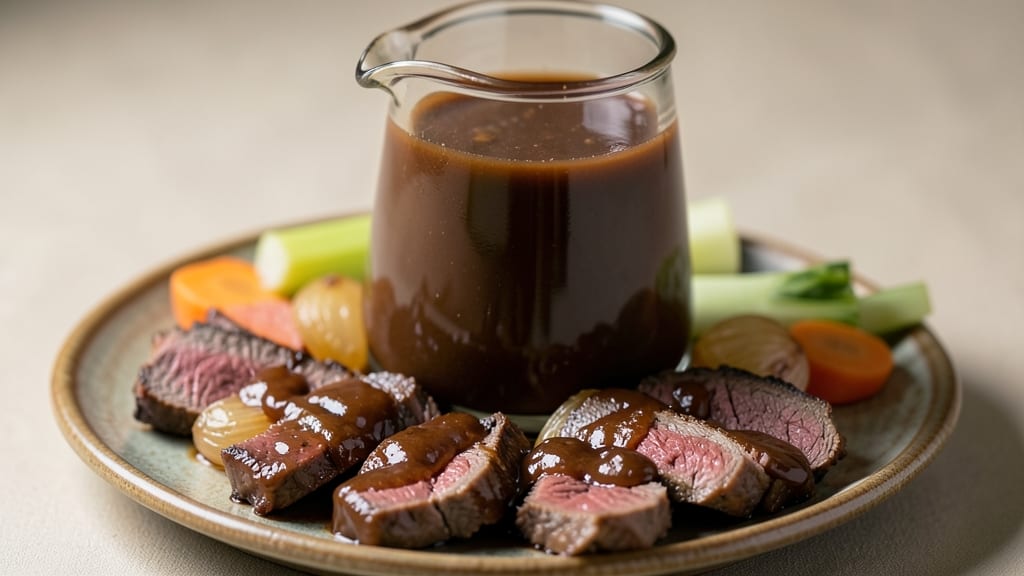
This au jus recipe with beef bones transforms simple kitchen scraps into a rich, umami-packed sauce that elevates any beef dish. The secret lies in slow-simmered bones, aromatic vegetables, and patience—no shortcuts here. What starts as a basic stock becomes a deeply flavorful liquid when reduced and seasoned just right.
The process begins with roasting beef bones to deepen their natural richness before simmering them with onions, carrots, and celery for hours. This slow extraction pulls out collagen and gelatin, creating a velvety texture that coats every bite. The result? A sauce that’s far more complex than store-bought versions, with layers of savory depth.
Perfect for drizzling over roasted beef, steak, or even mashed potatoes, this au jus delivers restaurant-quality flavor with minimal effort. The key is letting it reduce until it’s thick enough to cling to food—no cornstarch needed. Every spoonful carries the essence of slow-cooked beef, making it a pantry staple worth the time.
Once mastered, you’ll never settle for bottled versions again. The bones can be any cut—ribs, short ribs, or even leftover roasts—so there’s no waste. Store the finished sauce in the fridge for up to 5 days or freeze for months. This is the kind of homemade sauce that turns ordinary meals into something extraordinary.
Ingredients for au jus recipe with beef bones
Transform scraps into a velvety sauce with these twelve essential ingredients.
| Ingredient | Amount | Notes |
|---|---|---|
| Beef Bones 🦴 | 4 lb | Rib, short ribs, or marrow bones preferred |
| Yellow Onions 🧅 | 2 whole | Chopped into 1-inch pieces |
| Carrots 🥕 | 3 whole | Cut into 2-inch chunks |
| Celery Stalks 🌿 | 4 whole | Cut into 2-inch pieces |
| Garlic Cloves 🧄 | 6 cloves | Smashed with side of knife |
| Tomato Paste 🍅 | 2 tbsp | High-quality, no sugar added |
| Red Wine Vinegar 🍷 | ½ cup | Dry variety preferred |
| Beef Stock 🥫 | 4 cups | Homemade or high-quality store-bought |
| Worcestershire Sauce 🍶 | 2 tbsp | Anchovy-free version if needed |
| Black Peppercorns 🌶️ | 1 tbsp | Crushed, not ground |
| Bay Leaves 🌿 | 2 whole | Fresh preferred |
| Salt 🧂 | 1 ½ tsp | Kosher or sea salt |
The bones are the foundation—any cut works, but marrow bones or short ribs add richness from their marrow. Look for bones with some meat still clinging, especially around joints. Costco or Whole Foods often have pre-packaged beef bones in the meat section, but butcher shops can cut custom pieces from whole roasts. If using leftover roasts, trim excess fat to avoid greasy stock. The vegetables—onions, carrots, and celery—create the aromatic base, so don’t skimp on quantity. Fresh herbs like thyme or parsley can be added later for brightness, but the core trio is non-negotiable for depth.
No red wine vinegar? Apple cider vinegar works in a pinch, though it’ll lack the same depth. Worcestershire sauce contains anchovies, so check labels if avoiding fish products—Lee Kum Kee makes a vegetarian version. For the tomato paste, San Marzano is ideal, but any high-quality paste without added sugar will do. The beef stock can be homemade (simmer bones separately first) or store-bought—Kitchen Basics or Pacific Foods brands are reliable. If you’re short on time, bouillon cubes (dissolved in hot water) can replace 1-2 cups of stock, though homemade tastes far superior. The peppercorns should be crushed just before adding to release their oils—mortar and pestle works best, but a rolling pin in a bag does the trick.
Roasted bones develop deeper flavor—pat them dry and sear in a 400°F oven for 20-30 minutes before simmering. The finished au jus keeps 5 days refrigerated in an airtight container or 6 months frozen in ice cube trays for portion control. For long-term storage, glass jars are best—they preserve flavor longer than plastic. If the sauce thickens too much after refrigeration, whisk in 1-2 tbsp water to loosen. This sauce gets better with time as flavors meld, so make extra if you can—it disappears fast once it’s ready.
Why You'll Love This Recipe
- Here’s what sold me: the beef bones. They’re not just for looks—they melt into the broth, turning it into this ridiculously rich, savory sauce that clings to everything. The garlic? Oh, it’s there in the background, but the bones carry the show. Drizzle it over roasted potatoes or use it as a dip, and you’ll understand why I keep a stash in the freezer.
- I’ll be real: beef bones aren’t cheap, but they stretch like crazy. A single batch feeds my family for days, and the broth freezes perfectly, so I’m not scrambling for takeout when I’m tired. Plus, the veggies? They’re the cheap, flavor-packed base that makes every sip worth it. It’s comfort food without the guilt.
Step-by-step instructions for deep umami beef bone au jus
Transform simple beef bones into a rich, velvety au jus with layers of umami depth.
Char and Prepare the Beef Bones
Preheat your oven to 450°F. Place the 4 lb beef bones on a rimmed baking sheet and roast for 20-25 minutes, turning occasionally, until deeply browned and slightly crispy. This step develops the Maillard reaction, creating complex flavors that form the foundation of your au jus.
While the bones roast, chop the 2 whole yellow onions into 1-inch pieces and cut the 3 whole carrots and 4 whole celery stalks into 2-inch chunks. The vegetables will add sweetness and body to your broth, balancing the richness of the beef. Squeeze the 6 cloves garlic with the side of your knife to smash them—this releases their oils and intensifies their flavor.
Build the Broth Base in a Dutch Oven
In a large Dutch oven, combine the roasted beef bones, chopped vegetables, smashed garlic cloves, 2 tbsp tomato paste, 0.5 cup red wine vinegar, 4 cups beef stock, 2 tbsp Worcestershire sauce, crushed 1 tbsp black peppercorns, and 2 whole bay leaves. The vinegar adds brightness while the Worcestershire sauce contributes depth and complexity.
Bring the mixture to a boil over medium-high heat, then reduce to a gentle simmer. Skim off any foam that rises to the surface during the first 10 minutes—this ensures a clear, clean broth. Cover the Dutch oven and simmer for 2.5-3 hours, maintaining a gentle bubble. The bones should become tender and easily pull away from their cartilage.
Strain and Season the Au Jus
Carefully strain the broth through a fine-mesh sieve into a clean pot, pressing gently on the solids to extract all the flavorful liquid. Discard the solids or save them for another use. Return the strained broth to the pot and season with 1.5 tsp salt, adjusting to taste. The au jus should be rich but not overly salty—balance is key.
Simmer the strained broth uncovered for an additional 15-20 minutes to reduce slightly and intensify the flavor. You're aiming for a velvety consistency that coats the back of a spoon. Taste and adjust seasoning if needed—this is where you fine-tune the depth of umami and acidity. The final product should be glossy, aromatic, and perfectly balanced.
Finish and Serve with Precision
Remove the au jus from heat and let it cool slightly. Skim off any remaining fat that has risen to the surface—this ensures a clean, elegant presentation. The au jus should be silky smooth with a deep, beefy flavor that lingers on the palate. For an extra touch of richness, you can whisk in 1 tbsp cold butter just before serving, but this step is optional.
Serve the au jus immediately alongside roasted meats or use it as a base for sauces. The homemade quality shines through in every sip, offering a depth of flavor that store-bought versions simply can't match. Store any leftovers in the refrigerator for up to 5 days or freeze for up to 3 months—the flavors only improve with time.
Pro Tips For Making Au Jus Recipe With Beef Bones
- CHAR THE BONES FIRST: Start with a screaming-hot pot—no half-measures—and sear the beef bones until they’re deep brown, almost black in spots. I used to skip this, thinking it was just for looks, but it’s what unlocks that rich, meaty depth in your au jus. (Yes, even if you’re impatient like me, resist the urge to rush.)
- CUT ONIONS INTO BIG CHUNKS: No need for tiny dice—chop yellow onions into ½-inch pieces. They’ll soften and melt into the broth without turning to mush, and you’ll spend less time stirring them into oblivion. (Bonus: fewer bits to fish out later.)
- DON’T SKIP THE COLD WATER START: Add cold water to your pot when you begin—never hot. This keeps the bones from boiling violently and losing flavor in a cloud of foam. I learned this the hard way after watching my first batch turn cloudy and weak.
- USE A LID, BUT LIFT IT: Cover the pot with a lid, but prop it open just a crack. This lets steam escape, preventing a gummy, over-reduced broth while still keeping the heat gentle. (Your future self will thank you when the au jus isn’t too thick or too thin.)
Dietary considerations for this recipe
Gluten-Free Adaptations
This au jus recipe is naturally gluten-free as long as you use gluten-free Worcestershire sauce—Lee Kum Kee makes an excellent anchovy-free version. Always check labels on beef stock, too, since some brands add wheat-based thickeners. The tomato paste, vinegar, and other ingredients are inherently safe, but cross-contamination can occur if you reuse utensils with gluten-containing foods. 🌾
Low-Sodium Options
If you're watching your sodium intake, reduce the salt to ½ tsp and use low-sodium beef stock (like Pacific Foods unsalted). Skip the Worcestershire sauce or opt for a homemade version with apple cider vinegar, tamari, and a pinch of garlic powder. Taste as you go—this sauce is forgiving, and you can always add more salt later if needed.
Dairy-Free Considerations
The original recipe includes an optional butter finish, but you can skip it entirely or substitute olive oil or nut-based butter (like almond or cashew butter) for richness. The au jus itself is dairy-free, so it works perfectly for vegan or lactose-intolerant diets. Just ensure all stock and sauces are certified dairy-free if needed. 🥛
Paleo-Friendly Adjustments
For a paleo version, stick to the core ingredients but avoid Worcestershire sauce (unless using the anchovy-free Lee Kum Kee version). Replace tomato paste with sun-dried tomato paste (check for no added sugar) and use apple cider vinegar instead of red wine vinegar. The bones, vegetables, and spices are all paleo-compliant, making this a great umami-rich sauce for the diet. 🦴
Allergen Awareness
This recipe contains beef, so it’s not suitable for vegetarians or those with beef allergies. For a vegetarian alternative, use mushroom or vegetable bones (like portobello stems) and swap beef stock for vegetable stock. Always double-check all ingredients for hidden allergens—some Worcestershire sauces contain anchovies, and tomato paste may have added preservatives. When in doubt, opt for organic or specialty brands like Annie’s.
Nutrition facts
Frequently asked questions
Can I use any beef bones for this au jus?
You can use most beef bones, but marrow bones, short ribs, or rib bones work best—they contain flavorful marrow that enriches the sauce. Avoid bones with too much meat still attached, as they can make the broth greasy. If you only have chuck roast bones or neck bones, they'll still work but may yield a slightly less velvety texture.
How do I know when the au jus is reduced enough?
The sauce is ready when it coats the back of a spoon smoothly without being syrupy. Aim for a consistency where it clings lightly to meat but doesn't drip excessively. For reference, you should see about 1.5-2 cups of liquid after reduction from the original 4 cups of stock. Taste as you go—it should be rich and concentrated, not watery.
Can I make this au jus in a slow cooker? Yes! Follow the same steps, but transfer everything to a slow cooker after the initial 10-minute skim. Cook on low for 6-8 hours instead of simmering on the stove. The slow cooker method is more hands-off, though stove-top simmering gives you better control over the reduction. Just
Why does my au jus smell bitter?
Bitterness usually comes from overcooking the bones or skimmed impurities. To fix it, strain again through a fine-mesh sieve and simmer with a splash of red wine vinegar (½ cup) or a pinch of sugar to balance flavors. For prevention, never let the broth boil vigorously—keep it at a gentle simmer and skim foam regularly.
How can I use up leftover au jus?
This versatile sauce works in countless ways! Use it as a dipping sauce for fries or veggies, drizzle over mashed potatoes or roasted veggies, or reduce it further to make a glaze for seared steaks or roasted chicken. Store leftovers in the fridge for 5 days or freeze in ice cube trays for easy portioning.