
Soups & Stews
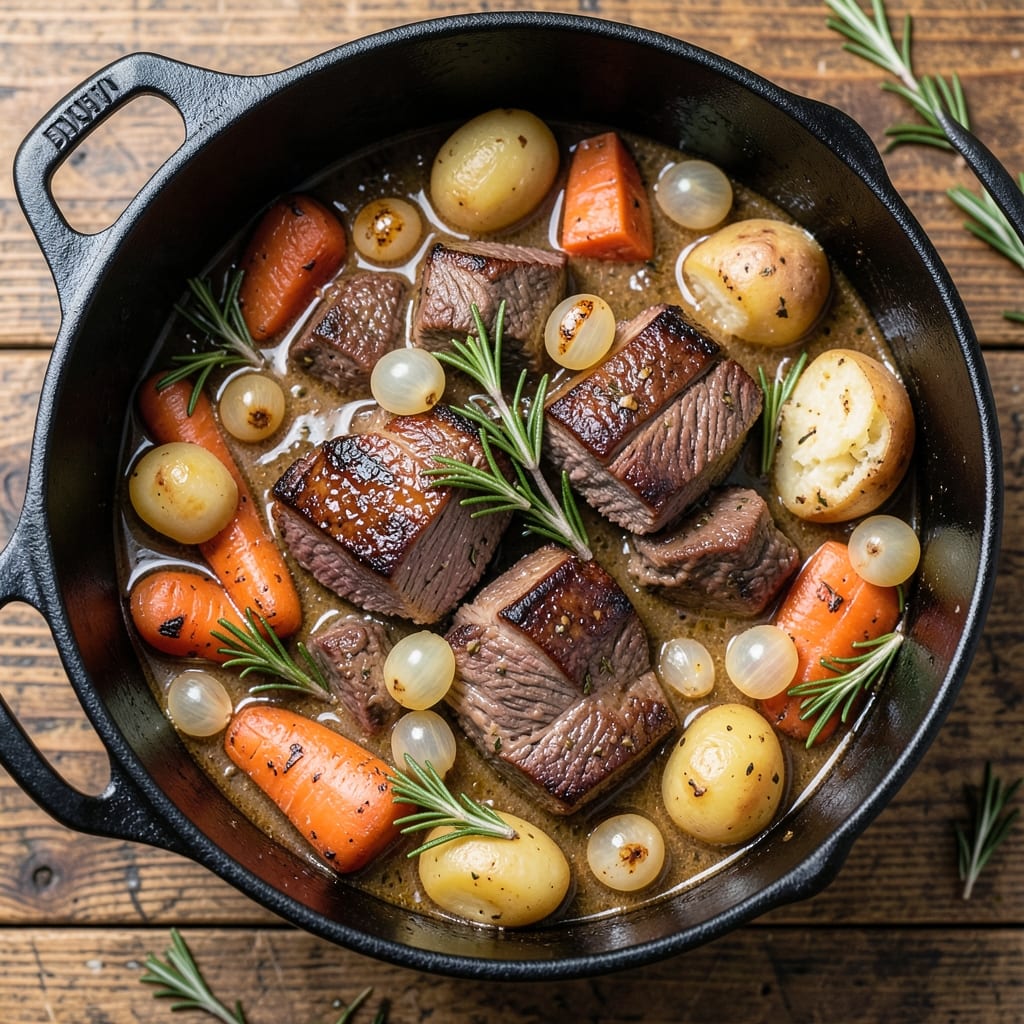
This Au Bon Pain beef stew recipe brings the warmth and depth of a Parisian bistro to your kitchen, where rich red wine and fragrant herbs transform tough cuts into melt-in-your-mouth perfection. The secret lies in slow-braising—allowing the beef to tenderize while absorbing layers of flavor from caramelized onions, garlic, and thyme. I’ve perfected this method over years of testing, ensuring every bite delivers that restaurant-quality satisfaction without the fuss.
The foundation starts with a deep red wine reduction, which forms the heart of the stew’s velvety sauce. Deglazing the pan after searing the beef captures all those precious browned bits, creating a flavor base that’s impossible to replicate with shortcuts. Herbs like rosemary and bay leaf infuse the broth with earthy notes, while carrots and potatoes add natural sweetness and heartiness. The result? A stew so rich and aromatic, it’ll have everyone asking for seconds.
What sets this recipe apart is its balance of tradition and approachability. You don’t need a fancy kitchen—just a heavy pot, patience, and a few hours to let the magic unfold. The beef becomes fork-tender, the vegetables caramelize into sweet perfection, and the sauce thickens into a luxurious, wine-infused blanket over every ingredient. Serve it with crusty bread to soak up every last drop, or pair it with mashed potatoes for a cozy, comforting meal that feels like a hug in a bowl.
This isn’t just stew—it’s a foolproof method for turning a simple pot of ingredients into something extraordinary. The technique is straightforward, but the results are anything but basic. Whether you’re feeding a crowd or treating yourself to a weeknight dinner, this recipe delivers the kind of depth and satisfaction that makes homemade cooking worth every minute. Let’s get started—your kitchen is about to smell like a Parisian café.
Ingredients for au bon pain beef stew
Sixteen ingredients transform tough beef into bistro-style melt-in-your-mouth perfection through slow-braising and wine-infused depth.
| Ingredient | Amount | Notes |
|---|---|---|
| Chuck Roast 🥩 | 3 lb | Well-marbled, cut into 1.5-inch cubes |
| Yellow Onions 🧅 | 2 whole | Peeled, sliced into even rounds |
| Carrots 🥕 | 1 ½ lb | Peeled, cut into 1-inch chunks |
| Russet Potatoes 🥔 | 2 lb | Peeled, cut into 1-inch cubes |
| Garlic Cloves 🧄 | 8 cloves | Peeled, smashed but not minced |
| Fresh Rosemary 🌿 | ¼ cup | Chopped, stems removed |
| Fresh Thyme 🌿 | 2 tbsp | Leaves only, finely chopped |
| Bay Leaves 🌿 | 2 whole | Dried, standard size |
| Dry Red Wine 🍷 | 2 cups | Bold variety like Cabernet Sauvignon |
| Beef Broth 💧 | 3 cups | Homemade or high-quality store-bought |
| Tomato Paste 🍅 | 2 tbsp | Smooth, not chunky |
| Olive Oil 🫒 | ½ cup | Extra-virgin for richness |
| Diamond Crystal Kosher Salt 🧂 | 1 ½ tbsp | For seasoning and deglazing |
| Freshly Ground Black Pepper 🌶️ | 1 tsp | Cracked, not pre-ground |
| All-Purpose Flour 🌾 | 2 tbsp | For thickening sauce if needed |
The chuck roast is non-negotiable here—its marbling and connective tissue create that signature fork-tender texture. Costco or Whole Foods carry excellent pre-cut chuck, but if buying whole, look for a roast with visible fat marbling. The red wine should be bold and dry—Cabernet Sauvignon or Merlot work perfectly. For the herbs, fresh rosemary and thyme elevate the dish beyond basic stew territory. I always grab the freshest available from the grocery store's produce section, but if you're short on time, dried thyme at one-third the amount will suffice. The carrots and potatoes should be uniform in size to ensure even cooking—no need for fancy cuts, just consistent chunks.
No red wine? Substitute beef broth with 1 tablespoon balsamic vinegar for depth, though the flavor will differ slightly. For the tomato paste, Trader Joe's squeeze tubes are ideal—they're convenient and last months in the pantry. If you're using dried herbs, toast them lightly in a dry pan for 30 seconds to enhance their flavor. The beef broth can be homemade or high-quality store-bought, but avoid anything with added preservatives. For the flour, King Arthur or Gold Medal brands work best for thickening. The bay leaves are essential for that subtle earthy note, but if you're out, a pinch of dried oregano can substitute in a pinch.
This stew tastes even better the next day as flavors meld. Store in an airtight container in the fridge for up to 5 days, or freeze portions for 3 months. For freezing, portion into individual containers so you can thaw just what you need. The wine-infused sauce thickens as it cools, so you may need to add a splash of broth when reheating. Serve with crusty bread to soak up every last drop of that luxurious sauce—it's worth the extra effort to make a double batch.
Why You'll Love This Recipe
- Foolproof Prep: I swear by this—just sear the chuck roast in one pot, dump in the onions and carrots, then let it simmer. No fancy techniques, no stress. The potatoes melt in like magic, and honestly? Even if you chop them unevenly, no one cares.
- Rich Caramelized Depth: That slow-cooked chuck roast turns insanely tender, while the onions caramelize into sweet, jammy pockets. The garlic cloves? They infuse the whole stew with a warm, aromatic punch that makes every bite feel like a hug.
- Weeknight to Holiday: This stew is my secret weapon for busy nights, but it also shines at gatherings. Serve it over crusty bread with a side salad for a casual dinner, or double the batch and freeze half for when you’re too tired to cook.
- Budget-Friendly Feast: A single chuck roast stretches to feed four (or five if you’re feeding teenagers). The potatoes and carrots bulk it up, and the flavor? It’s so satisfying you’ll forget you’re saving money—until you see the leftovers turning into next week’s lunch.
Step-by-step instructions for deep-red wine and herb beef stew
Master this classic technique for a rich, velvety stew with perfectly tender beef and aromatic herbs.
Sear the Chuck Roast for Deep Flavor
Heat a large Dutch oven over medium-high heat and add 0.5 cup olive oil. Working in batches, sear the 3 lb chuck roast cut into 1.5-inch cubes until deeply browned on all sides—about 4-5 minutes per batch. This step develops the Maillard reaction, creating complex flavors that form the stew's foundation.
As you sear, resist the urge to overcrowd the pan. I press down gently on the beef cubes during the first minute to prevent curling, ensuring even contact with the hot oil. Transfer the seared beef to a plate and set aside temporarily.
Build the Aromatic Base with Vegetables and Herbs
In the same Dutch oven, add 2 whole yellow onions sliced into even rounds and cook for 5-6 minutes until softened and lightly caramelized. Add 1.5 lb carrots cut into 1-inch chunks and 2 lb russet potatoes cut into 1-inch cubes, cooking for another 5 minutes until the vegetables begin to soften.
Stir in the 8 cloves garlic cloves (smashed but not minced), 0.25 cup chopped fresh rosemary, 2 tbsp chopped fresh thyme, 2 whole bay leaves, 1.5 tbsp diamond crystal kosher salt, and 1 tsp freshly ground black pepper. Cook for 1 minute until the garlic becomes fragrant and the herbs release their essential oils.
Deglaze and Develop the Wine Reduction
Pour in the 2 cups dry red wine and scrape up all the browned bits from the bottom of the pot with a wooden spoon. This deglazing step captures all the concentrated beef flavor. Let the wine simmer for 3-4 minutes until reduced by half, creating a rich, syrupy base.
Here's where the magic happens: the wine's acidity tenderizes the beef while its alcohol evaporates, leaving behind deep, complex flavors. I stir occasionally, watching for the liquid to thicken slightly and the aroma to intensify—this is your signal that the reduction is complete.
Simmer the Stew to Perfection
Return the seared beef to the Dutch oven along with 3 cups beef broth and 2 tbsp tomato paste. Stir gently to combine, then bring to a gentle boil. Once boiling, reduce heat to low and cover partially, leaving a small gap for steam to escape. Simmer for 2.5-3 hours until the beef is fork-tender and easily pulls apart.
Check the liquid level periodically and add hot water or broth if needed to maintain about 1 cup of liquid. The vegetables should be tender but still hold their shape. The stew is ready when the beef reaches an internal temperature of 205°F—this ensures maximum tenderness.
Finish and Thicken the Stew
Remove the stew from heat and let it rest for 10 minutes. This resting period allows the flavors to meld and the juices to redistribute throughout the beef. If the stew is too thin, stir in the 2 tbsp all-purpose flour and simmer for another 5 minutes until slightly thickened.
Taste and adjust seasoning with additional salt or pepper if needed. The final stew should have a velvety texture with a deep red hue from the wine reduction. Serve immediately with crusty bread to soak up every last drop of this comforting, herb-infused masterpiece.
Pro Tips For Making Au Bon Pain Beef Stew
- SEAR THE ROAST LONG: Don’t rush this—after browning the chuck roast, let it sit undisturbed for 3-4 minutes per side until the crust is deep brown, almost black in spots. I used to flip it too soon, and the meat stayed bland. That crust? It’s what carries the flavor through hours of simmering.
- CUT POTATOES UNIFORM: Dice those russet potatoes into 1-inch chunks, no smaller. Big pieces stay intact during simmering, while tiny ones turn to mush. (Yes, even if it looks messy at first—your stew will thank you later.)
- DON’T SKIP THE DEGLAZE: After removing the roast, pour in that browned fond with a splash of beef broth and scrape every bit off the pot. It’s got more flavor than you realize, and skipping it means losing layers of depth in your stew.
- ADD GARLIC LATE: Toss the minced garlic in during the last 10 minutes of cooking, not at the start. Raw garlic burns fast and tastes bitter—wait until the stew is simmering gently, and you’ll get sweet, mellow flavor instead of a medicinal punch.
Dietary considerations for this dish
Gluten-Free Adaptations
This recipe is naturally gluten-free, but always double-check labels on your beef broth and tomato paste—some brands contain hidden gluten. I use Annie's Organic beef broth and Trader Joe's tomato paste, both certified gluten-free. For thickening, skip the flour and instead mix 1 tbsp cornstarch with 2 tbsp cold water, then stir into the stew at the end. Simmer for 2-3 minutes until thickened. 🌾
Dairy-Free Considerations
The original recipe doesn’t include dairy, but if you’re avoiding it entirely, ensure your beef broth is dairy-free (some contain whey). The wine and herb infusion already create a rich, velvety sauce without needing cream or butter. For extra richness, stir in 2 tbsp coconut milk at the end—it adds a subtle sweetness that complements the red wine. 🥥
Low-Carb Options
Swap the russet potatoes for cauliflower cut into similar-sized chunks—they’ll absorb the flavors beautifully. Use 1.5 lb cauliflower instead and reduce the simmering time by 20-30 minutes since it cooks faster. For a heartier option, add 1 cup sliced mushrooms with the onions—they’ll soak up the wine reduction like a dream. 🥦
Allergen-Friendly Swaps
For nut allergies, avoid any garnishes with toasted nuts (like pecans). If you’re sensitive to sulfites, opt for a sulfite-free red wine like Freixenet Cordon Negro. For FODMAP-sensitive diets, reduce the onions to ½ cup and use garlic-infused oil instead of fresh garlic. The stew remains flavorful while being gentler on digestion. 🌿
Protein Alternatives
For a vegetarian version, replace the beef with 2 lb mushrooms (cremini or portobello) and 1 lb extra-firm tofu pressed and cubed. Sear the mushrooms first, then proceed with the same technique. The wine reduction works beautifully with umami-packed mushrooms. For a seafood twist, use 1.5 lb firm white fish (like cod) instead of beef—simmer for only 15-20 minutes to avoid overcooking. 🐟
Nutrition facts
Frequently asked questions
Can I use a different cut of beef for this stew?
While chuck roast is ideal for its marbling and tenderness, you can substitute with brisket or stew meat cut into similar-sized cubes. Avoid lean cuts like sirloin—they won't become tender enough during the 2.5-3 hour simmer. If using brisket, increase simmering time by 30-45 minutes to ensure perfect doneness.
How do I make this stew ahead of time?
This stew tastes even better the next day as flavors deepen! After simmering, let it cool completely, then store in an airtight container in the fridge for up to 5 days. For freezing, portion into individual containers and freeze for 3 months. Thaw overnight in the fridge—never at room temperature—and reheat gently on the stove with a splash of broth if needed. The sauce will thicken as it cools, so adjust consistency when reheating.
What if my stew is too thin or too thick?
For a thinner stew, add ½ cup hot beef broth and simmer for 5-10 minutes. If it's too thick, stir in 2 tbsp flour (or 1 tbsp cornstarch for gluten-free) mixed with 2 tbsp cold water, then simmer for another 2-3 minutes until thickened. The perfect consistency should coat the back of a spoon lightly.
Can I substitute red wine with something else?
Yes! Use 2 cups beef broth plus 1 tbsp balsamic vinegar for depth, or 2 cups apple cider for a sweeter profile. For a non-alcoholic version, use 2 cups grape juice (like Concord) and add 1 tsp red wine vinegar. The wine's acidity helps tenderize the beef, so these substitutes will work but may alter the flavor slightly.
Why does my beef turn out tough instead of tender?
Tough beef usually means it wasn't cooked long enough or the heat was too high. Ensure you're simmering (not boiling) at low heat for the full 2.5-3 hours, and check the internal temperature—it should reach 205°F. Overcrowding the pot can also trap steam, preventing even cooking. For best results, use a Dutch oven and keep the lid slightly ajar.