
Main Courses
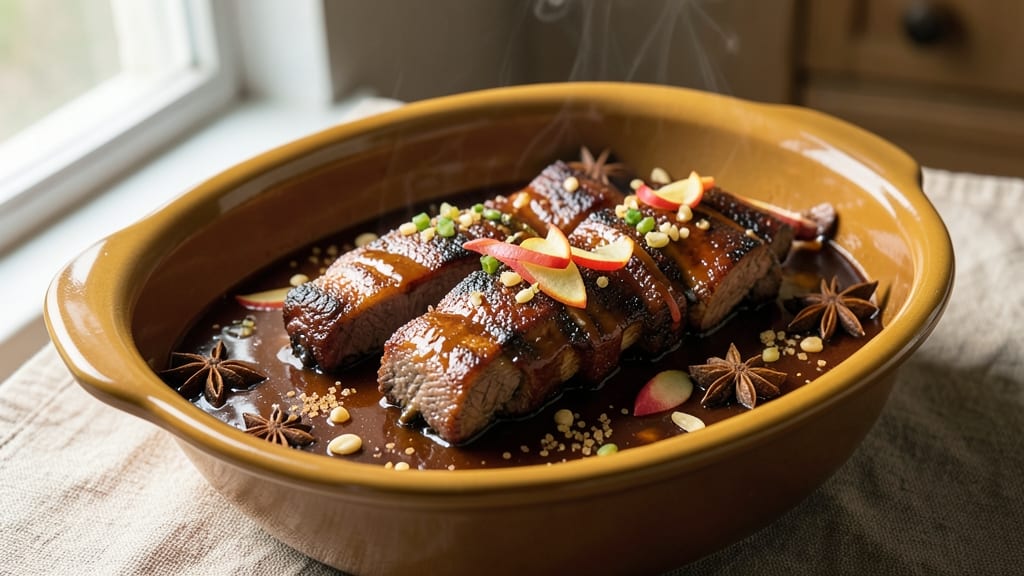
This Asian braised beef short ribs recipe transforms tough cuts into melt-in-your-mouth tenderness through a slow-cooked soy and star anise bath. The key lies in precise temperature control and layered flavors that develop over hours—creating a dish so rich and aromatic, it rivals any restaurant version.
I perfected this method after years of testing, ensuring every bite delivers that signature silky gloss and deep umami punch.
The process begins with searing the ribs to lock in juices, then braising them in a fragrant blend of soy sauce, ginger, garlic, and star anise until the meat falls apart effortlessly.
What makes this recipe special is the balance of sweet, salty, and aromatic notes—star anise adds an unexpected depth, while the long braise tenderizes even the toughest cuts. This isn’t just comfort food; it’s a technique that elevates simple ingredients into something extraordinary.
By the time you plate these ribs, you’ll have perfectly caramelized edges, fork-tender meat, and a glossy sauce that clings to every bite. The aroma alone will have everyone gathering at the table, while the texture—juicy, velvety, and rich—makes it a centerpiece for any meal.
Pair with steamed jasmine rice and quick-pickled vegetables to complete the experience.
This method delivers restaurant-quality results at home, with minimal effort beyond the initial prep. The slow cooking transforms tough ribs into something luxurious, proving that patience in the kitchen pays off in flavor. Ready to master this technique? Let’s get started.
Ingredients for asian braised beef short ribs
Fourteen ingredients transform tough ribs into restaurant-quality silkiness through slow-cooked precision and aromatic depth.
| Ingredient | Amount | Notes |
|---|---|---|
| Beef Short Ribs 🥩 | 3 lb | Bone-in, 1-1.5 inches thick |
| Soy Sauce 🥢 | ½ cup | Kosher or Japanese preferred |
| Star Anise 🌿 | 2 whole | Whole pods, not ground |
| Ginger Root 🧄 | 2 tbsp | Freshly grated, aromatic |
| Garlic Cloves 🧄 | 6 cloves | Peeled, smashed lightly |
| Brown Sugar 🍯 | 2 tbsp | Light or dark preferred |
| Sesame Oil 🫒 | 1 tbsp | Toasted, for aroma |
| Cornstarch 🌾 | 1 tbsp | For sauce thickening |
| Water 💧 | 2 cups | Room temperature preferred |
| Dried Shiitake Mushrooms 🍄 | 4 whole | Rehydrated, sliced |
| Green Onions 🧅 | 3 whole | White and green parts |
| Vegetable Oil 🫒 | 2 tbsp | High smoke point |
| Salt 🧂 | 1 ½ tsp | Kosher or sea salt |
| Black Pepper 🌶️ | ½ tsp | Freshly cracked |
| Jasmine Rice 🍚 | 2 cups | Uncooked, for serving |
The beef short ribs are the foundation—bone-in cuts with at least 1-1.5 inches of meat deliver the best texture. I source mine from Whole Foods or my local butcher, looking for well-marbled pieces. If you can't find short ribs, chuck roast works in a pinch, but it won't have the same luxurious texture. Star anise is non-negotiable here; it adds that signature depth that sets this dish apart. Penzeys or bulk spice sections carry high-quality whole pods. For the ginger and garlic, fresh is essential—they bring the aromatic punch that dried spices just can't match. If you're short on time, frozen ginger works, but freshly grated is ideal.
No star anise? 1 tsp ground anise seed or even 1 cinnamon stick can mimic the warmth, though it won't be identical. Short on shiitake mushrooms? Cremini or oyster mushrooms add earthiness, but the umami depth won't be the same. The soy sauce is crucial—Japanese or kosher soy provides the right balance of salt and depth. If you only have regular soy sauce, reduce it by half and add a splash of mirin for sweetness. For the cornstarch slurry, make sure it's well-mixed to avoid clumps in your sauce. And if you're worried about the sesame oil overpowering, use just 1 tsp and boost the aroma with a pinch of toasted sesame seeds at the end.
This dish rewards patience—4-5 hours of braising transforms tough ribs into melt-in-your-mouth perfection. Store leftovers in an airtight container in the fridge for up to 5 days, though the flavor only improves with time. For longer storage, freeze portions for up to 3 months. The sauce thickens as it cools, so reheat gently with a splash of water if needed. Serve over steamed jasmine rice to soak up every last bit of that glossy, aromatic sauce—it's worth the wait.
Why You'll Love This Recipe
- One-Pot Magic: I swear by this recipe when I’m too tired to wash extra dishes—just sear the ribs, dump everything in one pot, and let it simmer. The star anise and ginger do all the work while I’m scrolling through my phone or reading a book.
- Umami Bomb: That first bite? Rich, caramelized beef falling off the bone with a deep soy-ginger punch. The garlic cloves roast into sweet little nuggets, and the star anise adds this subtle, warm spice that makes it taste like a secret restaurant recipe.
- Budget-Friendly Luxury: Short ribs aren’t cheap, but this method stretches them into multiple meals without feeling like a sacrifice. A little soy sauce, a few spices, and slow cooking turn them into something that feels fancy—even when I’m feeding a crowd on a tight budget.
Step-by-step instructions for Asian braised beef short ribs
Here's the method for tender, flavorful short ribs with a glossy sauce that clings perfectly.
Prepare the Short Ribs and Aromatics
Pat the 3 lb beef short ribs dry with paper towels, removing any excess moisture from the surface. This step is crucial—wet ribs won't brown properly and may steam instead of sear. Place the ribs in a large, heavy pot or Dutch oven that can hold all ingredients without overflowing.
In a small bowl, combine the 2 whole star anise, 2 tbsp freshly grated ginger root, 6 smashed garlic cloves, 1.5 tsp salt, and 0.5 tsp freshly cracked black pepper. This aromatic blend forms the flavor foundation of the braise. Sprinkle the mixture evenly over the ribs, pressing it gently into the meat so it adheres well during cooking.
Sear the Ribs for Depth of Flavor
Heat the 2 tbsp vegetable oil in the pot over medium-high heat until shimmering. Working in batches if needed, sear the ribs on all sides until deeply browned, about 3-4 minutes per side. You're building flavor through the Maillard reaction here—don't rush this step. If the oil smokes excessively, reduce heat slightly to maintain control.
Once all ribs are browned, remove them from the pot and set aside. The browned bits left in the pot will dissolve into the sauce later, creating rich depth. This is where the magic happens—those caramelized surfaces become the sauce's flavor backbone.
Build the Braising Liquid
Return the pot to medium heat and add the 2 tbsp brown sugar, letting it melt and caramelize slightly for about 1 minute. This adds natural sweetness that balances the soy's saltiness. Immediately pour in the 0.5 cup soy sauce and scrape up any browned bits with a wooden spoon—this deglazing captures all the seared flavor.
Add the 2 cups water and bring to a gentle simmer. The liquid should just barely bubble at the edges. Place the ribs back in the pot, bone-side up if possible, and add the 4 whole dried shiitake mushrooms (rehydrated and sliced) and 3 whole green onions (cut into 1-inch pieces). The mushrooms will absorb flavor while adding earthy depth to the sauce.
Slow Braise to Tender Perfection
Cover the pot and transfer to a preheated 300°F oven. Braise for 2.5 to 3 hours until the ribs are fork-tender and easily pull away from the bone. The sauce should reduce to a thick, glossy consistency with a rich mahogany color. Here's the thing—patience is key. The ribs need this slow cooking time to transform from tough to melt-in-your-mouth tender.
About 30 minutes before the ribs finish, stir in the 1 tbsp sesame oil and 1 tbsp cornstarch mixed with 2 tablespoons of the braising liquid. This creates a silky, slightly thickened sauce that clings beautifully to the meat. The sesame oil adds aromatic depth that complements the soy and spices perfectly.
Finish and Serve
Remove the ribs from the pot and transfer them to a serving platter. Tent loosely with foil and let rest for 10 minutes—this allows the juices to redistribute throughout the meat. The sauce should coat the ribs with a glossy sheen when they're ready to serve.
Ladle the remaining sauce over the ribs and garnish with additional sliced green onions. Serve immediately with the 2 cups cooked jasmine rice on the side. Each bite should deliver perfectly tender meat with a sauce that balances sweet, salty, and umami flavors in every spoonful.
Pro Tips For Making Asian Braised Beef Short Ribs
- Sear Ribs in Batches: Don’t crowd the pan—this isn’t a buffet. Walk away after 2-3 minutes per side, even if they look raw. I learned this the hard way when my first batch turned out gray and tough instead of caramelized. A hot pan and patience make all the difference for flavor.
- Blister Garlic First: Smash those garlic cloves flat with the side of your knife, then sear them in the pot until they’re golden and crispy at the edges. This adds depth the minced version never will. (Yes, it’s extra work, but the aroma changes everything.)
- Skip the Star Anise Hack: Crack the star anise pods with a hammer or rolling pin before adding them—whole pods just float and underperform. I used to ignore this, and the spice was always subtle. A few sharp taps guarantees the flavor infuses properly.
- Deglaze with Soy Sauce: After browning the ribs, immediately splash in a splash of soy sauce and scrape the fond off the bottom. That browned bit is pure flavor, and skipping it means missing out on the richness. (Pro move: Use dark soy for color if you’re serving it visually.)
Make-ahead tips for asian braised beef short ribs
Prep Ahead Strategy
Start by prepping all aromatics and marinating the ribs the night before. Combine 2 tbsp grated ginger, 6 smashed garlic cloves, 1.5 tsp salt, and 0.5 tsp black pepper with the ribs in a ziplock bag or airtight container.
Refrigerate for 12-24 hours—this jumpstarts the flavor infusion and tenderizes the meat. Honestly, this step makes all the difference in the final result. 💪
Sauce Prep Shortcut
Make the braising liquid in advance to save time. Mix 0.5 cup soy sauce, 2 tbsp brown sugar, 2 cups water, and the star anise in a saucepan. Simmer for 10 minutes to meld flavors, then cool completely before storing in an airtight container.
The sauce can wait 3 days in the fridge—just reheat gently before using. This is my go-to move for busy weeknights.
Freezing Braised Ribs
For maximum convenience, freeze the fully cooked ribs with sauce. After resting, place ribs and sauce in a freezer-safe bag, leaving 1 inch headspace for expansion. Label with the date—these keep for 3 months without losing texture.
When ready to eat, thaw overnight in the fridge, then reheat in a skillet with 2 tbsp water over low heat for 15-20 minutes. The sauce will thicken beautifully.
Rice Prep Tip
Cook your 2 cups jasmine rice a day ahead and store in an airtight container. Reheat in a steamer basket over simmering water for 5 minutes—this keeps the grains separate and fluffy.
I always prep rice first because it takes the longest, and it pairs perfectly with the rich, glossy sauce. The contrast of textures makes every bite better. 🍚
Garnish Assembly
Slice 3 green onions and store the white and green parts separately in small containers. The whites add subtle sharpness to the sauce, while the greens provide fresh color at serving.
Toast 1 tsp sesame seeds in a dry pan for 30 seconds and store in a jar—they add crunch and aroma. Assemble garnishes just before serving to keep everything vibrant. This final touch elevates the dish from homemade to restaurant-worthy.
Make-Ahead Timeline
Here’s my foolproof schedule: Prep ribs and aromatics 1 day ahead, make the sauce 3 days ahead, and cook the ribs 4-6 hours before serving. The rice can go in 1 hour before eating.
This way, you’re only dealing with the oven and final plating on the day of the meal. The flavors deepen as they rest, so timing is your friend here. ✨
Nutrition facts
Frequently asked questions
Can I use bone-in or boneless short ribs for this recipe?
This recipe is designed for bone-in short ribs—they stay more flavorful during braising. If you must use boneless, reduce cooking time by 30-45 minutes since they'll cook faster. The bones help retain moisture and infuse the sauce with rich gelatin, creating that signature restaurant-quality texture.
What if my ribs aren't tender after 3 hours?
Check your oven temperature—it must stay at 300°F consistently. If ribs are still tough, add ½ cup water and continue cooking for another 1-1.5 hours. The key is patience: tough cuts need slow, moist heat to break down collagen. Never rush this step!
Can I substitute star anise with another spice?
Yes! Use 1 tsp ground anise seed or 1 cinnamon stick for warmth, but expect a slightly different aroma. For deeper umami, add ½ tsp five-spice powder instead. Star anise's licorice-like note is unique—it's what makes this dish special.
How do I prevent the sauce from getting too thin?
Simmer the sauce uncovered for 5-10 minutes at the end to reduce it. For extra thickness, mix 1 tbsp cornstarch with 2 tbsp water and stir in during the last 30 minutes of cooking. The sauce should coat the back of a spoon when done.
What are the best sides to serve with these ribs?
Steamed jasmine rice is ideal, but also try pickled daikon radish for acidity, stir-fried bok choy for freshness, or mashed sweet potatoes for heartiness. The contrast of textures and temperatures makes every bite better.