
Soups & Stews
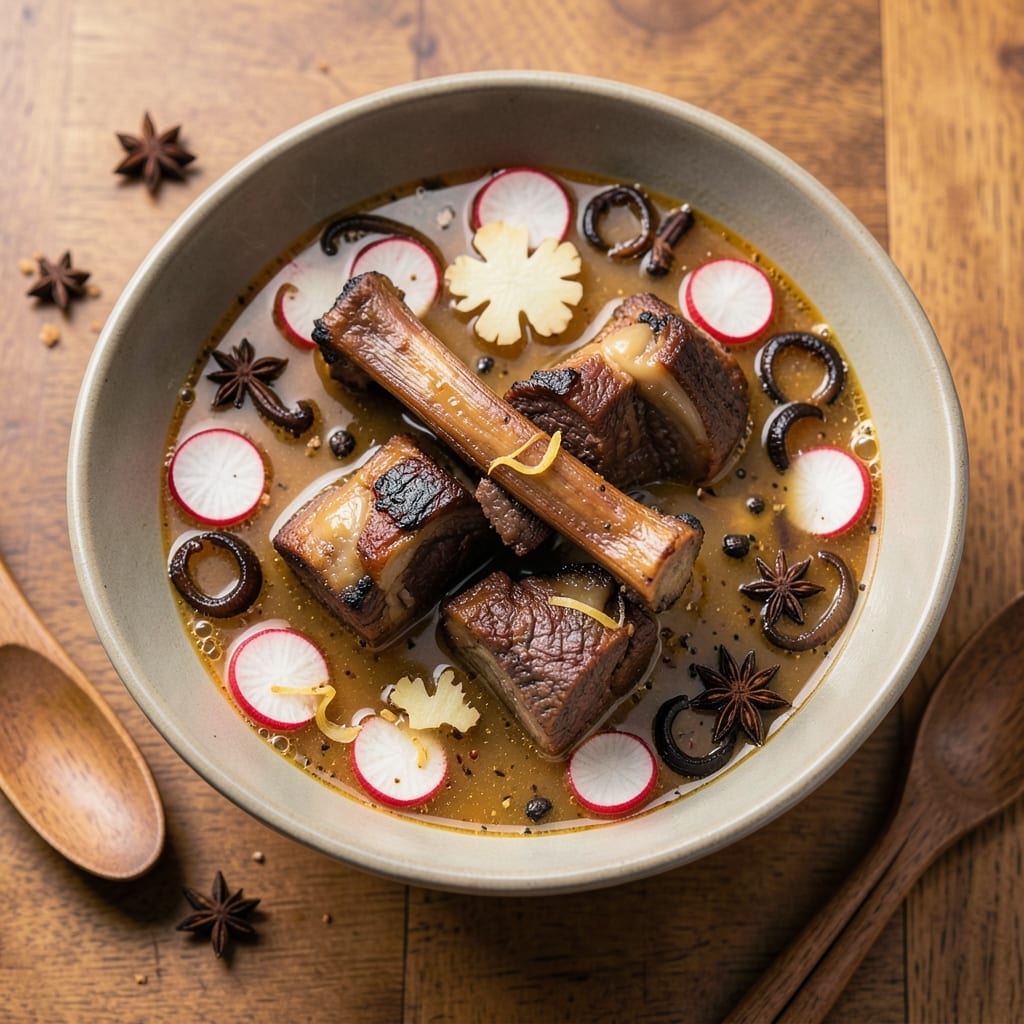
This Asian beef bone soup recipe transforms simple ingredients into a deeply flavorful, collagen-rich broth that warms both body and soul. The secret lies in slow simmering beef bones with star anise, ginger, and aromatic spices—creating a broth so rich it practically melts into every spoonful. What sets this apart is the balance of traditional techniques (like extracting marrow for depth) with modern shortcuts for busy cooks.
Unlike lighter soups, this recipe builds layers of umami through collagen extraction, turning tough bones into tender, melt-in-your-mouth beef while infusing the broth with natural richness. The star anise and cinnamon add warmth, while soy sauce and fish sauce deliver that signature Asian depth. What you’ll end up with is a soup that’s hearty enough for a cold evening but light enough for any meal.
Perfect for feeding a crowd or meal prepping, this soup pairs beautifully with steamed rice, fresh herbs, or soft noodles. The broth alone is a treasure—use it for dumplings, stir-fries, or simply sip it straight from a bowl. Whether you’re following tradition or adapting for convenience, this recipe delivers restaurant-quality results at home.
The beauty of this dish is its versatility: simmer it for hours on the stovetop for maximum flavor, or use a pressure cooker to cut time without sacrificing depth. Garnish with scallions, cilantro, or a drizzle of chili oil for extra brightness. Let’s get started—your taste buds (and bones) will thank you.
Ingredients for asian beef bone soup
Six pounds of collagen-rich bones and aromatic spices create a deeply flavorful broth that balances tradition with modern convenience.
| Ingredient | Amount | Notes |
|---|---|---|
| Beef Bones (Marrow and Knuckle) 🦴 | 4 lb | Raw, uncooked, organic preferred |
| Yellow Onions 🧅 | 2 whole | Peeled, halved lengthwise, charred |
| Fresh Ginger Root 🌿 | 3 oz | Peeled, sliced into 1/4-inch coins |
| Star Anise Pods 🌟 | 4 whole | Whole, lightly crushed |
| Cinnamon Sticks 🌳 | 2 whole | 2-inch lengths, lightly toasted |
| Cloves 🌿 | 6 whole | Whole, lightly crushed |
| Garlic Cloves 🧄 | 8 cloves | Peeled, smashed but not minced |
| Light Soy Sauce 🍶 | ½ cup | Kikkoman or similar brand |
| Fish Sauce 🐟 | 2 tbsp | Red Boat brand preferred |
| Dried Shiitake Mushrooms 🍄 | 8 whole | Stems removed, torn into pieces |
| Dried Daikon Radish 🥕 | ½ lb | Sliced into 1/2-inch rounds |
| Sesame Oil 🫒 | 1 tbsp | Toasted, for finishing |
| Fresh Cilantro 🌿 | ¼ cup | Chopped, for garnish |
| Green Onions 🧅 | ¼ cup | Thinly sliced, for garnish |
| Salt 🧂 | 1 ½ tsp | Diamond Crystal kosher salt |
The bones are the foundation—organic, marrow-filled knuckle and marrow bones deliver the richest collagen extraction. Local butchers or specialty grocers like Whole Foods carry these cuts, often labeled as 'beef soup bones.' Avoid bones with meat still attached, as they release blood into the broth. For maximum flavor, char the onions and ginger over a gas flame before adding them to the pot. Star anise and cinnamon should be whole and lightly crushed—this prevents bitterness and allows for easy removal later. If you can't find whole spices, Penzeys sells them in bulk online.
No fish sauce? Worcestershire sauce (vegan version) at half the amount works in a pinch, though it lacks the depth. Substitute dried shiitakes with white button mushrooms if needed, but they won't add the same umami. For daikon, firm white potatoes can stand in, though the texture differs slightly. The soy sauce is non-negotiable—light soy has less salt than dark, balancing the broth's richness. If you're short on time, pre-soaked dried mushrooms (like those in Asian markets) save 30 minutes of simmering. The sesame oil should be toasted—heat it in a dry pan for 30 seconds until fragrant before adding to the soup.
Broth develops best when simmered 8-12 hours, but pressure cookers cut that to 2 hours. Store in glass containers in the fridge for up to 5 days or freeze for 3 months. The bones can be pickled in vinegar after use for future broths. Garnish with cilantro and green onions just before serving—they wilt quickly if added too early. For meal prep, portion the broth into ice cube trays, then transfer to freezer bags for easy use in stir-fries or noodle dishes.
Why You'll Love This Recipe
- One-Pot Simplicity: I swear by this recipe because it’s literally one pot—no chopping chaos, no last-minute ingredient scrambles. Toss in the knuckle bones (already charred for depth), a few onion slices, and a thumb-sized ginger slab, then let the spices—star anise and cinnamon—do their magic while you sip tea. The bones render their own richness; no extra stock needed.
- Deep Umami Magic: Between us, that marrow-packed knuckle bone is where the soul of this soup lives. When it cracks open after hours of simmering, the gelatinous, buttery marrow melts into the broth, turning it into something dangerously addictive. The star anise and ginger? They’re the secret handshake—warm, earthy, and just spicy enough to make you reach for seconds.
- Leftovers That Beg: This soup only gets better the next day. Honestly, I make it on Sundays just to have flavorful lunches all week—no sad, watery reheats here. The bones keep the broth rich, and the onions caramelize further, adding sweetness that’s chef’s kiss. Freeze extras in ice cube trays for quick broth boosts later.
- Budget-Bone Goldmine: Beef knuckles and marrow bones are the unsung heroes of affordable cooking. A single batch feeds four heartily, and the bones themselves are often cheaper than pre-made broth. Plus, the spices—star anise and cinnamon—stretch across multiple recipes. It’s my go-to when I need a nourishing, filling meal without breaking the bank.
Step-by-step instructions for Asian beef bone soup
Master this aromatic broth technique for rich, collagen-infused soup with layered spice complexity.
Char the Onions and Prepare Aromatics
Heat a dry skillet over medium-high heat and char the 2 whole yellow onions cut side down until deeply blackened in spots, about 8-10 minutes. This caramelization builds deep umami flavor. While they char, peel and slice the 3 oz fresh ginger root into ¼-inch coins.
Lightly crush the 4 whole star anise pods, 2 whole cinnamon sticks, and 6 whole cloves using a rolling pin or mortar and pestle. Peel and smash the 8 cloves garlic but don't mince them—this prevents bitter flavors. Set all aromatics aside for the next step.
Brown the Beef Bones and Build the Base
In a large stockpot, sear the 4 lb beef bones (marrow and knuckle) over medium-high heat for 8-10 minutes until deeply browned on all sides. This Maillard reaction creates the soup's foundational depth. Remove bones and set aside.
Add 2 cups water to the pot and scrape up all browned bits from the bottom. Return bones to the pot, then add the charred onions, ginger, crushed spices, and smashed garlic. Bring to a boil, then reduce heat to medium-low and simmer for 30 minutes to release initial flavors.
Simmer with Spices and Vegetables
Add the 8 whole dried shiitake mushrooms (stems removed, torn) and ½ lb dried daikon radish (sliced into ½-inch rounds). Pour in the ½ cup light soy sauce and 2 tbsp fish sauce, then add 8 cups water to cover everything by 2 inches. Sprinkle with 1.5 tsp salt.
Return heat to medium-low and simmer uncovered for 4-5 hours, skimming any foam that rises to the surface. The soup should develop a rich amber color and intense aroma. Taste occasionally—adjust seasoning with additional soy sauce or salt if needed.
Finish and Garnish
Strain the broth through a fine-mesh sieve into a clean pot, pressing gently on solids to extract maximum flavor. Discard the solids or save for other uses. Return broth to the pot and simmer for 10 minutes to reduce slightly if needed.
Just before serving, stir in 1 tbsp toasted sesame oil for nutty depth. Ladle soup into bowls and garnish with ¼ cup chopped fresh cilantro and ¼ cup sliced green onions. Serve immediately with steamed rice for the full experience.
Pro Tips For Making Asian Beef Bone Soup
- BLISTER ONIONS FIRST: Char those yellow onions until blackened in spots before adding them to the pot—this deepens their sweetness and cuts through the richness of the marrow. I used to skip this, and the broth just tasted flat until I saw how much difference a quick torch or high-heat pan made. ---
- CRACK THE BONES: Give your knuckle bones a sharp tap with a cleaver or heavy pan before simmering—it exposes more marrow and speeds up the gelatin release. I learned this the hard way after staring at a pot of broth that took three hours to get rich instead of two. ---
- SKIP THE BOIL: Once the broth starts to simmer, drop the heat to a gentle bubble—no rolling boils, no splattering. I’ve seen people crank the heat to "get it going," but that just clouds the broth and wastes flavor. Low and slow is the only way to extract that golden collagen. ---
- TOAST THE SPICES: Dry-toast your star anise and cinnamon sticks in a separate pan until fragrant (about 30 seconds) before adding them to the broth—this prevents bitterness and lets their aromas shine. Sounds weird, but it works: my broth now tastes like a spice market, not a medicine cabinet. ---
Common mistakes when making this recipe
Skimming Neglect
Foam forms during the initial simmer and can make your broth cloudy if left unchecked. I see this mistake often—people think skimming is optional, but those bubbles contain impurities that dull the broth's clarity. Use a fine-mesh skimmer or large spoon to remove foam every 15-20 minutes during the first 2 hours of simmering. This keeps your broth clean and allows the collagen to emulsify properly. 🌡️
Overcrowding the Pot
Stuffing too many bones or vegetables into your pot might seem like a shortcut, but it actually traps steam and prevents proper heat circulation. I learned this the hard way when my first batch turned out watery. Use a pot that gives you 2 inches of headspace above the ingredients—this ensures even simmering and maximum flavor extraction. If your pot is too small, cook in batches or use a larger vessel. ⚡
Rushing the Simmer
Many recipes suggest simmering for 4-5 hours, but I’ve seen people cut this to 2 hours or less, thinking it’s a time-saver. The truth? Collagen needs time to break down into gelatin, which gives that signature silky mouthfeel. For best results, aim for a minimum 6-hour simmer on the stovetop. If you're short on time, a pressure cooker (2 hours) or slow cooker (8 hours) works, but don’t skip the process entirely. 💪
Ignoring the Bones
Some cooks remove the bones too early, missing out on the marrow and gelatin-rich collagen. Leave the bones in until the broth reaches 165°F internal temperature—this ensures maximum flavor extraction. Once done, let them cool slightly, then crack open the marrow bones with a cleaver and scoop out the marrow for extra richness. Store the bones in the freezer for future broths or pickle them in vinegar for a tangy condiment. 🦴
Skipping the Char
Charred onions and ginger add a smoky depth that raw aromatics can’t match. I’ve tasted broths where these steps were skipped, and the difference is night and day. Char the onions over an open flame or in a dry skillet until blackened in spots—this caramelization builds umami that elevates the entire soup. If you’re short on time, a high-heat broiler works too, but keep an eye on them to avoid burning. 🔥
Over-Salting Early
Adding all the salt at once can overpower the broth’s delicate balance of flavors. Instead, start with just ½ tsp salt and taste as you go. The fish sauce and soy sauce already contribute significant saltiness, so you’ll likely only need to add the remaining 1 tsp toward the end. Adjust gradually—it’s easier to add more salt than to fix an oversalted broth. ✨
Nutrition facts
Frequently asked questions
Can I use chicken or pork bones instead of beef?
While beef bones provide the richest collagen and marrow, you can substitute with chicken bones for a lighter broth or pork trotter bones for extra gelatin. Chicken works well but lacks the deep umami of beef—add an extra 1 tbsp fish sauce to compensate. Pork bones require 12+ hours of simmering to fully break down their connective tissue.
How do I make this soup in a slow cooker?
Brown the bones and char the aromatics as directed, then transfer everything to your slow cooker. Add 10 cups water and cook on low for 8-10 hours or high for 5-6 hours. The longer cook time actually enhances flavor—just monitor liquid levels and add water if needed. The broth will be even more tender and infused.
What can I do with leftover broth?
This broth is incredibly versatile! Use it as a base for ramen, pho, or dumpling soups. Freeze in ice cube trays for easy portioning in future stir-fries or rice dishes. The rich umami works perfectly in marinades for grilled meats or as a braising liquid for tough cuts. Store in glass containers for up to 5 days refrigerated.
Why does my broth look cloudy?
Cloudiness usually means you didn't skim the foam during the first 2 hours of simmering. Those bubbles contain impurities that prevent clarity. For a cleaner broth, strain through a cheesecloth-lined sieve after simmering. If you prefer a rustic look, leave it—cloudiness often indicates natural collagen development.
Can I make this soup without fish sauce?
Yes, but the flavor profile will shift. Replace the 2 tbsp fish sauce with 1 tbsp soy sauce + 1 tbsp Worcestershire sauce (vegan if needed). For extra depth, add ½ tsp MSG or a splash of oyster sauce. The broth will still be delicious but less complex—fish sauce's umami is hard to replicate perfectly.