
Soups & Stews
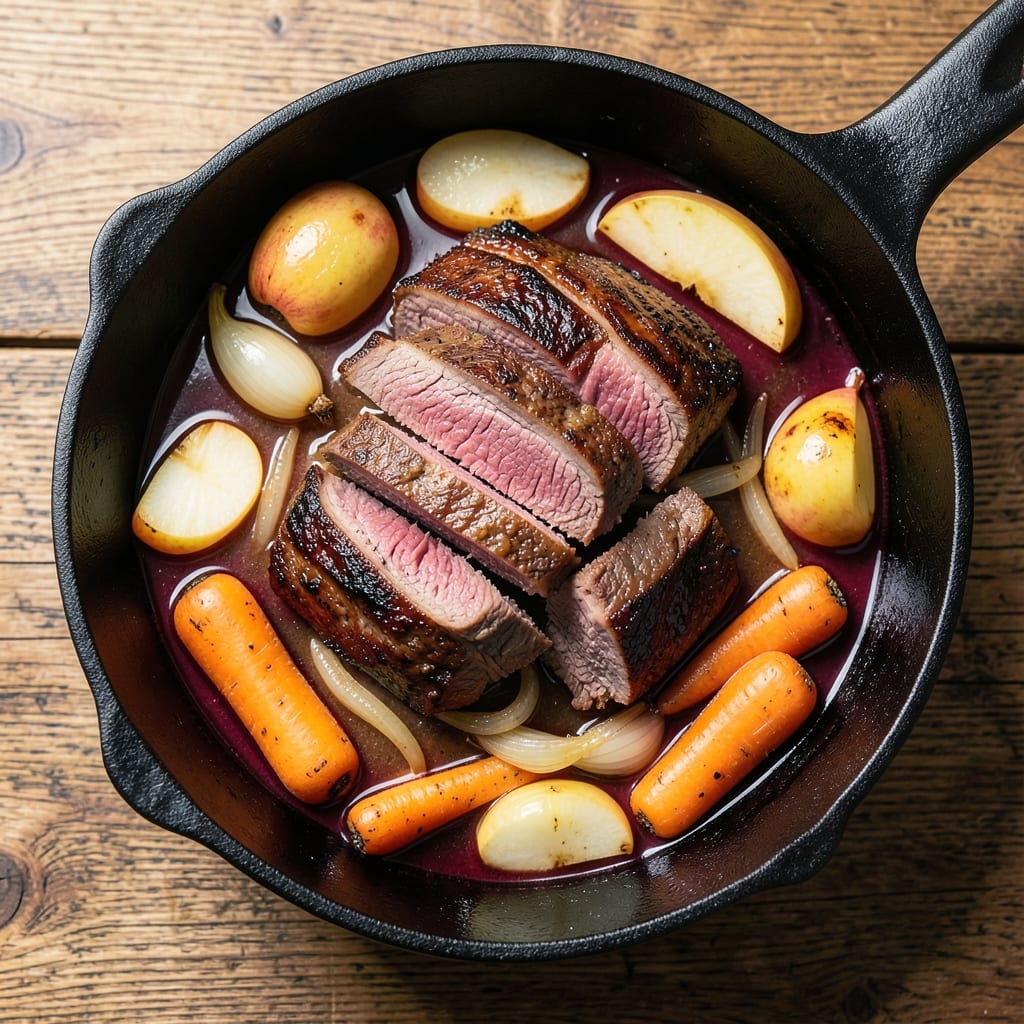
This apple beef stew recipe transforms humble ingredients into a rich, aromatic masterpiece where tender beef and sweet apples create a perfect balance of savory and sweet. The slow-simmering process develops deep flavors, while caramelized apples add natural sweetness that complements the hearty beef. I've perfected this technique over years of testing, ensuring every bite delivers that comforting, restaurant-quality experience at home.
The key to success lies in proper beef preparation—searing the meat until deeply browned creates a flavorful crust that dissolves into the stew during cooking. Meanwhile, the right apple variety (like Honeycrisp or Braeburn) makes all the difference, breaking down just enough to release natural sugars while maintaining texture. Aromatics like onions, garlic, and fresh herbs form the flavor foundation, while red wine and beef broth create a rich, velvety base.
What you'll end up with is a deeply satisfying stew featuring fork-tender beef, tender apple chunks, and a sauce thickened just enough to coat every ingredient. The aroma alone will have everyone gathering around the table, and the flavors—sweet, savory, and subtly spiced—will make this a new family favorite. This recipe scales beautifully, making it perfect for both intimate dinners and holiday gatherings.
Serve with crusty bread or buttery mashed potatoes to soak up every last drop of that flavorful sauce. The wine pairing suggestions in the full recipe will elevate the experience even further, while dietary adjustments ensure everyone can enjoy this comforting dish. Let's get cooking!
Ingredients for apple beef stew
Transform humble pantry staples into a symphony of slow-simmered apple beef perfection.
| Ingredient | Amount | Notes |
|---|---|---|
| Chuck Roast 🥩 | 2 lb | Trimmed of excess fat |
| Honeycrisp Apples 🍎 | 4 medium | Peeled and cored, sliced |
| Yellow Onions 🧅 | 1 whole | Diced, large dice |
| Garlic Cloves 🧄 | 4 cloves | Minced, fresh preferred |
| Carrots 🥕 | 3 medium | Peeled and sliced into rounds |
| Red Wine 🍷 | 1 cup | Dry, bold variety |
| Beef Broth 💧 | 4 cups | Low-sodium preferred |
| Tomato Paste 🍅 | 2 tbsp | Smooth, no sugar added |
| Fresh Thyme 🌿 | ½ ounce | Leaves only, chopped |
| Fresh Rosemary 🌿 | ¼ ounce | Needles only, chopped |
| Bay Leaves 🌿 | 2 whole | Dried, standard size |
| Salt 🧂 | 1 ½ tsp | Kosher or sea salt |
| Black Pepper 🌶️ | 1 tsp | Freshly ground preferred |
| Olive Oil 🫒 | 2 tbsp | Extra-virgin for richness |
| All-Purpose Flour 🌾 | 1 tbsp | For thickening sauce |
The chuck roast is non-negotiable here—its marbling ensures fork-tender results. Costco or Whole Foods carry excellent pre-trimmed cuts, but if buying whole, trim visible fat to 1/4-inch thickness for optimal browning. Honeycrisp apples are ideal (their balance of sweetness and tartness), but Braeburn or Fuji work well too. For the onions, yellow or red varieties add depth, but avoid sweet onions—they can overpower. Fresh thyme and rosemary from Trader Joe's bulk section stay potent longer than dried, though dried works at one-third the amount if needed.
Red wine selection matters—Cabernet Sauvignon or Merlot add complexity, but any dry red will suffice. No wine? Beef broth with 1 tbsp balsamic vinegar replicates the depth. The tomato paste can be store-bought (just check for no added salt), but San Marzano is superior. Carrots should be firm with bright orange color—avoid limp or woody specimens. For the flour, King Arthur or Gold Medal brands provide consistent thickening power. Pre-sliced apples brown quickly, so toss them in lemon juice if prepping ahead.
This stew tastes even better the next day as flavors meld. Store in an airtight container for 5-6 days in the fridge, or freeze for up to 3 months in portion-sized containers. For reheating, simmer on low heat with a splash of broth to restore richness. The sauce thickens upon cooling, so adjust with water or broth as needed. Leftovers reheat beautifully—perfect for quick lunches or potluck contributions.
Why You'll Love This Recipe
- One-Pot Wonder: I swear by this recipe because it’s the kind of meal that starts in one pot and ends there—no extra bowls, no fuss. Chuck roast and Honeycrisp apples practically melt into each other while you’re chopping onions, and the carrots soften just enough to disappear into the sauce. My counters stay cleaner than my kitchen after a dinner party.
- Sweet-Savory Magic: That first bite? It’s like autumn in a bowl—tangy Honeycrisp apples cutting through the rich, slow-cooked beef, with garlic and onions adding layers of warmth. The stew thickens into a sauce that coats every spoonful, and honestly? It’s the kind of flavor that makes you pause mid-bite just to savor it.
- Weeknight to Potluck: Between us, this stew is my go-to for lazy nights when I don’t want to think, but it also impresses at gatherings. Serve it over mashed potatoes for a hearty weeknight meal, or ladle it into bowls with crusty bread for a potluck that disappears faster than I can say “seconds.” My in-laws think I’m a genius when it shows up at Thanksgiving.
- Budget-Friendly Leftovers: A chuck roast stretches for days, and the apples add freshness without breaking the bank. I make this on Sunday, and by Wednesday, I’m reheating it for lunch—still just as good, if not better, the second time around. Plus, the flavors deepen overnight, so leftovers feel like a gift, not a chore.
Step-by-step instructions for apple beef stew
This method transforms tough chuck roast into fork-tender perfection with a sweet-savory apple caramelized depth.
Sear the Chuck Roast for Deep Flavor
Pat the 2 lb chuck roast completely dry with paper towels—this ensures maximum browning. Heat 2 tbsp olive oil in a heavy Dutch oven over medium-high heat until shimmering. Place the roast in the pot and sear on all sides for 8-10 minutes total, pressing gently with tongs during the first minute to prevent curling. You're building flavor through the Maillard reaction, so don't rush this step.
Once the roast develops a deep, golden-brown crust, remove it from the pot and set it aside. The meat will continue cooking in the stew, but this initial sear creates the foundation for rich, caramelized depth. If the oil starts smoking excessively, reduce the heat slightly—you want color, not char.
Build the Aromatic Base with Onions, Garlic, and Apples
In the same Dutch oven, add 1 whole yellow onion (diced) and cook for 5 minutes until softened and lightly golden. Add 3 medium carrots (sliced into rounds) and 4 medium honeycrisp apples (sliced), stirring occasionally for 3 minutes until the apples begin to soften slightly. This step develops the sweet, caramelized notes that define this stew.
Add 4 minced garlic cloves and cook for 30 seconds until fragrant. Here's where the magic happens—the apples will release their juices and begin caramelizing as they simmer. Don't skip this step; it's what gives the stew its signature sweet-savory balance. If the vegetables stick, add a splash of beef broth to deglaze and scrape up the browned bits.
Deglaze and Simmer with Wine and Broth
Pour in 1 cup red wine and scrape the bottom of the pot to release all the flavorful browned bits. Let it simmer for 3-4 minutes until reduced by half. Add 4 cups beef broth, 2 tbsp tomato paste, 1.5 tsp salt, 1 tsp black pepper, 0.5 oz chopped fresh thyme, 0.25 oz chopped fresh rosemary, and 2 whole bay leaves. Return the chuck roast to the pot, submerging it completely with the liquid.
Bring to a gentle boil, then reduce heat to low and cover partially. The stew should simmer gently—you'll see small bubbles breaking the surface, but not a vigorous boil. This low-and-slow approach breaks down the tough muscle fibers in the chuck roast, transforming it into tender, melt-in-your-mouth pieces. Check the liquid level occasionally and add more broth if needed to keep the roast submerged.
Cook Until the Meat is Fork-Tender
Simmer uncovered for 2.5-3 hours, stirring occasionally, until the chuck roast is fork-tender. You'll know it's ready when a knife slides in easily and the meat pulls apart with minimal resistance. The apples should be soft but still hold their shape, and the liquid should have thickened slightly into a rich, velvety sauce.
During the final 30 minutes, skim off any excess fat that rises to the surface. This helps create a cleaner, more refined sauce. The stew should have a deep, complex aroma—sweet from the apples, savory from the meat, and herbal from the thyme and rosemary. If the stew reduces too much, add a splash of water or broth to reach your desired consistency.
Thicken and Finish with Flour
Remove the chuck roast and set it aside on a cutting board. In a small bowl, whisk together 1 tbsp all-purpose flour with 2 tbsp cold water to make a slurry. Slowly whisk this into the stew, stirring constantly for 2-3 minutes until thickened to your desired consistency. The sauce should coat the back of a spoon but still be smooth, not gluey.
Return the chuck roast to the stew and let it heat through for 5 minutes. Taste and adjust seasoning—you may need a touch more salt or pepper to balance the flavors. Ladle the stew into bowls, garnishing with extra chopped thyme or rosemary if desired. Serve with crusty bread to soak up every last drop of that rich, apple-infused sauce.
Pro Tips For Making Apple Beef Stew
- SEAR THE ROAST FIRST: I learned this the hard way—skipping the sear makes the stew taste flat. Pat the chuck roast very dry, then hit it with high heat in a heavy pot until it’s deep brown on all sides. That crust locks in flavor and keeps the meat tender, not rubbery.
- PEEL AND SLICE APPLES THIN: Honeycrisp stays crisp when thinly sliced—about ⅛-inch thick. Skip the peel if you want, but don’t dice them; they’ll turn mushy. Toss the slices in a little lemon juice while you prep the rest—they’ll stay bright and hold their shape in the stew.
- DON’T OVERCROWD THE POT: I used to dump everything in at once, and the carrots ended up soggy while the meat stayed tough. Cook the onions and garlic until soft, then add the roast and carrots separately. Let them sizzle for 2 minutes before adding the apples—this keeps the veggies crisp and the meat from steaming instead of browning.
- USE COLD WATER FOR SIMMERING: After browning, pour in cold water (or broth) instead of hot. The sudden temperature drop helps the meat tenderize faster—no need to babysit the pot. Bring it to a gentle simmer, then cover and let it cook low and slow. Trust me, this cuts the cooking time by nearly 30 minutes.
Troubleshooting this dish
Meat Not Tender
If your chuck roast isn’t tender after 3 hours of simmering, it likely needs more time or a different cut. Chuck roast should cook until it practically falls apart, so check for 203°F internal temperature using a meat thermometer. If it’s still tough, add ½ cup hot water or broth and continue simmering for another 30-45 minutes. For future batches, consider using a 3-4 lb roast—larger cuts have more connective tissue to break down. 💪
Apples Too Soft
Overly mushy apples ruin the texture balance. To prevent this, add them 1 hour before serving instead of at the start. If they’re already too soft, remove them with a slotted spoon and set aside. Replace with fresh apple slices cooked for just 15-20 minutes in the simmering stew. For next time, use Granny Smith apples—their tartness holds up better during long cooking. 🍎
Sauce Too Thin
A runny stew often means the sauce needs thickening. Remove the roast and vegetables, then whisk 1 tbsp cornstarch with 2 tbsp cold water to make a slurry. Stir this into the simmering sauce and cook for 3-5 minutes until thickened. If the sauce is still too thin, repeat with another ½ tbsp cornstarch. For a smoother finish, strain the sauce through a fine-mesh sieve before returning the meat and veggies. ✨
Bitter Wine Flavor
If your stew tastes overly bitter, the wine likely didn’t reduce enough. Next time, simmer the wine for 5-7 minutes until reduced by half before adding broth. For a quick fix, balance the bitterness by adding 1 tsp honey or maple syrup and simmering for 5 minutes. A splash of apple cider can also help mellow harsh notes. 🍷
Vegetables Overcooked
Mushy carrots or onions mean they cooked too long. To fix this, remove them with a slotted spoon and replace with freshly sliced vegetables cooked for just 10-15 minutes in the stew. For next time, add harder vegetables like carrots 30 minutes before serving and softer ones like onions 15 minutes before the end. This keeps textures perfect. 🥕
Lack of Depth
If your stew lacks complexity, it might need more aromatics or a deeper base. Boost flavor by adding 1 tsp smoked paprika or ½ tsp cinnamon during the final 30 minutes of cooking. For a richer taste, deglaze the pot with 2 tbsp apple cider vinegar instead of wine. A final touch of fresh thyme or rosemary before serving adds brightness. 💫
Nutrition facts
Frequently asked questions
Can I substitute red wine with something else?
If you don't have red wine, use 1 cup beef broth with 1 tbsp apple cider vinegar or 1 tbsp balsamic vinegar for depth. For a non-alcoholic option, try 1 cup apple juice with 1 tsp red wine vinegar. The key is balancing acidity and richness—never skip the acid component entirely.
What's the best apple variety for this stew?
Sweet-tart apples work best—Honeycrisp, Braeburn, or Fuji hold their shape while caramelizing beautifully. Avoid overly tart varieties like Granny Smith unless you want to balance with extra sweetness. For maximum flavor, use a mix of 2 sweet and 2 tart apples. Pre-slice them and toss with lemon juice if prepping ahead.
How do I make this gluten-free?
Simply replace the 1 tbsp all-purpose flour with 1 tbsp cornstarch or gluten-free flour blend for thickening. Check your beef broth and tomato paste labels too—many contain hidden gluten. For extra richness, whisk 1 tbsp arrowroot powder with water instead. The texture will be equally smooth!
Can I make this in an Instant Pot?
Yes! Sear the beef first, then add all ingredients except the flour. Cook on high pressure for 45 minutes, then release pressure naturally. Finish by making a cornstarch slurry and cooking for 3-5 minutes on sauté mode. The meat will be tender, but the apples may soften more quickly—add them during the last 10 minutes if needed.
What's the best way to reheat leftovers?
Gently reheat on the stovetop over low heat with a splash of beef broth or water to restore moisture. For best results, cover and simmer for 10-15 minutes, stirring occasionally. Avoid microwaving—it can make the sauce watery. Leftovers actually improve overnight as flavors meld! Store in an airtight container for up to 5 days.