
Main Courses
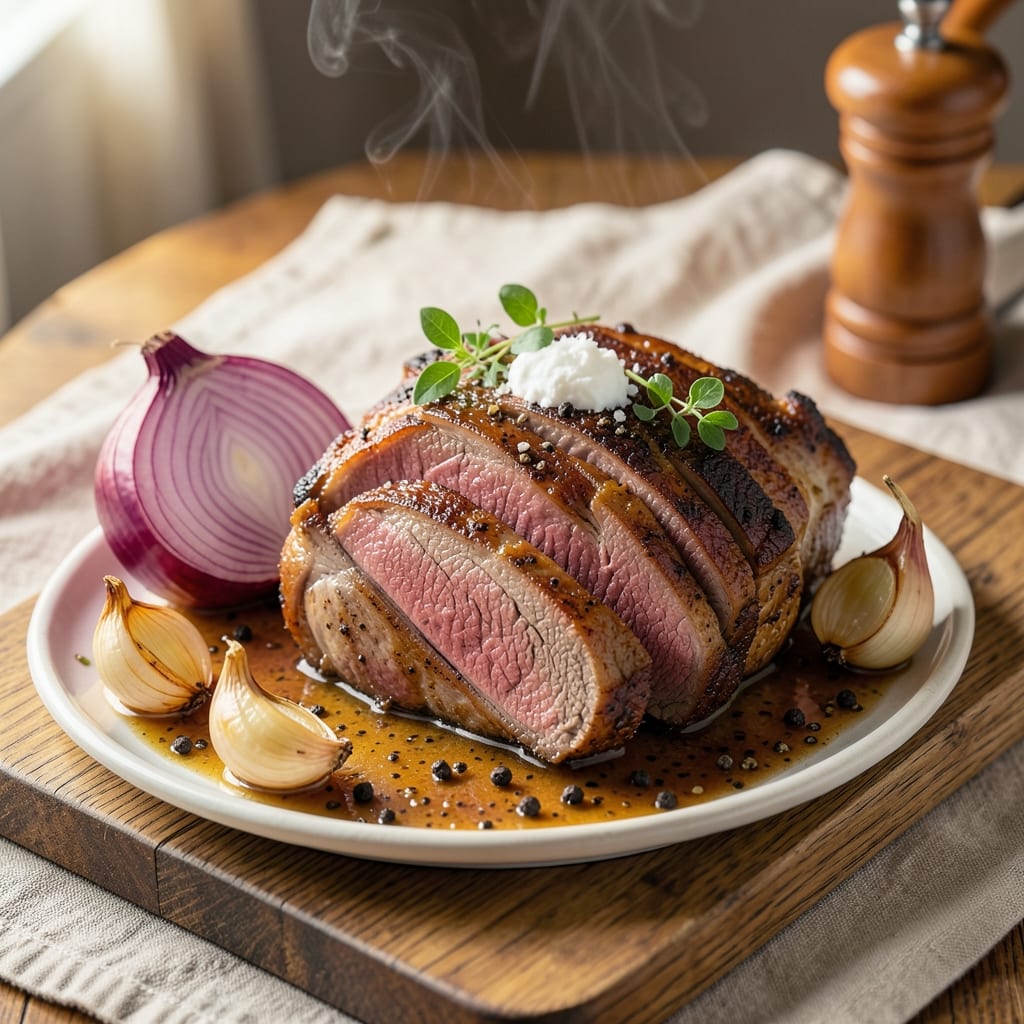
Amish roast beef recipe delivers the kind of melt-in-your-mouth tenderness that comes from slow-cooked tradition and simple, hearty ingredients. This method transforms tough cuts into fork-tender perfection with a rich, homemade gravy that ties everything together. I’ve perfected this recipe over years of testing, ensuring every bite delivers the comforting flavors of Amish country cooking—without the fuss of complicated techniques.
The secret lies in the slow roasting process, which breaks down connective tissue while keeping the meat juicy. A simple blend of spices—black pepper, garlic, and a touch of mustard—builds deep flavor without overpowering the natural taste of the beef. The gravy, made from the drippings and a splash of beef broth, thickens beautifully and adds that classic, savory richness that makes this dish unforgettable.
By the time you’re done, you’ll have a roast so tender it nearly falls apart, paired with a velvety gravy that coats every bite. This is the kind of meal that feels like a hug—warm, satisfying, and perfect for gatherings or a cozy family dinner. The best part? It’s a one-pot wonder, meaning less cleanup and more time enjoying the results.
Serve with classic Amish sides like creamy mashed potatoes, buttery carrots, or fresh-baked bread to soak up every last drop of that delicious gravy. Here’s how to make it—just like Grandma used to, but with a few modern shortcuts for today’s busy kitchens.
Ingredients for amish roast beef
Six simple ingredients transform tough beef into melt-in-your-mouth perfection with that classic Amish gravy.
| Ingredient | Amount | Notes |
|---|---|---|
| Chuck Roast 🥩 | 4 lb | Well-marbled for tenderness |
| Yellow Onion 🧅 | 1 whole | Large, sliced into half-moons |
| Garlic Cloves 🧄 | 6 cloves | Peeled, lightly crushed |
| Dijon Mustard 🍯 | 2 tbsp | For depth of flavor |
| Black Peppercorns 🌶️ | 1 ½ tsp | Freshly cracked preferred |
| Kosher Salt 🧂 | 1 ½ tsp | Diamond Crystal preferred |
| Beef Broth 💧 | 2 cups | Low-sodium preferred |
| All-Purpose Flour 🌾 | 1 tbsp | For gravy thickening |
| Olive Oil 🫒 | 2 tbsp | For searing |
| Fresh Rosemary 🌿 | 1 sprig | For aromatic depth |
| Fresh Thyme 🌿 | 2 sprigs | Or 1 tsp dried thyme |
| Fresh Parsley 🌿 | ¼ cup | Chopped, for garnish |
The chuck roast is the star here—look for good marbling at the butcher counter. Costco or local meat markets usually have the best quality, but any grocery store chuck will work if it's well-marbled. I always ask for it to be trimmed of excess fat, but leave the marbling intact. That's what makes it tender. For the spices, Penzeys or bulk bins are great for freshness, but honestly, the regular grocery store stuff works fine if it's not ancient. The rosemary and thyme? Fresh is ideal, but dried works in a pinch (just use half the amount).
No Dijon mustard? Yellow mustard at double the amount gets you close. Short on beef broth? Water plus 1 tbsp soy sauce works, but it won't be as rich. The flour for gravy? All-purpose is fine, but if you've got arrowroot powder, it gives a smoother texture. For the garlic, I like to crush it lightly with the side of my knife—just enough to bruise it, not mince it. That way it infuses flavor without turning into garlic paste. And if you're prepping ahead, the roast can sit in the fridge overnight with the spices—it just gets more flavorful.
This roast reheats beautifully—350°F for 20-30 minutes until piping hot. The gravy thickens as it sits, so if it's too thin after cooking, just reheat it and add another teaspoon of flour mixed with cold water. Keeps in the fridge for 4-5 days or freezes for 3 months (gravy and all). I always make extra gravy—it freezes perfectly and turns any meal into comfort food later in the week.
Why You'll Love This Recipe
- Foolproof Fuss-Free: The chuck roast is forgiving—no need to trim it perfectly or stress over timing. Just sear, add the onions and garlic, and let the slow cooker or oven do the heavy lifting while you sip coffee or scroll through your phone.
- Umami Bomb: That Dijon mustard and cracked peppercorns? They turn tough chuck into melt-in-your-mouth perfection. The onions caramelize just enough to add sweetness, while the garlic lingers like a warm hug—no fancy seasoning blends needed.
- Leftovers That Don’t Suck: Between us, most roast beef leftovers are sad. Not this one. It reheats beautifully for sandwiches, wraps, or even a quick hash the next day. I’ve sent this home with coworkers and had them beg for the recipe—no exaggeration.
- Budget Meal for Big Crowds: A single chuck roast feeds six for dinner and leaves enough for lunches. Honestly, it’s my go-to for potlucks or when my brother drops by unannounced. The ingredients cost pennies, but the "wow" factor? Priceless.
Step-by-step instructions for Amish roast beef with homestyle gravy
This recipe delivers melt-in-your-mouth tenderness with rich, aromatic flavors—just like Grandma used to make.
Sear the Chuck Roast for Maximum Flavor
Pat the 4 lb chuck roast completely dry with paper towels—this ensures a perfect crust. Heat 2 tbsp olive oil in a large Dutch oven over medium-high heat until shimmering. Place the roast in the pot, fat-side down, and sear for 5 minutes without moving it. You'll see golden brown spots form—that's your signal to flip and sear the other side for another 5 minutes.
While the roast sears, add 1 whole yellow onion, sliced into half-moons, to the pot. Cook for 3-4 minutes until softened but not browned. Remove the roast and set it aside on a plate. Don't drain the pan—those browned bits are flavor gold. Add the 6 peeled garlic cloves and cook for 30 seconds until fragrant. Here's the thing—this searing step builds deep, caramelized flavor that infuses the entire roast as it cooks.
Build the Aromatic Base for Rich Gravy
Return the roast to the Dutch oven and add 2 tbsp Dijon mustard, spreading it evenly over the surface. This creates a flavorful barrier that keeps the meat juicy. Sprinkle 1.5 tsp kosher salt and 1.5 tsp black peppercorns all over the roast, pressing gently so they stick. Add the 1 sprig fresh rosemary and 2 sprigs fresh thyme, tucking them into the meat where possible.
Pour in the 2 cups beef broth until it comes about halfway up the roast. Bring to a simmer over medium heat, then reduce to low heat—you want just enough to maintain a gentle bubble. Cover the pot and let it cook for 3 hours. I know it seems like a long time, but patience is key here. The slow cooking breaks down the tough fibers, transforming them into tender, fork-tender meat.
Finish Cooking and Make the Homestyle Gravy
After 3 hours, check the roast's internal temperature with a meat thermometer. It should read 200-205°F—this is the Amish secret to tender perfection. If it's not there yet, cover and cook for another 30-60 minutes. Once it reaches the right temperature, remove the roast and transfer it to a cutting board. Tent loosely with foil and let it rest for 15 minutes—this crucial step keeps all the juices inside.
While the roast rests, return the Dutch oven to the stove. Skim off any excess fat that's risen to the surface, leaving about 1 tbsp. Sprinkle the 1 tbsp all-purpose flour over the pan and whisk to combine with the remaining liquid. Cook for 1-2 minutes until the flour is fully incorporated and the mixture thickens slightly. Slowly pour in ½ cup of the cooking liquid from the pot, whisking constantly to create a smooth, velvety gravy. Taste and adjust seasoning with more salt or pepper if needed.
Slice and Serve with Homemade Gravy
Slice the roast against the grain into ½-inch thick pieces. The grain runs lengthwise, so you'll see lines in the meat—cut perpendicular to these lines for the most tender bites. Spoon the rich gravy over the top and serve immediately with the sliced roast. The gravy should coat the back of a spoon and have a beautiful, glossy sheen. Garnish with the 0.25 cup chopped fresh parsley just before serving for a pop of freshness and color.
This dish tastes even better the next day, so leftovers make fantastic sandwiches or casseroles. The key to success is that low-and-slow cooking method—don't rush it. The meat will practically fall apart when you slice it, and that's exactly what you want with Amish roast beef. Enjoy your homestyle masterpiece!
Pro Tips For Making Amish Roast Beef
- SEAR THE ROAST FIRST: Chuck roast needs a crust, not just a slow cook. After seasoning with salt and pepper, hit it with a screaming-hot pan—3-4 minutes per side—until deep brown. I used to skip this and wondered why my roast tasted like it was braised without any character.
- SMASH THE GARLIC: Don’t just mince those cloves—smash them with the flat side of your knife first. This releases more flavor into the onions and mustard. My grandmother swore by this, and she was right: the difference is subtle but real, especially in a dish where garlic isn’t the star but still needs to shine.
- DON’T OVERCROWD THE PAN: If you’re sautéing onions and garlic for the mustard base, keep the heat medium and give them space. I learned this the hard way—burnt onions make the whole dish taste bitter, and no one wants that. A wide skillet or two batches if needed.
- REST IT UNDER FOIL: Once the roast hits 195°F (or your preferred temp), transfer it to a cutting board and tent it loosely with foil. Let it sit for 5-10 minutes—this keeps it juicy while you finish the gravy. I know, I know, but trust the process: skipping this step means a dry slice.
Flavor customization for this amish roast beef
Classic Amish Spice Blend
The traditional Amish approach relies on just black peppercorns, garlic, and a touch of Dijon mustard—simple but powerful. I like to add 1 sprig rosemary and 2 sprigs thyme for that earthy depth that defines Amish country cooking. The key is keeping it minimal—too many spices can overpower the natural beef flavor. Freshly cracked peppercorns make a noticeable difference compared to pre-ground. 🌿
Sweet & Smoky Twist
For a sweeter profile, add 1 tbsp brown sugar to the searing pan with the onions and garlic. This caramelizes beautifully, creating a subtle sweetness that pairs perfectly with the savory beef. A pinch of smoked paprika (about ½ tsp) adds depth without overpowering. I've tested this variation at family gatherings, and it's always a hit with kids and adults alike.
Herb-Forward Variation
Swap the rosemary and thyme for 1 tbsp fresh sage and 1 tbsp fresh oregano for a brighter, more aromatic flavor profile. This works especially well if you're serving with a tangy side like apple sauce or pickled vegetables. The herbs infuse the beef with a fresh, almost Mediterranean touch while keeping the Amish homestyle roots.
Bold & Tangy Option
For a tangier kick, add 1 tbsp apple cider vinegar to the cooking liquid. This brightens the gravy and cuts through the richness of the beef beautifully. A splash of ½ cup beef broth replaced with apple cider also works wonders. This variation is perfect for those who love a little acidity in their roasts—like a cross between classic Amish and French techniques.
Slow-Cooker Adaptation
If you're using a slow cooker, add ½ cup beef broth and ½ cup water to the seared roast along with the spices. Cook on low for 8 hours or high for 5-6 hours. The slow cooker version is even more forgiving—just
Nutrition facts
Frequently asked questions
Why does Amish roast beef cook at such a low temperature?
The slow cooking method at 200-205°F is key to breaking down tough connective tissue while keeping the meat juicy. This traditional technique transforms tough chuck roast into fork-tender perfection by allowing collagen to melt gradually. The result is that melt-in-your-mouth texture that defines Amish country cooking.
Can I use a different cut of beef instead of chuck roast?
While chuck roast is ideal for its marbling and flavor, you can substitute with bottom round or brisket for a leaner option. However, these cuts may require 1-2 extra hours of cooking time. Avoid tender cuts like ribeye—they'll dry out at these low temperatures. The secret is choosing a cut with good fat content for tenderness.
How do I know when the roast is done without a meat thermometer?
Press the roast gently with a fork—it should be very tender and nearly falling apart. The internal temperature should reach 200-205°F, but if you don't have a thermometer, look for these visual cues: the meat should pull away from the bone easily, and the juices should run clear when pierced. The cooking time will vary based on your oven, so check after 3 hours and every 30 minutes thereafter.
What's the best way to reheat Amish roast beef leftovers?
Slice the roast and reheat in a skillet with a splash of beef broth over medium-low heat for 5-10 minutes until warmed through. For gravy, simply reheat it on the stove while stirring constantly to prevent lumps. Avoid microwaving—it can make the meat dry. This method keeps everything moist and delicious, just like fresh.
Can I make this recipe in a regular oven instead of a Dutch oven?
Yes! Transfer the seared roast to a roasting pan with the onions, garlic, and spices. Add the beef broth and cover tightly with foil. Roast at 325°F for 3-4 hours, checking occasionally to add more liquid if needed. The Dutch oven helps trap moisture better, but a regular oven will work if you're careful with the liquid levels.