
Soups & Stews
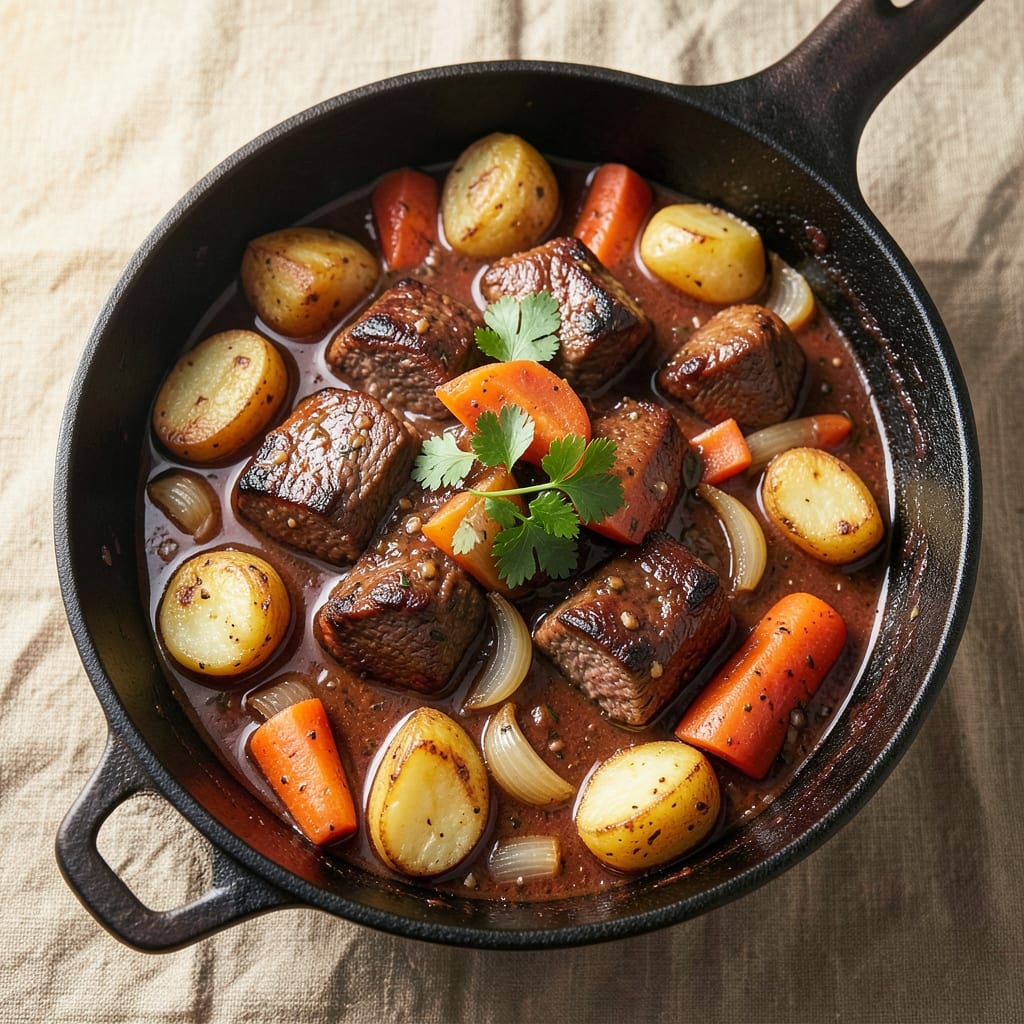
This A1 beef stew recipe delivers the rich, caramelized depth of a classic comfort dish with modern efficiency. Slow-cooked until tender, the beef transforms into melt-in-your-mouth perfection while potatoes develop a crispy, golden crust. The secret lies in browning the meat thoroughly and balancing sweet A1 sauce with umami-rich ingredients like Worcestershire and soy sauce.
What sets this recipe apart is its foolproof technique—ideal for weeknight dinners or holiday gatherings. A pressure cooker cuts the time to 1.5 hours, but the stovetop version simmers for 3 hours, deepening flavors with each passing minute. The result? A hearty stew where every bite reveals layers of savory, smoky, and slightly sweet notes.
The caramelized potatoes add a satisfying texture contrast, while herbs like thyme and bay leaf infuse warmth. Serve with crusty bread to soak up the velvety sauce, or pair it with roasted vegetables for a complete meal. This is the kind of stew that tastes even better the next day—perfect for meal prep or feeding a crowd.
For extra depth, deglaze the pot with red wine after browning the meat. If you prefer a quicker version, use a slow cooker on low for 6 hours. The key is patience—rushing this recipe means missing out on its restaurant-quality richness. Let’s get cooking!
Ingredients for a1 beef stew
Sixteen ingredients transform into a restaurant-quality A1 beef stew with deep umami and caramelized potatoes.
| Ingredient | Amount | Notes |
|---|---|---|
| Chuck Roast 🥩 | 3 lb | Trimmed of excess fat, cut into 1.5-inch cubes |
| Yellow Onions 🧅 | 2 whole | Medium size, sliced into half-moons |
| Carrots 🥕 | 4 whole | Medium size, peeled and cut into 2-inch chunks |
| Russet Potatoes 🥔 | 3 lb | Yukon Gold preferred, cut into 1-inch chunks |
| A1 Steak Sauce 🍯 | ½ cup | Original A1 sauce, not imitation |
| Worcestershire Sauce 🍶 | 2 tbsp | Lea & Perrins brand preferred |
| Soy Sauce 🥢 | 2 tbsp | Low-sodium preferred |
| Red Wine 🍷 | 1 cup | Bold Cabernet Sauvignon or Merlot |
| Beef Broth 💧 | 4 cups | Low-sodium preferred, homemade or high-quality |
| Fresh Thyme 🌿 | 2 tbsp | Leaves only, chopped fine |
| Bay Leaves 🍃 | 2 whole | Dried, standard size |
| Garlic Cloves 🧄 | 6 cloves | Peeled, smashed lightly |
| Olive Oil 🫒 | 2 tbsp | Extra-virgin for browning |
| All-Purpose Flour 🌾 | 1 tbsp | For dredging beef |
| Salt 🧂 | 2 tsp | Diamond Crystal preferred |
| Black Pepper 🌶️ | 1 tsp | Freshly ground |
| Tomato Paste 🍅 | 1 tbsp | Canned, unsweetened |
The chuck roast is non-negotiable for this recipe—its high fat content ensures melt-in-your-mouth tenderness. Look for well-marbled cuts from the butcher section at Whole Foods or your local grocery store's meat counter. If you're using pre-cut beef, opt for 1.5-inch cubes to ensure even cooking. The potatoes deserve equal attention: Yukon Gold or Russet develop the best caramelized crust when cut into consistent 1-inch chunks. For the A1 sauce, stick to the original version—imitations lack the depth of flavor this dish requires. The Worcestershire and soy sauces should be low-sodium to avoid over-salting the stew.
No red wine? Substitute with 1 cup beef broth plus 1 tbsp balsamic vinegar—it mimics the acidity and depth. Fresh thyme is ideal, but dried thyme at one-third the amount works in a pinch. The tomato paste can be skipped entirely if you prefer a less tangy stew, though it adds a subtle sweetness. For the beef broth, homemade or high-quality store-bought makes a noticeable difference. The olive oil should be extra-virgin for browning—it adds a fruity note that regular olive oil lacks. If you're short on time, pre-cut frozen onion and carrot mixes from Trader Joe's save chopping time without sacrificing flavor.
This stew tastes even better the next day as flavors meld together. Store in an airtight container in the fridge for up to 5 days, or freeze for 3 months for future meal prep. For serving, reheat gently on the stovetop with a splash of beef broth to restore moisture. The sauce thickens as it cools, so adding a little liquid when reheating ensures a velvety consistency. Portion into individual containers for easy lunches—just add a side of crusty bread or roasted vegetables to complete the meal.
Why You'll Love This Recipe
- One-Pot Magic: I swear by this recipe—just dump everything in a slow cooker (or a big pot) and let it do the work. No chopping like a pro, no fancy techniques. The chuck roast practically melts into tender perfection while you’re folding laundry or scrolling through your phone.
- A1 Magic Boost: That bottle of A1 steak sauce isn’t just an afterthought—it’s the secret weapon. A splash at the end turns this stew from good to ridiculously good, giving it that deep, savory umami kick that makes everyone ask, “What’s in this?” (Spoiler: It’s the sauce.)
- Leftovers for Days: Between us, this recipe makes way more than I need for one meal. The flavors actually get better the next day—seriously. I freeze portions for lazy Mondays or toss them into sandwiches when I’m in a rush. Zero waste, all reward.
- Budget Hero: Chuck roast is cheap, potatoes and carrots are cheap, and A1 sauce? A tiny bottle goes a long way. I feed my whole family (plus leftovers) for under $15. That’s a win for my wallet and my taste buds—no compromises.
Step-by-step instructions for A1 beef stew with caramelized potatoes
This method delivers restaurant-quality depth through precise timing and layering of flavors.
Prepare and Sear the Chuck Roast
Pat the 3 lb chuck roast dry with paper towels and cut into 1.5-inch cubes. In a large Dutch oven, heat 2 tablespoons olive oil over medium-high heat until shimmering. Working in batches to avoid crowding, sear the beef cubes for 2-3 minutes per side until deeply browned and developed a crust. This step builds the stew's rich foundation.
Remove the beef and set aside. If the pan releases too much oil, wipe it with a paper towel—you want to retain maximum flavor for the vegetables. The beef should be golden brown with caramelized edges before moving to the next step. This deep browning creates the umami backbone of your stew.
Develop the Vegetable Base
In the same Dutch oven, add 2 tablespoons olive oil if needed, then add the 2 whole yellow onions and 4 whole carrots cut into 2-inch chunks. Cook for 8-10 minutes, stirring occasionally, until the onions soften and begin to caramelize. Add the 6 cloves garlic cloves and 1 tablespoon tomato paste, stirring for 1 minute until fragrant.
Sprinkle the beef cubes with 1 tablespoon all-purpose flour and toss to coat evenly. Return the beef to the pot and stir to combine with the vegetables. The flour creates a light crust that helps thicken the stew naturally. Cook for 2 minutes to toast the flour slightly before adding liquids.
Deglaze and Build the Braising Liquid
Pour in the 1 cup red wine and scrape up any browned bits from the bottom of the pot with a wooden spoon. This deglazing step captures all the concentrated beef flavor. Let the wine simmer for 3-4 minutes until reduced by half, then add the 4 cups beef broth, 0.5 cup A1 steak sauce, 2 tablespoons Worcestershire sauce, and 2 tablespoons soy sauce. Stir well to combine.
Add the 3 lb russet potatoes cut into 1-inch chunks, 2 tablespoons fresh thyme, 2 whole bay leaves, 2 teaspoons salt, and 1 teaspoon black pepper. Bring to a gentle simmer, then reduce heat to maintain a barely bubbling surface. The potatoes should be mostly submerged—if not, add a splash of water or broth.
Braise Until Tender and Flavor-Infused
Cover the Dutch oven and transfer to a 325°F oven for 2.5-3 hours. Check after 2 hours—the beef should be fork-tender, with the potatoes nearly soft but still holding their shape. If the liquid reduces too quickly, add ½ cup water to maintain proper braising moisture.
For the final 30 minutes, increase oven temperature to 350°F to allow the potatoes to caramelize slightly and the stew to thicken. The edges of the potatoes should develop a light golden crust, while the beef should pull apart easily. This final step intensifies the flavors through slow evaporation.
Adjust Consistency and Serve
Remove the stew from the oven and let it rest for 15 minutes before serving. If the stew is too thick, stir in 2-3 tablespoons of reserved cooking liquid to reach your preferred consistency. Remove and discard the bay leaves before serving.
Ladle the stew into bowls, ensuring each serving contains tender beef, caramelized potatoes, and richly flavored broth. Garnish with additional fresh thyme if desired. The beef should be fork-tender with visible marbling, the potatoes creamy yet holding their shape, and the sauce glossy with deep umami notes from the A1 and wine reduction.
Pro Tips For Making A1 Beef Stew
- SEAR THE CHUCK FIRST: Chuck roast is forgiving, but a quick 2-minute sear in a hot Dutch oven with 1 tablespoon of oil—before you even add onions—builds flavor you won’t get from slow simmering alone. I used to skip this, and the stew always tasted flat until I tried it.
- CUT POTATOES UNIFORM: Russets break apart when overcooked, so aim for 1.5-inch chunks that’ll soften in the same time as the carrots. If they’re too small, they’ll turn to mush; too big, and they’ll stay hard. (Yes, even if you’re impatient like me.)
- ADD A1 SAUCE LATE: Dump that bottle in too early, and the sauce will burn or turn bitter from the onions. Wait until the stew’s simmering hard for 15 minutes first—then stir in the sauce and let it meld with the beef. Trust me, the timing matters.
- SALT THE WATER LIKE THE OCEAN: Chuck roast needs a briny bath to tenderize, so don’t be shy: 2 tablespoons of kosher salt in the 8 cups of water (or broth) guarantees the meat stays juicy. I learned this the hard way—my first attempt was bland until I doubled the salt.
Make-ahead tips for this dish
Prep Ahead Timeline
Start by prepping all ingredients the night before—chopping onions, carrots, and potatoes into uniform chunks saves 30 minutes of active time. Store them in airtight containers in the fridge. I like to marinate the beef cubes in 1 tbsp soy sauce and 1 tbsp A1 sauce overnight for extra tenderness. This step alone makes a noticeable difference in flavor depth. 💫
Slow Cooker Adaptation
For hands-off cooking, brown the beef and vegetables as directed, then transfer everything to a 6-quart slow cooker. Add all remaining ingredients and cook on low for 8 hours or high for 5 hours. The slow cooker maintains consistent heat, ensuring the beef becomes fork-tender without drying out. This method is perfect for busy weeknights when you can't monitor the stove.
Freezer-Friendly Prep
Assemble the stew completely, then let it cool to room temperature before transferring to freezer-safe containers. Leave 1-inch headspace for expansion and label with the date. This stew freezes beautifully for up to 3 months. When ready to eat, thaw overnight in the fridge, then reheat on the stovetop with a splash of beef broth to restore moisture. The flavors actually improve after freezing, making this an ideal make-ahead option.
Potato Pre-Caramelization
For extra restaurant-quality texture, parboil the potatoes for 5 minutes before adding them to the stew. Drain well and set aside. When you add them back to the Dutch oven during the final 30 minutes of cooking, they'll develop a perfect caramelized crust while staying creamy inside. This technique takes 10 extra minutes but elevates the dish significantly.
Sauce Thickening Shortcut
If you're short on time, make a quick roux by mixing 1 tbsp flour with 1 tbsp cold water to form a paste. Stir this into the stew during the last 15 minutes of cooking to thicken the sauce naturally. This creates a glossy finish without requiring additional waiting time. The flour-to-liquid ratio ensures the sauce thickens properly without becoming gluey.
Herb Freshness Hack
Fresh thyme and bay leaves add incredible depth, but dried herbs work in a pinch. Use 1 teaspoon dried thyme and 1 dried bay leaf if fresh isn't available. For an extra herbaceous note, add 1 sprig fresh rosemary during the final 30 minutes of cooking. Remove it before serving to prevent bitterness. This small addition transforms the stew's aroma dramatically. ✨
Nutrition facts
Frequently asked questions
Why does this recipe use chuck roast instead of tenderloin?
Chuck roast is ideal because its high fat content breaks down during slow cooking, creating incredibly tender, flavorful beef. Tenderloin would dry out—this cut needs the fat to stay juicy. The marbling also adds rich flavor that complements the A1 sauce perfectly.
Can I make this stew in a pressure cooker?
After browning the meat and vegetables, add all ingredients and pressure cook for 45 minutes on high. The beef will be fork-tender with minimal effort. For best results, use natural release for 10 minutes before quick-release to avoid toughening the meat.
What if I don't have red wine?
No problem! Replace it with 1 cup beef broth plus 1 tbsp balsamic vinegar to maintain acidity and depth. The balsamic adds subtle sweetness that mimics wine's complexity. For extra richness, add ½ tsp smoked paprika to the vegetables during cooking.
How do I prevent the potatoes from turning mushy?
Parboil the potatoes for 5 minutes first, then drain and add them back to the stew during the final 30 minutes of cooking. This creates a perfect caramelized crust while keeping the insides creamy. Also ensure they're fully submerged in liquid throughout cooking.
Can I use this stew for meal prep?
Yes! Store in airtight containers for up to 5 days in the fridge or 3 months in the freezer. Reheat gently on the stovetop with a splash of beef broth to restore moisture. The flavors actually deepen over time, making it perfect for busy weeks.