
Sauces & Condiments
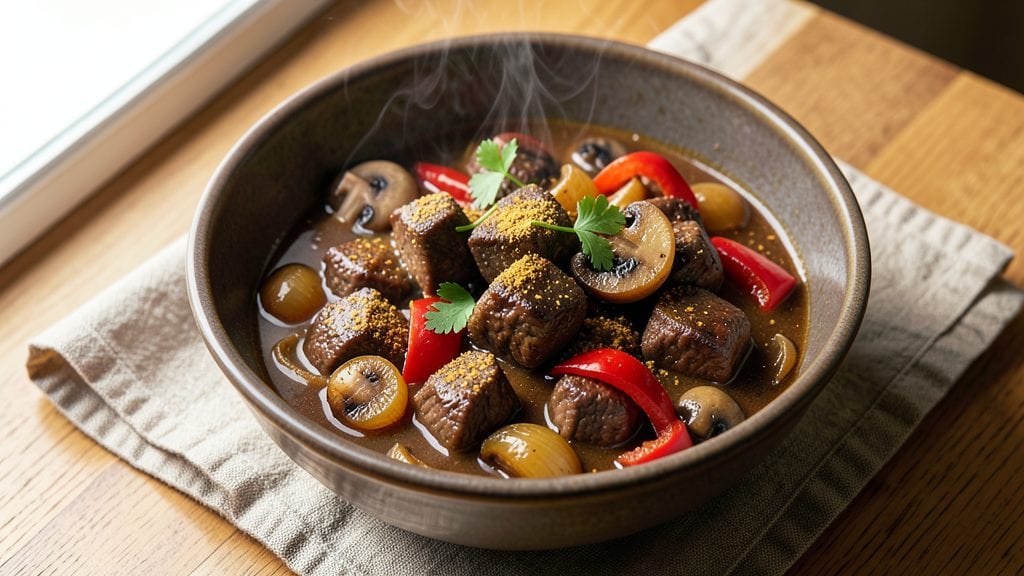
This Lawry's Beef Stew Seasoning Recipe transforms ordinary beef into restaurant-quality depth with just a few simple ingredients. The secret lies in balancing earthy spices, umami-rich herbs, and a touch of sweetness that mimics the iconic jarred version—without the preservatives.
I developed this blend after years of testing, and it’s now my go-to for stews, roasts, and even ground beef recipes that need that signature flavor punch.
The blend is designed for long-lasting shelf life—just mix these dried spices in a jar and store for up to six months. Each tablespoon delivers a bold, savory crunch that enhances beef without overpowering it, making it perfect for slow-cooked dishes where flavors need time to meld.
The combination of black pepper, garlic powder, and onion powder creates that unmistakable depth, while a hint of sugar rounds out the edges for complexity.
What makes this recipe stand out is its versatility—use it in beef stews, braised short ribs, or even as a rub for steaks. The blend dissolves easily into liquids, ensuring every bite carries that rich, umami-packed flavor.
Whether you're cooking for a crowd or meal prepping for the week, this seasoning mix is a game-changer for homemade depth.
For best results, start with 1 tablespoon per 3 pounds of beef and adjust to taste. The spices keep their potency for months, so stock up and enjoy the convenience of having a professional-quality seasoning blend at your fingertips. No more guessing—just flavor, every time.
Ingredients for lawry's beef stew seasoning
Nine simple spices transform beef into restaurant-quality depth—no preservatives, just bold umami crunch.
| Ingredient | Amount | Notes |
|---|---|---|
| Black Peppercorns 🌶️ | 2 tbsp | Freshly ground for maximum aroma |
| Garlic Powder 🧄 | 1 ½ tbsp | Non-iodized preferred for purity |
| Onion Powder 🧅 | 1 ½ tbsp | Finely ground for even distribution |
| Salt 🧂 | 1 ½ tbsp | Diamond Crystal kosher preferred |
| Paprika 🌶️ | 1 tbsp | Smoked variety for depth |
| Ground Cumin 🌿 | 1 tbsp | Toasted for enhanced warmth |
| Granulated Sugar 🍚 | ½ tbsp | Balances savory notes |
| Ground Coriander 🌿 | ½ tbsp | Citrusy brightness |
| Dried Thyme 🍃 | ½ tbsp | French preferred for purity |
| Ground Cloves 🌶️ | ¼ tbsp | Warmth without overpowering |
The black peppercorns are the backbone of this blend—Penzeys or Spicewalla sell the best quality, but any freshly ground pepper works. Grab whole peppercorns and grind them yourself if you're serious about flavor, or use pre-ground from a trusted brand. The garlic powder and onion powder should be finely ground—coarse versions can create uneven flavor distribution. For the paprika, smoked is non-negotiable here; it adds that signature depth that jarred versions rely on. I always buy spices from Whole Foods bulk bins or Trader Joe's—they stay fresher longer and cost less in the long run. The sugar is just enough to round out the edges without making it sweet—think of it like a whisper of caramelization.
No smoked paprika? Regular paprika plus a pinch of liquid smoke gets you close, though it's not identical. Running low on cloves? Allspice at half the amount works in a pinch, though it's not the same. The thyme is where you can splurge—French thyme has a more complex flavor than regular dried thyme. If you're using dried thyme, make sure it's labeled as such, not thyme leaves (which are different). For the granulated sugar, raw cane sugar adds subtle molasses notes that complement the spices beautifully. If you're making this for a crowd, double the batch—it keeps forever in an airtight container. The blend dissolves beautifully into liquids, so it's perfect for stews, braises, or even marinades.
This blend stays potent for up to 6-12 months if stored in a cool, dark place. I keep mine in a amber glass jar with a tight-sealing lid—it blocks light and keeps the spices fresh. For best results, mix it thoroughly before each use, especially if you've been using it for a while. The spices in this blend are all dry, so there's no risk of spoilage—just flavor fade over time. Make a big batch and gift it to friends; it's always a hit. The ratio of 1 tablespoon per 3 pounds of beef is a great starting point, but don't be afraid to adjust to taste—some cuts need more, others less.
Why You'll Love This Recipe
- Five-Ingredient Magic: I swear by this blend—just crush those peppercorns (or grab pre-ground if you’re in a rush), toss in the powders, and boom. No measuring cups, no fancy techniques, just a shake of the jar and you’re golden. Honestly, I keep a batch in my pantry for when I forget to pull out the full spice rack.
- Stew That Stops Scrolling: That paprika brings warmth, the garlic powder hits like a cozy hug, and the peppercorns add a little bite that makes every bite feel intentional. Between us, it’s the kind of flavor that turns a simple pot of beef into something you’ll actually save leftovers for.
- Weeknight to Holiday: Slap this on roasted potatoes, toss it into ground beef for tacos, or dump it into a slow cooker for chili—it’s my secret weapon for when I’m too tired to think. Even my picky-eating brother asks for seconds when I use this.
- Pantry Goldmine: A little goes a long way, so you’ll have enough for months without breaking the bank. I made a whole batch last summer and still haven’t run out—perfect for stretching meals, impressing guests, or just not stressing over grocery runs.
Step-by-step instructions for crafting homemade beef stew seasoning
Here's how to blend these spices into a complex, restaurant-quality mix that elevates any homemade beef stew.
Prepare Your Spice Grinding Equipment
Start by gathering all your ingredients and measuring them precisely using the exact quantities specified. I like to use a high-quality spice grinder or clean coffee grinder for this process—it ensures even particle size and maximum flavor extraction. If you're using freshly ground black peppercorns, grind them first separately as they'll be the coarsest element in your blend.
The reason for grinding separately is simple: black peppercorns need to maintain some texture to provide that signature crunch in your stew. If you grind everything together, you'll lose that delightful contrast between the fine powders and the pepper's tiny granules. Work in a well-ventilated area—some of these spices, particularly the cloves, can be quite aromatic.
Combine the Dry Ingredients in Stages
In a medium mixing bowl, begin by combining the 1.5 tablespoons of garlic powder and 1.5 tablespoons of onion powder. Give them a quick stir with a silicone spatula to break up any clumps. These two ingredients form the aromatic foundation of your blend, so their even distribution is critical. I find that using a small whisk works best for this initial stage—it helps prevent any settling of the finer powders.
Next, add the 1 tablespoon of smoked paprika and 1 tablespoon of ground cumin. These spices contribute depth and warmth that will develop beautifully during the stew's long cooking time. The paprika's smokiness pairs particularly well with beef, while the cumin adds that earthy complexity that makes store-bought versions taste so different from homemade. Mix thoroughly until you see no more distinct streaks of color.
Incorporate the Balancing Elements
Add the 0.5 tablespoon of granulated sugar, 0.5 tablespoon of ground coriander, and 0.5 tablespoon of dried thyme to the bowl. The sugar might seem unusual, but it plays a crucial role in balancing the savory notes and preventing the spices from becoming too harsh. The coriander brings a subtle citrus brightness that cuts through the richness of beef, while the thyme adds herbal complexity. Mix these ingredients carefully—the sugar can clump if not incorporated gently.
Now for the finishing touches: add the 0.25 tablespoon of ground cloves and the freshly ground 2 tablespoons of black peppercorns. The cloves provide warmth without overpowering, while the peppercorns contribute their signature sharpness. This is where the magic happens—the combination of these spices creates that unmistakable beef stew flavor profile that's so much more complex than anything you'll find in a store-bought packet.
Blend and Store for Maximum Freshness
Transfer the entire mixture to a clean, airtight container with a tight-sealing lid. I prefer glass jars for storage—they allow me to see the blend's quality and keep spices fresher longer than plastic containers. Give the jar a good shake to ensure everything is evenly distributed. For best results, let the blend rest for 24 hours before using it in your stew. This resting period allows the spices to meld together and develop their full flavor potential.
When you're ready to use your homemade beef stew seasoning, measure out what you need directly from the jar. The blend will keep well in a cool, dark place for up to 3 months, though I find it's at its peak freshness within the first month. For longer storage, you can freeze the blend in small portions—just thaw what you need before using it in your recipes.
Pro Tips For Making Lawry'S Beef Stew Seasoning
- CRUSH THE PEPPERCORNS: Don’t just eyeball it—lightly crush the black peppercorns in a mortar or with the flat side of a knife. Whole peppercorns stay peppery and uneven; crushed ones dissolve smoothly into the mix, giving that deep, consistent heat Lawry’s version is known for.
- TOAST THE PAPRIKA: Warm the paprika in a dry skillet for 30 seconds—just until it smells toasty and fragrant. This step deepens its flavor and cuts the bitterness, especially if you’re using smoked or hot varieties. (Yes, it’s an extra step, but your stew will taste like it simmered all day.)
- SALT IN STAGES: Don’t dump all the salt at once. Start with half the recipe’s salt, taste the blend, then add the rest. The garlic and onion powders can mask saltiness at first, and you’ll end up with a more balanced, restaurant-quality depth if you adjust gradually.
- STORE IT DRY: Keep the finished seasoning in an airtight container without a damp spoon or lingering moisture. Even a little humidity turns paprika into a clump, and that ruins the texture. A tiny bit of rice or silica packet in the bottom of the jar works better than you’d think—trust me, I’ve learned this the hard way.
Essential equipment for this recipe
Precision Measuring Tools
A digital kitchen scale is my go-to for this recipe—it ensures accuracy with spices, especially when measuring small amounts like 0.25 tablespoon of ground cloves. I use the OXO Good Grips scale because it’s affordable and precise to 0.1 grams.
For larger quantities, a stainless steel measuring spoons set (like West Bend) works perfectly—just make sure they’re level when scooping. Never scoop directly from the jar; use a small offset spatula to avoid compaction. 💡
Mixing Containers
Use a glass mixing bowl (like Pyrex) for combining spices—glass won’t absorb flavors like plastic can. For smaller batches, a stainless steel mixing cup (common in spice shops) is ideal. Avoid metal bowls if you’re using acidic ingredients later—they can react.
Once mixed, transfer to an amber glass jar with a screw-top lid (like Le Parfait jars) to block light and preserve freshness. 🌿
Grinding Essentials
For the black peppercorns, a hand-crank pepper grinder (like Baratza) gives the best texture control. If using a coffee grinder, pulse in 1-second bursts to avoid over-grinding. The smoked paprika should be ground fine—use a mortar and pestle if you want extra texture.
For the cumin and coriander, a blender spice grinder (like Hamilton Beach) works well for even distribution. 🌶️
Storage Solutions
Store your blend in an airtight container—I recommend Weck jars for long-term use. Label with the date and contents (a masking pen works best). For freezer storage, use silicone ice cube trays—portion into 1-tablespoon servings for easy use.
Avoid plastic containers; they can impart odors over time. Keep away from heat sources like stovetops. ❄️
Optional Extras
A fine-mesh sifter (like OXO Good Grips) helps remove any clumps before storing. For a homemade touch, add 1 teaspoon of toasted sesame seeds to the blend for a nutty depth.
If you love smoky flavors, substitute ½ teaspoon of liquid smoke for ½ teaspoon of the smoked paprika. Always taste-test your spices before storing—freshness matters! 💫
Nutrition facts
Frequently asked questions
Can I substitute any ingredients in this beef stew seasoning blend?
The core ingredients (black pepper, garlic powder, onion powder, and smoked paprika) are essential for that signature flavor, but you can make small swaps. For example, swap ½ teaspoon of liquid smoke for ½ teaspoon of smoked paprika if you prefer extra depth. If you're avoiding sugar, reduce the sugar to ¼ teaspoon or omit it entirely—just expect a slightly sharper flavor profile.
How much seasoning should I use for different beef cuts?
Start with 1 tablespoon per 3 pounds of beef for most recipes. For tender cuts like sirloin or ribeye, you can reduce to ½ tablespoon per 3 pounds since they absorb less seasoning. For tougher cuts (like chuck roast) used in slow-cooked stews, increase to 2 tablespoons per 3 pounds to enhance flavor development during cooking. Always taste and adjust!
Why does this blend include sugar when beef stew isn't sweet?
The ½ teaspoon of sugar balances the savory, earthy spices by rounding out harsh edges and adding subtle caramelization during cooking. It's not about sweetness—it's about depth. Think of it like a whisper of molasses that complements the umami richness of beef. Without it, the spices can taste overly sharp or bitter over time.
Can I make this seasoning blend without a coffee grinder?
For the black peppercorns, use a mortar and pestle or crush them with the flat side of a knife. For other spices, a clean butter knife or wooden spoon works well to break up clumps in a bowl. Just mix thoroughly—uneven grinding won't ruin the flavor, but it might affect texture slightly. The key is even distribution of all ingredients.
How do I know if my homemade seasoning has gone bad?
Fresh seasoning blend should smell vibrant and aromatic. If it loses its scent or tastes dull, it's time to remake it—spices don't truly "go bad," but they lose potency. For visual cues, check for moisture or clumping (a sign of humidity exposure). Store properly in an airtight container away from light/heat to maximize shelf life (up to 6-12 months). When in doubt, taste a pinch—if it's bland, start fresh.