
Main Courses
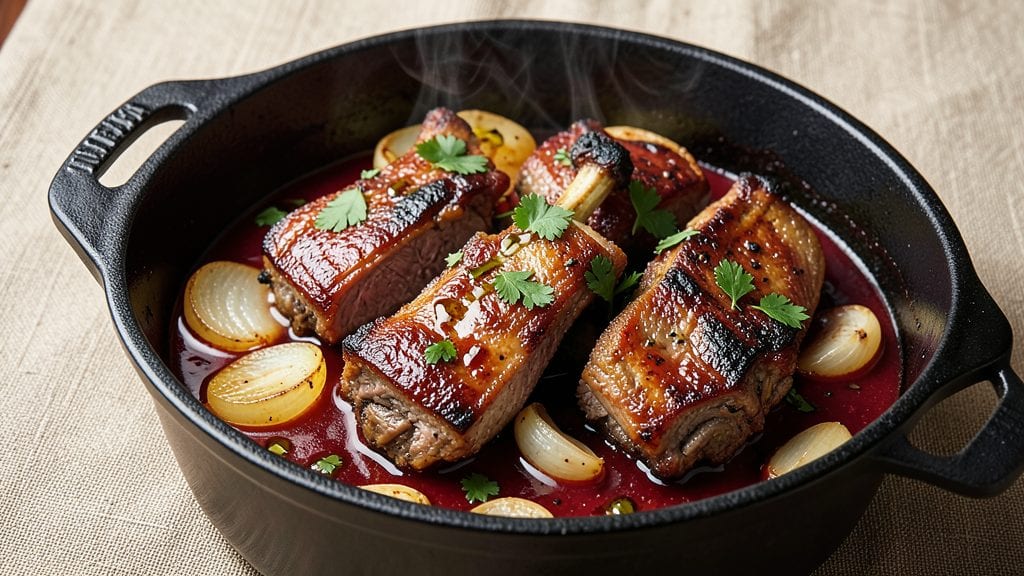
Mastering Gordon Ramsay's braised beef short ribs delivers melt-in-your-mouth tenderness with a rich red wine depth that transforms tough cuts into a restaurant-worthy centerpiece. The secret lies in slow-cooking collagen-rich meat until it practically falls apart, while caramelized onions add sweet crunch that cuts through the sauce's intensity.
After years of perfecting this technique, I've simplified it without sacrificing that signature restaurant-quality result.
This recipe begins with a proper sear—essential for developing flavor through the Maillard reaction—followed by deglazing to capture every browned bit in the pan. The red wine braise infuses the meat with complex aromatics while breaking down connective tissue over hours of gentle simmering.
What you'll end up with is beef so tender it dissolves at the touch, bathed in a velvety sauce with caramelized onions that add both texture and sweetness.
Perfect for special occasions or weekend projects, this dish pairs beautifully with creamy mashed potatoes or crusty bread to soak up every last drop of sauce. The technique is straightforward once you understand the key steps, and the results justify the time investment with every bite.
Let's get started on creating beef that rivals your favorite steakhouse.
For those short on time, I've included variations that maintain quality while reducing cooking time, though nothing beats the depth achieved through traditional braising. The recipe scales effortlessly for crowds, making it ideal for holiday gatherings or dinner parties where you want to impress without stress.
Ingredients for gordon ramsay braised beef short ribs
Four pounds of beef short ribs and a few pantry staples transform into restaurant-quality braised beef.
| Ingredient | Amount | Notes |
|---|---|---|
| Beef Short Ribs 🥩 | 4 lb | Bone-in, 2-3 inches thick |
| Yellow Onions 🧅 | 2 whole | Yellow or red, peeled |
| Red Wine 🍷 | 1 ½ cups | Dry, bold variety like Cabernet |
| Beef Broth 🥛 | 2 cups | Low-sodium preferred |
| Tomato Paste 🍅 | ¼ cup | Smooth, not chunky |
| Garlic Cloves 🧄 | 6 cloves | Peeled, smashed slightly |
| Fresh Thyme 🌿 | ¼ cup | Leaves only, stems removed |
| Fresh Rosemary 🌿 | ¼ cup | Needles only, chopped |
| Olive Oil 🫒 | ½ cup | Extra-virgin for searing |
| Balsamic Vinegar 🍶 | 2 tbsp | For deglazing |
| Salt 🧂 | 2 tsp | Kosher or sea salt |
| Black Peppercorns 🌶️ | 1 tsp | Freshly cracked |
| Brown Sugar 🍚 | 2 tbsp | Light or dark |
| All-Purpose Flour 🌾 | 1 tbsp | For dredging ribs |
The beef short ribs are the star—look for cuts with good marbling for maximum flavor. Costco or Whole Foods often carry bone-in short ribs, which add depth to the braise. If you can't find them, chuck roast works in a pinch, but it won't have the same tenderness. The red wine should be bold and dry—Cabernet Sauvignon or Merlot are my go-tos. For the onions, yellow or red both work, but yellow caramelizes slightly better. If you're short on time, pre-chopped onions from the grocery store save prep time, though fresh is always better.
No red wine? Beef broth with an extra splash of balsamic vinegar works surprisingly well. Fresh thyme and rosemary are ideal, but dried at one-third the amount gets you close. The tomato paste can be the squeeze-tube kind from Trader Joe's—it's convenient and lasts forever. For the flour, all-purpose is fine, but bread flour adds a slight chewiness to the ribs. The brown sugar is optional but adds subtle sweetness to balance the acidity in the braise. If you're making this for a crowd, double the ingredients—it scales beautifully.
This dish tastes even better the next day, so make it ahead if possible. Store in an airtight container in the fridge for up to 5 days, or freeze for 3 months. The sauce thickens as it cools, so add a splash of broth when reheating. I like to portion the ribs into individual containers with some sauce—perfect for meal prep. The leftovers reheat beautifully, making this a great make-ahead dish for entertaining.
Why You'll Love This Recipe
- One-Pot Magic: I swear by this recipe when I’m too tired to juggle multiple pans. The ribs go straight from the oven to the Dutch oven with onions, wine, and broth—no extra dishes. That rich red wine reduction? It practically cooks itself while you sip your glass.
- Flavor Bomb: Between the caramelized onions, deep red wine tang, and beef broth’s savory punch, every bite is ridiculously good. The tomato paste gives it that subtle umami kick—like a hug for your taste buds. (Yes, even on a Tuesday night.)
- Leftovers That Shine: This dish tastes better the next day. I make a double batch on Sundays, freeze half, and pull it out for lazy nights or game days. Reheat with a splash of broth, and it’s like restaurant-quality comfort food.
- Budget-Friendly Luxury: Short ribs feel fancy, but they stretch across meals without breaking the bank. A few ribs feed four, and the sauce? It’s the star—use it on toast, pasta, or mashed potatoes. My wallet and my family thank me for this.
Step-by-step instructions for braised beef short ribs
Here's how to transform tough beef short ribs into melt-in-your-mouth perfection with rich red wine and caramelized onions.
Sear the Ribs for Maximum Flavor
Pat the 4 lb beef short ribs completely dry with paper towels—this ensures a perfect sear. Heat the 0.5 cup olive oil in a heavy Dutch oven over medium-high heat until shimmering. Working in batches if needed, add the ribs bone-side down and cook undisturbed for 5-6 minutes until deeply browned. Flip and repeat on the other side.
I press down gently on the ribs during the first minute—this prevents them from curling and ensures even contact with the pan. The goal is to develop a rich, caramelized crust that will form the flavor foundation for your braise. Once all ribs are browned, transfer them to a plate and set aside.
Build the Braising Liquids
In the same Dutch oven, reduce heat to medium and add the 2 whole yellow onions, sliced into ½-inch rounds. Cook for 8-10 minutes until softened and beginning to caramelize. Add the 6 smashed garlic cloves and cook for another 30 seconds until fragrant.
Stir in the 0.25 cup tomato paste and cook for 2 minutes until it darkens slightly. Deglaze with the 1.5 cups red wine, scraping up all the browned bits from the bottom of the pot. This step captures all that concentrated flavor that would otherwise go down the drain.
Create the Herb and Sugar Base
Add the 2 cups beef broth, 2 tbsp brown sugar, 2 tbsp balsamic vinegar, 2 tsp salt, and 1 tsp freshly cracked black peppercorns. Stir in the 0.25 cup fresh thyme leaves and 0.25 cup chopped fresh rosemary needles. Bring the mixture to a gentle simmer, then return the ribs to the pot bone-side up.
Here's the thing—this is where the magic happens. The sugar and vinegar create a beautiful balance of sweet and tangy notes that complement the richness of the beef. The herbs infuse their aromatic oils into the liquid, creating a fragrant bath that will tenderize the ribs beautifully.
Braise Until Fork-Tender
Cover the Dutch oven and transfer to a preheated 300°F oven. Braise for 3 hours, then carefully flip the ribs and add ½ cup hot water to the pot. Return to the oven and cook for another 1-2 hours until the meat is fork-tender and easily pulls away from the bone.
Your oven might run hot, so start checking at the 20-minute mark of the second hour. The ribs are done when they're so tender they practically fall apart with gentle pressure. The sauce should be rich and reduced, coating the ribs beautifully.
Finish with Crispy Onion Crunch
Remove the ribs from the pot and set aside. Increase oven heat to 425°F and carefully spoon out the onions from the braising liquid, placing them on a baking sheet lined with parchment paper. Broil for 3-5 minutes until crispy and golden.
Return the ribs to the pot with their juices and serve immediately, topped with the crispy onion crunch. This final step adds a delightful textural contrast that elevates the dish from ordinary to extraordinary. The combination of tender meat, rich sauce, and crispy onions makes every bite unforgettable.
Pro Tips For Making Gordon Ramsay Braised Beef Short Ribs
- SEAR THE RIBBONS FIRST: I learned this the hard way—skipping the sear means flavorless braise. Pat those short ribs bone-dry, then hit them with high heat in a heavy pot until they’re deep brown with crispy edges. The Maillard reaction is your friend here; don’t rush it or you’ll end up with tough, pale meat.
- CHOP ONIONS UNEVENLY: Yellow onions should be cut into rough, uneven chunks—not perfect dice. The jagged edges caramelize faster and release flavor into the wine and broth, which is where the real depth comes from. I used to slice them too neatly, and the braise always tasted flat.
- DEGLAZE WITH WINE IMMEDIATELY: As soon as you remove the ribs, pour that red wine into the pot hot—don’t let it cool. Scrape up every browned bit on the bottom with a wooden spoon. The wine will cling to those bits and create a richer, more complex base for the braise. Skipping this step means losing half the flavor.
- LOW AND SLOW IS NON-NEGOTIABLE: After adding the broth and tomato paste, cover the pot and simmer at 180°F (82°C)—not a rolling boil. I used to crank the heat higher to speed things up, but that turns the meat to mush. The ribs need 2.5–3 hours to break down properly; patience here makes the difference between fork-tender and chewy.
Regional styles of this gordon ramsay braised beef short ribs
French Classic
In France, braised beef short ribs—known as bœuf bourguignon—traditionally use red Burgundy wine instead of Cabernet, creating a lighter but equally rich sauce. The French technique includes adding mushrooms and lardons (cured pork belly) for extra depth.
I recommend using dry red Burgundy and simmering the ribs for 4-5 hours to achieve that signature French tenderness. 🍷
Italian Osso Buco Style
Italy transforms braised short ribs into osso buco, where the ribs are pounded thin and seared deeply before braising in white wine with gremolata (lemon zest, garlic, parsley). The Italians use tomato paste sparingly and add celery and carrots for a soffritto base.
The dish is finished with a white wine reduction and served with saffron risotto—a perfect contrast to the rich beef. 🌿
American Southern Comfort
The Southern U.S. approach leans into smoky flavors with bourbon or whiskey in the braising liquid, plus hot sauce for heat. I love adding collard greens or cornbread as sides to complement the ribs.
For extra richness, some cooks finish with a butter-bacon topping—just melt 2 tbsp butter with 4 slices cooked bacon and spoon over the ribs before serving. 🔥
Japanese Red Wine Braise
Japanese chefs elevate braised short ribs with mirin and soy sauce in the braising liquid, creating a sweet-savory glaze. The ribs are often finished with a sesame seed crust or scallion garnish.
For a fusion twist, I recommend adding 1 tbsp mirin and 1 tbsp soy sauce to the red wine braise, then finishing with toasted sesame seeds and thinly sliced scallions for a bright, umami-packed dish. 🌶️
Spanish Cocido Style
Spain’s cocido tradition turns braised ribs into a hearty stew with garbanzo beans, morcilla (blood sausage), and tortilla española on the side. The braising liquid includes smoked paprika and bay leaves for a smoky, earthy depth.
I suggest using smoked paprika in the braise and serving with crusty bread to soak up the rich sauce. 🗺️
Nutrition facts
Frequently asked questions
Why do I need to sear the beef short ribs before braising?
The sear creates a flavorful crust through the Maillard reaction, locking in juices and building depth. Skipping this step means missing out on that rich, caramelized foundation that makes the dish taste restaurant-quality.
Can I use bone-in or boneless short ribs for this recipe?
Bone-in ribs are traditional—they add flavor and structure, but boneless works too. If using boneless, reduce braising time by 30-45 minutes since they cook faster. The bones also help tenderize the meat during cooking.
How do I know when the ribs are fully tender?
Use a fork to gently test the meat—it should pull apart easily with minimal resistance. The internal temperature should reach 195°F (90°C) at the thickest part. If they're not tender enough after 4 hours, add ½ cup more liquid and cook another 30 minutes.
What can I do if the braising liquid reduces too much?
Simply add ½ cup hot beef broth or water to the pot and return to the oven. The ribs will absorb the extra liquid while maintaining tenderness. For extra richness, stir in 1 tbsp butter or a splash of red wine.
Can I make this dish ahead of time?
The flavor improves overnight. Store in an airtight container in the fridge for up to 5 days or freeze for 3 months. Reheat gently in the oven at 325°F (163°C) until warmed through, adding a splash of broth if needed.