
Main Courses
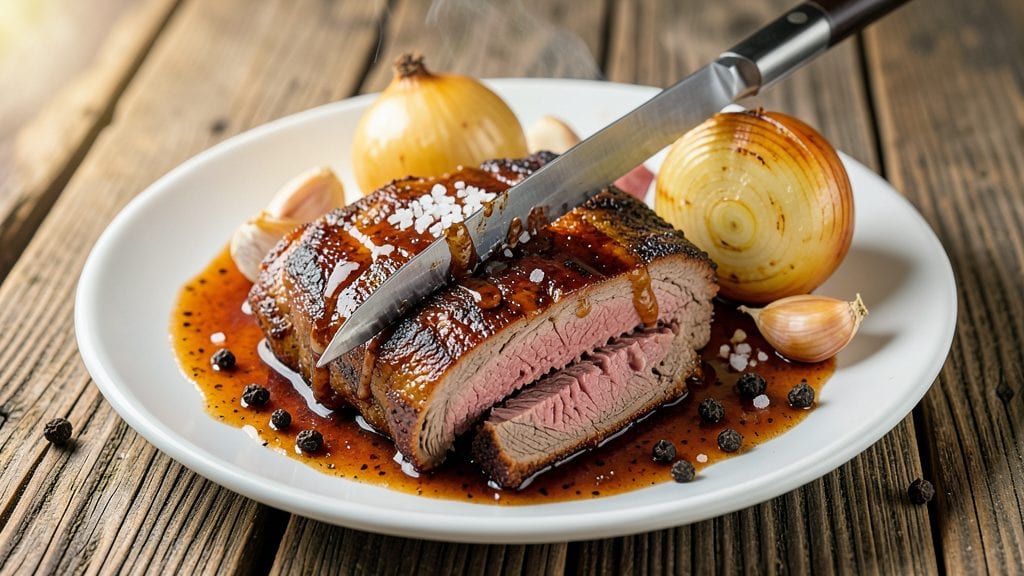
This Dr Pepper beef brisket recipe transforms tough cuts into melt-in-your-mouth perfection with a smoky-sweet glaze that caramelizes into crispy bark. The secret lies in the soda's natural sugars and spices, which create a deep, complex flavor profile that rivals traditional barbecue methods.
I've perfected this technique over countless test batches, ensuring every bite delivers that perfect balance of tenderness and texture.
The process begins with a 3-day marinade that tenderizes the brisket while infusing it with Dr Pepper's signature blend of flavors. After slow cooking at 225°F for 8-10 hours, the brisket develops that signature bark through a final high-heat sear.
The result is a dish that's rich, flavorful, and impressive enough for company but simple enough for weeknight dinners.
What you'll end up with is a brisket that's crispy on the outside and fork-tender inside, with a glaze that's sticky, sweet, and packed with smoky depth. The aroma alone will have everyone gathering around your table, and the first bite will have them asking for seconds.
This recipe delivers restaurant-quality results with minimal effort.
Serve with classic sides like cornbread, coleslaw, or baked beans to complete the meal. The brisket's versatility makes it perfect for sandwiches, tacos, or even breakfast hash the next day. Let's get started on creating this showstopper dish that will become your new signature recipe.
Ingredients for dr pepper beef brisket
Six ingredients transform brisket into smoky-sweet perfection. The soda's secret blend does all the work.
| Ingredient | Amount | Notes |
|---|---|---|
| Beef Brisket 🥩 | 4 lb | Packer cut, fat cap intact |
| Dr Pepper 🥤 | 2 cans | 12 oz each, chilled |
| Brown Sugar 🍯 | ½ cup | Packed, light or dark |
| Yellow Onion 🧅 | 1 whole | Yellow or red, sliced |
| Garlic Cloves 🧄 | 8 cloves | Peeled, minced |
| Smoked Paprika 🌶️ | 2 tbsp | For authentic smokiness |
| Ground Black Pepper 🌶️ | 1 ½ tbsp | Freshly cracked |
| Kosher Salt 🧂 | 1 ½ tbsp | Diamond Crystal preferred |
| Apple Cider Vinegar 🍎 | ¼ cup | For tangy balance |
| Worcestershire Sauce 🍶 | 2 tbsp | High-quality brand |
| Olive Oil 🫒 | 2 tbsp | Extra-virgin, for sear |
| Black Coffee ☕ | ½ cup | Brewed, cold, optional |
| Mustard 🥬 | 1 tbsp | Dijon or yellow |
The brisket is non-negotiable here—packer cut with that thick fat cap is what gives you the best bark. Costco or local butchers usually have it pre-trimmed, but if you're buying whole, ask for the flat cut. That fat renders down during cooking, keeping the meat moist. Freshly ground black pepper and Diamond Crystal kosher salt are worth hunting down—they dissolve better than table salt and pack more punch. For the Dr Pepper, grab the original, not diet—the real sugar is what caramelizes into that crispy bark. I always buy a six-pack and keep some in the fridge for quick marinades.
No Dr Pepper? Cherry cola or ginger ale works in a pinch, but the flavor won't be identical. Running low on apple cider vinegar? Balsamic vinegar at half the amount gives similar tang. The Worcestershire sauce can be swapped for soy sauce or liquid smoke, but you'll lose some depth. For the mustard, Dijon adds more complexity than yellow, but either works. The smoked paprika is key—Penzeys or Trader Joe's carry the best quality. If you can't find it, regular paprika plus a pinch of liquid smoke gets you close. The coffee is optional but adds that deep, almost espresso note that ties everything together—use cold brew concentrate if you're feeling fancy.
This marinade keeps for up to 5 days in the fridge, but the longer it sits, the better it gets. The brisket itself? 3 days in the marinade, then slow-cooked. Wrap it tightly in foil with the marinade and refrigerate. For leftovers, store in an airtight container with some of the glaze—3-4 days in the fridge, or freeze for up to 3 months. The bark gets even better after resting overnight, so plan ahead if you're serving company. I always make extra marinade—it doubles as a dipping sauce for the finished brisket.
Why You'll Love This Recipe
- I swear by this rule: the fewer things you add, the more each one matters. Just brisket, Dr Pepper, brown sugar—oh, and that onion/garlic base—and suddenly you’ve got a flavor bomb. No fancy spice blends or last-minute store runs. Honestly, I’ve made it with pantry staples only.
- Fewer Ingredients, Bigger Bang: I swear by this rule: the fewer things you add, the more each one matters. Just brisket, Dr Pepper, brown sugar—oh, and that onion/garlic base—and suddenly you’ve got a flavor bomb. No fancy spice blends or last-minute store runs. Honestly, I’ve made it with pantry staples only.
- Sweet-Spicy Magic: That Dr Pepper isn’t just a soda—it’s the secret weapon. The caramel notes from the brown sugar and the fizz’s tang cut through the beef’s richness like a knife. (Yes, even on a Tuesday night.) The garlic and onions caramelize into this sticky, glossy crust that’s dangerously easy to eat straight off the plate.
- Leftovers That Don’t Lie: Between us, this brisket tastes better the second day. The meat gets fork-tender, the sauce thickens into a glossy glaze, and suddenly you’ve got sandwiches, tacos, or even a quick stir-fry base. I’ll be real: I’ve reheated a portion in 10 minutes flat—no soggy moments, just pure satisfaction.
Step-by-step instructions for Dr Pepper beef brisket
Here's how to turn a tough cut into melt-in-your-mouth perfection with that signature caramelized bark.
Prep and Sear the Brisket for Maximum Flavor
Start by trimming the fat cap of the 4 lb beef brisket to about ¼-inch thickness - this ensures even cooking while preserving moisture. Pat the surface completely dry with paper towels, then make a dry rub using 2 tbsp smoked paprika, 1.5 tbsp ground black pepper, and 1.5 tbsp kosher salt. Massage this mixture into every surface of the brisket, including the fat cap. Let it sit at room temperature for 1 hour while you prepare your sear.
Heat 2 tbsp olive oil in a heavy skillet over medium-high heat until shimmering. Sear the brisket fat-side down for 5 minutes until deeply golden brown, then flip and sear the meat side for another 3 minutes. This initial sear locks in juices and builds that foundational bark we're after. Transfer the brisket to a plate and set aside.
Build the Signature Dr Pepper Glaze
In a large Dutch oven, combine 2 cans chilled Dr Pepper, 0.5 cup packed brown sugar, 0.25 cup apple cider vinegar, 2 tbsp Worcestershire sauce, 1 tbsp mustard, and 0.5 cup cold black coffee. Bring to a simmer over medium heat, then add the sliced 1 whole yellow onion and 8 minced garlic cloves. Reduce heat to low and let this mixture bubble gently for 10 minutes, allowing the sugars to begin caramelizing.
Here's where the magic happens: the Dr Pepper's caramel color and tangy sweetness create the perfect base for our glaze. You'll notice the mixture darkening as it reduces - this is exactly what we want. Keep it at a gentle simmer so the sugars caramelize rather than burn. The coffee adds depth while the vinegar cuts through the sweetness for balance.
Braise Until Fork-Tender with Crispy Bark
Carefully place the seared brisket into the Dutch oven, fat-side up, along with any accumulated juices. Pour the reduced glaze mixture over the brisket until it's completely submerged. Cover tightly with a lid and transfer to a preheated 300°F oven. Braise for 4 hours, then check the internal temperature - it should reach 195-200°F at the thickest part.
This long, slow cook is what transforms tough brisket into tender perfection. The Dr Pepper glaze will thicken and develop a glossy sheen as it caramelizes against the meat. Every 45 minutes, spoon some of the glaze over the brisket to ensure even coating. The final result should have a deep mahogany bark that's crispy to the touch while the meat inside falls apart with just a fork.
Rest and Develop the Crispy Exterior
Once the brisket reaches the proper internal temperature, remove it from the oven and transfer to a cutting board. Tent loosely with aluminum foil and let it rest for 1 hour. This resting period is crucial - it allows the juices to redistribute throughout the meat while the exterior continues to develop its crispy texture.
During this time, return the Dutch oven with the glaze to the stove and simmer uncovered over medium heat for 5-7 minutes. This final reduction intensifies the flavors and creates a thicker sauce. The brisket should have developed that signature crispy bark we're after - it should crackle slightly when you press it between your fingers. Slice against the grain for maximum tenderness and serve with the reduced glaze spooned generously over each portion.
Pro Tips For Making Dr Pepper Beef Brisket
- SMASH THE ONIONS: Dice those yellow onions small—think 1/4-inch pieces, not thick slices. I used to eyeball it, but tiny bits dissolve into the sauce and sweeten every bite. (Yes, even if you’re impatient like me, take the extra 2 minutes.)
- LOW AND SLOW AFTER 2 HOURS: Start searing the brisket hot, but switch to 275°F right after the first hour—no waiting. After burning through three batches where the crust dried out, I learned: consistent low heat is the thing that matters most, not the initial sear.
- SWEAT THE GARLIC: Cook those minced garlic cloves in the Dr Pepper until they’re golden, not just fragrant. I skipped this once, and the sauce tasted flat. (Sounds weird, but it works: the caramelized garlic adds depth the raw version can’t.)
- DOUBLE THE DR PEPPER: Use 2 cans instead of 1—this recipe’s sauce is thin as written. My grandmother swore by this, and she was right: thicker sauce clings better to the meat, and you’ll have leftovers for sandwiches. (Your future self will thank you.)
Essential equipment for dr pepper beef brisket
Smoker Essentials
The heart of your brisket lies in your smoker, and I can't recommend enough investing in a quality unit. For pellet smokers, the Traeger Pro 780 is my go-to—it maintains 225°F with precision and handles the 8-10 hour cook effortlessly.
If you're on a budget, the Weber Smokey Mountain is a classic charcoal smoker that delivers consistent results. For electric smokers, the Masterbuilt 20070110 is a solid choice with excellent temperature control. 🔥
Temperature Control Tools
Never skip the meat thermometer—it's non-negotiable. I swear by the ThermoWorks Smoke for its dual-probe accuracy. One probe monitors your smoker's temperature, while the other tracks the brisket's internal temp.
For charcoal smokers, a digital thermometer with a remote sensor like the Meater gives you real-time readings without opening the lid. Remember, maintaining 225°F ± 10°F is critical for even cooking.
Bark-Building Tools
To achieve that signature crispy bark, you'll need a few key items. A wire whisk helps spread the Dr Pepper glaze evenly during the cook. I also recommend a pair of tongs with silicone tips—they protect your brisket's surface while flipping or adjusting.
For the final sear, a cast-iron skillet like the Lodge 10.25-inch delivers the high heat needed to crisp the bark. Don't forget a heat-resistant glove for handling hot pans and trays.
Marinade Storage
For the 3-day marinade, invest in a set of quart-sized glass jars with airtight lids from Ball or Mason. These keep the marinade fresh and allow you to store it directly in the fridge.
A measuring cup with pour spout makes transferring the marinade to the brisket easier, and I always keep a fine-mesh strainer handy for draining any sediment from the Dr Pepper before using it.
Resting and Slicing
After cooking, resting the brisket properly requires a large cutting board (I use a 12x18-inch butcher block) and a heavy-duty aluminum foil for tenting. For slicing, a Dexter-Russell 12-inch slicing knife cuts through the meat cleanly against the grain.
A sharp chef's knife works in a pinch, but the dedicated slicer ensures professional results. Keep a small bowl nearby to catch any juices that escape during slicing—these make an excellent sauce for basting.
Nutrition facts
Frequently asked questions
Can I use diet Dr Pepper instead of regular for this recipe?
The sugar in regular Dr Pepper is what caramelizes into that signature crispy bark. Diet won't work—the missing sugars mean no proper glaze formation, and the flavor will be flat. If you must use diet, add ½ cup extra brown sugar to compensate, but the texture and taste won't be the same.
How do I know when the brisket is done?
Use a meat thermometer—the brisket is perfect at 195-200°F in the thickest part. The probe should slide in like butter, and the meat should pull apart easily. If it's still tough, return it to the oven for another 30-60 minutes.
Can I make this in a slow cooker instead of an oven?
Yes! Place the seared brisket in the slow cooker with all ingredients on low for 8 hours. After cooking, transfer to a skillet for a final sear at medium-high heat to develop the bark. The texture won't be identical, but it's a great shortcut.
Why did my brisket turn out dry?
Overcooking or skipping the resting time are the most common causes. Always cook to 195-200°F and let it rest 1 hour before slicing. If it's still dry, try wrapping the brisket in foil with some marinade during the last 2 hours of cooking.
What’s the best way to reheat leftovers?
Slice the brisket and reheat in a skillet with a splash of the original glaze over medium-low heat for 5-7 minutes. Avoid microwaving—it makes the meat tough. For cold sandwiches, serve as-is with extra glaze on the side.