
Main Courses
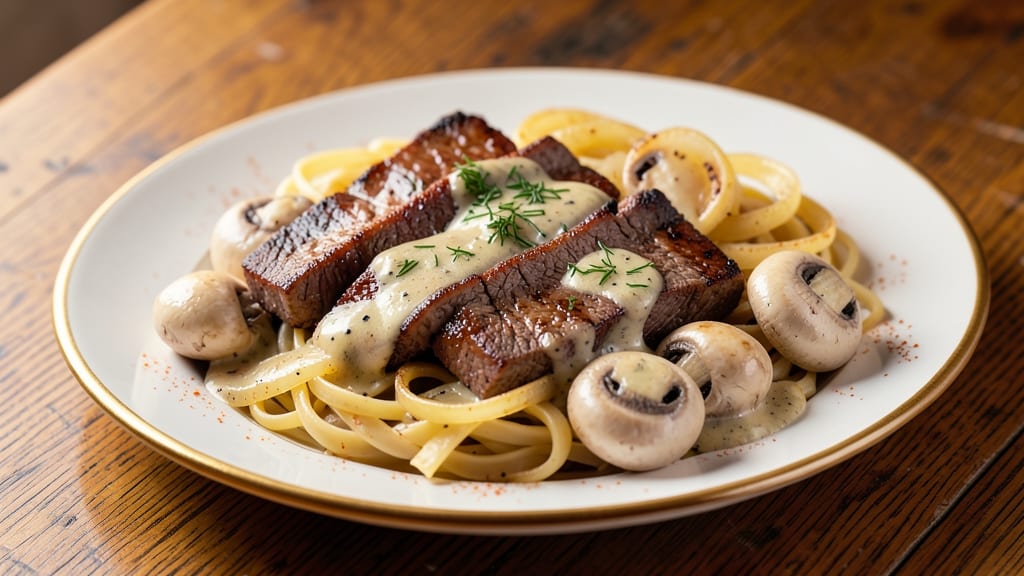
Bobby Flay’s beef stroganoff recipe delivers restaurant-quality results with tender beef and a velvety sour cream sauce in just 30 minutes. The secret lies in proper searing and deglazing, which builds deep, savory flavors without overcomplicating the process.
This technique transforms simple ingredients into a dish that feels like a fine-dining experience—perfect for weeknight dinners that impress.
The recipe begins with perfectly seared beef strips, cooked to a golden crust before being set aside to rest. Deglazing the pan with beef broth captures all those flavorful browned bits, forming the foundation of a rich, aromatic sauce.
Adding mushrooms and onions deepens the umami profile, while a touch of sugar balances the acidity from the sour cream, creating a harmonious blend of tangy and creamy.
By the time you plate this dish, you’ll have fork-tender beef swimming in a glossy, velvety sauce, all swirled together with egg noodles for a satisfying bite. The finishing touch—a dollop of extra sour cream and fresh herbs—elevates the presentation to match the flavor.
This is comfort food at its finest, with professional-level results that anyone can achieve.
Pair it with roasted potatoes or steamed asparagus for a complete meal, or serve it over buttered noodles for a classic presentation. The technique is straightforward, but the outcome is undeniably impressive—just like Bobby Flay’s signature dishes. Let’s get cooking!
Ingredients for bobby flay beef stroganoff
Restaurant-quality beef stroganoff starts with these carefully selected ingredients for tender beef and velvety sauce.
| Ingredient | Amount | Notes |
|---|---|---|
| Beef Tenderloin 🥩 | 1 ½ lb | Cut into 1/2-inch strips |
| Yellow Onion 🧅 | 1 whole | Thinly sliced, about 1.5 cups |
| White Button Mushrooms 🍄 | 8 oz | Sliced, whole or baby |
| Garlic Cloves 🧄 | 4 cloves | Minced, fresh preferred |
| All-Purpose Flour 🌾 | 1 tbsp | For coating beef strips |
| Unsalted Butter 🧈 | 3 tbsp | Full-fat for richness |
| Beef Broth 💧 | 1 cup | Low-sodium preferred |
| Sour Cream 🥛 | 1 cup | Full-fat for creaminess |
| Dijon Mustard 🍯 | 1 tbsp | For depth of flavor |
| Granulated Sugar 🍚 | 1 tsp | Balances acidity |
| Worcestershire Sauce 🍶 | 1 tbsp | For umami complexity |
| Fresh Dill 🌿 | 2 tbsp | Chopped, for freshness |
| Egg Noodles 🍝 | 8 oz | Medium width preferred |
| Diamond Crystal Kosher Salt 🧂 | 1 tsp | For seasoning |
| Freshly Ground Black Pepper 🌶️ | ½ tsp | For finishing |
The beef selection is critical—tenderloin ensures fork-tender results, though sirloin works in a pinch. Costco or Whole Foods carry premium cuts ideal for this dish. Avoid anything with excessive marbling, as it can make the meat tough. For the mushrooms, cremini or shiitake add depth but button mushrooms deliver consistent results. The Diamond Crystal kosher salt is preferred for its clean flavor profile, though any fine sea salt works. Fresh dill should be vibrant green with no wilting—Trader Joe's often has excellent quality at reasonable prices.
No beef tenderloin? Top sirloin or flank steak work well when sliced thinly against the grain. Substitute vegetable broth for beef broth if needed, though the umami will be slightly muted. For the sour cream, full-fat is non-negotiable—reduced-fat versions won't achieve that luxurious texture. The Dijon mustard can be swapped for whole-grain mustard, though it may add slight graininess. When measuring the flour for coating, spoon and level for consistent results. The egg noodles should be fresh if possible—Barilla or De Cecco brands are consistently reliable.
This dish reheats beautifully—store in an airtight container for up to 4 days or freeze portions for 3 months. For best results, reheat gently with a splash of beef broth to restore moisture. The sauce can be made ahead and stored separately, then combined with the cooked beef just before serving. Fresh dill should be added last to preserve its vibrant flavor. Portion the noodles separately if making ahead to prevent sogginess—cook al dente and toss with olive oil before storing.
Why You'll Love This Recipe
- One-Pan Magic: I swear by this recipe when I’m too tired to wash extra dishes. The beef tenderloin sears right in the same pan with onions and mushrooms—no skillet juggling, no stress.
- Rich Without Effort: That tenderloin? It melts in your mouth, but the real star is the creamy mushroom sauce. The flour gives it that velvety texture while keeping it light—no heavy cream mess, just pure satisfaction.
- Date Night Ready: Between us, this is my go-to for impressing guests. It’s fancy enough for company but still feels like a weeknight meal. Serve it over egg noodles or crusty bread, and suddenly you’re the host who actually cooks.
- Leftovers That Don’t Suck: Honestly, I make double batches because the flavor only gets better the next day. The sauce thickens just right, and the beef stays juicy—perfect for lunches or freezing for lazy nights.
Step-by-step instructions for Bobby Flay's beef stroganoff
Here's the method for achieving Bobby Flay's signature tender beef and creamy sauce in record time.
Prepare and Sear the Beef Tenderloin
Begin by cutting the 1.5 lb beef tenderloin into ½-inch strips—this ensures even cooking and maximum tenderness. Pat the strips dry with paper towels to remove any surface moisture, which helps achieve a proper sear. Season each strip generously with 1 teaspoon diamond crystal kosher salt and ½ teaspoon freshly ground black pepper, pressing the seasoning into the meat so it adheres.
Heat 2 tablespoons unsalted butter in a large skillet over medium-high heat until the butter foams and begins to sizzle. Add the beef strips in a single layer, leaving space between them to prevent overcrowding. Sear for 2-3 minutes per side until the beef develops a deep golden-brown crust. Remove the beef and set it aside on a plate, leaving the rendered butter and beef juices in the skillet—these are essential for building flavor. The beef should be cooked to medium-rare (135°F internal temperature) at this stage, as it will finish cooking later in the sauce.
Sauté Aromatics and Develop the Sauce Base
In the same skillet, reduce the heat to medium and add the remaining 1 tablespoon unsalted butter. Add the thinly sliced 1 whole yellow onion and cook for 4-5 minutes, stirring occasionally, until the onions soften and begin to caramelize at the edges. Add the 8 oz sliced white button mushrooms and cook for another 5 minutes, stirring frequently, until they release their moisture and begin to brown.
Push the mushrooms and onions to one side of the skillet and add the 4 minced garlic cloves. Sauté for 30 seconds until fragrant—this prevents the garlic from burning, which would make the dish bitter. Sprinkle 1 tablespoon all-purpose flour over the aromatics and stir to coat evenly. Cook for 1 minute to remove the raw flour taste, then gradually pour in the 1 cup beef broth, scraping up any browned bits from the bottom of the skillet with a wooden spoon. This deglazing step captures all the rich flavors you've built so far.
Simmer and Finish the Sauce
Return the seared beef strips to the skillet and stir to combine with the sauce. Add the 1 tablespoon dijon mustard, 1 teaspoon granulated sugar, 1 tablespoon worcestershire sauce, and bring the mixture to a gentle simmer. Reduce the heat to low and let it cook for 5-7 minutes, stirring occasionally, until the sauce thickens slightly and the beef is cooked through to 145°F internal temperature. The sugar balances the acidity of the mustard and Worcestershire, while the mustard adds depth that elevates the dish beyond basic stroganoff.
Remove the skillet from heat and stir in the 1 cup sour cream and 2 tablespoons chopped fresh dill. The sour cream should be warmed through but not curdled—this is why you work off low heat. Taste and adjust the seasoning with additional diamond crystal kosher salt or freshly ground black pepper as needed. The sauce should be creamy, well-balanced, and rich without being overly heavy.
Cook and Combine with Noodles
While the sauce simmers, cook the 8 oz egg noodles according to package instructions in a separate pot of salted boiling water until al dente. Drain the noodles, reserving ½ cup pasta water, and return them to the pot. Toss the noodles with 1 tablespoon unsalted butter to prevent sticking and keep them creamy.
To serve, divide the cooked egg noodles among 4 plates, then spoon the beef stroganoff generously over each portion. The key to presentation is the sour cream swirl—use a spoon to create elegant ribbons of sauce across the top of each serving. Garnish with additional chopped fresh dill and a final crack of freshly ground black pepper. Serve immediately, as the noodles absorb the sauce best when hot and the flavors meld together right at the table.
Pro Tips For Making Bobby Flay Beef Stroganoff
- Sear the Beef First: Bobby Flay’s version demands a deep, caramelized crust on the tenderloin—don’t skip the high-heat sear. Slice the beef thin (¼-inch max) and cook it in batches for 1-2 minutes per side until golden, or it’ll turn tough before the stroganoff sauce finishes.
- Slice Onions Thinly: I used to chop onions roughly, but Bobby’s recipe relies on them melting into the sauce. Cut them into paper-thin half-moons—almost translucent—and they’ll dissolve smoothly without bitterness.
- Deglaze with Beer: The flour-to-beef ratio is tight here, so scrape every last bit of fond from the pan with a splash of dark beer (like a stout or porter). It adds depth and prevents a dry, flour-heavy sauce—trust me, it’s not just for flavor.
- Cook Mushrooms Separately: Sautéing mushrooms directly with the beef makes them watery and dull. Brown them first in a separate pan with a pinch of salt, then add them back at the end—just until heated through. They’ll stay meaty and rich.
Troubleshooting perfect results
Beef Overcooked
If your beef feels tough instead of tender, you likely overcooked it during the searing stage. Bobby Flay’s method calls for medium-rare (135°F) beef strips that finish cooking in the sauce.
Use an instant-read thermometer to check internal temperature—never let it exceed 145°F before removing from heat. For extra tenderness, try slicing the beef thinly against the grain before searing. 🔥
Sauce Too Thin
A watery sauce usually means the flour wasn’t cooked long enough to thicken properly. Always toast the flour for 1 full minute after adding it to the skillet to remove the raw taste and activate its thickening power.
If the sauce is still too thin after simmering, mix 1 tablespoon cornstarch with 2 tablespoons cold water, stir into the sauce, and cook for 2-3 minutes until thickened.
Sour Cream Curdling
Adding cold sour cream to a hot sauce causes curdling. To prevent this, stir the sour cream into the sauce off the heat and keep the temperature below 160°F. If it curdles anyway, whisk in 1 tablespoon cold butter to restore creaminess.
For extra insurance, temper the sour cream first by mixing in 2 tablespoons warm broth before adding it to the sauce.
Mushrooms Too Watery
Overcrowding mushrooms releases excess moisture, diluting the sauce. Cook them in 2 batches if needed, and always pat them dry with a paper towel before slicing. For deeper flavor, swap button mushrooms for cremini or shiitake—they hold their shape better and add umami richness.
Salt the mushrooms lightly before cooking to draw out moisture. 🍄
Lacking Depth of Flavor
If your stroganoff tastes flat, the deglazing step might have missed flavorful browned bits. Always scrape the pan aggressively with a wooden spoon while adding beef broth. For extra umami, add 1 teaspoon soy sauce or ½ teaspoon fish sauce to the sauce.
A pinch of smoked paprika or 1 bay leaf (removed before serving) can also elevate the dish.
Noodles Soggy or Mushy
Overcooked noodles absorb too much sauce, creating a mushy texture. Cook noodles al dente (1 minute less than package instructions) and toss immediately with 1 tablespoon butter to create a barrier.
For extra insurance, serve noodles separately and let guests add sauce to taste. If using leftovers, reheat noodles and sauce separately, then combine briefly before serving. ⚡
Nutrition facts
Frequently asked questions
Can I use ground beef instead of beef tenderloin for this recipe?
While beef tenderloin is ideal for its tenderness, you can use lean ground beef (80/20 blend) in a pinch. Brown it thoroughly first to develop flavor, then proceed with the recipe. For best results, break it into small pieces to mimic the texture of sliced tenderloin. The dish will still be delicious, though slightly more hearty.
How do I prevent the sour cream from curdling when making stroganoff?
Always stir the sour cream into the sauce off the heat and keep the temperature below 160°F. For extra insurance, temper the sour cream first by mixing in 2 tablespoons warm broth before adding it to the pan. If curdling occurs, whisk in 1 tablespoon cold butter to restore creaminess.
What's the best way to reheat leftover beef stroganoff?
Reheat leftovers gently in a skillet over low heat with a splash of beef broth to restore moisture. Never microwave directly from the fridge. For best texture, reheat the sauce and noodles separately, then combine briefly before serving. This prevents soggy noodles and maintains the creamy sauce consistency.
Can I make this recipe ahead of time?
Yes! Prepare the sauce and beef up to 2 days ahead and store in an airtight container. Cook the noodles fresh when ready to serve. Reheat the sauce gently with a splash of broth, then combine with freshly cooked noodles. The flavors actually improve overnight as they meld together.
What are good side dishes to serve with beef stroganoff?
Classic pairings include roasted garlic mashed potatoes, steamed asparagus, or a simple green salad. For a heartier meal, serve with crusty bread to soak up the creamy sauce. The dish is rich enough that lighter sides work best to balance the meal.