
Soups & Stews
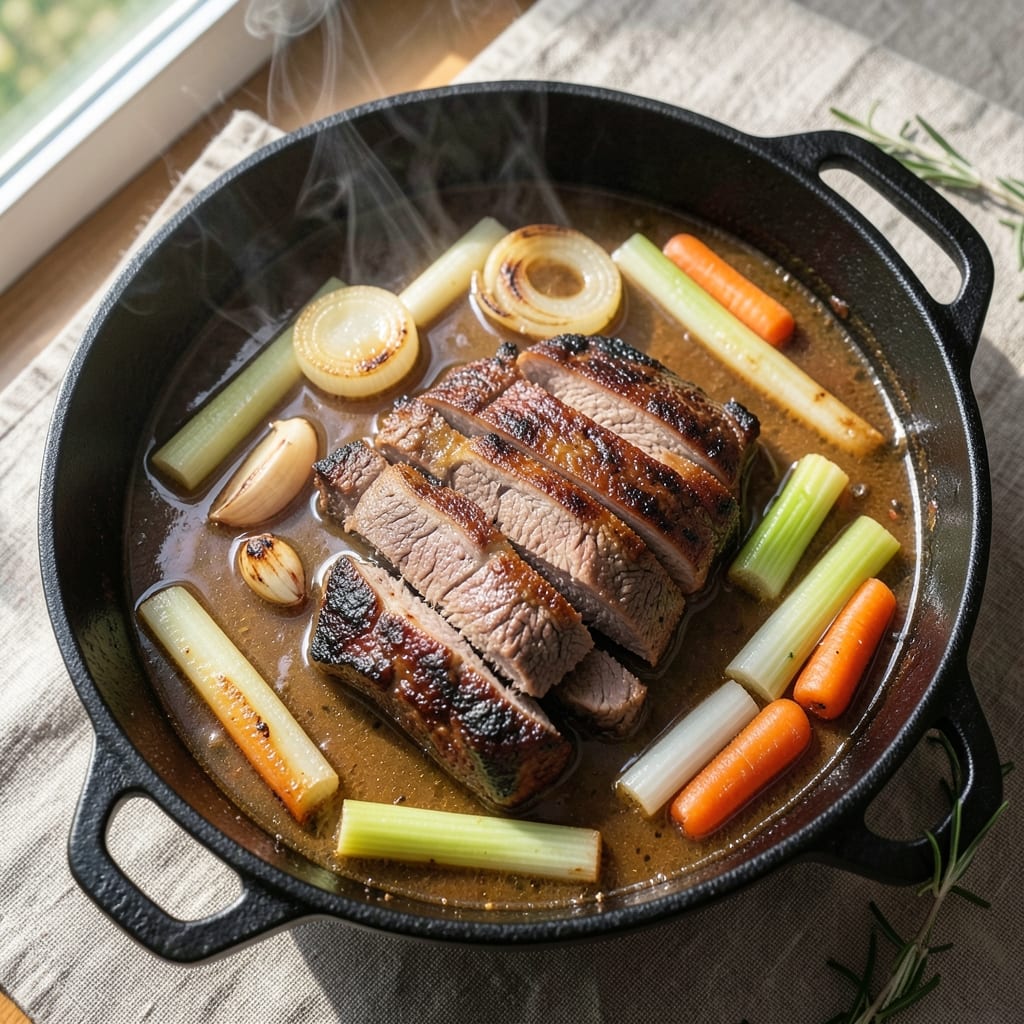
This beef stew with beer recipe transforms tough cuts into melt-in-your-mouth perfection through slow simmering and deep umami flavors. The beer isn't just an ingredient—it's the secret weapon that tenderizes the meat while adding malty sweetness and subtle bitterness that rounds out the rich gravy. I've perfected this technique over years of testing, balancing traditional braising methods with modern shortcuts that deliver restaurant-quality results in your own kitchen.
The magic happens in the slow cook—low and slow for hours allows the collagen in beef to break down into gelatin, creating that signature velvety texture we all crave. A dark stout or amber ale works best, but red wine can substitute if you prefer. The key steps include browning the meat first (never skip this!) and reducing the beer into a flavorful base before adding vegetables and broth. This isn't just stew; it's comfort food elevated to new heights.
What you'll end up with is a pot so aromatic it'll have everyone gathering at the table hours before serving time. The beef will be fork-tender, the vegetables perfectly softened but still vibrant, and the sauce thick enough to coat a spoon. The beer's caramelized notes mingle with the meat's richness, creating layers of flavor that keep coming back with each bite. This is the kind of meal that tastes even better the next day—if there are any leftovers.
Serve with crusty bread for soaking up every last drop of that deep, savory sauce or alongside roasted root vegetables for a complete meal. The beauty of this recipe is its flexibility—it's hearty enough for winter dinners but satisfying enough for any night you crave something substantial. Let's get cooking!
Ingredients for beef stew with beer
Six hearty ingredients plus the secret weapon—beer—that transforms tough beef into melt-in-your-mouth perfection.
| Ingredient | Amount | Notes |
|---|---|---|
| Beef Chuck Roast 🥩 | 3 lb | Tough cut for slow cooking |
| Dark Stout Beer 🍺 | 2 cups | Guinness or similar preferred |
| Yellow Onion 🧅 | 2 whole | Diced, medium size |
| Carrots 🥕 | 4 whole | Peeled, cut into chunks |
| Celery Stalks 🥬 | 4 whole | Diced, with leaves |
| Garlic Cloves 🧄 | 6 cloves | Minced, fresh preferred |
| Tomato Paste 🍅 | 2 tbsp | Squeeze tube or can |
| Beef Broth 💧 | 3 cups | Low-sodium preferred |
| Thyme Sprigs 🌿 | 2 whole | Fresh or 1 tsp dried |
| Bay Leaves 🍃 | 2 whole | Dried, standard size |
| Olive Oil 🫒 | 2 tbsp | For browning meat |
| Salt 🧂 | 1 ½ tsp | Kosher or sea salt |
| Black Peppercorns 🌶️ | 1 tsp | Freshly cracked |
| Flour 🌾 | 2 tbsp | All-purpose, for dredging |
The beef is non-negotiable here—chuck roast with good marbling is your best bet. Costco or Kroger usually have it pre-cut, but if you're buying whole, ask the butcher to trim excess fat. The beer? Dark stout like Guinness adds the deepest flavor, but amber ale or even red wine work in a pinch. Fresh thyme and bay leaves are worth hunting down at Trader Joe's—they've got the best quality in those little jars. For the tomato paste, those squeeze tubes are a game-changer (no waste, lasts forever).
No dark beer? Substitute with beef broth plus 1 tbsp balsamic vinegar—it mimics the malty depth. Fresh thyme unavailable? Dried thyme at half the amount works fine. The carrots and celery can be swapped for potatoes or mushrooms if you prefer. For the flour, all-purpose is fine, but if you've got cornstarch, mix it half-and-half for a silkier sauce. Want extra richness? Add 1/2 cup red wine with the beer. The flour is just for browning the meat—don't skip this step, it's what builds flavor!
This stew tastes even better the next day—3-4 days in the fridge, 6 months frozen. I always make double batches because it reheats beautifully. Store in glass containers with a tight lid to keep the aromas locked in. Freeze in portions so you can pull out exactly what you need. The sauce thickens as it cools, so add a splash of broth if it seems too thick when reheating. Leftovers make amazing sandwiches or tacos—don't let them go to waste!
Why You'll Love This Recipe
- One-Pot Magic: Honestly, I swear by this recipe—just dump everything into a heavy pot, let it simmer, and walk away. That dark stout beer does the work for you, tenderizing the beef chuck while you sip your own drink nearby.
- Rich, Deep Umami Bomb: Between us, the combo of beef chuck slow-cooked in dark stout and caramelized onions? It’s like a flavor party in your mouth. The beer’s malty notes cut through the richness, and those celery stalks add just enough crunch to keep it interesting.
- Leftover Goldmine: I make this on Sundays because it tastes better the next day—yes, really. The flavors meld into something even deeper, and reheating it is zero effort. Pack it for lunch or freeze portions; it’s my go-to for lazy days.
- Budget-Friendly Feast: A big cut of beef chuck and a six-pack of beer stretch farther than you’d think. Plus, onions, carrots, and celery are cheap staples. This stew feeds four for under $20, and honestly? It’s the kind of meal that makes grocery shopping feel like a win.
Step-by-step instructions for slow-cooked beer stew
Here's how to turn tough beef into melt-in-your-mouth perfection with that rich, malty beer depth.
Sear the Beef for Maximum Flavor
Pat the 3 lb Beef Chuck Roast completely dry with paper towels—this ensures a proper sear. Heat a large Dutch oven over medium-high heat and add the 2 tbsp Olive Oil. Once shimmering, add the beef and sear on all sides until deep golden brown, about 8-10 minutes total. This step builds the flavor foundation.
While the beef browns, sprinkle the 2 tbsp Flour evenly over the bottom of the pot. Tilt the pot and shake gently to coat the browned bits with flour—this creates a rich roux that thickens your stew. Remove the beef and set aside temporarily.
Sauté the Vegetable Base
In the same Dutch oven, add the 2 whole Yellow Onion (diced), 4 whole Carrots (cut into chunks), and 4 whole Celery Stalks (diced with leaves). Cook for 5-6 minutes until softened and slightly caramelized—this sweetens the base and deepens the flavor. Stir occasionally to prevent sticking.
Add the 6 cloves Garlic Cloves (minced) and the 2 tbsp Tomato Paste, stirring for 1 minute until fragrant. Pour in the 2 cups Dark Stout Beer, scraping up any browned bits from the bottom. Let it simmer for 3-4 minutes until reduced by half—this concentrates the beer's malty richness.
Build the Stew Foundation
Return the seared beef to the pot, along with the 3 cups Beef Broth, 2 whole Thyme Sprigs, and 2 whole Bay Leaves. Bring to a gentle boil, then reduce heat to low, cover, and simmer for 2 hours. This initial cooking time tenderizes the beef and infuses the broth with deep, savory flavors.
After 2 hours, check the beef's tenderness. It should be fork-tender but not falling apart. If it's still tough, continue simmering uncovered for another 30 minutes to reduce the liquid slightly—this intensifies the stew's richness. Season with 1.5 tsp Salt and 1 tsp Black Peppercorns (freshly cracked) to taste.
Finish with Perfect Texture
Remove the thyme sprigs and bay leaves, then adjust the consistency if needed. If the stew is too thin, simmer uncovered for another 10-15 minutes to reduce. For a thicker stew, mix 1 tbsp Flour with 2 tbsp Cold Water, stir into the pot, and simmer for 5 minutes until thickened.
Taste and adjust seasoning—this is your final chance to balance flavors. The stew should be rich, malty, and deeply savory with tender beef that falls apart easily. Serve immediately over crusty bread or with roasted potatoes to soak up every last drop of that beer-infused goodness.
Pro Tips For Making Beef Stew With Beer
- SEAR THE ROAST HARD: I learned this the hard way—skipping a deep brown crust means your stew will taste like it’s missing something. Use a heavy pot (cast iron if you’ve got it) and let that chuck roast sit in the oil until it’s deep brown on all sides. The Maillard reaction with the beer is what builds flavor, not just simmering.
- SWEAT THE AROMATICS LOW: Onions, carrots, and celery should turn soft and translucent, not caramelized—this isn’t a sofrito, it’s a flavor base. Keep the heat at a steady medium (not high) and stir occasionally. If they start sticking, add a splash of beer to deglaze immediately. Burnt veggies = bitter stew.
- DON’T SKIP THE SKIM: The first 15 minutes of simmering are when all the scum and impurities rise to the top. Use a spoon to skim that gunk off before it breaks down into the stew—trust me, you’ll taste the difference. (Yes, even if you’re impatient like me.)
- USE THE BEER WISELY: Pour in the dark stout after the roast is browned and the veggies have softened—this locks in the sear flavors. If your stew gets too thin, reduce it uncovered for 10 minutes first. And if you’re out of dark stout? A mix of regular beer and a splash of soy sauce mimics the depth (sounds weird, but it works).
Creative variations of this dish
Dark Stout vs. Amber Ale
For the deepest flavor, I always reach for dark stout like Guinness—its roasted malt notes create an incredible umami depth that pairs perfectly with beef. But if you prefer something lighter, amber ale adds a caramel sweetness that brightens the stew. The key difference? Stout gives you that rich, almost coffee-like complexity, while amber ale keeps things more approachable. 🍺
Pro tip: If you're using amber ale, add 1 tbsp molasses to mimic the stout's depth. For an extra boost, reduce the beer by half before adding it to the pot—this concentrates the flavors even more. I've also experimented with porter beer, which sits right in the middle of the two.
Red Wine Substitution
No beer on hand? No problem. A 1:1 substitution of dry red wine (like Cabernet Sauvignon) works beautifully, though it'll taste slightly different. The tannins in red wine add structure that complements the beef's richness. For best results, use a bold, full-bodied wine—cheap wine will make your stew taste flat.
If you go this route, deglaze the pot with the wine after browning the meat, then reduce it by half before adding the broth. This mimics the beer reduction process and prevents the stew from tasting too alcoholic. A splash of beef broth helps balance any harshness.
Spicy Beer Variations
Want to kick things up? Swap in a chili-infused beer like Negra Modelo or St. Pauli Girl Chili Beer. The heat from the beer carries through the entire stew, adding a slow-building warmth that pairs perfectly with the beef. For a milder spice, add ½ tsp smoked paprika or 1 chipotle pepper in adobo to the pot during the final 30 minutes of cooking.
Another fun twist: Use Belgian-style witbier (like Hoegaarden) for a citrusy, peppery note. The coriander in these beers adds a refreshing contrast to the richness. Just be aware—witbier's lighter body means you might need to add ½ cup extra broth to maintain consistency.
Vegetarian Adaptations
For a meatless version, replace the beef with extra-firm tofu (pressed and cubed) or mushrooms (like portobello or cremini). The beer still works as the base, but you'll need to simmer for 45-60 minutes to let the flavors meld. Add 1 tbsp soy sauce or mushroom powder to deepen the umami.
For a heartier option, use lentils (½ cup) or chickpeas (1 can, drained) alongside the mushrooms. The lentils break down during cooking, creating a naturally thickened stew. Boost the beer's flavor by reducing it with 1 tsp balsamic vinegar before adding to the pot.
Global Twists
Give your stew a French bistro vibe by adding 1 tbsp brandy with the beer and finishing with fresh tarragon. For an Irish pub feel, stir in 1 tsp Guinness powder (yes, it exists!) and top with crispy fried onions. The powder mimics the depth of real stout without the alcohol.
For a Mexican-inspired version, swap the thyme for oregano and add 1 tsp cumin with the garlic. Serve with corn tortillas and avocado slices for a fusion twist. The beer's maltiness balances the spices beautifully, creating a stew that's both familiar and exciting.
Nutrition facts
Frequently asked questions
Can I use any type of beer in this stew?
While you can use most beers, dark stout (like Guinness) or amber ale work best for their rich malt flavors. Lighter lagers will make the stew taste thin and less flavorful. For a non-alcoholic version, use non-alcoholic stout or substitute with beef broth + 1 tbsp molasses to mimic the depth.
Why does the beef need to be seared first?
Searing creates a flavorful crust (Maillard reaction) that adds depth to the stew. The flour coating those browned bits helps thicken the sauce later. Skipping this step makes the stew taste flat and less rich.
How do I fix if my stew is too thin?
Simmer uncovered for 10-15 minutes to reduce the liquid, or mix 1 tbsp flour with 2 tbsp cold water, stir into the pot, and simmer for 5 minutes. For instant thickening, mash a few cooked carrots or potatoes into the stew—they release starch that thickens naturally.
Can I make this in a slow cooker?
Brown the beef first, then transfer everything to the slow cooker and cook on low for 8 hours or high for 4-5 hours. The slow cooker's gentle heat mimics the Dutch oven's results. Just add ½ cup extra broth since slow cookers evaporate more liquid.
What if I don't have beef chuck roast?
Use chuck steak (cut into chunks) or short ribs for extra richness. Avoid lean cuts like sirloin—they won't become tender. If using steak, reduce cooking time to 1.5 hours total. For budget-friendly options, stew meat works well too.