
Sauces & Condiments
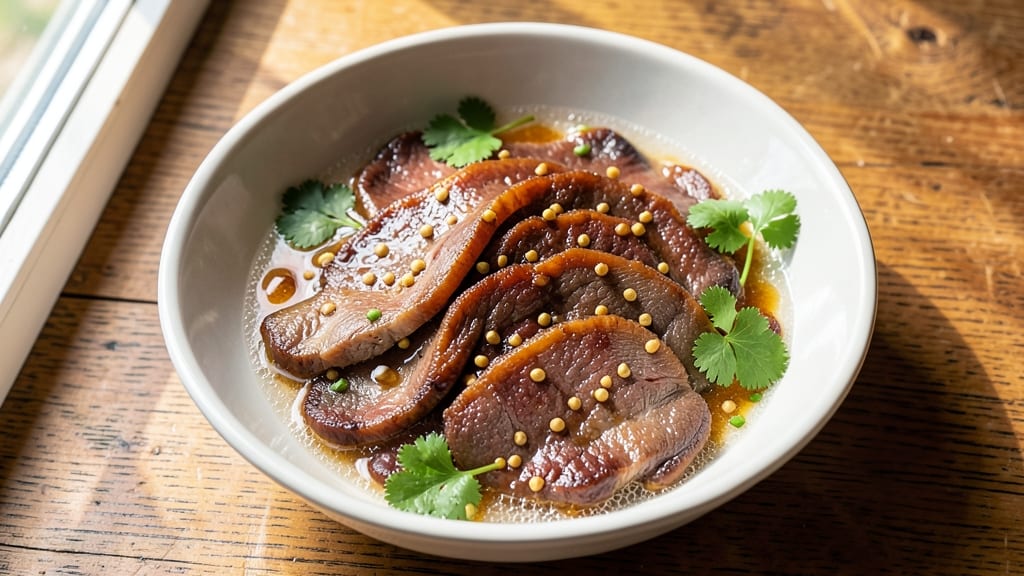
This beef pickle recipe transforms tender beef into a tangy, crunchy condiment that adds depth to sandwiches, tacos, and salads—with a shelf life that lasts for months. The process combines traditional fermentation with precise cooking techniques to achieve that signature balance of sweet, sour, and spicy flavors.
My version uses thinly sliced beef shoulder, which develops the perfect texture when marinated and cooked just right.
The key to success lies in the marinade—a blend of vinegar, spices, and aromatics that tenderizes the beef while infusing it with bold flavor. After marinating overnight, the beef is gently simmered until tender, then cooled before being packed into jars.
The fermentation process, which happens naturally over time, enhances the crunch and intensifies the tangy taste. This method ensures every bite delivers that satisfying crunch and complex flavor profile.
What sets this recipe apart is its versatility—whether you're looking to elevate a classic Reuben sandwich or add a unique twist to tacos, these beef pickles bring a restaurant-quality crunch to any dish.
The flavors deepen the longer they ferment, making them even more delicious with time. Once you try homemade beef pickles, store-bought versions simply won’t compare.
Perfect for meal prep, gifting, or keeping on hand for quick flavor boosts, this recipe delivers professional results with simple techniques. The process is straightforward, but the payoff—a jar of tangy, crunchy beef pickles that lasts for months—is well worth the effort.
Let’s get started on creating your own batch today.
Ingredients for beef pickle
Thinly sliced beef shoulder and bold spices create tangy, crunchy pickles that last months.
| Ingredient | Amount | Notes |
|---|---|---|
| Beef Shoulder 🥩 | 1 ½ lb | Thinly sliced against grain |
| White Vinegar 💧 | 1 cup | Distilled or apple cider |
| Water 💧 | 1 cup | Filtered preferred |
| Granulated Sugar 🍚 | ½ cup | Light brown sugar works too |
| Mustard Seeds 🌶️ | 1 tbsp | Yellow or brown |
| Celery Seeds 🌿 | 1 tbsp | Ground preferred |
| Ground Black Pepper 🌶️ | 1 tsp | Freshly cracked |
| Bay Leaves 🍃 | 2 whole | Fresh or dried |
| Onion 🧅 | 1 whole | Yellow, thinly sliced |
| Garlic Cloves 🧄 | 4 cloves | Minced or crushed |
| Salt 🧂 | 1 ½ tbsp | Kosher or sea salt |
| Red Wine Vinegar 🍷 | ½ cup | For depth of flavor |
| Pickling Spice 🌶️ | 1 tbsp | Store-bought or homemade |
| Cayenne Pepper 🔥 | ¼ tsp | Adjust for heat |
The beef shoulder is non-negotiable—look for well-marbled cuts at Costco or Whole Foods for the best texture. Thinly slicing against the grain (about 1/8-inch thick) ensures that signature crunch. If you're not confident slicing yourself, ask your butcher to do it. The vinegar mix is where the magic happens: white vinegar for brightness, red wine vinegar for depth, and sugar to balance the acidity. Trader Joe's has affordable pickling spices if you don't want to make your own blend. Fresh bay leaves add a subtle aroma, but dried works in a pinch.
No mustard seeds? Substitute 1/2 tsp ground mustard—it won't be identical, but it'll work. Running short on celery seeds? Skip it or use 1/2 tsp ground coriander. The sugar is key for fermentation, but if you're watching carbs, reduce to 1/4 cup and add 1/4 cup honey. For a milder kick, swap cayenne for 1/2 tsp smoked paprika. The onions and garlic can be prepped ahead—they'll keep in the fridge for up to 3 days before marinating. If you're making a big batch, double the spices and use a large stockpot for the cooking step.
This recipe keeps for 6-12 months in the fridge—yes, really. After simmering, let the beef cool completely before packing into sterilized jars. The longer they ferment, the tangier they get. Label your jars with the date so you can track flavor development. For gifting, these make an amazing present—just tie a ribbon around the jar. If you've got extra marinade, freeze it in ice cube trays for quick flavor boosts later. The pickles are best after 2 weeks of fermenting, but they'll stay good for months.
Why You'll Love This Recipe
- One-Pot Magic: I swear by this recipe because it’s literally one pot—no chopping, no fussing. Just slice the beef shoulder thin, toss it in with vinegar, sugar, and mustard seeds, then let the heat do the work. Honestly, I’ve made it while scrolling through my phone.
- Tangy Crunch Alert: That vinegar-sugar balance? Chef’s kiss. The mustard seeds add a little pop, and the beef gets this perfect tender-yet-firm texture. It’s not sweet, not sour—just ridiculously good in every bite.
- Picnic Game-Changer: Between us, this is my go-to for potlucks, tailgates, or even a lazy Sunday. Pack it in jars, and it stays fresh for days. My friends keep asking for the recipe—now they’ll know why.
- Budget-Friendly Staple: Beef shoulder is affordable, and a big batch stretches for weeks. I’ve had it cold with crackers, reheated in sandwiches, or even tossed with rice. Not the prettiest, but the taste makes up for it every time.
Step-by-step instructions for fermented beef pickles
Here's how to make these tangy, crunchy beef pickles that stay fresh for months.
Prepare the Beef Shoulder
Start by slicing the 1.5 lb beef shoulder thinly against the grain using a sharp knife. You want strips about ¼-inch thick—this ensures they stay tender after fermentation. Place the sliced beef in a large bowl and set aside.
Here's the thing—if your beef slices are uneven, they won't ferment evenly. Take your time with this step. The thinner the slices, the more surface area they have to absorb all that delicious pickle flavor.
Create the Pickling Brine
In a medium saucepan, combine the 1 cup white vinegar, 1 cup water, 0.5 cup granulated sugar, 1 tbsp mustard seeds, 1 tbsp celery seeds, 1 tsp ground black pepper, 2 whole bay leaves, 1 whole onion (thinly sliced), and 4 cloves garlic cloves (minced). Stir well to dissolve the sugar completely.
Bring the mixture to a gentle boil over medium heat, then reduce to a simmer for 10 minutes. This allows the flavors to meld together. While it simmers, you'll notice the bay leaves and pickling spice releasing their aromas—this is when the magic starts happening.
Remove the pan from heat and let it cool for 15 minutes. This prevents the beef from cooking in the hot liquid. Once cooled, stir in the 0.5 cup red wine vinegar, 1 tbsp pickling spice, and 0.25 tsp cayenne pepper. Give it one final stir to distribute everything evenly.
Season and Pack the Beef
Add the sliced beef shoulder to the cooled brine and stir gently to coat each piece. Now's the time to add the 1.5 tbsp salt—sprinkle it evenly over the beef and mix again. The salt helps preserve the meat and enhances the flavor.
Transfer the beef and brine to a clean, quart-sized mason jar, pressing down gently to remove any air bubbles. The beef should be fully submerged in the liquid—this prevents mold and ensures proper fermentation. Leave about ½-inch of headspace at the top of the jar.
Ferment and Store
Seal the jar tightly and let it sit at room temperature for 48 hours. This initial fermentation period develops the tangy flavor. After 48 hours, transfer the jar to the refrigerator where it will continue fermenting slowly.
The pickles will be ready to eat after 72 hours in total, but they'll keep improving in flavor for up to 3 months if stored properly. The longer they ferment, the more complex and tangy they become. Give them a taste after a week—the flavor transformation is amazing.
Pro Tips For Making Beef Pickle
- BLANCH THE MEAT FIRST: Drop your beef shoulder into boiling water for 2-3 minutes before pickling—this softens the fibers and keeps it tender even after hours in vinegar. I learned this the hard way when my first batch turned chewy; the brief pre-cook makes all the difference.
- USE LESS SUGAR: Start with half the sugar called for and taste as you go. The vinegar’s acidity balances sweetness better when you adjust gradually—adding more later is easier than fixing cloying syrup. (Yes, even if the recipe says "1 cup.")
- SIMMER GENTLY AFTER BOILING: Once the liquid reaches a full boil, drop the heat to a barely simmer. I used to let it rage, and the vinegar would evaporate too fast, leaving the beef dry and the flavor flat. A slow, steady simmer keeps everything balanced.
- TOAST THE MUSTARD SEeds: Dry-toast your mustard seeds in a separate pan for 30 seconds until they sizzle and smell nutty—this deepens their flavor without burning. Skipping this step means they’ll just sit there, bland and underwhelming. (Trust me, it’s worth the extra minute.)
Flavor customization for this dish
Sweet & Tangy Twist
Swap the cayenne pepper for 1 tbsp honey and add ½ tsp ground ginger to the brine for a sweet-tangy profile. The honey caramelizes slightly during simmering, creating a glossy finish. I find this version works beautifully in sandwiches—try it with corned beef or pastrami. 🍯
Spicy Carolina Reuben Style
Boost the heat by adding 1 tbsp hot sauce (like Crystal or Tabasco) to the cooled brine, plus 1 tsp smoked paprika. This gives you that signature Carolina Reuben kick.
For extra crunch, pack the jars with thinly sliced red onions alongside the beef. These pickles are perfect for loaded fries or as a sandwich topping.
Herb-Infused Mediterranean
Replace the pickling spice with 1 tbsp dried oregano, 1 tsp dried thyme, and ½ tsp dried rosemary. Add 1 tbsp lemon zest to the brine for brightness.
This variation pairs wonderfully with grilled lamb or in Mediterranean-style salads. The herbs add an earthy depth that complements the tangy vinegar perfectly. 🌿
Garlic & Onion Bomb
Double the garlic to 8 cloves and add 2 tbsp finely chopped fresh onion to the brine. For extra punch, stir in 1 tbsp fish sauce (trust me, it balances beautifully).
This version is ideal for Asian-inspired dishes like banh mi sandwiches or pho. The umami from the fish sauce elevates the beef to a whole new level.
Smoky BBQ Rub Finish
After the initial 48-hour fermentation, remove the beef from the jar and pat it dry. Toss the slices in 1 tbsp BBQ rub (I like Kansas City-style) and smoke them lightly over applewood chips for 10 minutes.
Return them to the jar with fresh brine—now you’ve got smoky, tangy beef pickles that taste like a BBQ festival in every bite. 🔥
Low-Sugar Option
Reduce the sugar to ¼ cup and replace the rest with ¼ cup erythritol (a sugar substitute). The fermentation process will still work, and you’ll get the same tangy flavor without the extra carbs.
This version is perfect for keto or low-sugar diets while keeping that addictive crunch. The pickles stay crisp and flavorful for months.
Nutrition facts
Frequently asked questions
Can I use any cut of beef for pickles?
Beef shoulder is ideal because of its fat content, which keeps the pickles tender and flavorful. For best results, avoid lean cuts like sirloin—they can turn tough during fermentation. If you must use a leaner cut, marinate it for 24 hours in extra vinegar before pickling to help tenderize it.
How do I know when the pickles are ready to eat?
After 72 hours of fermentation, they're ready—but the flavor improves over time. Taste a piece after 1 week to check for tanginess. The longer they ferment (up to 3 months in the fridge), the more complex and crunchy they become. Look for a bright red color and firm texture before serving.
What if my pickles smell bad or have mold?
Discard them immediately—this means the fermentation went wrong. To prevent spoilage, always use sterilized jars, ensure the beef is fully submerged in brine, and store in the fridge after 48 hours. If you see white mold (like fuzzy spots), toss the batch. Proper fermentation should smell tangy, not rotten.
Can I make beef pickles without vinegar?
Vinegar is essential for both flavor and preservation. While some fermented pickles use saltwater brine, beef pickles rely on vinegar's acidity to prevent spoilage and create that signature tang. If you're avoiding vinegar, consider a lacto-fermented version with extra salt (but texture and flavor will differ significantly).
How should I serve these pickles?
They're perfect for sandwiches (Reuben, banh mi), tacos, or as a crunchy topping for salads. Try them on burgers, loaded fries, or even as a snack with beer. The flavor deepens over time, so the older they get, the better they taste in dishes that need a tangy kick.