
Sauces & Condiments
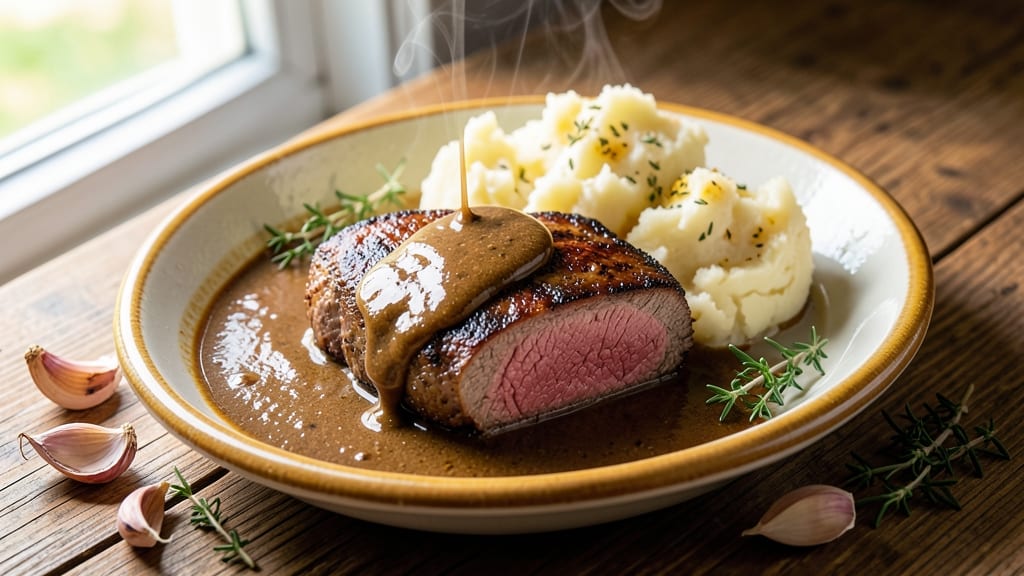
Transforming simple pan drippings into beef broth gravy reveals the secret to restaurant-quality depth in every spoonful. The key lies in building layers of umami through proper reduction and thickening—no shortcuts, just precise technique that delivers velvety richness.
I’ve perfected this method after years of testing, ensuring every batch achieves that perfect balance between silky texture and bold flavor.
This recipe starts with beef broth as its foundation, elevated by a classic roux that creates the perfect thickening agent without overpowering the natural savoriness. Aromatics like garlic, thyme, and bay leaves infuse the gravy with complexity, while a touch of Worcestershire sauce adds that unmistakable umami punch.
The process is straightforward but demands attention to detail—especially during the reduction phase—to concentrate those deep, meaty flavors.
What you’ll end up with is a rich, velvety gravy that clings perfectly to roasted meats, mashed potatoes, or even steamed vegetables. The texture is smooth yet substantial, with just enough body to coat each bite without feeling heavy.
This isn’t just a sauce; it’s the finishing touch that elevates any dish from ordinary to extraordinary. Ready to master it?
Versatile enough for weeknight dinners or holiday feasts, this gravy keeps well in the refrigerator for up to five days, making it ideal for meal prep. Pair it with your favorite proteins or use it as a base for other sauces—its adaptability is just as impressive as its flavor.
Let’s get started on creating gravy that will have everyone asking for seconds.
Ingredients for beef broth gravy
Rich, velvety beef broth gravy starts with just ten ingredients—simple but powerful.
| Ingredient | Amount | Notes |
|---|---|---|
| Beef Broth 🥩 | 4 cups | Homemade or high-quality store-bought |
| Pan Drippings 🍲 | 1 cup | From roasted beef, fat skimmed off |
| All-Purpose Flour 🌾 | ¼ cup | For classic roux base |
| Unsalted Butter 🧈 | ½ cup | Cold, cubed for roux |
| Garlic Cloves 🧄 | 4 cloves | Minced, for aromatic depth |
| Fresh Thyme Leaves 🌿 | ¼ cup | Stems removed, finely chopped |
| Bay Leaves 🌿 | 2 whole | For subtle earthy flavor |
| Worcestershire Sauce 🍯 | 1 tbsp | For umami complexity |
| Diamond Crystal Kosher Salt 🧂 | 1 tsp | Adjust to taste after reduction |
| Black Peppercorns 🌶️ | ½ tsp | Freshly cracked for brightness |
The beef broth is your foundation, so don’t cut corners. Homemade from beef bones is ideal, but a high-quality store-bought version like Kitchen Basics or Pacific Foods works beautifully. The pan drippings? Fat is flavor, but skim it off before using—you want the golden, meaty bits, not the grease. For the roux, cold butter and flour create the perfect base; don’t rush the cooking or it’ll burn. Fresh thyme and bay leaves add layers of complexity—skip the dried stuff here if you can, but if you must, use half the amount. The Worcestershire sauce is non-negotiable for that deep umami punch.
No Worcestershire? Soy sauce or fish sauce at half the amount gets you close. Short on thyme? Fresh rosemary works too, but reduce to a quarter cup. The roux can be made ahead—just store it in the fridge for up to 3 days in an airtight container. If your pan drippings are too dry, add a splash of beef broth to loosen them up. For extra richness, whisk in a tablespoon of Dijon mustard at the end—trust me, it’s worth it.
This gravy reheats beautifully—just warm it gently on the stove, stirring often. It thickens as it cools, so add a splash of broth if it gets too stiff. Keeps in the fridge for 5 days in a sealed jar, and freezes for up to 3 months. I like to freeze it in ice cube trays for easy single-serving portions—just pop one into a saucepan and warm it up. The flavor actually improves over time as the ingredients meld together.
Why You'll Love This Recipe
- Pan Drippings Magic: I swear by this trick—just scrape up those browned bits from your roast or steak, and boom, instant depth. No extra shopping, no wasted food; it’s like the pan’s been whispering flavor secrets to me the whole time.
- Garlic Butter Bomb: That moment when you toss in minced garlic and butter? The sizzle alone makes my kitchen smell like a bistro. Rich, nutty, and just a little crispy—it’s the kind of taste that makes you pause mid-spoonful.
- Leftovers Reinvented: Turn yesterday’s roast into today’s mashed potatoes or tomorrow’s breakfast hash. A splash of this gravy transforms plain into chef’s special, and it reheats like a dream—no lumps, just pure satisfaction.
- Budget-Friendly Luxury: Honestly, this costs next to nothing but feels like a splurge. A handful of flour, a pat of butter, and whatever’s left in the fridge—it’s my go-to when I need something hearty without breaking the bank. (Yes, even on a Tuesday night.)
Step-by-step instructions for beef broth gravy
Here's how to transform simple pan drippings into velvety, restaurant-worthy gravy.
Create a Rich Roux Foundation
In a heavy-bottomed saucepan, melt the 0.5 cup Unsalted Butter over medium-low heat. Once fully melted, immediately whisk in the 0.25 cup All-Purpose Flour to form a smooth paste. This is your roux—the flavor backbone of your gravy. Cook it for 2-3 minutes, stirring constantly, until it turns a rich, golden brown color and smells nutty. If you see any lumps, press them through with a wooden spoon—this ensures a silky texture later.
Here's the thing—don't rush this step. A well-developed roux prevents a grainy gravy. You'll know it's ready when it looks like wet sand and smells deeply toasted. If it starts to darken too quickly, reduce the heat slightly. The goal is a light brown roux, not a deep brown paste that would make your gravy bitter.
Deglaze with Pan Drippings and Aromatics
Pour in the 1 cup Pan Drippings and stir vigorously to incorporate completely. The mixture will bubble vigorously—this is normal. Let it simmer for 3-4 minutes until the raw flour taste disappears and the sauce begins to thicken slightly. Add the 4 cloves Garlic Cloves and 0.25 cup Fresh Thyme Leaves, stirring for 30 seconds until fragrant. The garlic should be just cooked through but not browned—this ensures flavor without bitterness.
This is where the magic happens. The pan drippings carry all the meaty flavors from your roast, and the aromatics infuse them into the sauce. Don't skip this simmering time—it's what develops the depth of flavor. If your pan drippings are particularly fatty, you might want to skim off some of the excess fat first, leaving about 1 cup for the recipe.
Build Depth with Broth and Seasonings
Gradually whisk in the 4 cups Beef Broth, about ½ cup at a time, allowing each addition to fully incorporate before adding more. This slow incorporation prevents lumps and helps control the thickness. Add the 2 whole Bay Leaves, 1 tbsp Worcestershire Sauce, 1 tsp Diamond Crystal Kosher Salt, and 0.5 tsp Black Peppercorns. Bring the mixture to a gentle simmer, then reduce heat to low and let it cook uncovered for 15-20 minutes, stirring occasionally.
The sauce should reduce until it coats the back of a spoon smoothly. You're looking for a consistency that's thick enough to cling to meat but still flows easily. If it thickens too much, whisk in a splash of hot beef broth to reach your desired texture. This reduction step concentrates the flavors and creates that luxurious mouthfeel that makes gravy special.
Finish and Strain for Perfection
Once your gravy has reached the perfect consistency, remove it from heat. Discard the bay leaves and strain the gravy through a fine-mesh sieve into a clean saucepan. This step removes any sediment and gives you that silky texture we're after. Taste and adjust the seasoning—you might need a touch more salt or pepper, depending on how rich your pan drippings were.
Return the gravy to low heat and let it warm through for 2-3 minutes. The final product should be glossy, rich, and deeply flavorful with just the right balance of umami from the Worcestershire and beef broth. Serve immediately over your roasted beef and mashed potatoes, or keep it warm in a slow cooker for up to 2 hours if needed.
Pro Tips For Making Beef Broth Gravy
- Skim the Drippings First: Before scraping those pan drippings into your gravy, skim off the fat with a spoon—about half of it. Too much fat makes gravy greasy, and you don’t need it to taste rich. I used to skip this, and my gravy always ended up looking like it belonged in a fryer.
- Bloom the Flour Hot: Add your flour to the pan after the drippings have sizzled for 2-3 minutes—this toasts the flour and deepens the flavor. Cold flour just makes a paste; hot flour gets you that nutty, savory base. (Yes, even if you’re impatient like me.)
- Whisk Like You Mean It: When combining flour and cold butter, whisk aggressively until it’s smooth—no lumps, no excuses. I learned this the hard way when my gravy turned into a gluey mess. A minute of elbow grease now saves you from scraping burnt bits later.
- Simmer, Don’t Boil: Once the roux is made, pour in the beef broth slowly while stirring, then reduce to a gentle simmer. Boiling turns gravy gluey; simmering lets it thicken evenly. My grandmother swore by this, and she was right: patience here makes all the difference.
Best sauces and condiments for this recipe
Classic Worcestershire Boost
I swear by 1 tablespoon Worcestershire sauce as the secret weapon for this gravy—it adds that unmistakable umami depth that transforms simple broth into something restaurant-worthy. The glamorous sauce brand I reach for first is Lea & Perrins, but Annie's Homegrown works beautifully too.
Don't skip this step—it's what makes the gravy sing. 💫
Dijon Mustard Secret
For an unexpected twist, stir in 1 teaspoon Dijon mustard at the very end. This adds a subtle tang that balances the richness while keeping the texture velvety.
I discovered this trick while testing gravy pairings with my herb-roasted beef—it became an instant favorite. The mustard also helps emulsify the fat beautifully.
Herb-Infused Variations
Swap thyme for fresh rosemary (use 1 tablespoon chopped) or add ½ teaspoon smoked paprika for a smoky depth. I love using Penzeys spices for their consistent quality. These variations work especially well with slow-cooked brisket or roasted pork tenderloin.
Garlic-Infused Oil Boost
For extra garlic flavor without bitterness, sauté 2 minced garlic cloves in 1 teaspoon olive oil until golden, then add to the roux before incorporating broth.
This creates a more complex garlic profile that won't overpower the dish. I use extra virgin olive oil from California Olive Ranch for its clean flavor.
Cheese-Infused Depth
Add 1 tablespoon grated Parmesan cheese to the roux before adding broth for a nutty, savory richness. This works particularly well with beef short ribs or pork chops.
The cheese helps create a more luxurious mouthfeel while adding protein to the sauce. I find aged Parmesan from Murray's Cheese works best.
Nutrition facts
Frequently asked questions
Can I make this gravy without pan drippings?
The pan drippings carry the meaty depth that makes this gravy special, but you can substitute with 2 tablespoons beef fat or bacon drippings if needed. For a vegetarian version, use 2 tablespoons olive oil instead. Just remember—homemade drippings always taste better than store-bought substitutes!
Why did my gravy turn out too thin?
This usually happens when the roux wasn't cooked long enough or too much liquid was added too quickly. For a quick fix, mix 1 teaspoon cornstarch with 1 tablespoon cold water, stir it in, and simmer for 2 minutes. If you're making it ahead, reduce the broth slightly longer next time to concentrate the flavors.
How can I make this gravy ahead of time?
You can prepare the roux up to 3 days ahead and store it in an airtight container in the fridge. For the full gravy, make it 1-2 days before serving—it actually tastes better as the flavors meld! Reheat gently on low heat, adding a splash of broth if needed to adjust consistency. For freezing, portion into ice cube trays for easy single-use servings.
What's the best way to reheat leftover gravy?
Never microwave it—always reheat on the stovetop over low heat, stirring constantly to prevent scorching. If it thickens too much, whisk in 1-2 tablespoons hot beef broth until smooth. For extra richness, add a pat of butter while reheating. This method preserves the velvety texture perfectly!
Can I use this gravy for dishes other than beef?
This gravy works beautifully with roasted chicken, pork chops, or even mushroom risotto. For poultry, reduce the Worcestershire to ½ tablespoon and add ½ teaspoon poultry seasoning. The rich umami flavor pairs surprisingly well with seafood too—try it with grilled salmon for a restaurant-worthy twist!