
Soups & Stews
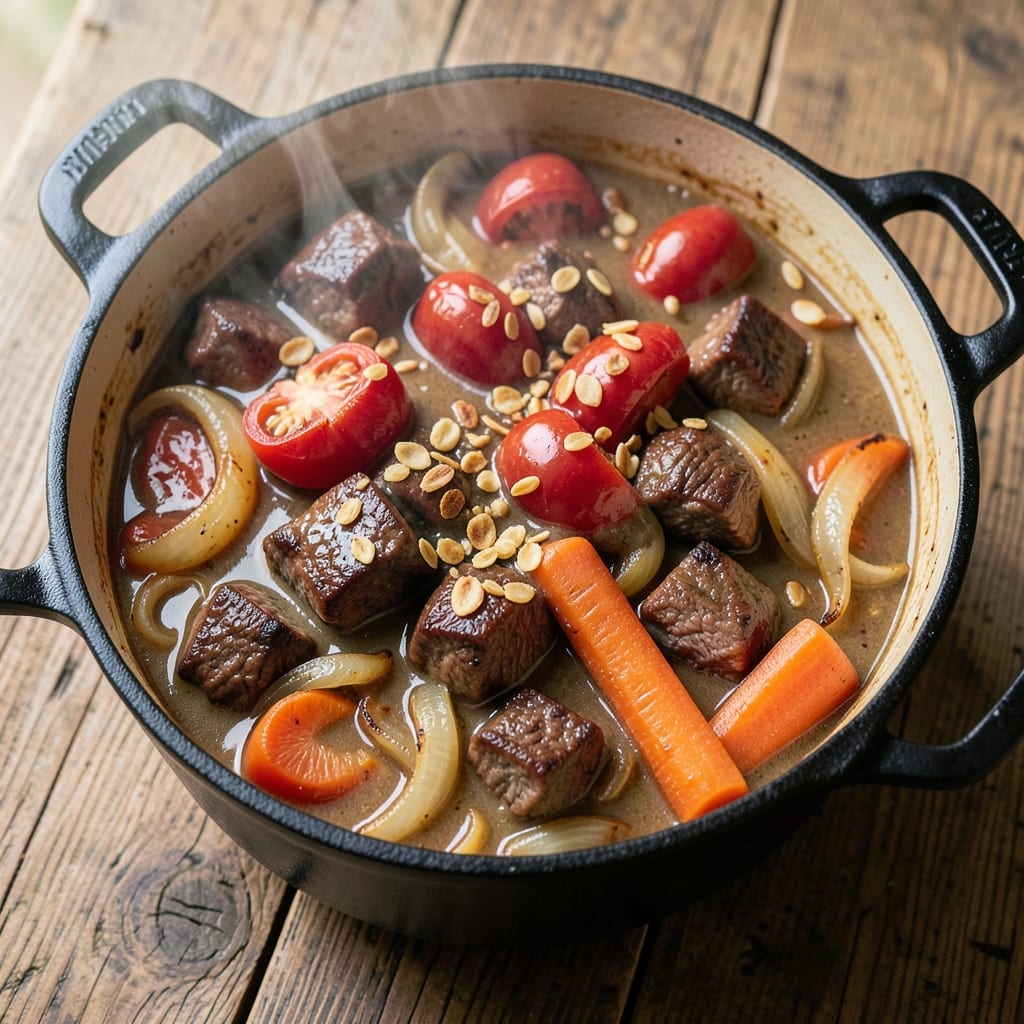
This Bavarian beef stew recipe transforms tough cuts into melt-in-your-mouth tenderness through slow simmering and deep caramelization—just like your favorite German tavern. The secret lies in searing the beef first to develop rich, meaty flavors, then letting it braise for hours until the meat practically falls apart. I've perfected this technique over years of testing, ensuring every bite delivers that perfect balance of savory, slightly sweet, and umami-rich depth.
The beauty of this stew is its simplicity: just a few core ingredients—beef chuck, onions, carrots, and a splash of dark beer—work together to create a dish that's hearty enough for a cold winter night but simple enough for weeknight dinners. The slow cooking process allows the flavors to meld beautifully, while the addition of fresh herbs at the end adds a bright, aromatic finish. This isn't just a stew; it's a comforting masterpiece that brings warmth and satisfaction to the table.
By the time you're done, you'll have a pot of rich, velvety stew with tender beef chunks swimming in a deeply flavorful broth. The carrots will be perfectly softened, the onions caramelized, and the beef so tender it could melt on your tongue. The aroma alone will have everyone gathering around the table, and the first bite will make this your new go-to recipe for cozy family dinners or special occasions.
Serve it with crusty bread or fluffy dumplings to soak up every last drop of that delicious broth. The best part? This recipe scales effortlessly—whether you're feeding a crowd or just treating yourself to a hearty meal. Let's get started on creating this Bavarian classic that's sure to become a household favorite.
Ingredients for bavarian beef stew
Just 14 ingredients transform tough beef into melt-in-your-mouth Bavarian magic.
| Ingredient | Amount | Notes |
|---|---|---|
| Beef Chuck Roast 🥩 | 3 lb | Cut into 1.5-inch cubes |
| Yellow Onions 🧅 | 2 whole | Peeled, cut into wedges |
| Carrots 🥕 | 4 whole | Peeled, cut into 2-inch pieces |
| Dark Beer 🍺 | 2 cups | Like Schwarzbier or Dunkel |
| Tomato Paste 🍅 | 2 tbsp | Squeeze tube preferred |
| Garlic Cloves 🧄 | 4 cloves | Minced, not powdered |
| Fresh Thyme 🌿 | 2 sprigs | Or 1 tsp dried thyme |
| Fresh Bay Leaves 🍃 | 2 whole | Removed before serving |
| Beef Broth 💧 | 4 cups | Low-sodium preferred |
| Olive Oil 🫒 | 2 tbsp | For searing beef |
| Salt 🧂 | 1 ½ tsp | Kosher salt preferred |
| Black Peppercorns 🌶️ | 1 tsp | Freshly cracked |
| All-Purpose Flour 🌾 | 2 tbsp | For dredging beef |
| Fresh Parsley 🌿 | ¼ cup | Chopped, for garnish |
The beef is everything here. Chuck roast with good marbling is non-negotiable—it's what gives you that melt-in-your-mouth texture. Most grocery stores carry it pre-cut, but if you're buying a whole roast, ask the butcher to cube it for you. I always grab mine from Costco when I'm making a big batch, but the regular supermarket stuff works perfectly fine for a weeknight dinner. Look for pieces that are about 1.5 inches in size—too small and they'll overcook, too big and they won't tenderize properly. The onions and carrots? Yellow onions add sweetness as they caramelize, while the carrots stay slightly crisp. Don't peel the carrots if you want that rustic look—just scrub them well.
No dark beer? Substitute with beef broth plus 1 tbsp of molasses for that malty depth. Fresh thyme is ideal but dried works at one-third the amount—just make sure it's not ancient. The tomato paste can be from a squeeze tube (like Trader Joe's) or a can, but skip the watery jarred stuff. For the flour, King Arthur or Gold Medal brands work best—they don't get gummy when wet. Want more richness? Add 1 tbsp of Dijon mustard with the tomato paste. The beef broth should be low-sodium—Swanson or Pacific Foods are my go-tos, but homemade is even better if you've got time.
This stew tastes even better the next day—honestly, the flavors deepen as it sits. Keeps for 5-6 days in the fridge, freezes beautifully for up to 3 months. I always make extra because it reheats so well. For serving, grab some crusty sourdough or homemade dumplings—the broth soaks right in. If you're prepping ahead, you can brown the beef and onions a day ahead, then finish cooking when you're ready. The aroma alone will have your whole house gathering around the pot.
Why You'll Love This Recipe
- One-Pot Magic: I swear by this—just toss everything in one pot, walk away, and come back to perfection. That chuck roast practically melts into tender chunks while the beer and tomato paste build a rich, caramelized base. No fancy techniques, no stress.
- Beer-Braised Bliss: The dark beer and tomato paste combo? Chef’s kiss. It’s like a deep, malty hug in a bowl—sweet, savory, with just enough bitterness to keep things interesting. The onions caramelize right in the pot, adding layers of flavor without extra effort.
- Leftovers That Shine: Between us, this stew improves the next day. The flavors meld even deeper, and it reheats like a dream. I make a double batch on Sundays—one for dinner, one for lunches that taste like a hug from my grandma.
- Budget-Friendly Feast: A chuck roast stretches miles, and beer and veggies won’t break the bank. It’s the kind of meal where you feed a crowd without sacrificing quality. Honestly, I’ve served this at potlucks, game nights, and even a last-minute dinner—always a hit.
Step-by-step instructions for Bavarian beef stew
Here's how to create rich, slow-cooked Bavarian beef stew with tender beef and aromatic vegetables.
Sear the Beef Chuck Roast
Heat a large Dutch oven over medium-high heat and add the 2 tablespoons olive oil. Once the oil shimmers, add the 3 lb beef chuck roast cut into 1.5-inch cubes. Work in batches if needed to avoid crowding the pan.
Sear the beef for 3-4 minutes per side until it develops a deep golden-brown crust. This step is crucial—it locks in flavors and prevents the beef from becoming tough. I press down gently on the beef cubes during the first minute to ensure even contact with the pan. Once all pieces are browned, transfer them to a plate and set aside.
Sauté Vegetables and Build the Base
In the same Dutch oven, add the 2 whole yellow onions cut into wedges and the 4 whole carrots cut into 2-inch pieces. Cook for 5-6 minutes until the onions soften and the carrots begin to caramelize slightly.
Add the 4 cloves minced garlic cloves and cook for 30 seconds until fragrant. Stir in the 2 tablespoons tomato paste and cook for another 1 minute to deepen its flavor. Sprinkle in the 1.5 teaspoons salt and 1 teaspoon freshly cracked black peppercorns, then add the 2 sprigs fresh thyme and 2 whole fresh bay leaves.
Deglaze and Add Liquids
Pour in the 2 cups dark beer and scrape up any browned bits from the bottom of the Dutch oven with a wooden spoon. This deglazing step captures all the flavorful fond that would otherwise be lost. Let the beer simmer for 2-3 minutes until it reduces by about half.
Add the 4 cups beef broth and bring the mixture to a gentle boil. Return the seared beef to the pot, along with any accumulated juices from the plate. The liquid should come about halfway up the beef cubes—if it's too shallow, add a splash more broth.
Slow Simmer Until Tender
Cover the Dutch oven with a tight-fitting lid and reduce the heat to low. Let the stew simmer gently for 2.5-3 hours, stirring occasionally, until the beef is fork-tender and easily pulls apart. The vegetables should be soft but still hold their shape.
Here's the thing—don't rush this step. The low and slow cooking is what transforms tough beef into melt-in-your-mouth tenderness. Check the liquid level occasionally and add a splash of water or broth if it reduces too much. The stew should have a rich, deep color and aroma that fills your kitchen.
Finish and Garnish
Once the beef is tender, remove the 2 sprigs fresh thyme and 2 whole fresh bay leaves. Stir in the 2 tablespoons all-purpose flour and cook for 1-2 minutes to slightly thicken the sauce. Taste and adjust seasoning if needed—this is where you can really make the stew sing.
Ladle the stew into bowls and garnish with 0.25 cup chopped fresh parsley. Serve immediately with crusty bread to soak up every last bit of that flavorful sauce. The result should be a hearty, comforting stew with perfectly tender beef, sweet carrots, and onions that've absorbed all the rich flavors.
Pro Tips For Making Bavarian Beef Stew
- Sear the Chuck First: I learned this the hard way—skipping the sear means bland, gray beef. Get your Dutch oven scorchingly hot (I’m talking smoke-just-starting level), pat the roast very dry, and let it sit until a deep crust forms—about 3-4 minutes per side. That crust locks in flavor when the beer hits.
- Slice Onions Like a Pro: Thin, even slices melt into the stew without turning to mush. Use a mandoline if you’re impatient (yes, even if you’re me), but if you’re doing it by hand, angle the knife and cut parallel to the cutting board—not across the grain. Thicker slices? They’ll just sit there like stubborn guests.
- Deglaze with Beer Immediately: Don’t let those browned bits turn to bitter sludge. The second you pull the roast out, pour in just enough beer to scrape up every last bit—about ½ cup—before adding the rest. I used to wait, and the stew always tasted like it was missing something. (Spoiler: It was.)
- Tomato Paste Timing Matters: Add the paste after the onions soften but before the beer goes in. Stir it into the fat and cook for 1-2 minutes until it darkens slightly—this builds depth. Dumping it in raw? You’ll end up with a clumpy, chalky mess. (And nobody wants that.)
Troubleshooting great bavarian beef stew
Beef Too Tough?
If your beef isn't tender after 3 hours of simmering, it likely needs more time. The ideal internal temperature for beef chuck is 203°F—use a meat thermometer to check the thickest piece. If it's still firm, add ½ cup hot water, cover, and cook another 30-60 minutes. Never rush this step—patience is key for that melt-in-your-mouth texture. 💪
Broth Too Thin?
For a thicker stew, mix 1 tbsp cornstarch with 2 tbsp cold water and stir it into the simmering stew during the final 5 minutes of cooking. If you prefer a natural thickener, mash a few cooked carrots directly into the pot—they'll break down and add body. Avoid over-reducing the broth, as this can make the stew taste concentrated rather than balanced.
Vegetables Overcooked?
To keep carrots and onions slightly crisp, add them to the pot only 30 minutes before the beef is done. Alternatively, sauté them separately and add them back just before serving. For extra color, toss in ½ cup frozen peas during the final 10 minutes—they'll thaw and add a vibrant pop without overcooking. 🥕
Flavor Too Mild?
Boost the depth by adding 1 tbsp Worcestershire sauce or 1 tsp smoked paprika during the last 30 minutes of cooking. For a richer beer flavor, substitute 1 cup beef broth with 1 cup stout beer (like Guinness) during the deglazing step. A pinch of sugar (½ tsp) can also help balance any bitterness from the beer.
Burnt Onions?
If your onions turn dark brown too quickly, reduce the heat to medium-low and cook them for 10-15 minutes before adding the beef. For extra insurance, remove the onions 10 minutes before the beef is fully tender and set them aside. You can always add them back later—they’ll still be flavorful but won’t overpower the dish. 🧅
Liquid Evaporated Too Fast?
If your stew reduces too quickly, cover the pot with a tight-fitting lid and reduce the heat to the lowest setting. For extra moisture, add ¼ cup beef broth or even a splash of water every 30 minutes. Avoid lifting the lid frequently—each time you do, steam escapes, speeding up evaporation. A slow cooker on low can also help maintain consistent moisture levels.
Nutrition facts
Frequently asked questions about Bavarian beef stew
Can I use a slow cooker for this recipe?
For a slow cooker version, brown the beef and vegetables first, then transfer everything to the pot. Add the beer, broth, and seasonings, and cook on low for 7-8 hours or high for 4-5 hours. The slow cooker maintains consistent moisture, making it perfect for busy days. Just stir occasionally and add a splash of water if needed.
What's the best cut of beef for this stew?
Beef chuck roast is ideal because it's well-marbled and becomes incredibly tender when slow-cooked. Other good options include chuck shoulder or stew meat. Avoid lean cuts like sirloin—they'll dry out. Look for pieces with visible fat marbling, as this adds flavor and moisture during cooking.
How do I make this stew ahead of time?
This stew actually tastes better the next day! Cook it completely, then refrigerate for up to 5 days or freeze for 3 months. Reheat gently on the stove over low heat or in the microwave, stirring occasionally. For serving, add a splash of broth or water to restore thickness if needed.
Can I substitute the beer with something else?
Yes, but you'll lose some depth. Replace the beer with 2 cups beef broth plus 1 tbsp molasses for a similar malty flavor. For a non-alcoholic version, use 2 cups apple cider or vegetable broth with 1 tsp beer extract. If you're using wine, opt for a dry red wine like Cabernet Sauvignon.
What's the secret to perfectly tender beef?
The key is low and slow cooking combined with proper searing. Sear the beef first to develop flavor, then cook it at 203°F internal temperature (use a meat thermometer). The slow simmer breaks down collagen in the meat, transforming it into gelatin that makes the beef melt-in-your-mouth tender. Never rush this step—patience is what separates good stew from great stew!