
Soups & Stews
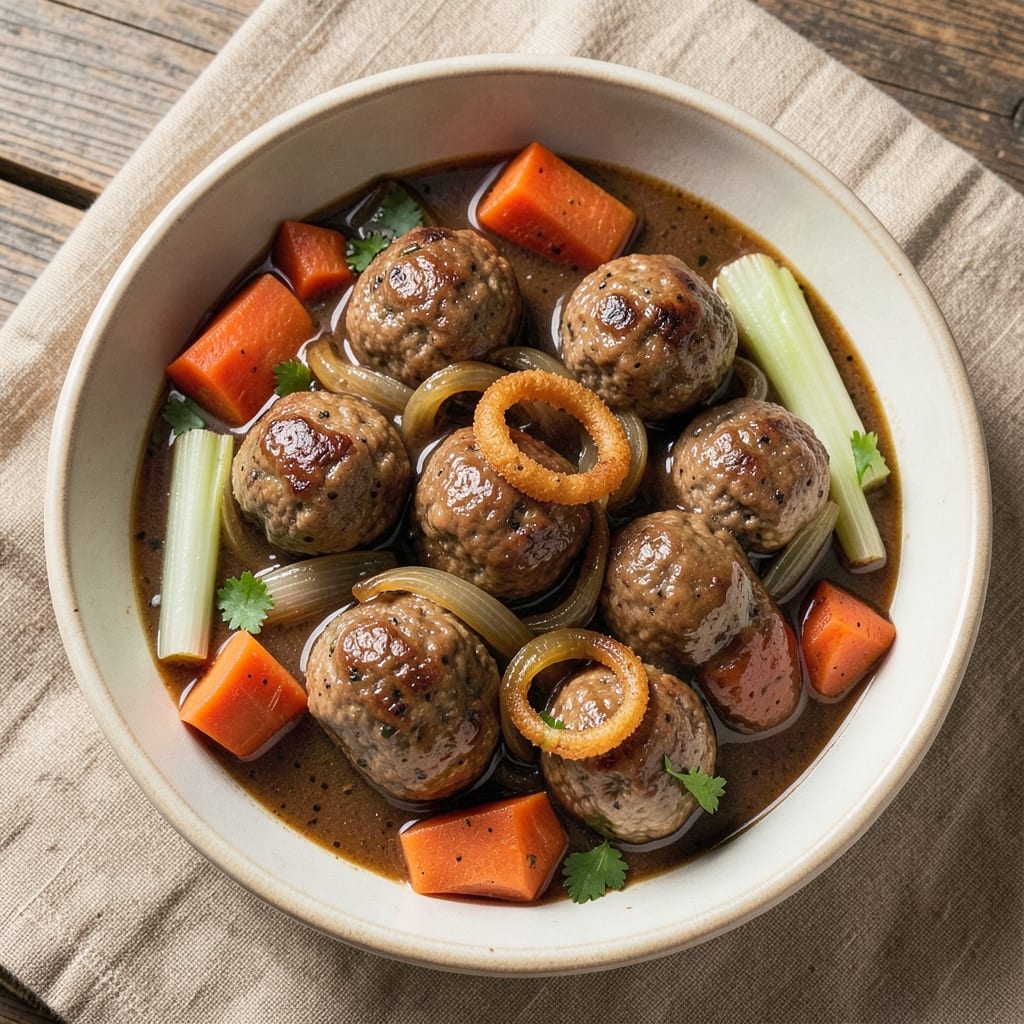
This ball beef stew recipe delivers the kind of deep, comforting flavor that transforms a simple meal into a hearty centerpiece. The secret lies in perfectly formed beef balls that simmer until tender, releasing their rich juices into a velvety broth infused with aromatic vegetables and herbs. I've perfected this technique over years of testing, ensuring every bite is packed with slow-simmered richness that makes it impossible to resist.
The recipe begins with hand-formed beef balls—no fancy equipment needed—bound together with just the right amount of flour and egg for structure. These are gently poached before joining the stew, guaranteeing they stay intact while absorbing the surrounding flavors. The broth builds gradually, with onions, carrots, and celery forming the classic mirepoix base, while bay leaves and thyme add depth that develops over hours of simmering.
What sets this apart is the potato crown crisp topping, a modern twist that adds textural contrast to each spoonful. Crispy on the outside, tender within, these potato crowns soak up the stew's savory broth while providing a satisfying bite. The result is a dish that balances tradition with innovation—restaurant-quality at home without the fuss.
Whether you're feeding a family or prepping for leftovers, this stew scales beautifully while maintaining its depth of flavor. The slow-cooked method ensures the beef remains juicy, and the potato crowns can be made ahead for convenience. Perfect for chilly evenings or special gatherings, this recipe proves that comfort food doesn't require shortcuts—just patience and the right techniques.
Ingredients for ball beef stew
Hand-formed beef balls and aromatic vegetables create this restaurant-quality slow-simmered masterpiece.
| Ingredient | Amount | Notes |
|---|---|---|
| Ground Beef (73% lean, 27% fat) 🥩 | 2 ½ lb | Chilled for easier handling |
| All-Purpose Flour 🌾 | ½ cup | For binding beef balls |
| Large Eggs 🥚 | 2 whole | Room temperature preferred |
| Yellow Onions 🧅 | 1 ½ lb | Yellow or red variety |
| Carrots 🥕 | 1 ½ lb | Medium-sized, peeled |
| Celery Stalks 🧄 | 6 whole | Trimmed and chopped |
| Garlic Cloves 🧄 | 8 cloves | Peeled and minced |
| Beef Broth 💧 | 6 cups | Low-sodium preferred |
| Red Wine 🍷 | 1 cup | Dry variety like Cabernet |
| Tomato Paste 🍅 | 2 tbsp | Smooth texture preferred |
| Fresh Thyme 🌿 | ¼ cup | Leaves only, chopped |
| Bay Leaves 🍃 | 2 whole | Dried works if needed |
| Russet Potatoes 🥔 | 3 lb | Starchy variety preferred |
| Panko Breadcrumbs 🍞 | 1 ½ cups | For potato crowns |
| Parmesan Cheese 🧀 | ½ cup | Freshly grated |
| Olive Oil 🫒 | ½ cup | Extra-virgin for richness |
| Salt 🧂 | 2 tsp | Diamond Crystal preferred |
| Ground Black Pepper 🌶️ | 1 tsp | Freshly ground |
The beef fat content is critical here—27% fat ensures tender, juicy balls that won't fall apart during simmering. Costco or Whole Foods carry the perfect 73/27 blend, but most grocery stores stock it too. Look for bright red meat with visible marbling. For the flour, King Arthur all-purpose is my go-to—it binds beautifully without altering the beef's natural flavor. The potatoes? Russet is non-negotiable for that perfect fluffy interior when baked into crowns. If you can't find them, Yukon Golds work but require more careful timing.
No red wine? Dry white wine or extra beef broth works in a pinch, though the depth of flavor suffers slightly. Fresh thyme is ideal, but dried thyme at one-third the amount gets you close. For the tomato paste, Muir Glen is my standard—smooth texture, no additives. The potato crowns require precise baking: 425°F for 30 minutes until golden and crisp. Don't skip the Parmesan—it adds that savory umami that ties everything together. And for the love of stew, measure your salt carefully—this dish builds flavor gradually.
Beef balls keep 3 days in the fridge before poaching, but make them fresh for maximum tenderness. The complete stew reheats beautifully—30 minutes on low heat restores all the richness. Potato crowns crisp best when made fresh, but you can reheat them in the oven at 375°F for 10 minutes if needed. Portion the stew into glass containers for best storage—it keeps 5 days in the fridge or 3 months frozen. The potato crowns? Freeze separately on a tray first, then transfer to a bag for 2 months of crispy perfection.
Why You'll Love This Recipe
- No Fuss Formation: I swear by the egg-and-flour trick—just mix, shape, and drop those beef balls straight into simmering broth. No rolling pins, no stress, and they hold together like magic (even if my hands look like I’ve been kneading dough).
- Rich, Deep Umami Bomb: That 27% fat ground beef? It’s the secret weapon—juicy, tender, and packed with flavor that actually coats every bite. The onions caramelize right in the stew, so you get sweetness without extra work.
- Weeknight to Potluck Hero: Make a double batch on Sunday—it reheats like a dream for lunches or freezes perfectly for when you’re too tired to cook. Bring it to a gathering? People will ask for the recipe (and probably your leftovers).
- Budget That Feeds: Ground beef and carrots stretch this into a full meal for under $10, and the eggs add protein without breaking the bank. Honestly, it’s the kind of dish that makes grocery day feel like a win.
Step-by-step instructions for ball beef stew with crispy potato crowns
This method delivers melt-in-your-mouth beef balls and golden potato crowns that stay crispy through every bite.
Form and Brown the Beef Balls
In a large bowl, combine the 2.5 lb ground beef (73% lean, 27% fat), 0.5 cup all-purpose flour, 2 whole large eggs, 2 tsp salt, and 1 tsp ground black pepper. Using your hands, gently mix until just combined—don't overwork the mixture or the beef will become dense. Roll into 1.5-inch diameter balls (about 12-14 total) and place on a plate.
Heat 0.25 cup olive oil in a 6-quart Dutch oven over medium-high heat until shimmering. Working in batches, brown the beef balls for 2-3 minutes per side until they develop a deep golden-brown crust. Remove and set aside—these will finish cooking in the stew. The residual fat in the pan will form the rich base for your sauce.
Build the Flavorful Stew Base
In the same Dutch oven, add 0.25 cup olive oil and reduce heat to medium. Add the 1.5 lb diced yellow onions, 1.5 lb diced carrots, and 6 chopped celery stalks. Cook for 8-10 minutes, stirring occasionally, until the vegetables soften and release their sweet aromas. Add the 8 minced garlic cloves and cook for 30 seconds until fragrant—this prevents bitter garlic flavors.
Stir in the 2 tbsp tomato paste and cook for 1 minute to deepen its flavor. Pour in the 1 cup red wine and scrape up any browned bits from the bottom of the pot—this technique, called deglazing, captures all the meaty flavor. Let the wine simmer for 2-3 minutes until reduced by half. Add the 6 cups beef broth, 0.25 cup chopped fresh thyme, and 2 bay leaves, then bring to a gentle simmer.
Simmer the Beef Balls to Perfect Tenderness
Return the browned beef balls to the Dutch oven and add the 3 lb peeled and cubed russet potatoes. The potatoes should be about 2 inches per side—this size ensures they cook through without turning mushy. Bring the stew to a gentle boil, then reduce heat to low, cover partially, and simmer for 1 hour 15 minutes. The beef should be fork-tender and the potatoes nearly cooked through.
Here's the thing—don't lift the lid during cooking. Every time you peek, you lose heat and steam, which can make the beef balls tough. Instead, check the doneness by piercing a beef ball with a fork—it should slide in easily with no resistance. The stew should be rich and slightly thickened from the beef juices.
Prepare the Crispy Potato Crowns
While the stew simmers, preheat your oven to 425°F. In a bowl, toss the 3 lb cubed russet potatoes (if not already added to the stew) with 1.5 cups panko breadcrumbs, 0.5 cup freshly grated parmesan cheese, 1 tsp salt, and 0.5 tsp black pepper. Spread them on a baking sheet in a single layer.
Bake for 20-25 minutes, flipping halfway through, until deep golden brown and crispy. The crowns should hold their shape when lifted—if they're browning too quickly, reduce the oven temperature to 400°F. These crispy potatoes add a delightful textural contrast to the tender stew.
Finish and Serve with Confidence
Once the beef balls and potatoes are tender, taste the stew and adjust seasoning if needed. Remove and discard the bay leaves. Ladle the stew into bowls, placing 2-3 potato crowns on top of each serving. The contrast of the crispy potato crowns against the rich, velvety stew is what makes this dish truly special.
Serve immediately with crusty bread to soak up every last drop of that flavorful broth. The beef balls should be juicy and rich, the potatoes fork-tender with crisp edges, and the sauce perfectly balanced between the wine's acidity and the beef's richness. This is comfort food at its finest—made even better by the satisfying crunch of those potato crowns.
Pro Tips For Making Ball Beef Stew
- CHILL THE MEAT: The 73% lean ground beef will release more fat when warm—work it straight from the fridge for tighter, juicier balls. I used to skip this and ended up with greasy, crumbly meatballs every time.
- GRATE THE ONIONS: Skip the chopping—grated yellow onions melt into the stew instead of sitting as chunks, adding depth without extra prep. Use a box grater or food processor for even distribution.
- REST THE BALLS: After forming, let the meatballs sit uncovered in the fridge for 15 minutes before cooking. This firms them up so they hold together when simmered, and I’ve never had a single one fall apart since.
- BROWN THE BALLS: Don’t rush the sear—get them deep golden on all sides before adding liquid. The Maillard reaction here makes the flavor pop, and skipping it leaves the stew tasting flat. High heat, 3-4 minutes per side.
Common mistakes when making great ball beef stew
Overworking Beef Mixture
When forming beef balls, resist the urge to mix the ingredients excessively. Overworking the meat releases too much moisture, which creates dense, tough balls that won't hold together during simmering. I learned this the hard way—my first attempt resulted in beef balls that crumbled like wet sand. Instead, handle the mixture gently, just until combined, and keep your hands slightly damp to prevent sticking. 💪
Skipping the Browning Step
Many home cooks skip browning the beef balls before simmering, but this is a critical flavor-building step. Browning creates a deep, caramelized crust that adds richness to the stew. I recommend browning in batches to avoid overcrowding—this ensures a proper sear. If you're short on time, at least sear them briefly (about 1 minute per side) to develop some color before adding to the stew.
Lifting the Lid Too Often
Peeking at your stew during simmering might be tempting, but it releases steam and causes temperature fluctuations that can make the beef balls tough. I promise, the stew won't burn if you resist the urge to check every 5 minutes. Instead, use the fork test: pierce a beef ball—it should slide in easily when done. Trust the process and let the stew work its magic undisturbed for the full 1 hour 15 minutes. ✨
Using the Wrong Potatoes
Russet potatoes are non-negotiable for this recipe—they're high in starch and low in moisture, which makes them ideal for both the stew and potato crowns. I've tried Yukon Golds, but they turn mushy too quickly in the broth. For the potato crowns, their fluffy interior contrasts perfectly with the crispy exterior. If you must substitute, use Idaho potatoes—they're the closest alternative. And for the crowns, don't skip the baking step—they need that oven time to develop proper crispiness.
Ignoring the Wine Reduction
The red wine in this recipe isn't just for flavor—it needs time to reduce by half before adding the broth. Skipping this step means your stew will be thinner and less concentrated. I always let the wine simmer for 2-3 minutes until it's noticeably reduced. This builds depth that you simply can't get by just pouring in the wine and broth. If you're avoiding alcohol, substitute with extra beef broth, but you'll lose some of that rich complexity.
Overcrowding the Pot
Don't add all the potatoes to the stew at once—they'll steam rather than simmer, leading to a watery stew. Instead, layer them in carefully, leaving space between each piece. I usually add half the potatoes first, let them cook for 30 minutes, then add the rest. This ensures even cooking and prevents the stew from becoming too thin. The same goes for the beef balls—give them room to develop a proper crust in the broth. 🥔
Nutrition facts
Frequently asked questions
Why does the recipe specify 73% lean ground beef?
The 27% fat content is crucial for tender, juicy beef balls that stay intact during simmering. The fat renders slowly, keeping the meat moist while adding rich flavor to the broth. Cheaper leaner meats (like 90% lean) often result in dry, crumbly balls that fall apart.
Can I make this stew in a slow cooker?
Brown the beef balls first, then transfer everything to your slow cooker. Cook on low for 6-7 hours or high for 3-4 hours. The key difference is the potato crowns—make them separately in the oven at the end since they won't crisp properly in the slow cooker.
What if I don't have red wine?
Use 1 cup beef broth + 1 tbsp balsamic vinegar for depth, or 1 cup dry white wine (like Chardonnay). For maximum flavor, simmer the substitute for 3 minutes to concentrate it before adding broth. The wine adds complexity that broth alone can't replicate.
How do I reheat leftovers without drying out the beef?
Reheat gently on the stovetop over low heat for 15-20 minutes, stirring occasionally. Add 1-2 tbsp broth or water if needed to maintain moisture. Microwaving works too—just cover with a damp paper towel and heat in 1-minute intervals until warmed through.
Can I make the potato crowns ahead of time?
Yes! Bake them fresh for best texture, but you can make them 1 day ahead and store at room temperature in an airtight container. Reheat in a 375°F oven for 5-7 minutes until crispy again. For longer storage, freeze them for up to 2 months—thaw at room temperature before reheating.